One of our favourite and most celebrated meals on the estancia is Osobuco. There is nothing nicer than walking in for dinner to be greeted by the aroma of red wine and rosemary. The chefs prepare the osobuco at lunchtime and the meat braises for at least 5 hours throughout the afternoon, ensuring the meat is soft and full of flavour when they go to take it for dinner the beef falls spectacularly off the bone.
Ñoqui del 29: Argentina's Gnocchi Day Tradition
If you're in Argentina on the 29th of any month, don't be surprised to find gnocchi on every menu in town. "Ñoqui del 29" - Gnocchi Day - is one of the country's most charming Argentine food traditions, and the story behind it is as simple as it is heartfelt.
Why Argentines Eat Gnocchi on the 29th
Back when most people were paid on the last day of the month, the 29th fell right before payday - the point when money was tightest and the larder was down to little more than potatoes and flour. Gnocchi (known locally as ñoqui) turned out to be the perfect solution: filling, comforting, and cheap to make.
Over time, the practical habit became a superstition for financial luck. To this day, many Argentines tuck a bit of money under the placemat while eating their ñoqui on the 29th, hoping to invite prosperity for the month ahead.
Italian Roots
Like so many beloved customs in Argentina, Ñoqui del 29 traces back to the wave of Italian immigrants who settled in the country during the 19th century, bringing their culinary traditions - and their gnocchi - with them. It's a lovely example of how deeply Italian heritage is woven into modern Argentine culture, from language and surnames right down to the dinner table.
How to Make Traditional Argentine Gnocchi
Serves 6
Ingredients:
5 large potatoes (as fresh as possible - one per person, plus three extra)
4 eggs
3 cups of flour
Method:
Wash the potatoes and boil them with the skins on.
Peel and mash the potatoes one at a time while still warm.
Spread the mashed potato out onto a large, flat surface to cool quickly - the bigger the surface area, the faster it cools.
Once cooled, crack one egg into the centre of the potato and mix well.
Gradually fold in the flour, pressing and combining until the dough comes together. Keep adding flour until the mixture is firm but still malleable.
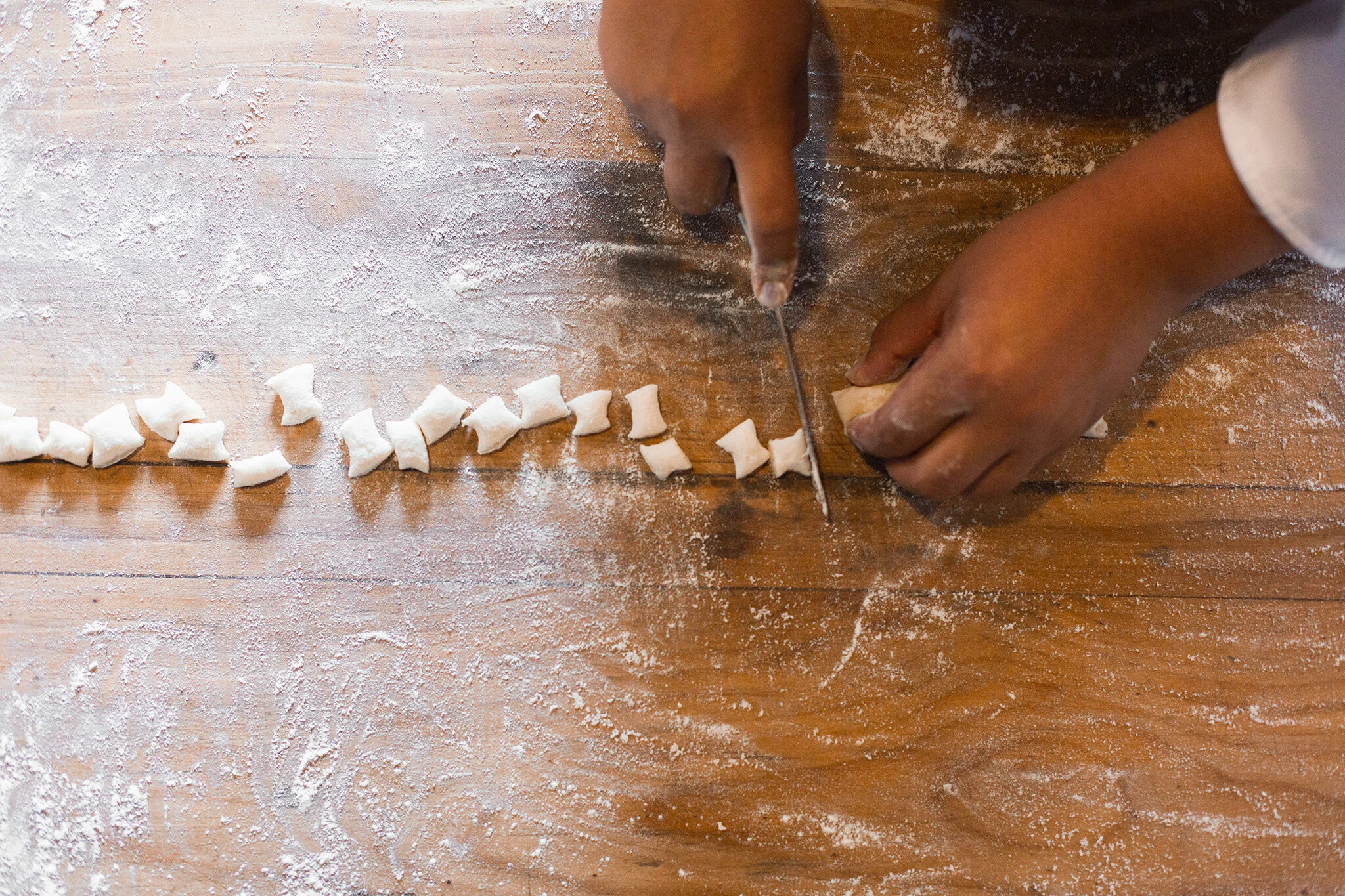
Divide the dough into equal portions, roll each into a long sausage shape, and cut into small pieces roughly 2cm x 1cm.
Prepare your sauce of choice while the water comes to the boil.
Cook the gnocchi in batches in boiling water - they're ready as soon as they float to the surface.
Keep an oven-safe dish warm to hold the cooked batches. Layer sauce on the bottom, add the cooked gnocchi, then repeat with more sauce and the next batch as it's ready.
Serve warm, and if it's the 29th - don't forget the money under the placemat.
Chicken Asado
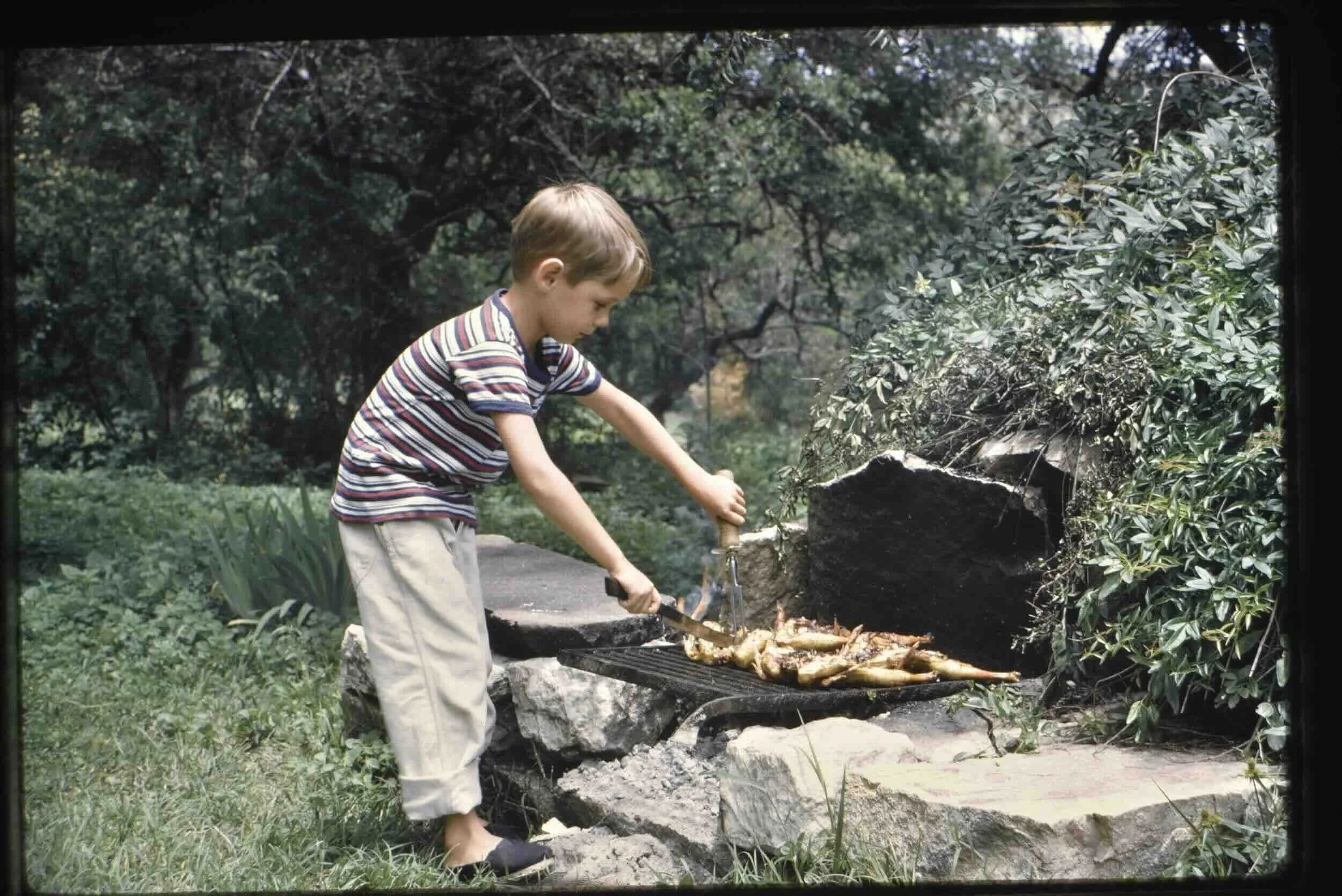
The asado originated in the 19th century with the gauchos, the word is used to describe both the occasion and the meat itself, traditionally wood from the White Quebracho tree would be used as it is relatively smokeless and produces good coals. Whilst beef is the focus of the asado many argentines also choose to cook chicken. Lunches at Los Potreros include both options but we particularly love a chicken asado. Chicken cooked on the parrilla marinated with lemon, onion, garlic, fresh herbs and olive oil. The preferred method is cooking the chicken as a whole butterflied.
1 Chicken
3 Onions
4 Garlic Cloves
Lemon Juice
Fresh thyme & rosemary
Olive oil
To prepare the parrilla for cooking you will need a lot of coals and a higher temperature than cooking beef, so ensure you light the fire around 30 minutes earlier than if you were cooking a normal asado. Light the fire around 11am to have sufficient time to begin cooking for a 1330 lunch. You will need minimum of one and a half hours to cook the chicken and must always put chicken on the parrilla for half an hour more than any red meat. Using a butterflied chicken place on the parrilla bone face-down and allow the chicken to start cooking. To check if the grill is hot enough hold your hand above it and if you can hold it for longer than 10 seconds you need to add more coals. Peel the onions and garlic and blend with the lemon juice and olive oil until it produces a thick paste and roughly cut the fresh herbs and add them to the mix. Brush the chicken with the paste whilst cooking, 3 or 4 times until serving, to ensure the chicken stays moist and does not become too dry. Turn the chickens regularly so they don’t burn and to allow for even cooking.
* goes really well with a fresh salad and bread cooked on the parrilla. Top the bread with fresh tomatoes diced with oregano, diced onions and a little olive oil.
Farm to Table: Sustainability in Our Kitchen
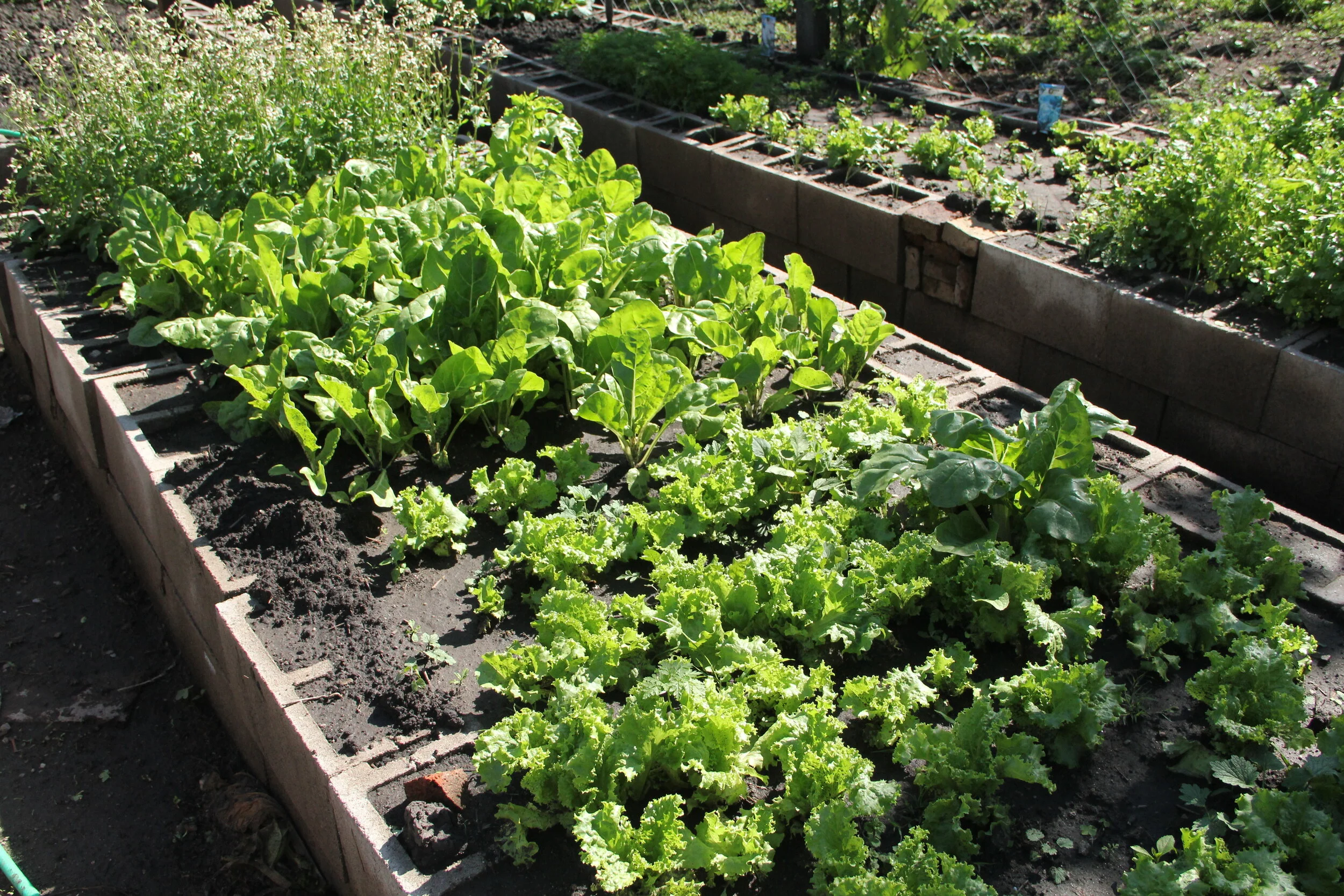
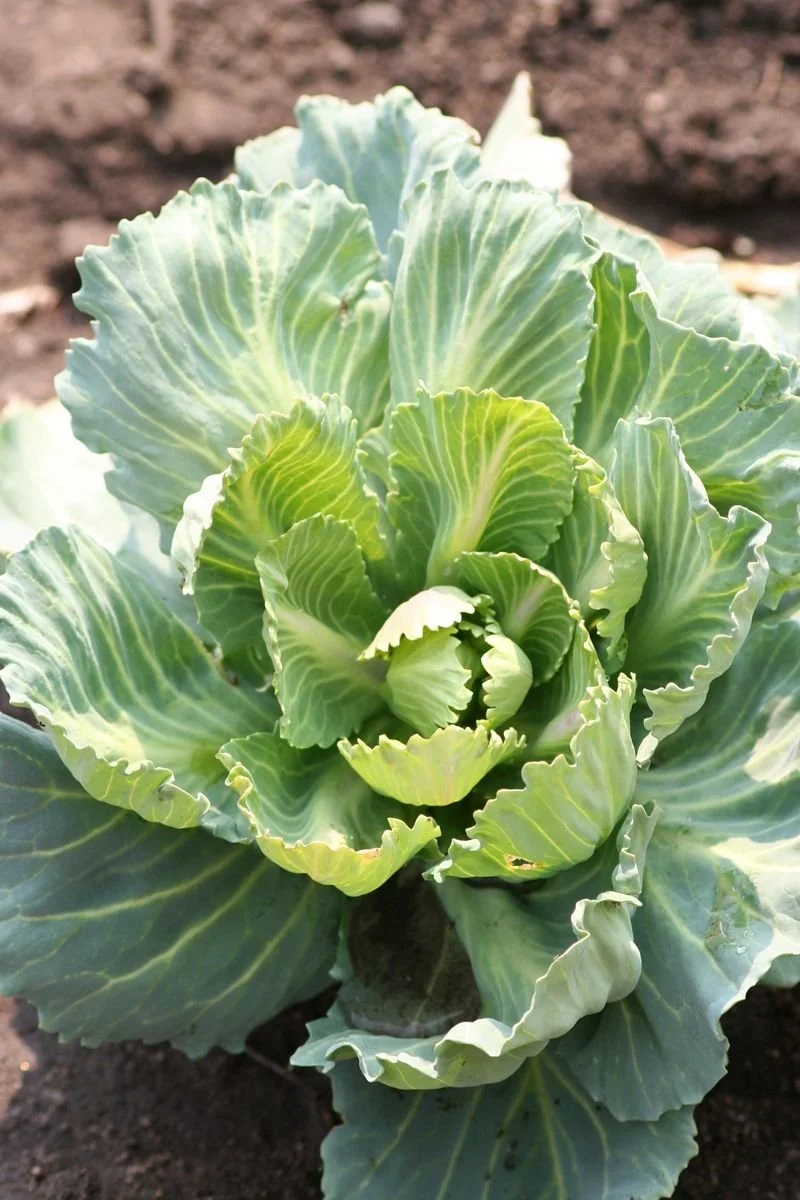
Every chef across the world, pays close attention to what goes into their food but here at Los Potreros we are also concerned about what our food is doing to the environment. Our chefs have always had a “no waste mentality” and now more than every they are minimizing what they throw out and developing a menu to ensure they can continue to cut down what little waste we still have, throughout the last few months we have begun to test out new ideas with great success.
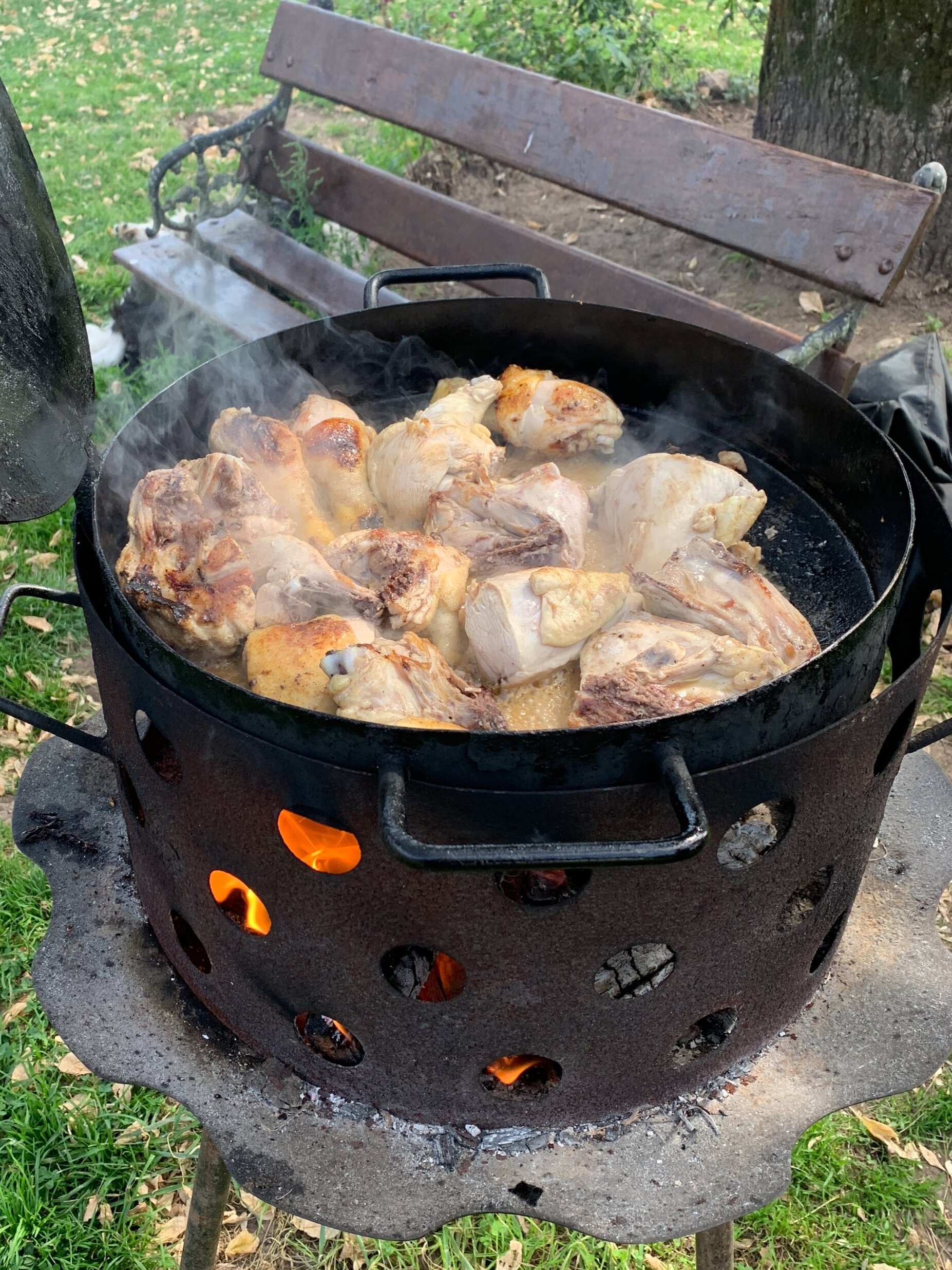
Pollo Al Disco
Food prepared “al disco” does not refer to a particular recipe but rather a cooking style.
Traditionally farm workers would use the blade of their plough; flipped on its side, wiped clean and with a fire lit below - these days we use a huge iron plow disc heated over a wood fire, but you can recreate this in a heavy bottom pan. Discos provide a large surface area for cooking while remaining easily portable, they are particularly useful for preparing meals away from the kitchen.
The following recipe for pollo al disco is using white wine, but this can be substituted with beer.
Serves 4
3 x chicken breasts - either cooked whole or cut into chunks
2 onions
2 red peppers sliced
2 green peppers
A handful of fresh herbs chopped
2 diced garlic cloves
Cream
Chilli flakes
Paprika
2 bay leaf
White wine
Water
Olive oil
To prepare the chicken use breast meat or cut into chunks on the bone (if leaving pieces on the bone it will take longer to cook). Once the disco is placed over the flames begin cooking immediately or it will burn and smoke. Add a splash of oil and sauté the chicken, stirring often until the chicken has colour all over. Once the chicken has begun cooking add the onions and garlic, allow to soften. Then add white wine, peppers, spices and herbs - flavor according to taste. Continue to add wine and water throughout cooking to ensure the meat doesn’t dry out. Stir often. Do not taste the sauce until the chicken is cooked.
Once the chicken has been cooked, and you are ready to serve drizzle some cream over the chicken, as you plate it.
The Legend Behind Argentina's Dulce de Leche
Eaten with almost everything in Argentina, dulce de leche is spread on toast, used to fill facturas, decorate flans, or simply eaten straight from the jar. It's one of the true icons of Argentine cuisine, and its origin story is just as sweet as the spread itself.
A Culinary Accident in 1829
As the local legend tells it, the birth of dulce de leche can be traced back to a culinary accident that occurred in 1829, during a turbulent period of Argentine history.
With the hope of ending a period of civil war in Argentina, the leaders of opposing political and military forces, Juan Manuel de Rosas and Juan Lavalle, decided to call a truce. Rosas invited Lavalle to sign the Cañuelas Pact at his headquarters on a large ranch called La Caledonia. Lavalle arrived at the ranch tired from the journey and decided to rest a while before meeting with Rosas - taking his siesta in the very tent where Rosas normally slept.
Meanwhile, one of Rosas' servants was busy preparing the "lechada" - hot milk with sugar - traditionally drunk as an accompaniment to mate during that period. When the servant went to bring some mate to Rosas, she found Lavalle asleep in Rosas' tent and panicked. Unaware of the planned meeting between the two leaders, she alerted the troops to the presence of the "enemy," leaving the lechada unattended on the stove amid the chaos.
When she finally returned, she discovered that the contents of the pot had transformed into a thick, gooey spread - what we know today as dulce de leche.
A happy accident born out of conflict and truce, this beloved Argentine staple has gone on to become one of the country's most cherished culinary traditions, enjoyed in kitchens and cafés across Argentina to this day.
Butternut Squash Sorrentinos with Blue Cheese Sauce
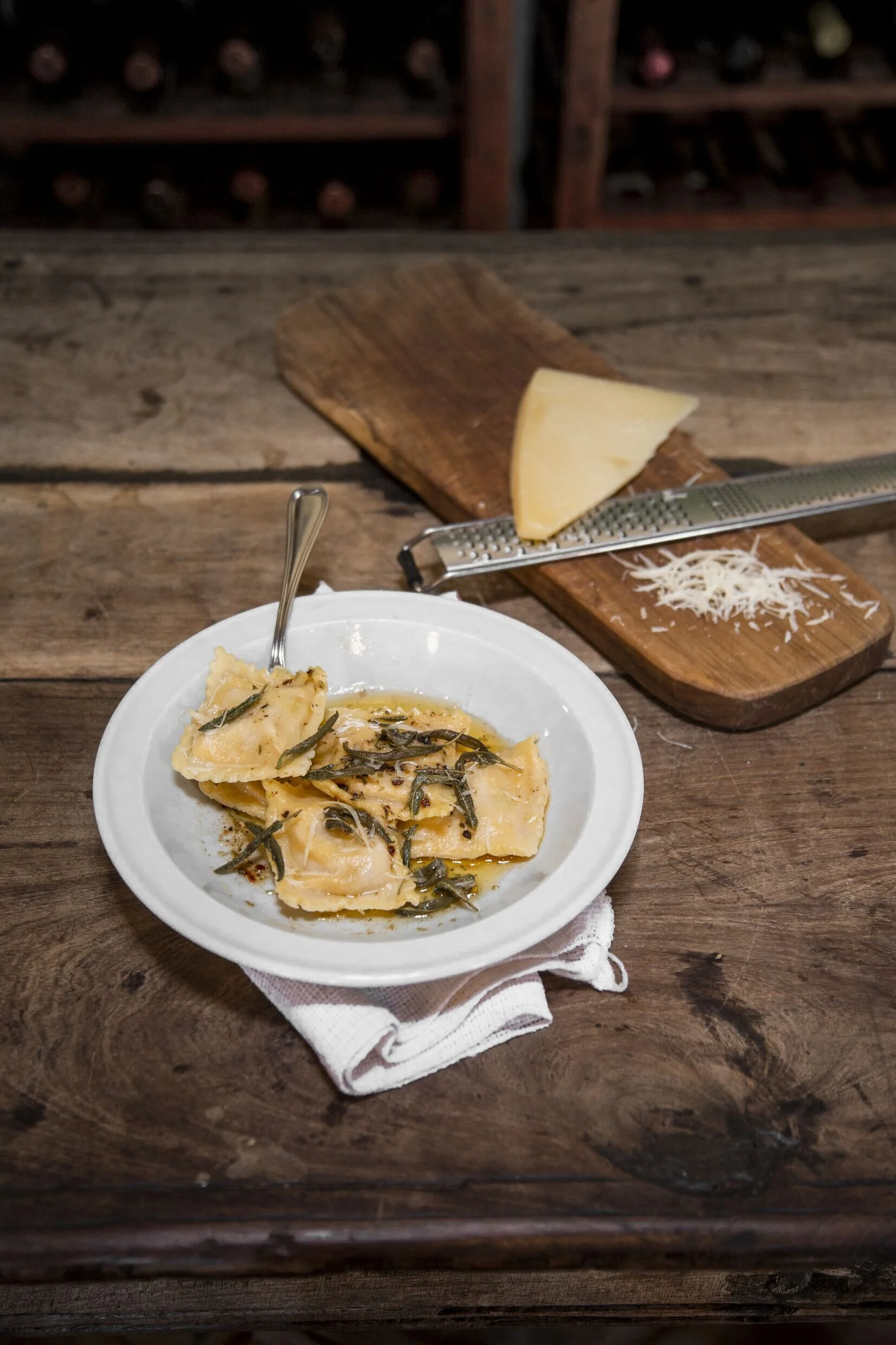
Argentines claim that there’s nothing in Italy quite like a sorrentino, making them an Argentine invention. Unlike their close relative the ravioli, which aims for a balance between dough and filling, sorrentino’s are plump and overstuffed. As with other stuffed pastas, both the sorrentino dough and the filling can be imaginatively flavoured to create an endless number of options. The choice of sauce also plays an important role in the dish. A favourite on the estancia is a butternut squash with a butter, sage and garlic sauce or for the more adventurous a blue cheese sauce.
Sage and Butter Filling - fresh sage, butter, garlic, dried herbs, salt and pepper
Blue Cheese - a strong blue cheese we like roquefort melted with a splash of double cream
Pasta Dough
To make the stuffing, cut the butternut squash in half down the middle and then roast in the oven, with garlic until it is soft and both will peel away from the skin.
Mash the butternut squash, sprinkling in salt, pepper, finely chopped chives and a handful of chilli flakes.
Begin rolling out the pasta using a pasta machine or rolling pin. If using a pasta machine roll through until about 4mm.
Use this mixture to fill the raviolis, whilst the pasta is cooking make a simple sauce.
For the sage and butter sauce, simply melt butter in a pan and throw in handfuls of fresh sage, dried herbs, chilli flakes and diced garlic..
If you want a blue cheese sauce, simply melt the blue cheese of your choice, with a piece of butter and a splash of cream.
The Argentine Asado: A Gaucho Tradition at Los Potreros
An asado is never just a meal. In Argentina, it's a ritual - a slow, unhurried gathering built around fire, good meat, and even better company. At Estancia Los Potreros, the asado sits at the very heart of daily life, just as it has for generations of gauchos before us.
The Gaucho Origins of the Argentine Asado
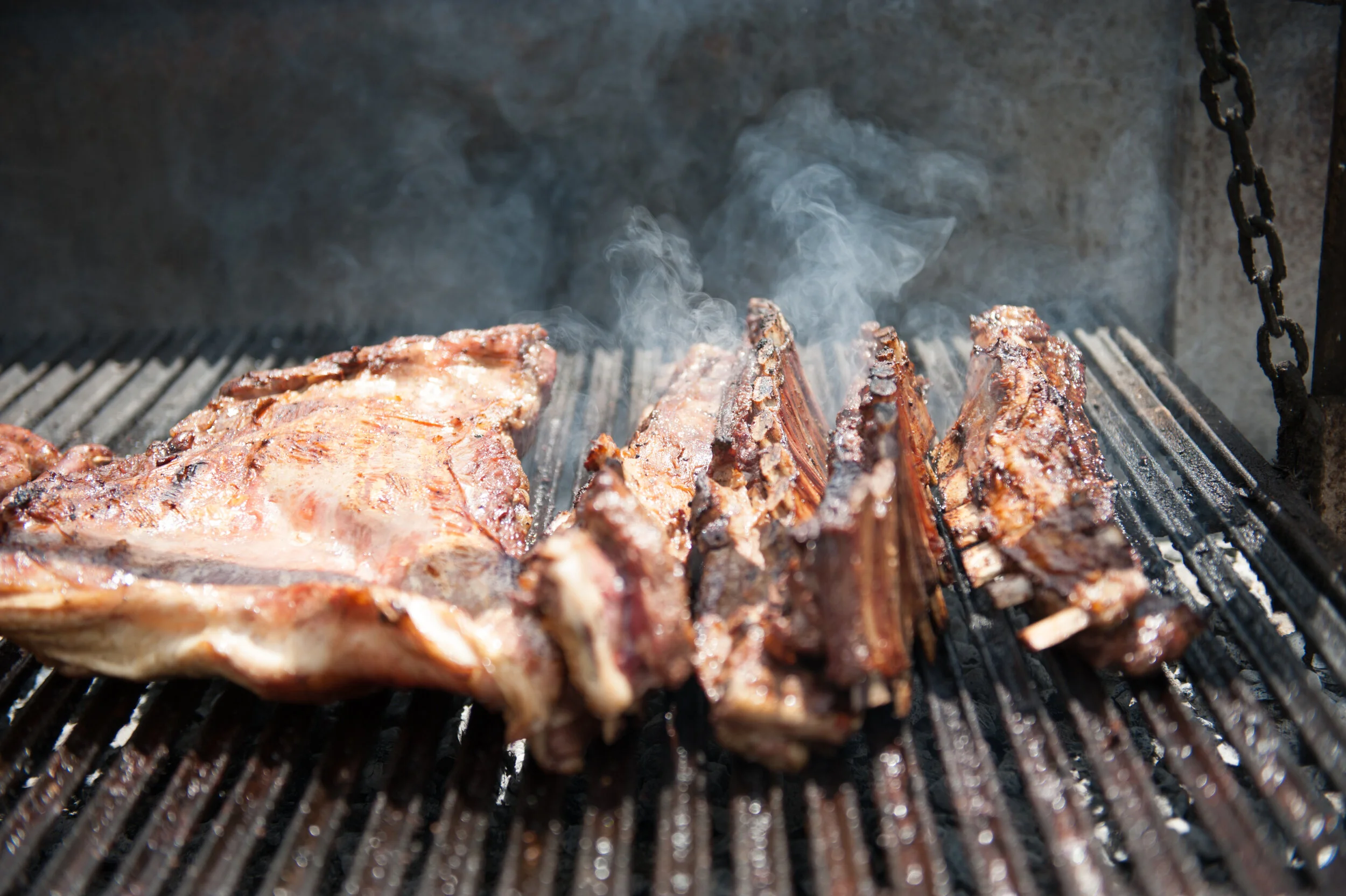
The Argentine asado traces back to the gauchos who worked the pampas in the eighteenth and nineteenth centuries. With cattle in abundance and little else on hand, they cooked freshly butchered beef over open flames using nothing more than wood, embers, and simple iron crosses called asadores. There was no need to dress it up - the quality of the meat did all the talking.
From the Pampas to the Parrilla
As Argentina's cattle industry grew, so did the asado's place in national life. What began as a practical way for gauchos to eat became a cornerstone of Argentine culture, from Sunday family lunches to celebrations of every kind. The parrilla replaced the open pit, but the philosophy never changed: cook slowly, over embers rather than flame, and let the fire do the work. Patience is the whole point.
What Goes on the Fire: Cuts and Sides
A proper asado brings a full spread to the table - beef ribs, bife de chorizo, chorizo sausage, morcilla, and often sweetbreads, served alongside grilled vegetables, fresh salads, and crusty bread. Chimichurri finishes the plate without ever getting in the way of the beef itself.
Asado at Estancia Los Potreros, Córdoba
Here in the Sierras Chicas, the asado tradition is very much alive. Much of the beef we serve comes from cattle raised on the estancia using regenerative grazing, so what lands on your plate reflects the land it came from. Guests are welcome to watch the fire being built, take in the smell of wood smoke drifting across the yard, and pull up a chair for a meal that hasn't changed much in a couple of centuries.
Why the Asado Matters to Argentine Culture
For visitors, sharing an asado is one of the most genuine ways to understand Argentina - not through a museum or a guidebook, but through gaucho heritage, hospitality, and rural life as it's actually lived. Whether it's a family table or a working estancia, the asado remains what it's always been: good food, good company, and no reason to rush either one.

Empanadas Arabes
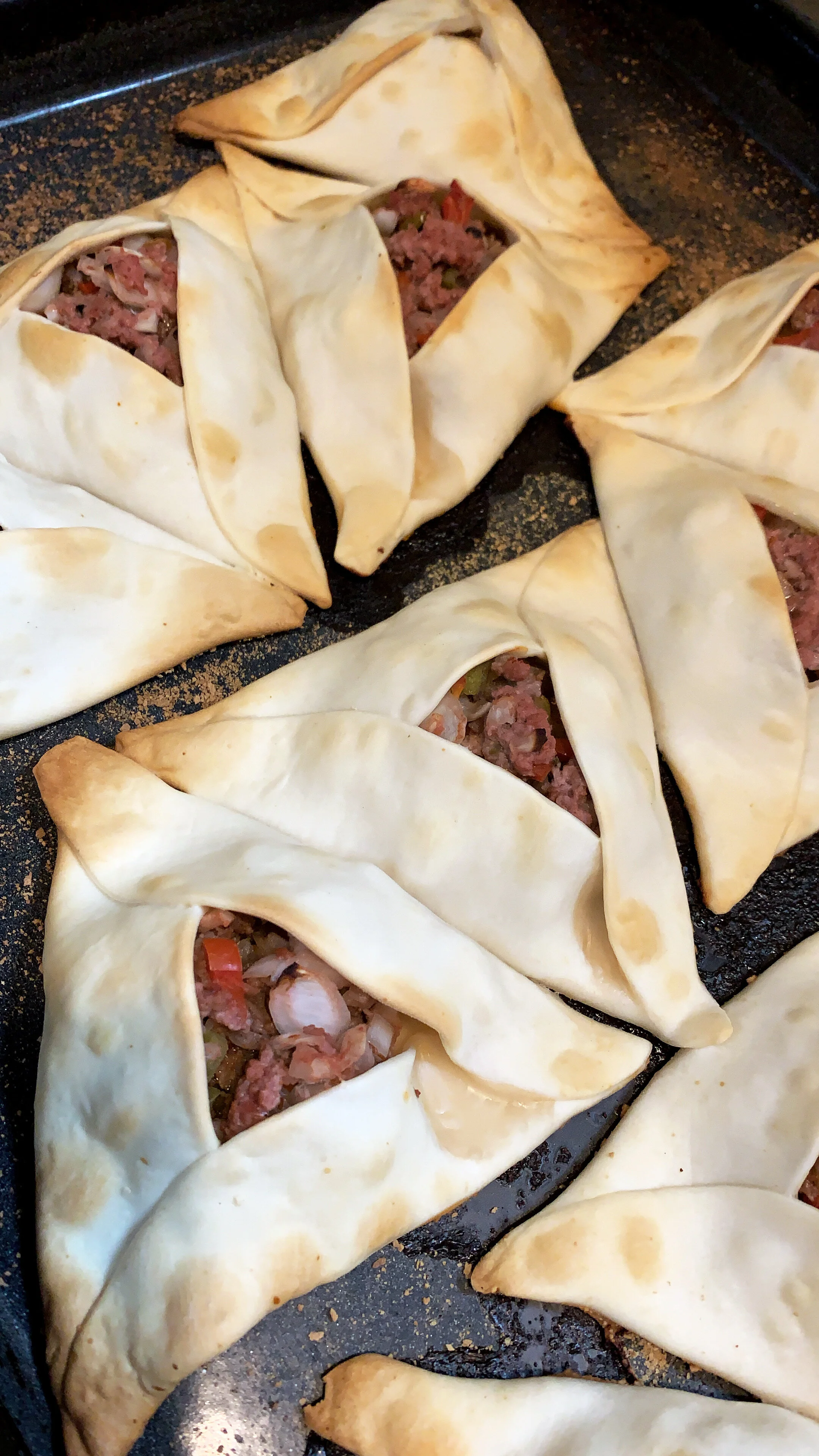
Alongside the European immigrants into Argentina, there were also large number from Syria and Lebanon. Whilst many dishes have Italian or Spanish heritage on for two from the middle east have left their mark on the country. One of which is the delicious empanada arabe. A combination of lemon, onion, tomato and fresh mint pairs perfectly with the beef.
Traditional Argentine Beef Empanadas (Empanadas de Carne)
Derived from the word “empanar” meaning to wrap or coat, we have the empanada - a stuffed or fried pastry traditionally filled with a combination of meat, vegetables or even dried fruits. Across the country they are a fast food staple and every region including Cordoba, prepares their own variation of a filling. Typical empanadas in Argentina are much smaller in size than those in Chile, normally fitting into the palm of your hand.
Empanada Pastry
2 cups plain flour
2/3 cups unsalted butter (cold)
2 tsp baking powder
To make the pastry, combine the flour, baking powder and 1 teaspoon of sea salt in a large bowl.
Finely chop or coarsely grate the butter, then rub into the dry mix until it resembles fine breadcrumbs.
Mix in just enough cold water to bring it together, then wrap in clingfilm and pop in the fridge for 1 hour.
Roll out the pastry using a rolling pin or pasta maker and cut into large circles.
A Traditional Argentine Filling
Empanadas in the Cordoba province are famous for being dulce salada, which means ‘sweet and salty’. You can use this recipe and by adding a couple more handfuls of raisins and a few teaspoons of white sugar they will become empanadas cordobesas.
4 cups of ground beef or meat finely cubed
6 white onions finely diced
4 hard boiled eggs
1 can of tinned tomatoes
1tbs paprika
2 handfuls of green olives
2 handfuls of raisins
A bunch of spring onions
1tbs chilli flakes
Salt and pepper
Finely cube meat, or use ground beef sauté until cooked.
In a separate pan sauté the onions until soft and then combine with the cooked meat, add the tomato sauce and season with salt and pepper.
Add the remaining ingredients except the egg and allow the mixture to simmer and reduce down so that it is not-too liquidly.
Allow the mix to cool completely.
Roughly chop the eggs up and add with the spring onions and sliced olives into the mixture , stirring throughly.
Fold the empanadas using the accordion fold and cook.
Place the assembled empanadas on a lightly greased baking sheet. Bake in an oven preheated to 180ºC/355°F for approximately 20 minutes or until the dough turns golden brown.
For a demonstration on folding empanadas check out our video here.
For a downloadable version click here.