Pasta

Why Argentines Eat Gnocchi on the 29th of Every Month

If you find yourself in Argentina on the 29th day of the month, you may notice something curious appearing on family tables, restaurant menus and social media feeds alike: gnocchi.

Known locally as ñoquis del 29, this beloved tradition is one of the country's most enduring culinary customs. More than just a meal, it is a ritual that connects generations, celebrates heritage and carries a hopeful wish for prosperity in the month ahead.

The Italian Roots of Ñoquis del 29

Like many of Argentina's most cherished foods, the tradition of eating gnocchi on the 29th has its roots in Italian immigration. Between the late nineteenth and early twentieth centuries, millions of Italians arrived in Argentina, bringing with them their language, customs and recipes. Among these was gnocchi, the humble potato dumpling that became a staple in homes across the country. Over time, the dish became woven into Argentine culture, evolving from an Italian comfort food into a uniquely Argentine monthly ritual.

A Saint, a Farming Family and Payday

The tradition is often linked to a legend about Saint Pantaleon, a Christian healer who travelled through northern Italy in the eighth century. According to the story, the saint was welcomed by a poor farming family and shared a simple meal of gnocchi with them. Before leaving, he predicted a year of abundant harvests. When the family later found coins beneath their table, the meal became associated with good fortune.

Another, more practical explanation reflects the realities of immigrant life. When most people were paid at the end of the month, the 29th fell just before payday, when money was tightest and the larder was down to little more than potatoes and flour. Gnocchi was filling, comforting and cheap to make. Whether rooted in legend or necessity, the tradition endured.

Money Under the Plate

Perhaps the most distinctive part of the custom is placing money beneath the plate. Many Argentines tuck a banknote under their plate or placemat before eating, believing it will bring prosperity and financial luck in the coming month. Some leave it there throughout the meal, while others carry it in their wallet afterwards as a symbol of abundance. For many families it is a playful ritual, but one observed with surprising consistency.

A Tradition That Brings Families Together

What makes ñoquis del 29 special is not simply the dish itself but the sense of continuity that comes with it. Grandparents pass the tradition to grandchildren. Families gather around the table. Restaurants create special menus. Friends send one another reminders as the 29th approaches. In a fast-paced world, these small rituals give us a connection to the past and a reason to pause and share a meal.

How to Make Traditional Argentine Gnocchi

Serves 6

Ingredients

  • 5 large potatoes, as fresh as possible

  • 4 eggs

  • 3 cups of flour

Method

  1. Wash the potatoes and boil them with the skins on.

  2. Peel and mash the potatoes one at a time while still warm.

  3. Spread the mash out on a large, flat surface so it cools quickly - the bigger the surface, the faster it cools.

  4. Once cool, crack an egg into the centre and mix well.

  5. Gradually fold in the flour, pressing and combining until the dough comes together. Keep adding flour until it is firm but still malleable.

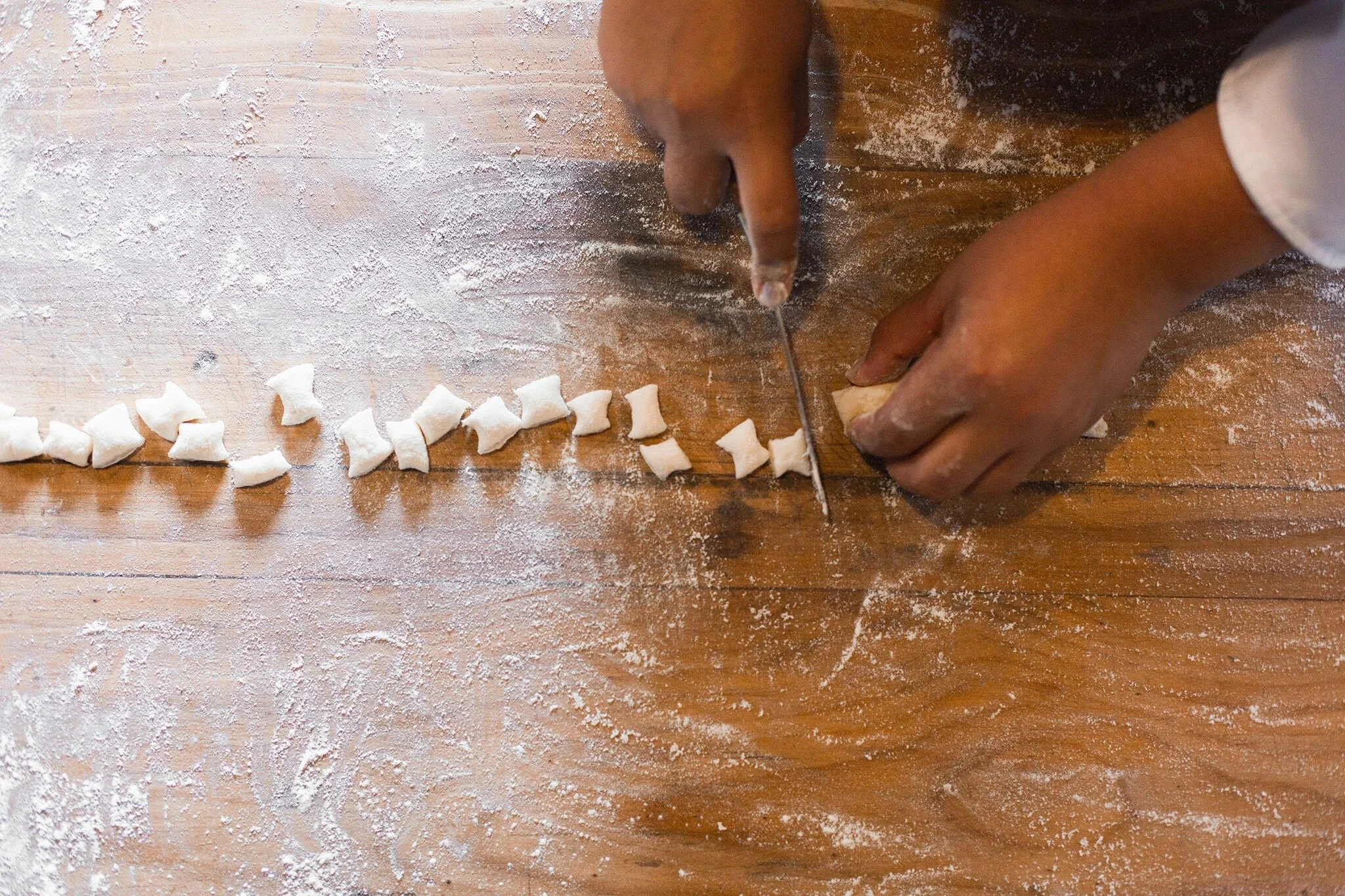
  6. Divide the dough into equal portions, roll each into a long sausage and cut into small pieces about 2cm x 1cm.

  7. Make your sauce of choice while the water comes to the boil.

  8. Cook the gnocchi in batches in boiling water. They're ready as soon as they float to the surface.

  9. Keep an ovenproof dish warm for the cooked batches. Layer sauce on the bottom, add the gnocchi, then repeat with more sauce and the next batch.

Serve warm, and if it's the 29th, don't forget the money under the placemat.

Food Is About More Than Nourishment

Argentina is rich in culinary traditions, but few are as widely recognised as eating gnocchi on the 29th. Whether for luck, family history, nostalgia or simply a love of good food, millions of Argentines keep up the practice month after month. Food carries stories, memories, hopes and traditions that connect us to those who came before us.

So if you happen to be in Argentina on the 29th, don't be surprised to see a plate of gnocchi on the table - and perhaps a banknote tucked discreetly underneath.
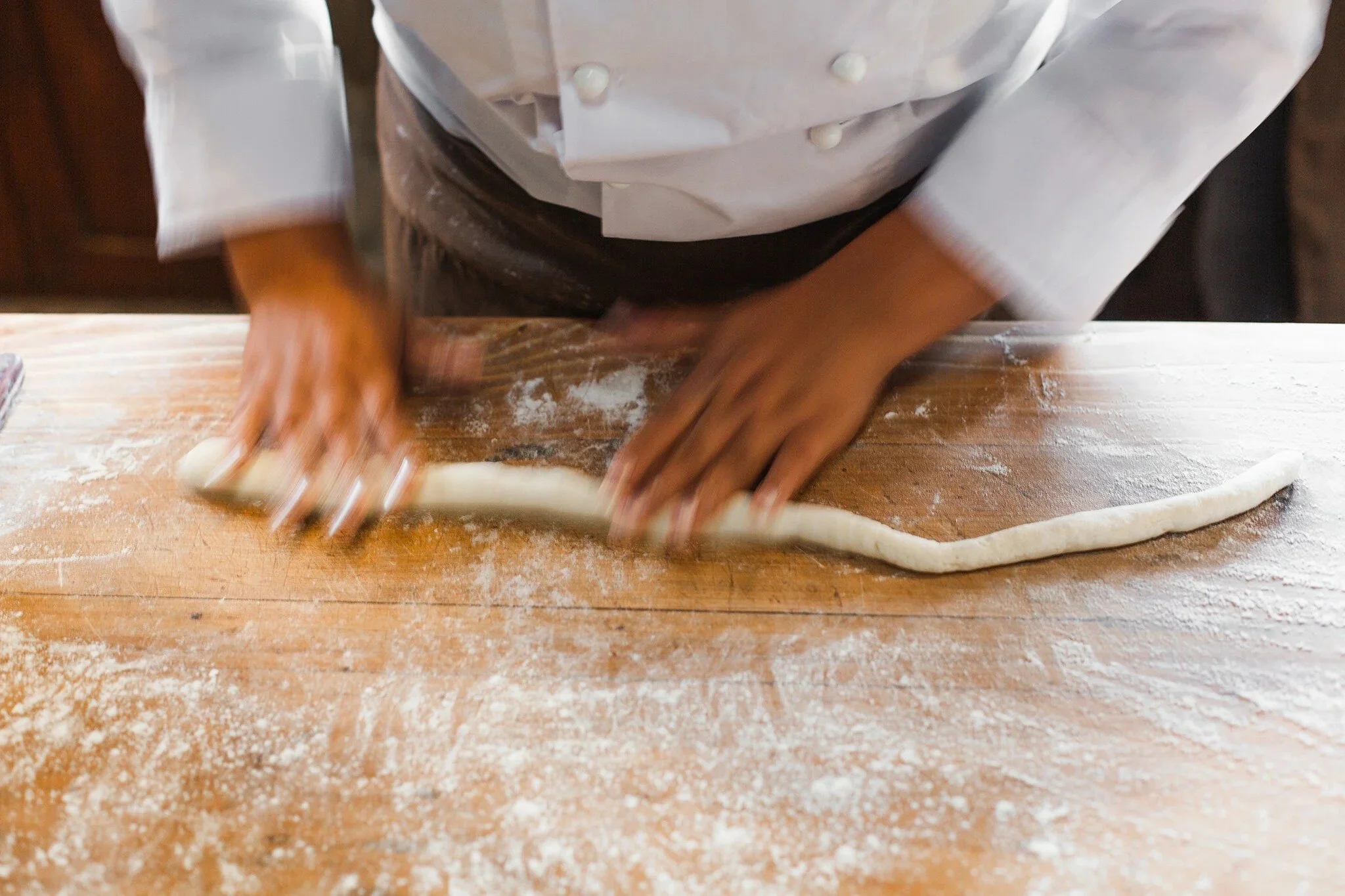
Chef rolling gnocchi dough by hand in the Los Potreros kitchen
Cutting the rolled dough into small gnocchi on a floured board
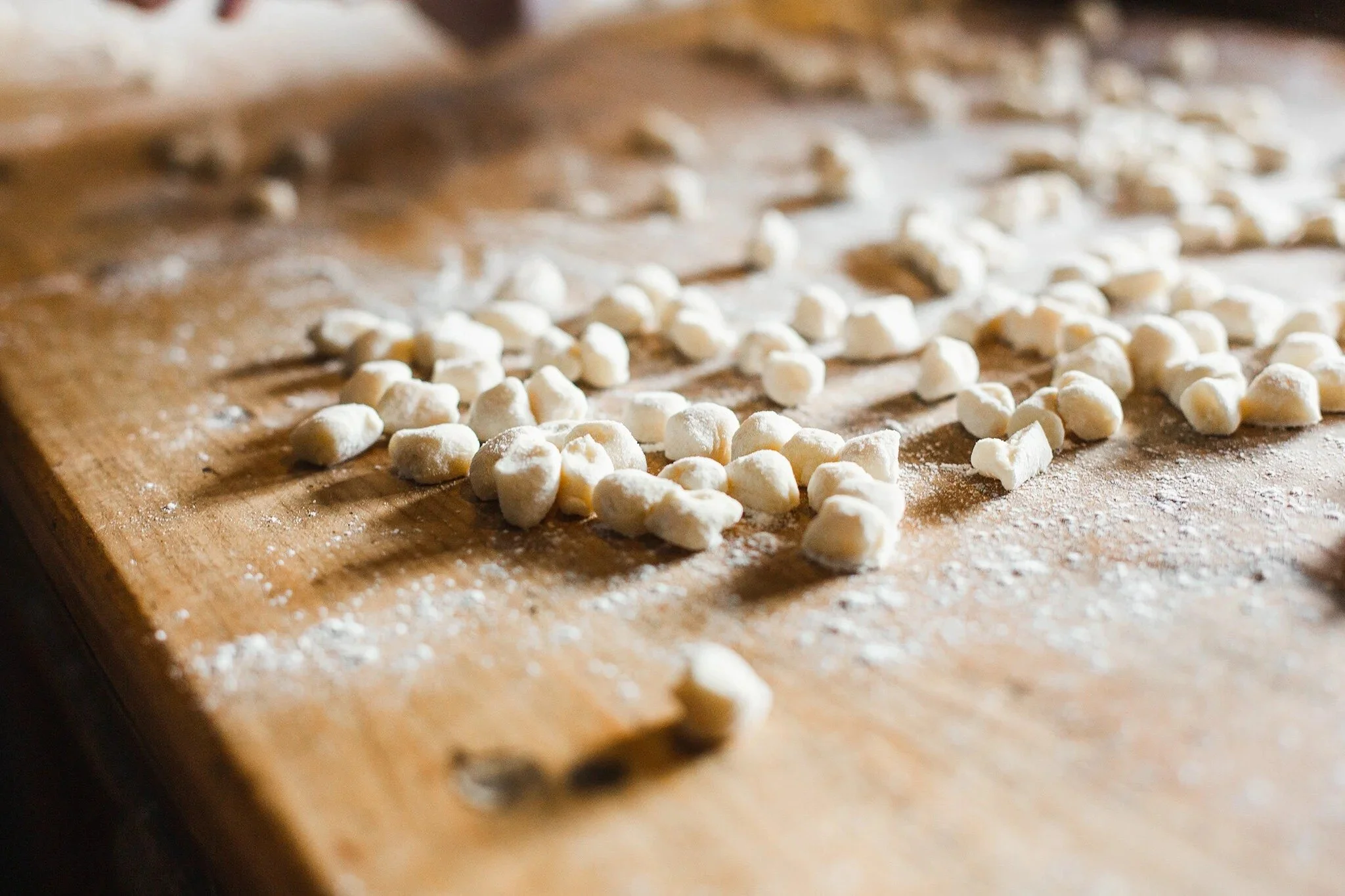
Freshly cut homemade gnocchi resting on a wooden board

Discover the Art of Homemade Pasta 7 & Recipe

At Los Pots Kitchen, we take great pride in creating dishes that highlight the flavours of Argentina, infused with rustic charm and the best local ingredients. This homemade pasta recipe is a perfect example of how simple, fresh components come together to create an unforgettable meal. Whether you're a seasoned cook or completely new to making pasta from scratch, our step-by-step guide will help you master this timeless craft and bring it into your own kitchen.

A Recipe Rooted in History

Argentina's love affair with pasta dates back to the late nineteenth and early twentieth centuries, when waves of Italian immigrants arrived on its shores and brought their culinary traditions with them. Over generations, these recipes wove themselves into the fabric of Argentine cuisine, blending with local ingredients and techniques until pasta became a true staple of the national table. Today, across the country, menus proudly feature an incredible variety of pasta dishes, each carrying echoes of that immigrant heritage while reflecting a distinctly Argentine character. From humble family kitchens to the finest restaurants, pasta night is a cherished tradition that brings people together.

Homemade Pasta Recipe

Serves 4-6

Ingredients:

  • 400g 00 flour, plus extra for dusting

  • 4 large eggs

  • 1/2 tsp salt

  • 1 tbsp olive oil

Method:

  1. Pile the flour onto a clean work surface (or into a large bowl) and make a well in the centre.

  2. Crack the eggs into the well, add the salt and olive oil, and beat gently with a fork.

  3. Gradually draw the flour into the eggs, mixing until a shaggy dough forms.

  4. Knead the dough by hand for 8-10 minutes, until it's smooth, elastic, and no longer sticky. Add a touch more flour if needed.

  5. Wrap the dough in cling film and let it rest at room temperature for at least 30 minutes - this relaxes the gluten and makes rolling much easier.

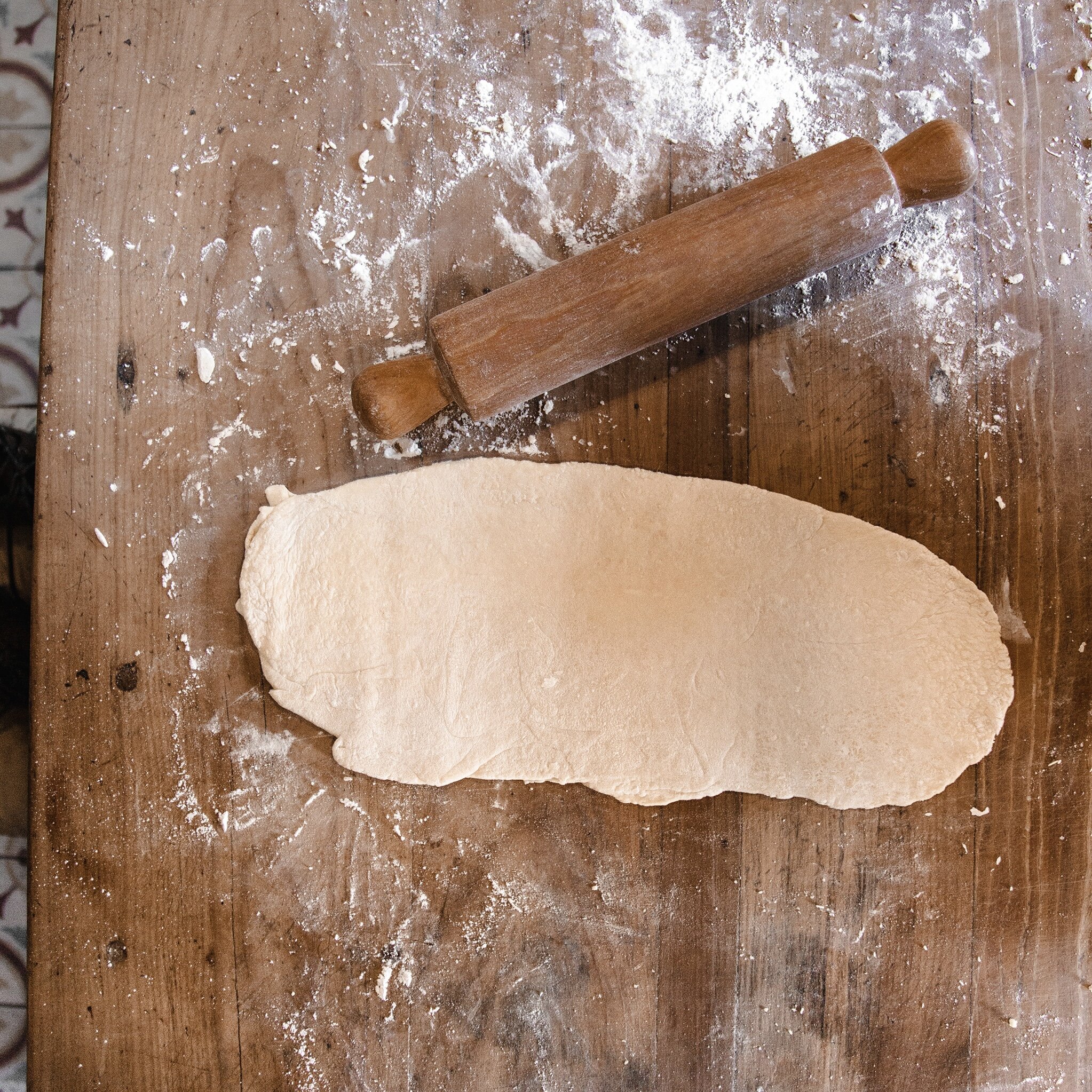
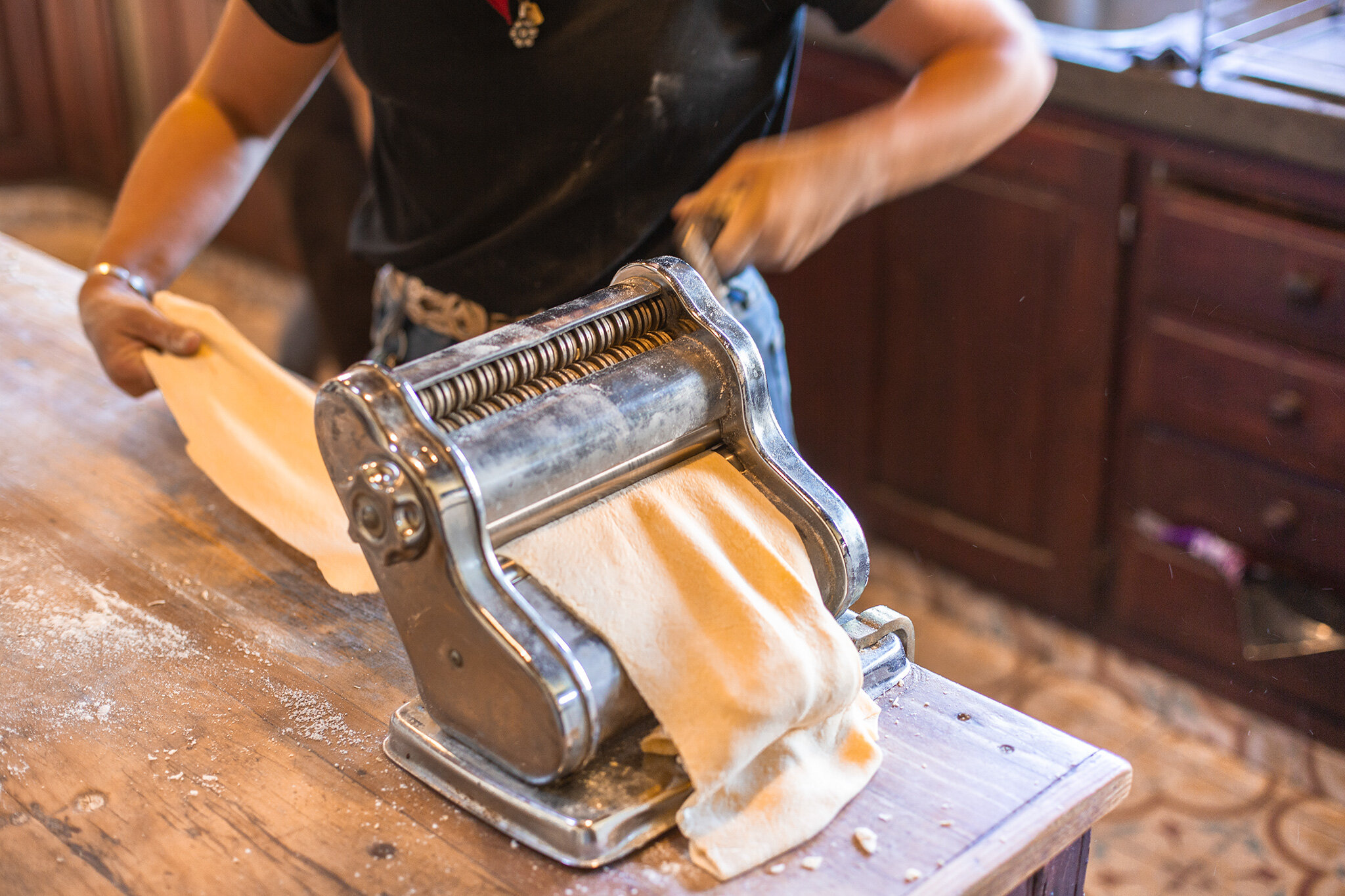
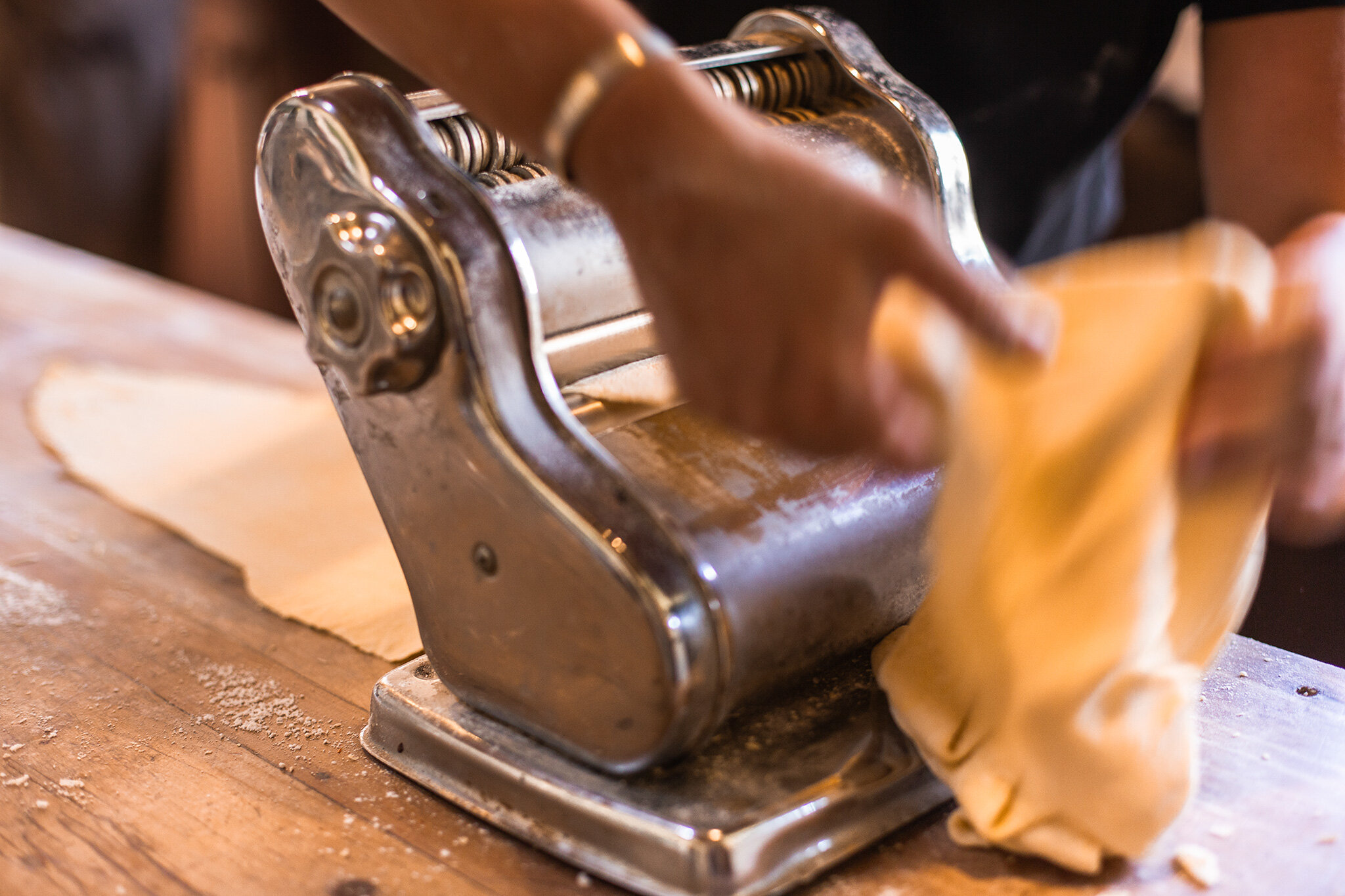
  6. Divide the dough into portions and roll each one out thinly, either by hand with a rolling pin or through a pasta machine, dusting with flour as you go.

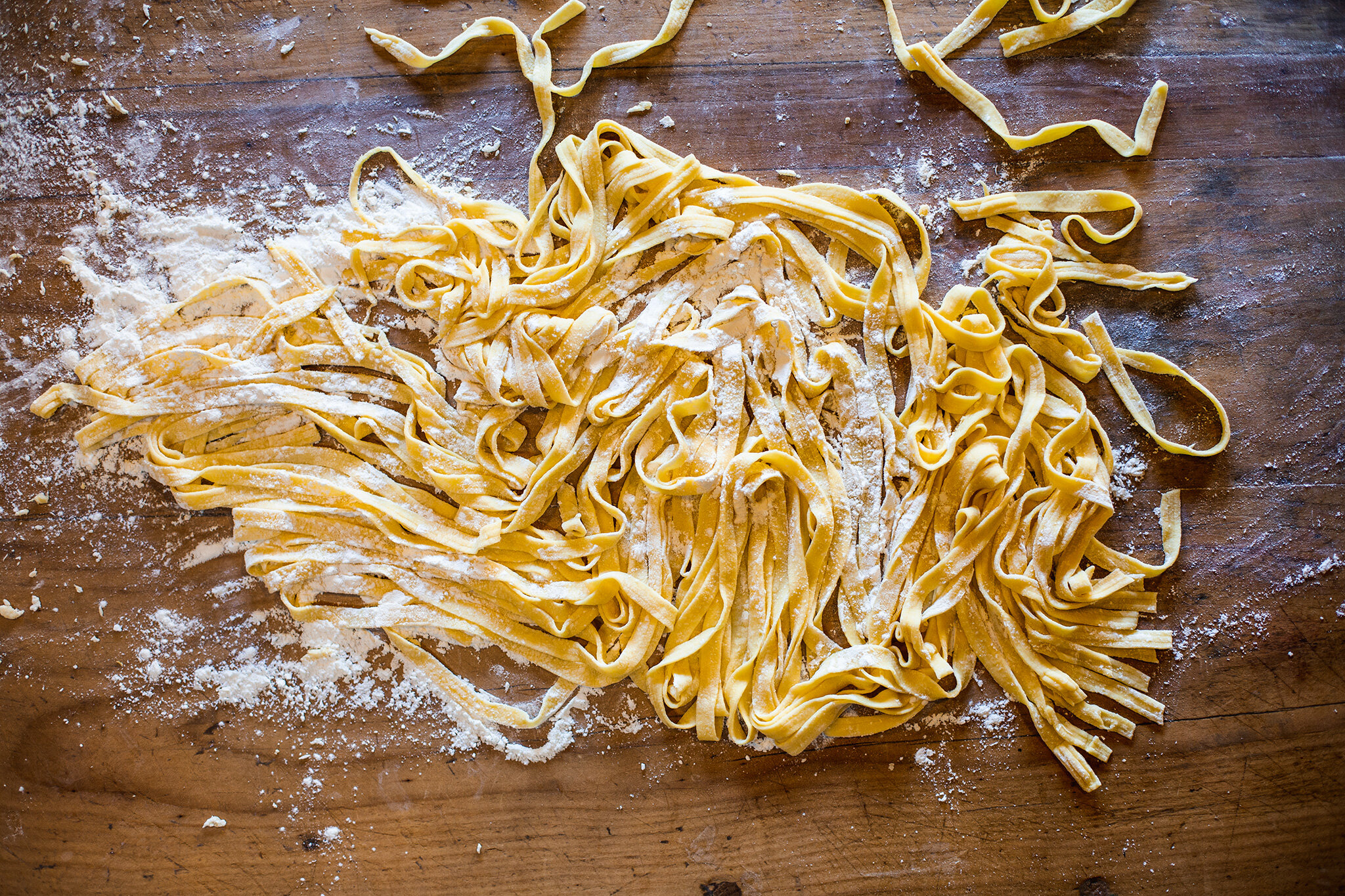
  7. Cut into your desired shape: wide sheets for lasagne, ribbons for spaghetti, or squares for ravioli.

  8. Cook fresh pasta in plenty of salted, boiling water for just 2-3 minutes, until it floats to the surface.

From One Sheet, Endless Possibilities

Here at our estancia, this history comes alive every day in our kitchen. There is something almost meditative about watching our chefs work the dough, kneading it with practiced hands until it reaches just the right texture, elastic yet tender. The rolling of the pasta is where the real artistry shines through. It takes years of practice to develop the feel for how thin to stretch the dough, how much flour to dust beneath it, and how to sense when it's ready to be shaped. Watching our chefs roll it out, layer by layer, is always a delight for guests, many of whom have never seen fresh pasta made entirely by hand.

From that single sheet of dough, an entire world of dishes unfolds. With a bit more thickness and careful layering, it becomes lasagne sheets, ready to be baked with rich sauces and melted cheese. Cut into wide ribbons or delicate squares, it transforms into fresh ravioli, filled with anything from ricotta and spinach to slow-braised meats sourced from our own land. Rolled thin and cut into long strands, it becomes spaghetti, simple yet endlessly versatile, equally at home with a rustic tomato sauce or a silky butter and sage preparation.

Italian Technique, Argentine Soul

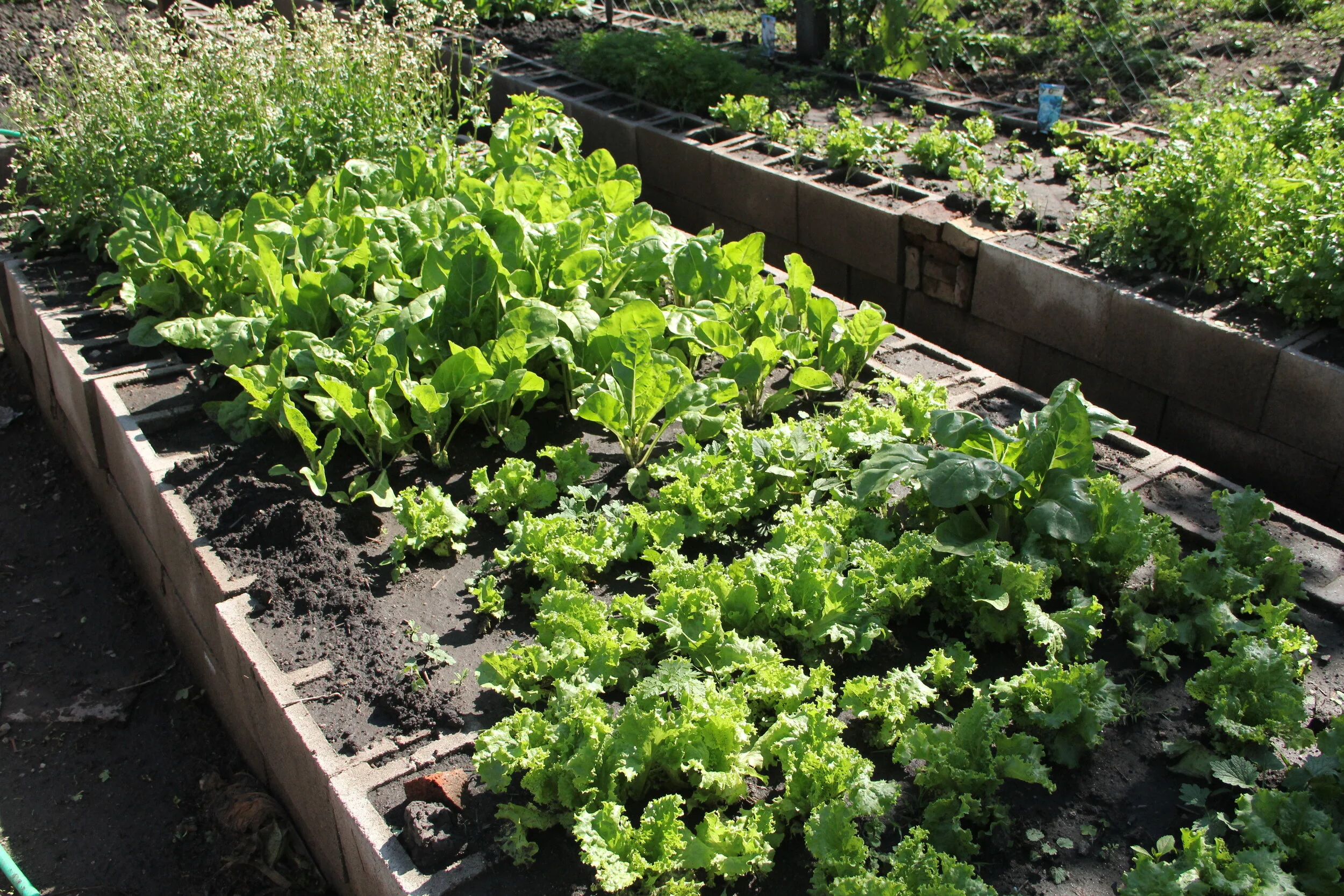
What makes our approach special is the marriage of Italian technique with Argentine soul. We use eggs from free-range hens, flour milled with care, and seasonal vegetables and herbs grown nearby, all combined with the sauces and fillings that reflect our region's character, from grass-fed beef to sun-ripened tomatoes. The result is pasta that feels both familiar and entirely its own, a dish that tells the story of two cultures meeting on one plate.

We invite you to try your hand at this rewarding process. Making pasta from scratch is not just about the final dish, it's about slowing down, working with your hands, and connecting with a tradition passed down through generations. Follow our guide, be patient with the dough, and you'll discover just how easily the authentic taste of Argentina can find a home in your own kitchen.

Butternut Squash Sorrentinos with Blue Cheese Sauce

Butternut Squash Sorrentinos with Two Easy Sauces

Argentines claim that there's nothing in Italy quite like a sorrentino, making them an Argentine invention. Unlike their close relative the ravioli, which aims for a balance between dough and filling, sorrentinos are plump and overstuffed. As with other stuffed pastas, both the sorrentino dough and the filling can be imaginatively flavoured to create an endless number of options. The choice of sauce also plays an important role in the dish. A favourite on the estancia is a butternut squash filling with a butter, sage and garlic sauce or, for the more adventurous, a blue cheese sauce.

The Story of the Sorrentino

Sorrentinos are believed to have been created in Mar del Plata by Italian immigrants from Sorrento, who gave them their home town's name. Whatever their true origin, they're now found on pasta menus across Argentina, and they're always round and generously filled. You can read more in our post on sorrentinos and the Italian influence on Argentine cuisine.

Butter foaming in a hot pan for a sage and butter pasta sauce

Ingredients (Serves 4)

For the pasta:

  • 400g 00 or plain flour

  • 4 eggs

  • A pinch of salt

For the filling:

  • 1 medium butternut squash (about 1kg)

  • 3 garlic cloves, unpeeled

  • A small bunch of chives, finely chopped

  • A pinch of chilli flakes

  • Salt and pepper

For the sage and butter sauce:

  • 100g butter

  • A handful of fresh sage leaves

  • 1 garlic clove, diced

  • A pinch of dried herbs and chilli flakes

For the blue cheese sauce:

  • 150g strong blue cheese (we like Roquefort)

  • A knob of butter

  • A splash of double cream

How to Make Butternut Squash Sorrentinos

  1. Cut the squash in half and roast it at 200C with the garlic for about 45 minutes, until soft enough to peel away from the skin.

  2. Mash the squash and garlic with salt, pepper, the chives and the chilli flakes, then leave to cool.

  3. Mix the flour, eggs and salt into a dough and knead for about 10 minutes until smooth. Wrap it and rest it for 30 minutes.

  4. Roll the dough out with a pasta machine or rolling pin until it is about 1-2mm thick. Cut into 8cm circles.

  5. Put a generous spoonful of filling on half the circles, top each with another circle and press the edges firmly to seal.

  6. Cook in plenty of salted boiling water for 3-4 minutes, until they float.

  7. While the pasta cooks, make your sauce. For sage and butter, melt the butter and add the sage, garlic, dried herbs and chilli flakes. For blue cheese, melt the cheese with the butter and a splash of cream.

  8. Drain the sorrentinos, spoon the sauce over and serve straight away.

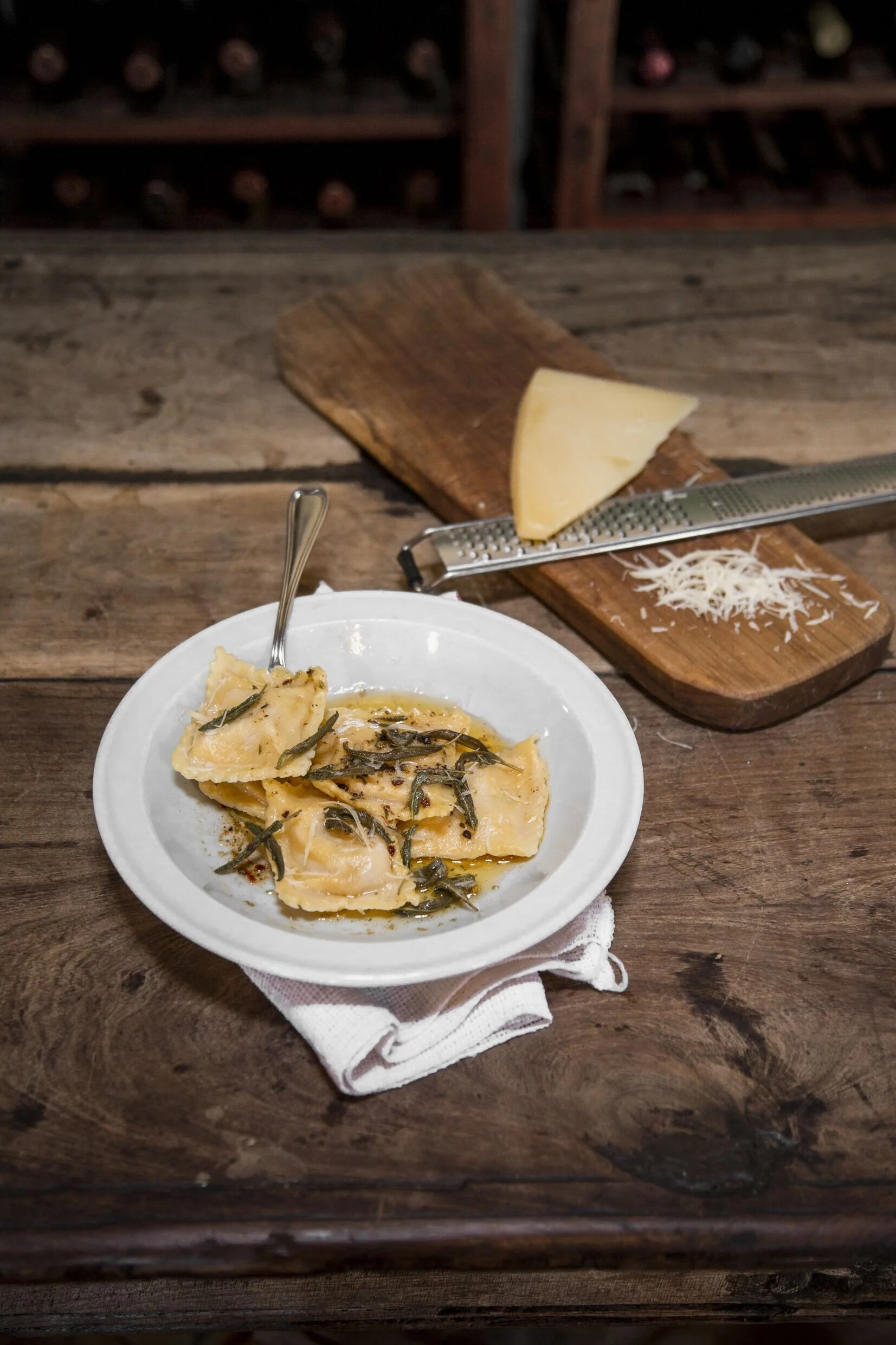
Butternut squash sorrentinos in sage butter sauce, with a wedge of cheese and a grater on a wooden board