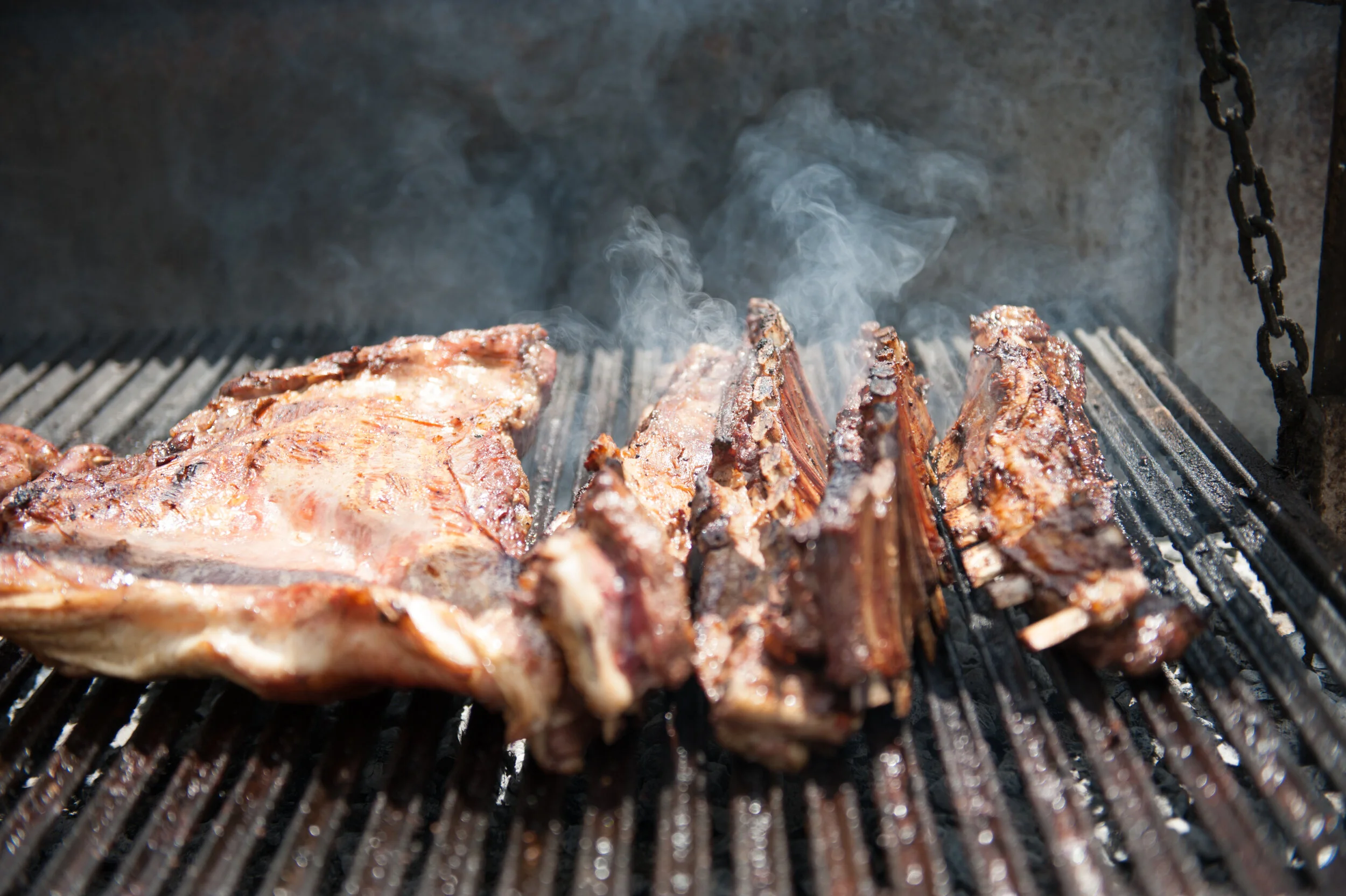

An asado is never just a meal. In Argentina, it's a ritual - a slow, unhurried gathering built around fire, good meat, and even better company. At Estancia Los Potreros, the asado sits at the very heart of daily life, just as it has for generations of gauchos before us.
The Gaucho Origins of the Argentine Asado
The Argentine asado traces back to the gauchos who worked the pampas in the eighteenth and nineteenth centuries. With cattle in abundance and little else on hand, they cooked freshly butchered beef over open flames using nothing more than wood, embers, and simple iron crosses called asadores. There was no need to dress it up - the quality of the meat did all the talking.
From the Pampas to the Parrilla
As Argentina's cattle industry grew, so did the asado's place in national life. What began as a practical way for gauchos to eat became a cornerstone of Argentine culture, from Sunday family lunches to celebrations of every kind. The parrilla replaced the open pit, but the philosophy never changed: cook slowly, over embers rather than flame, and let the fire do the work. Patience is the whole point.
What Goes on the Fire: Cuts and Sides
A proper asado brings a full spread to the table - beef ribs, bife de chorizo, chorizo sausage, morcilla, and often sweetbreads, served alongside grilled vegetables, fresh salads, and crusty bread. Chimichurri finishes the plate without ever getting in the way of the beef itself.
Asado at Estancia Los Potreros, Córdoba
Here in the Sierras Chicas, the asado tradition is very much alive. Much of the beef we serve comes from cattle raised on the estancia using regenerative grazing, so what lands on your plate reflects the land it came from. Guests are welcome to watch the fire being built, take in the smell of wood smoke drifting across the yard, and pull up a chair for a meal that hasn't changed much in a couple of centuries.
Why the Asado Matters to Argentine Culture
For visitors, sharing an asado is one of the most genuine ways to understand Argentina - not through a museum or a guidebook, but through gaucho heritage, hospitality, and rural life as it's actually lived. Whether it's a family table or a working estancia, the asado remains what it's always been: good food, good company, and no reason to rush either one.