The Great Fernet Face-Off: Branca vs. the Rest

No drink is more closely associated with Córdoba than fernet con coca. While Fernet-Branca was first created in Milan, Italy, in 1845, it has found its true home in Argentina, particularly in the province of Córdoba, where the bittersweet spirit is almost always enjoyed mixed with Coca-Cola. Whether shared at a family barbecue, a football match or a New Year's celebration, a glass of fernet con coca has become a symbol of friendship, hospitality and good company.

At Estancia Los Potreros, New Year's Eve is always a memorable occasion, and this year we decided to put Argentina's favourite drink to the ultimate test.

Against the backdrop of one of our iconic Los Potreros New Year's Eve celebrations - with dinner beneath the stars, a spritz station and plenty of dancing - we organised a blind fernet tasting to discover whether the legendary Fernet-Branca could still claim the crown.

Seven different bottles of fernet were sourced from Argentina and the United Kingdom before being decanted into identical bottles to conceal their identities. Hidden among them was the original Fernet-Branca, leaving guests to rely solely on their taste buds to identify Argentina's most iconic bitter spirit.

The tasting revealed just how much the world of fernet has evolved. While Fernet-Branca remains the benchmark, famous for its bold herbal character and unmistakable minty finish, a new generation of craft producers is bringing exciting interpretations of this historic drink.

Among the Argentine contenders, Fernet Beney reflected the mountain herbs of the Sierras with a robust, earthy flavour, while Nero 53 offered a smoother, more refined style. Búho Negro impressed as a modern fernet designed specifically to pair with cola, and Fernet 1882, another favourite throughout Córdoba, delivered its distinctive citrus-forward profile that has earned it a loyal following across the province.

Perhaps the biggest surprise came from Britannica London Fernet, crafted in England. Rather than the assertive bitterness traditionally associated with fernet, it offered softer woodland botanicals alongside subtle notes of hazelnut and cacao, proving just how versatile this spirit can be.

After a night of celebrations, old friendships renewed and new ones formed, guests gathered once again on New Year's Day for a traditional Argentine asado. As everyone enjoyed a leisurely lunch together, the results of the blind tasting were finally revealed, with two delighted winners correctly identifying the genuine Fernet-Branca from the seven samples.

The competition reminded us that while there may be many excellent fernets to discover, fernet con coca is ultimately about far more than the drink itself. It represents gathering around the table, sharing stories, celebrating milestones and enjoying time with friends and family. At Estancia Los Potreros, that spirit of togetherness perfectly reflects the philosophy we live by: nothing without friendship.

Rosé Malbec of Argentina: Fresh Twist on a Classic

Argentina, a land synonymous with the robust and captivating Malbec, has been quietly cultivating a delightful secret: Rosé Malbec. While the deep, complex reds have long held court, a new wave of vibrant, fresh, and irresistibly drinkable pink wines is emerging, showcasing the versatility and charm of Argentina's signature grape in a whole new light.

Forget everything you thought you knew about Malbec; Rosé Malbec is a revelation. It takes the beloved grape's inherent fruitiness, think ripe red berries, plums, and a hint of spice and transforms it into a lighter, crisper, and wonderfully refreshing experience. Perfect for a warm afternoon, a casual gathering, or simply as a prelude to a delicious meal, these rosés are quickly becoming a must-try for any wine enthusiast.

What makes Argentine Rosé Malbec so special? It's often crafted with a delicate touch, ensuring the vibrant fruit notes shine through without becoming overly sweet. The winemakers carefully control the skin contact during fermentation, allowing just enough time to impart that beautiful pink hue and a gentle whisper of the grape's character. The result is a wine that is both familiar in its Malbec heritage and excitingly new in its expression.

Here are a few of our favourites that perfectly capture the essence of this delightful Argentine trend:

Salentein Rosé Malbec: Hailing from the high-altitude Uco Valley, Salentein consistently delivers quality, and their Rosé Malbec is no exception. It's elegantly structured with bright red fruit aromas, a refreshing acidity, and a smooth finish that leaves you wanting another sip. A sophisticated choice for any occasion.
Crios Rosé of Malbec (Susana Balbo): From the pioneering winemaker Susana Balbo, Crios offers a vibrant and expressive Rosé Malbec. It bursts with notes of fresh strawberries and raspberries, balanced by a zesty acidity. It's a testament to Balbo's expertise, showcasing the grape's youthful exuberance in a beautifully crafted wine.

Posada La Matilde Rosé Malbec: For those seeking something with a touch more artisanal charm, Posada La Matilde offers a Rosé Malbec that truly speaks of its terroir. Expect a lovely balance of red fruit and floral notes, with a crisp, dry finish. It's a wonderful representation of the passion and dedication found in smaller Argentine wineries.

So, next time you're at Los Potreros don't overlook the vibrant allure of Argentine Rosé Malbec. It's a testament to the innovation and dynamic spirit of Argentine winemaking, offering a delicious and refreshing take on a beloved classic.

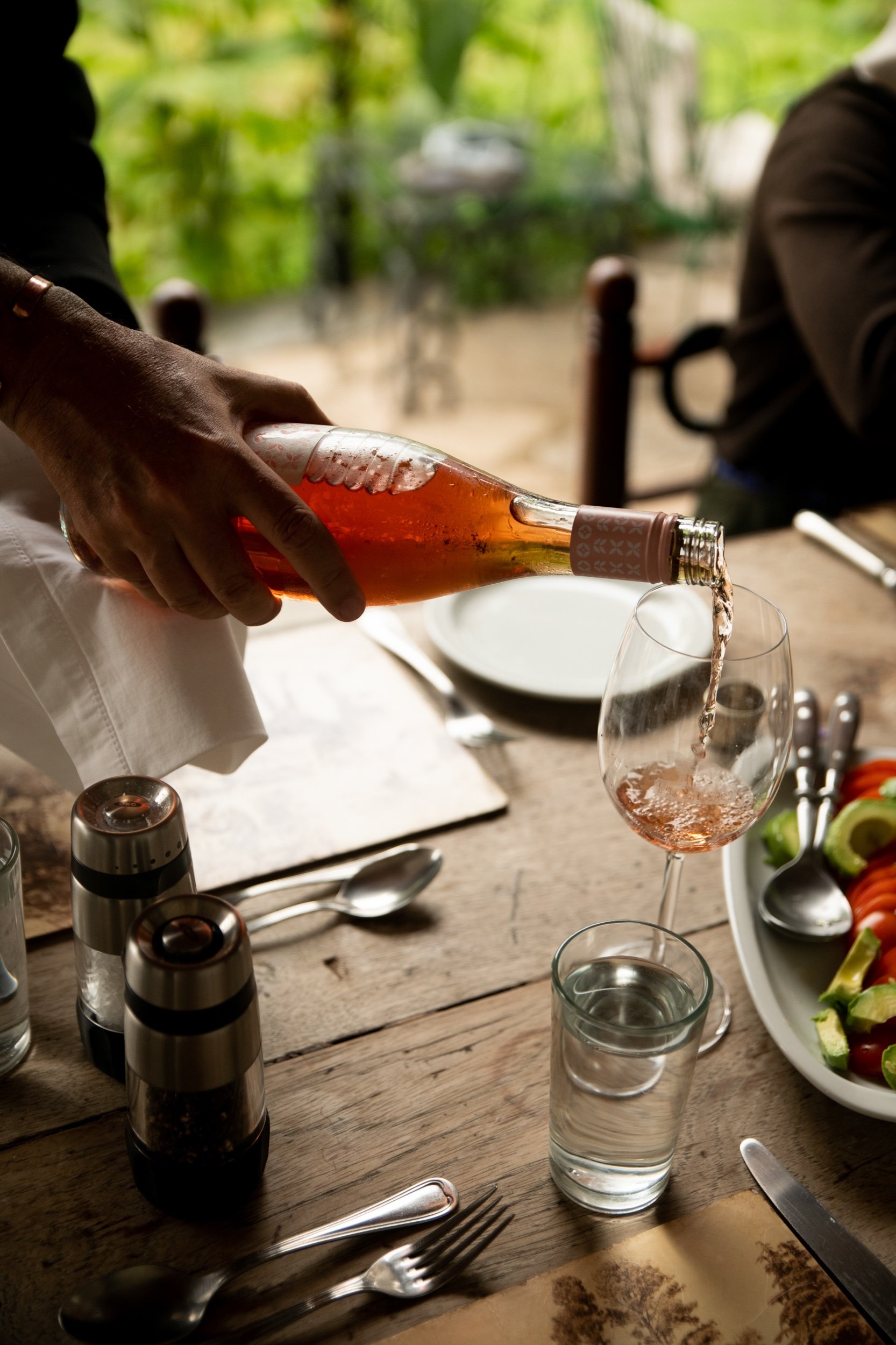
Rose on the rocks with views over the Sierras Chicas

Empanadas: Argentina’s Iconic Delight

No visit to Argentina is complete without tasting an empanada, the beloved pastry that holds a special place in the hearts and those across the country. At Estancia Los Potreros, we serve our own version of this delicious treat, lovingly made in our kitchen using family recipes passed down through generations.

Empanadas are small, savory pastry typically filled with spiced beef, onions, olives, and hard-boiled egg - though every region, and every cook, has their own take. In Córdoba, you'll often find them with a touch of sweetness, while in the north, expect bold, smoky spices. Some are baked to golden perfection; others are fried for a crispy finish. The pastry is very simply made from flour, water, salt, and fat (either butter, lard or vegetable oil), gently kneaded together before being rolled out into disks and filled. 

Much like the Cornish Pasty, empanadas were designed to be the perfect lunch or snack for miners. The curved crust worked as a handle of the empanada, meaning they could easily eat the delicious filling and toss the crust without having to worry about washing their hands or contaminating their food. 

These days the folding of an empanada has a huge amount of cultural significance. The traditional method of a twisted fold is named a ‘repulgue’ and is the classic way to seal the filling. Although these days, often different flavours of empanadas are characterized by different folding and shaping techniques, to allow people to identify them more easily. 

Then you enter the hotly debated question of whether fried or baked empanadas are better. The traditional way to cook them is to bake them, which keeps the pastry flaky, and the casing structurally performs well, holding in the juicy filling well. 

On the other hand, the fried empanada has a certain appeal. They cook in a flash, and the casing is satisfyingly crunchy and crispy. That being said, they do not last as long - and require being consumed almost immediately. Although when they are as delicious as they are, it is not a difficult task.

At the estancia, our empanadas are a guest favourite, whether shared around the fire with a glass of local Rose Malbec or served as part of a relaxed lunch. Along with the traditional beef filling, our chefs love to create other flavours including a delightful broccoli and blue cheese. So, next time you're with us, pull up a chair, grab an empanada, and taste a little piece of tradition.

Making homemade Empanadas in the Los Pots Kitchen

Learning how to fill the perfect Empanada

Learning how to fold the perfect Empanada

Rolling the edges in the traditional style known as the ‘repulge’

An Argentine Empanada

Empanadas ready to go in the oven

Taste Argentina with Traditional Alfajores Marplatenses

Not quite a cake and not quite a biscuit, the alfajor is a sandwich cookie and one of Argentina's best-loved sweets - and the perfect excuse for a generous layer of dulce de leche.

A Little History of Argentina's Favourite Sweet

Alfajores have Arab roots and arrived in Argentina with the Spanish. Over the centuries they've been reinvented across the country, and almost every province now has its own version. Fillings and coatings range from dulce de leche and jam to meringue, coconut, icing sugar, chocolate and even mousse.

What Makes an Alfajor Marplatense Different

Alfajores Marplatenses come from Mar del Plata, on the Buenos Aires coast, and they're the version most Argentines picture when they hear the word. A soft cocoa biscuit is sandwiched with dulce de leche and then dipped in chocolate or dusted with icing sugar.

Ingredients for Our Alfajores Marplatenses

  • 340g self-raising flour

  • 160g cornflour

  • 60g cocoa powder

  • 150g butter

  • 150g caster sugar

  • 2 eggs

  • A splash of milk

  • 1 tsp vanilla extract

  • A jar of dulce de leche

How to Make Alfajores Marplatenses at Home

  1. Cream the butter, sugar and vanilla together.

  2. Add the eggs and mix well with a fork, then add the milk.

  3. Add the dry ingredients in two stages, with a little more flour if needed, until it comes together like pastry. If it feels dry, add another splash of milk.

  4. Chill the dough for at least half an hour.

  5. Roll it out and cut it into circles.

  6. Bake at 180°C for about 10 minutes, until the biscuits are firm but still soft when pressed.

  7. Leave them to cool, then sandwich pairs together with dulce de leche. Finish by dipping in chocolate ganache or dusting with icing sugar.

A thick dulce de leche, sold as "repostero" in Argentina, holds its shape best between the biscuits.

Tea Time on the Veranda at Los Potreros

At the estancia, alfajores often appear at afternoon tea on the veranda after a long ride, alongside a pot of tea and whatever cake the kitchen has made that day. They rarely last long.

Chocolate alfajores filled with dulce de leche being dusted with icing sugar

The Kitchen at the Heart of Estancia Los Potreros

The Kitchen at the Heart of Estancia Los Potreros

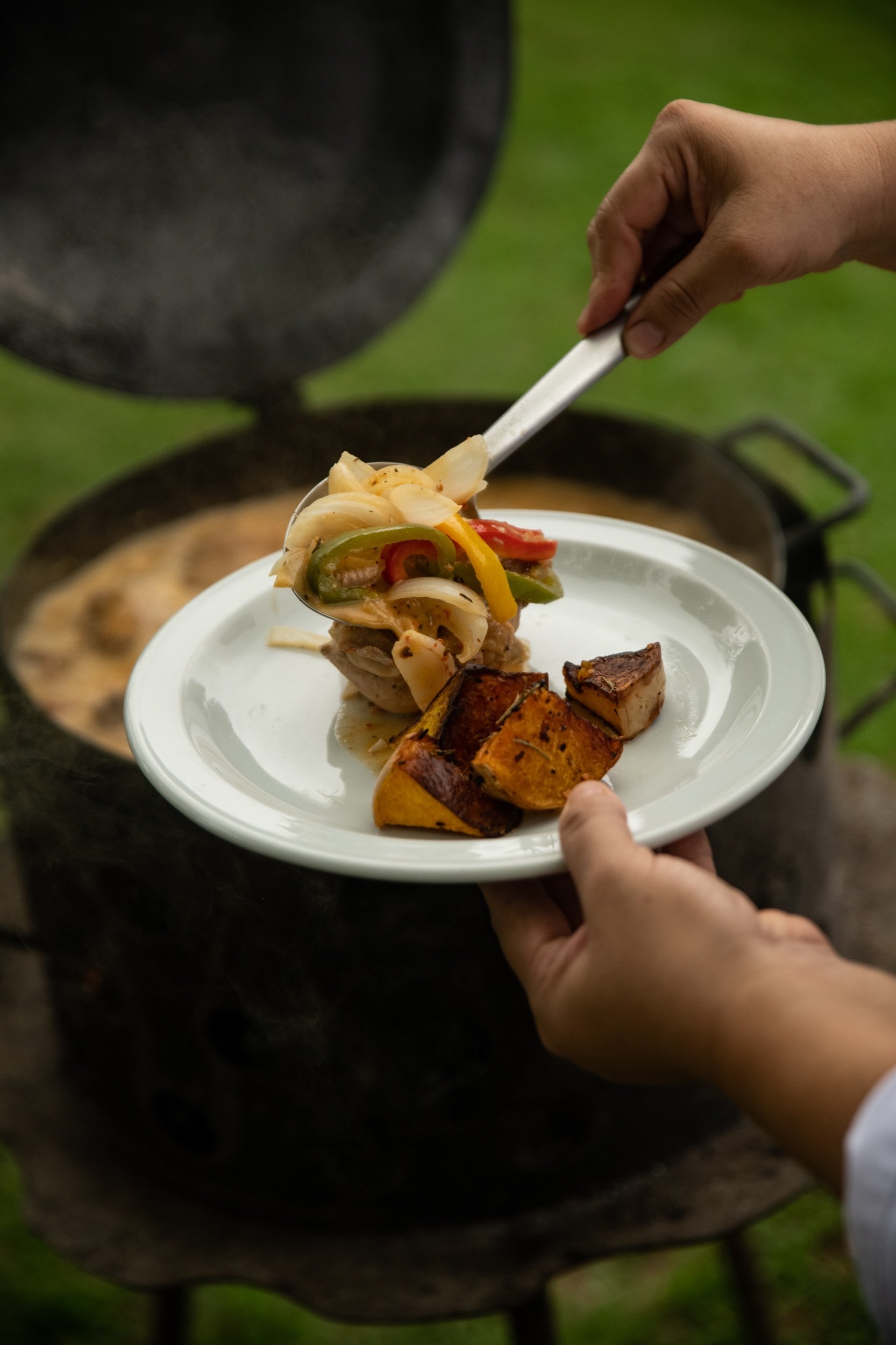
We have been welcoming guests to Los Potreros (The Enclosures) since the 1940s and our kitchen provides everyone who stays here with an insight into the delights of Argentine cuisine. Visitors discover the art of making and savouring traditional mate tea, the secrets to getting the best flavours from Argentina’s famous beef, and the family recipes behind the sumptuous cakes that are baking continuously in the original wood-burning oven. The kitchen is, without a doubt, the heart and soul of the estancia.The pleasures of Argentine food are also extended to the outdoors, with guests enjoying their meals under the shade of the verandah or a nearby tree. Their friendly chatter over the dining table is accompanied by the lively chirping of monk parakeets in the branches above.

Parrilla Pizza: A Los Potreros Speciality

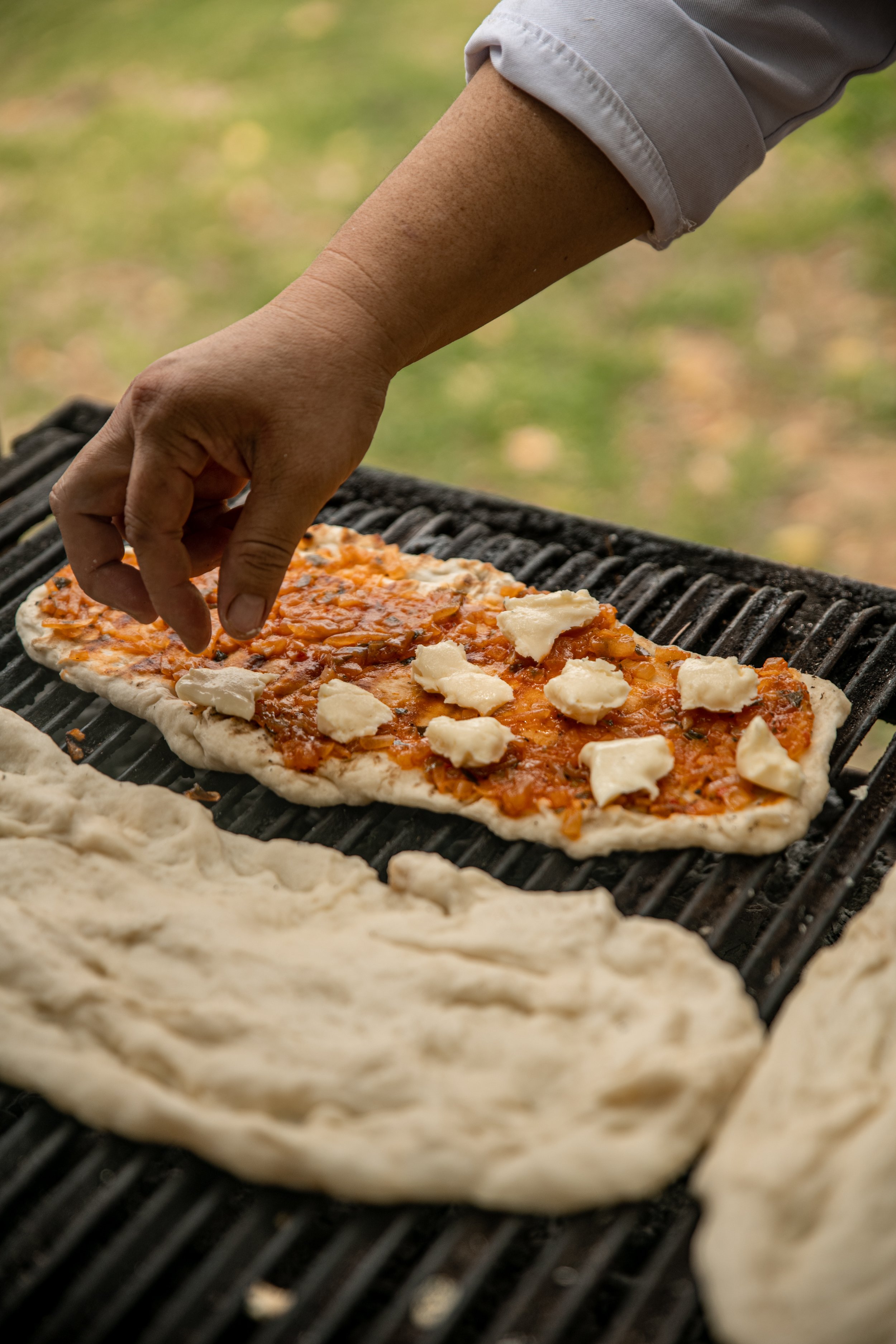
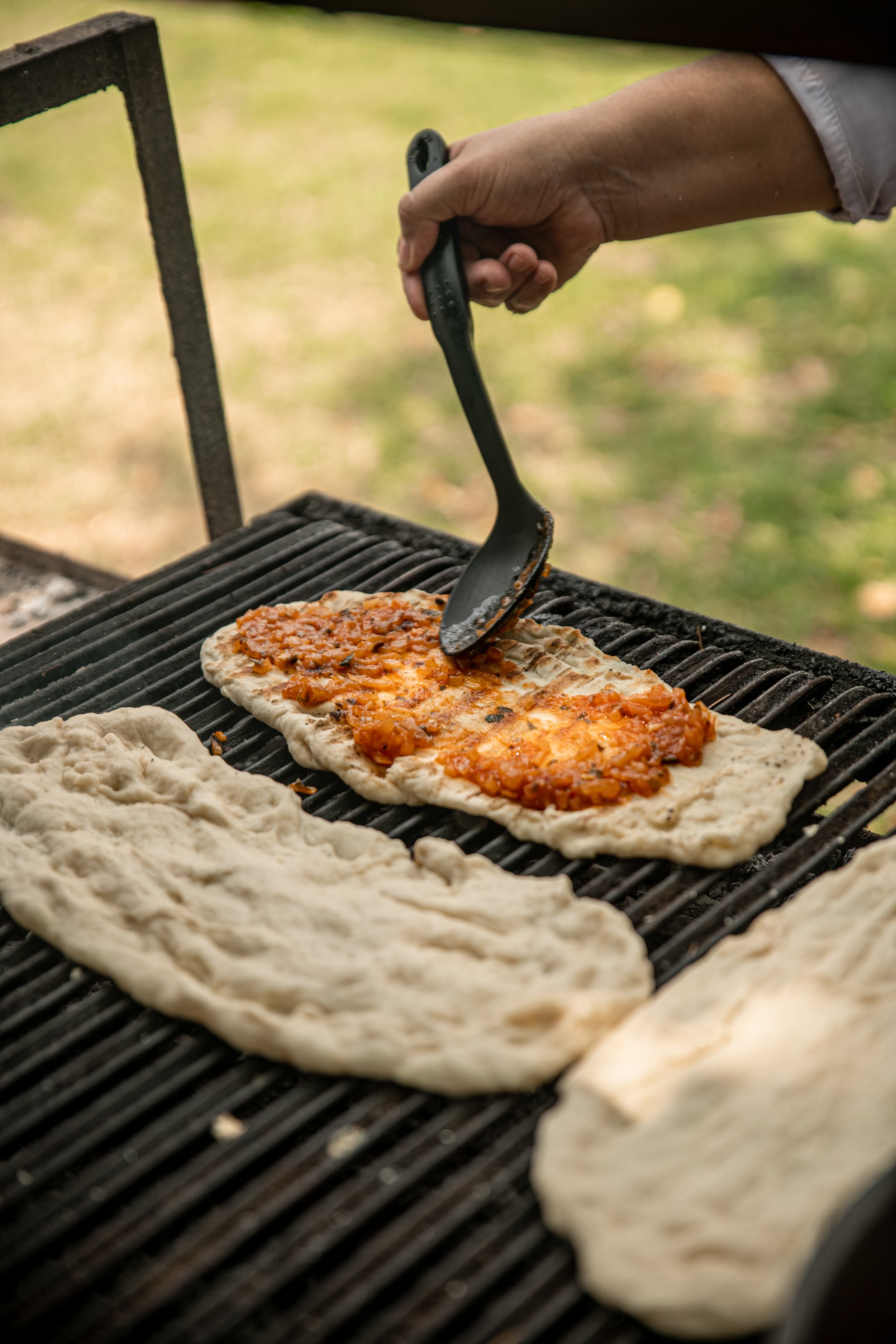
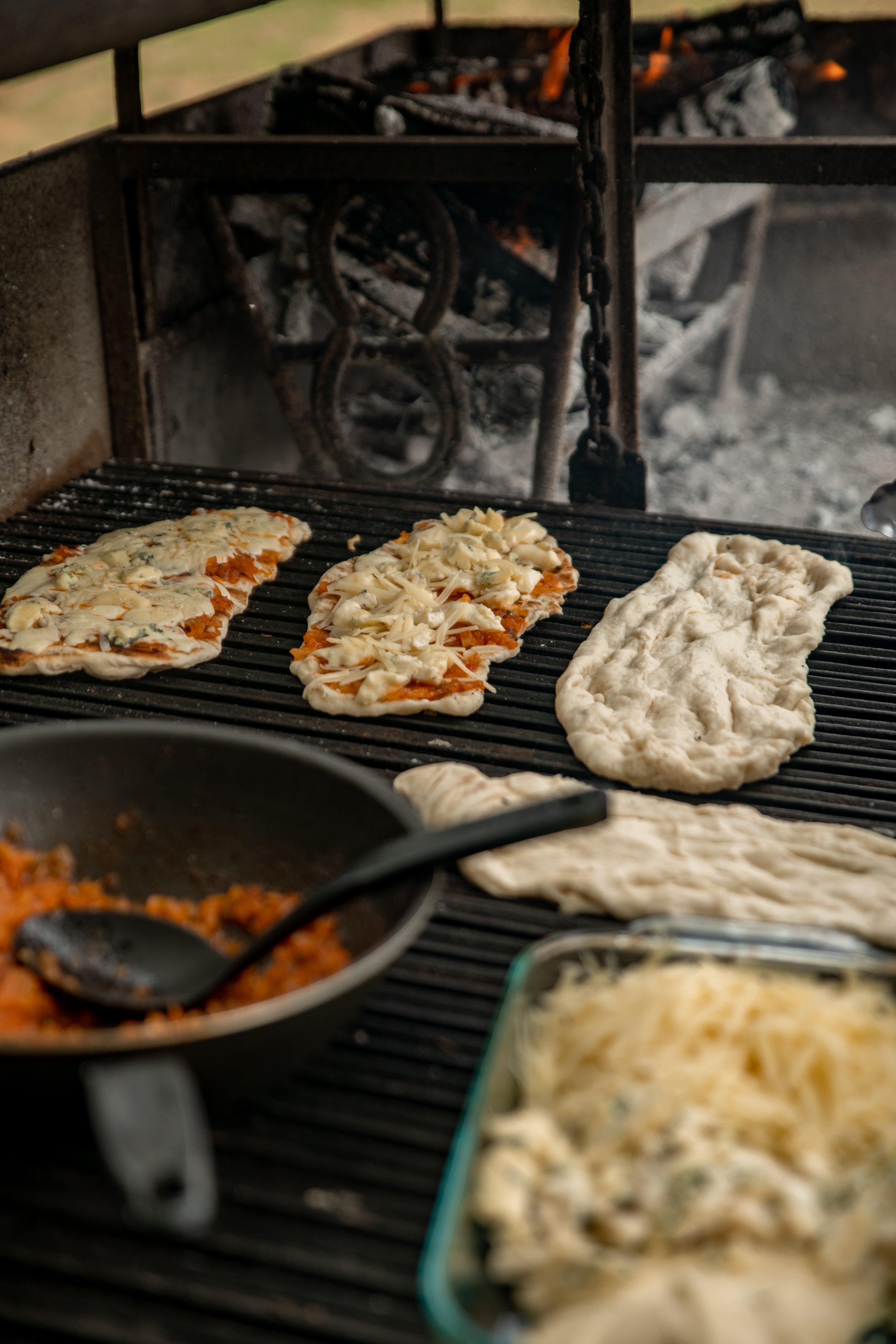
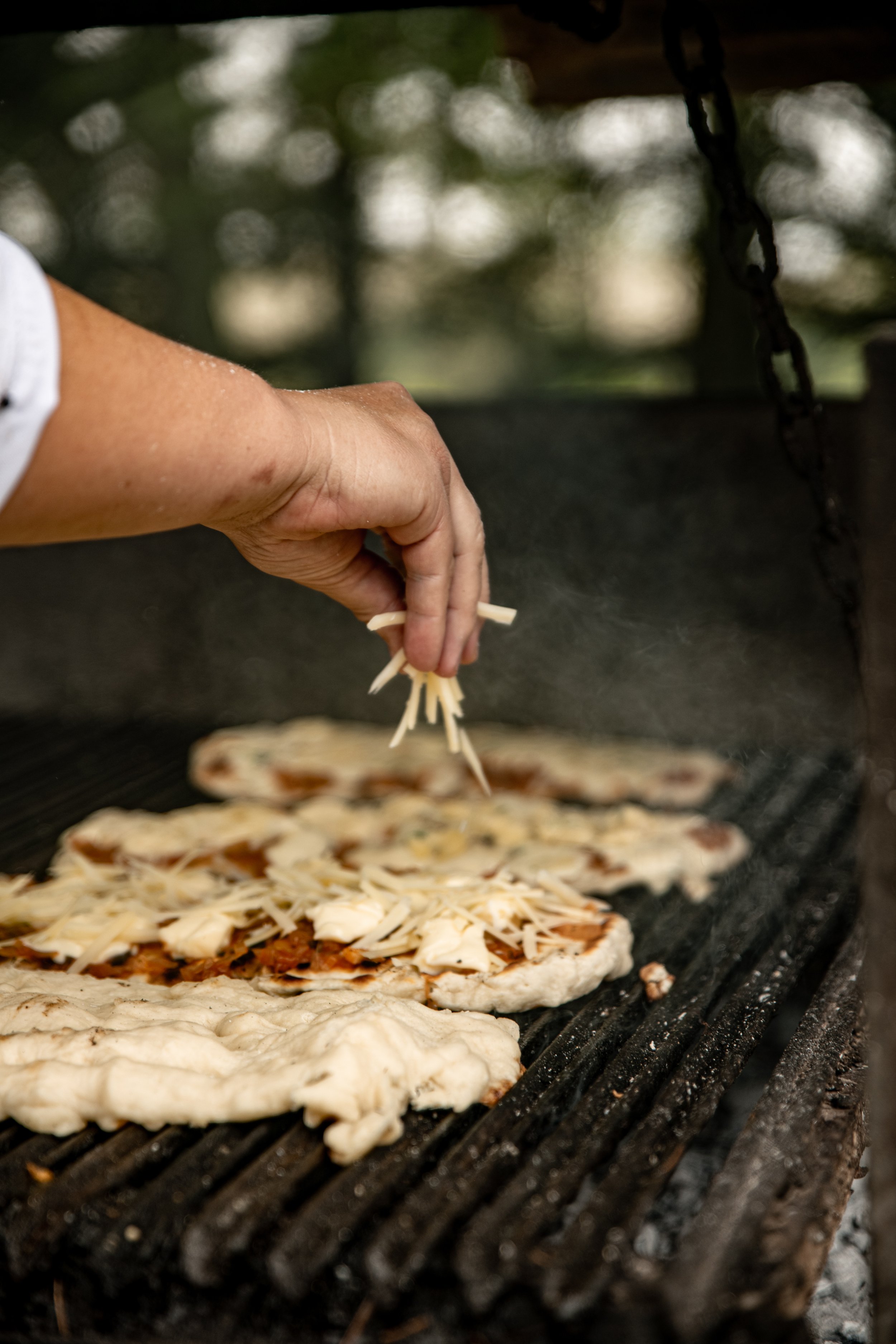
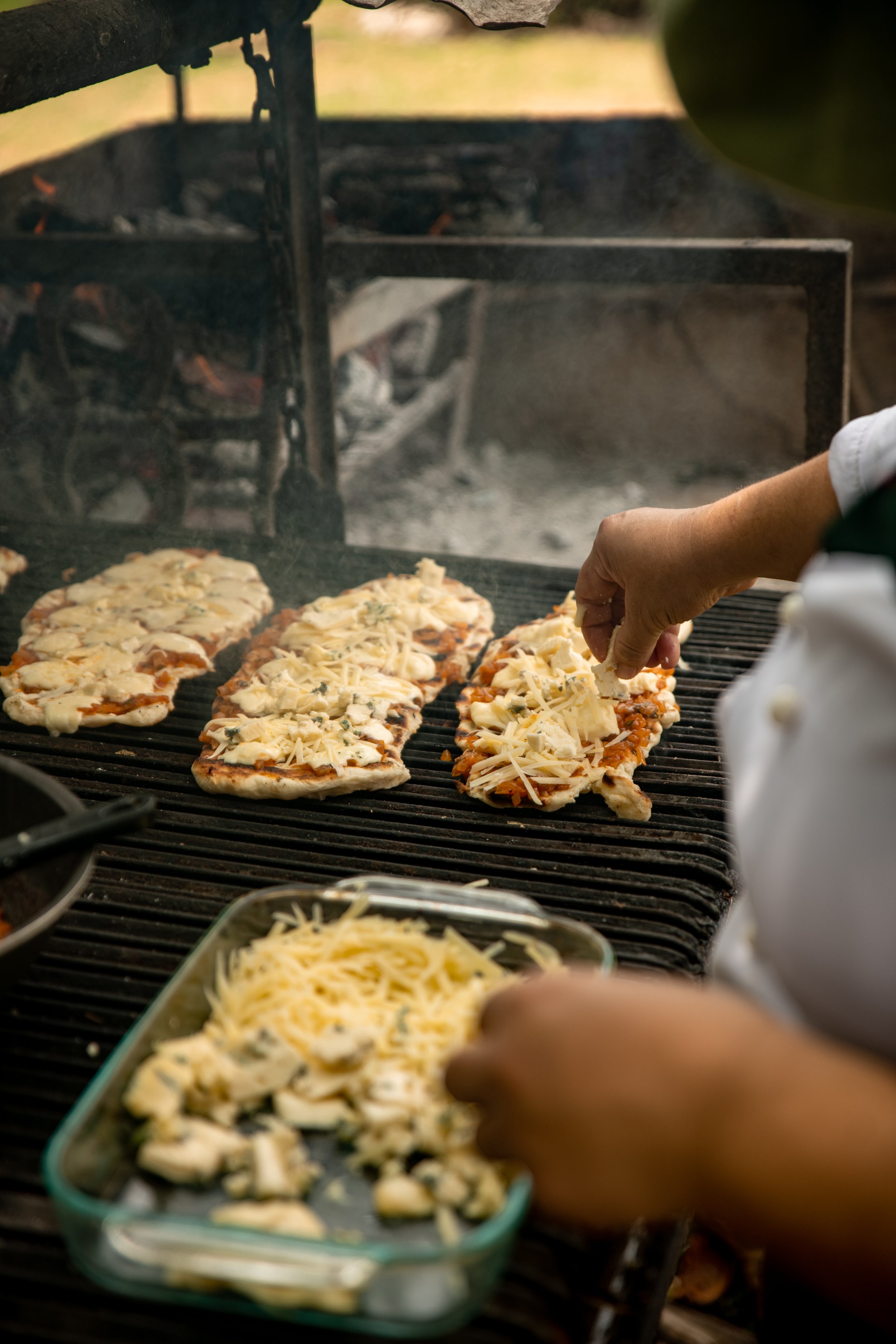
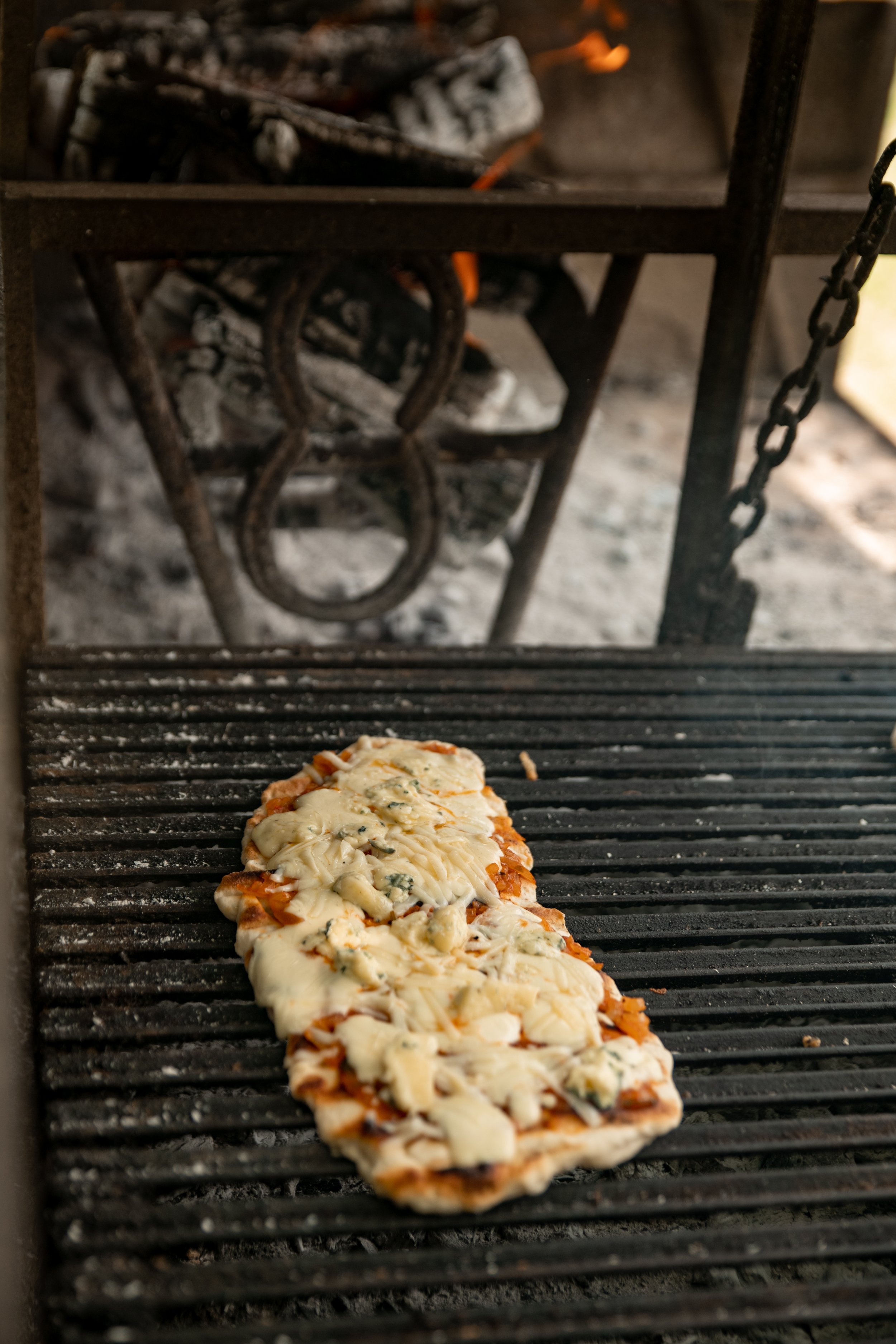
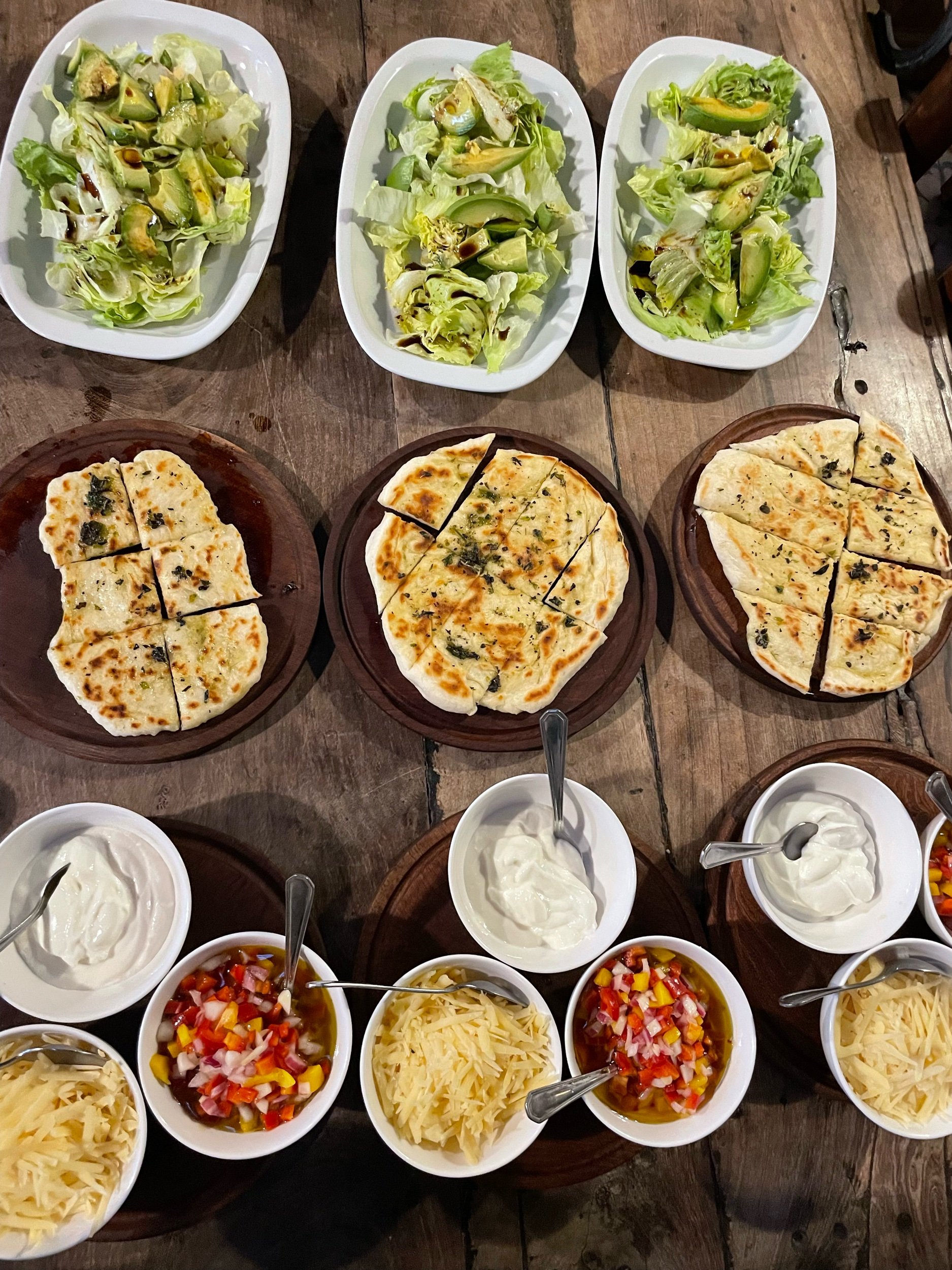
This is a Los Potreros speciality - the smoky taste of a pizza base cooked outdoors on the parrilla, combined with four different Argentine cheeses and a rich tomato sauce. It's one of our most popular lunches, and alongside serving it as a meal in its own right, we often use it as a picada before an asado.

This traditional Argentine pizza is grilled to perfection, giving it a smoky flavour and crispy crust, all while using the finest, locally sourced ingredients. Perfect for an outdoor meal, this dish brings together the best of Argentine culinary traditions and the unforgettable flavours of the grill.

Parrilla Pizza Recipe

Serves 6

For the sauce and toppings:

  • 375ml tomato passata

  • Fresh basil and oregano

  • 150g cheddar cheese, grated

  • 150g blue cheese, crumbled

  • 150g mozzarella

  • 150g additional hard cheese (we use an unaged Parmesan)

  • 2 tsp dried oregano

  • 2 tsp chilli flakes

  • 2 garlic cloves, chopped

  • 2 onions, diced

For the dough:

  • 2 tsp dried yeast

  • 1 tsp sugar

  • 450ml warm water

  • 600g 00 flour, plus extra for dusting

  • 1/2 tsp salt

  • 2 tbsp olive oil

Method:

Preheat the oven to 200ºC/390ºF, or light your fire if you're cooking on a grill or outdoor pizza oven.

To make the dough, combine the flour and salt in a bowl and make a well in the centre. Pour in the yeast mixture along with the olive oil and warm water, then knead for around 10 minutes until the dough is smooth and no longer sticks to your hands - add more flour if it's too sticky, or more water if it becomes too dry.

Using floured hands, transfer the dough to a lightly oiled bowl, cover with a tea towel, and leave to sit for an hour until it has doubled in size.

While the dough proves, make the sauce by sautéing the garlic and onions, then adding the tomato passata and herbs, and allowing it to cook through. Grate the cheese and leave it out of the fridge - this helps it melt faster later on.

Divide the dough into two portions. On a lightly floured surface, roll and stretch each portion into a large, thin circular or rectangular shape. Transfer onto a lightly floured baking tray and repeat with the second portion.

If cooking on an outdoor grill, make sure you have plenty of coals, rub a little olive oil into the dough so it doesn't stick, and cook on each side. If cooking in the oven, place the baking tray in the hot oven and flip the dough as it starts to colour - this happens quickly if the oven is hot. If using a pizza oven, transfer the dough directly in and let it turn golden on each side.

Remove from the heat, spread the tomato sauce over the base, and sprinkle with cheese and any remaining herbs. Argentines often add parma ham, onion, or fresh olives as toppings. Once topped to taste, cook again just long enough for the cheese to melt.

April Flavours of the Sierras Chicas

April in the Los Pots Kitchen brings a bounty of seasonal ingredients and unique flavours that celebrate the changing seasons in Argentina. As we transition from summer to autumn, our kitchen team at Estancia Los Potreros prepares hearty, fresh dishes that reflect the rich traditions of Argentine cuisine. Experience the best of local, seasonal cooking, with ingredients sourced from our own gardens and local suppliers.

Here in the Sierras Chicas, autumn arrives gently - cooler mornings, golden light over the hills, and a landscape shifting from summer's greens to russet and amber. This is a season of transition in the kitchen too, as we move away from the bright, light dishes of summer toward the warmer, earthier flavours that define Argentine autumn cooking.

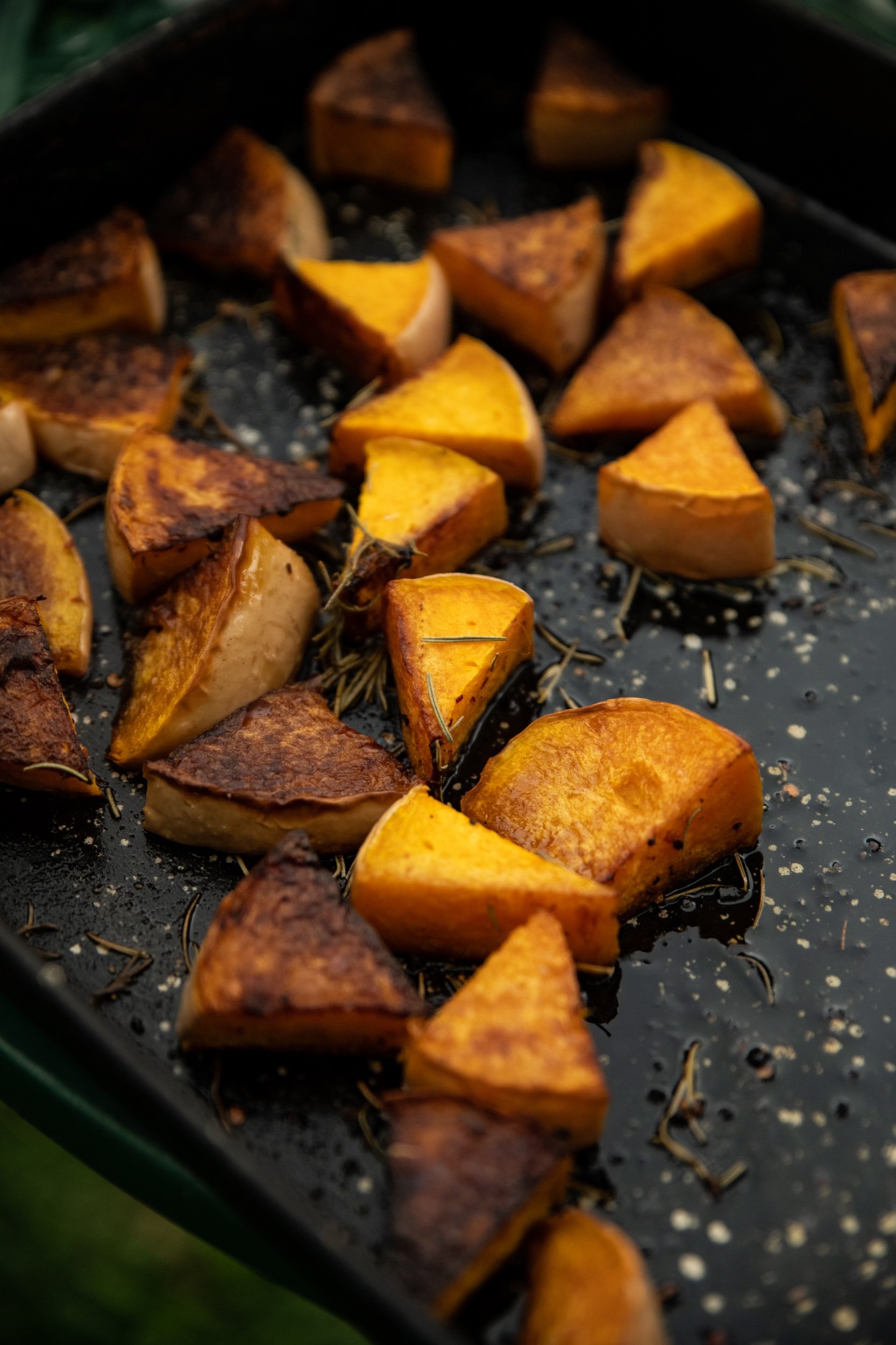
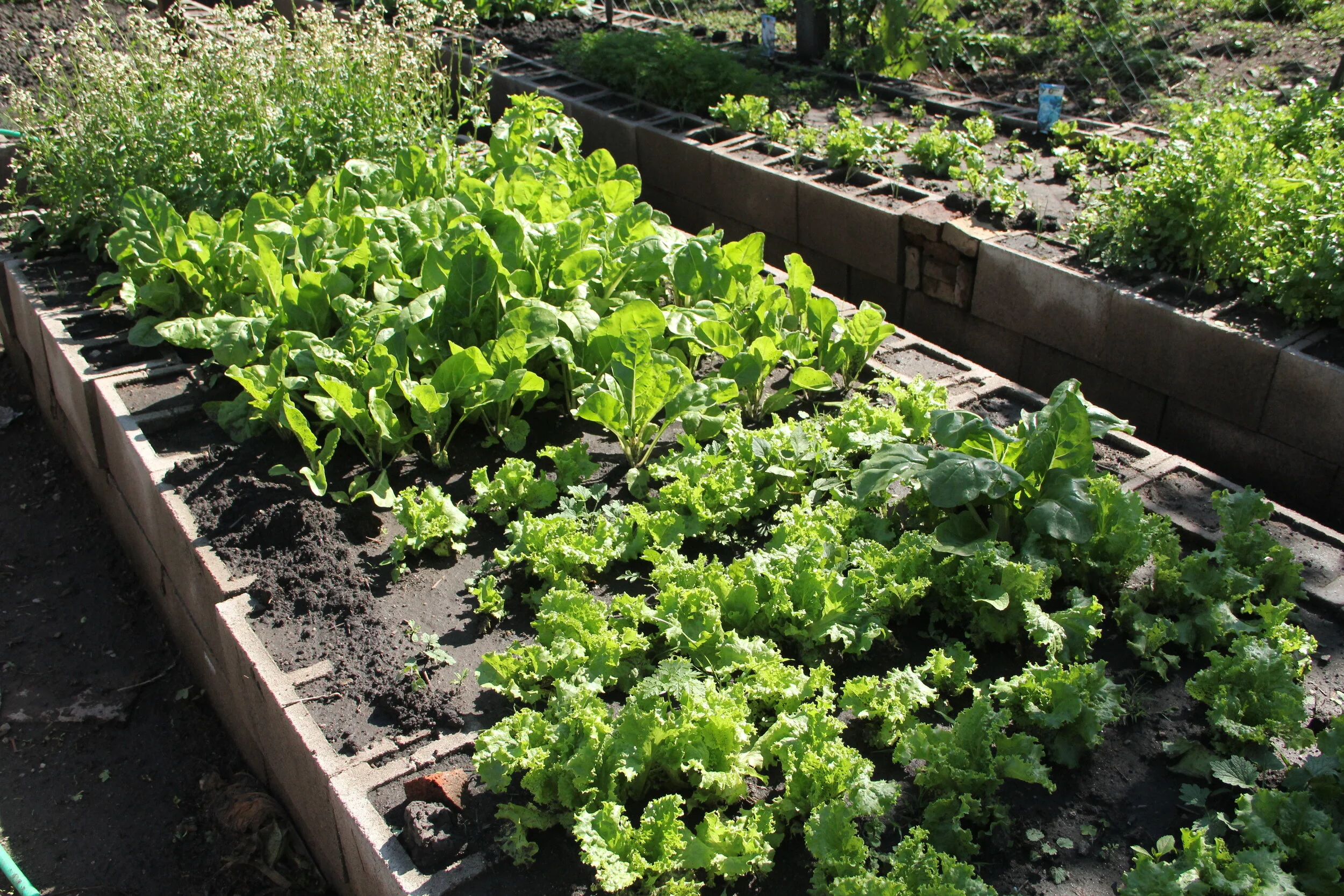
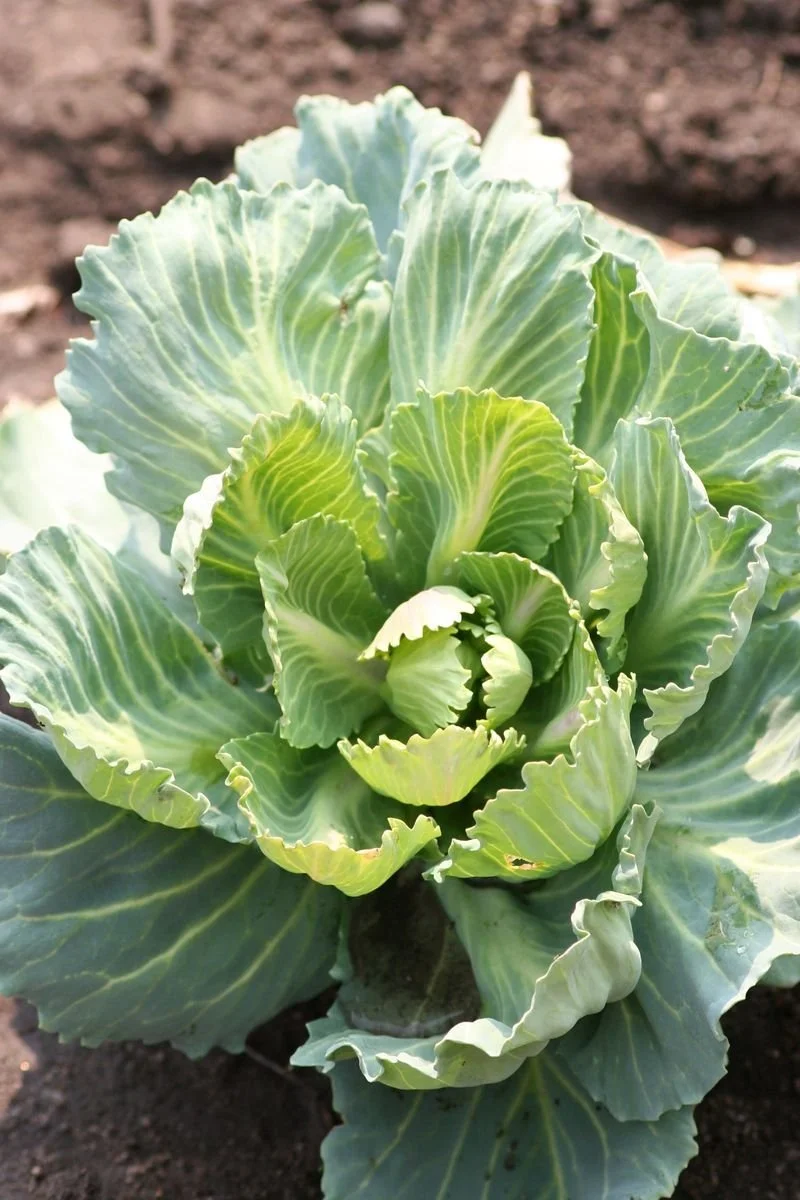
Our gardens are especially generous this month. Acelga (Swiss chard) and spinach come in thick, dark bunches, perfect for tartas and empanadas. Beets, turnips, and radishes pull from the soil with vivid color, while celery, fennel, and leeks add depth to slow-cooked stews and broths. Cabbage and Brussels sprouts, at their sweetest after the first cool nights, find their way into roasted side dishes alongside our grass-fed beef. Sweet potato - batata - becomes a kitchen staple, roasted whole in the coals or folded into warming purées.

Citrus is where April truly shines in the Sierras Chicas. Oranges, mandarins, lemons, and grapefruit ripen through the region this month, their brightness a perfect counterpoint to the richness of autumn cooking. We use them in everything from marinades for grilled meats to simple desserts finished with candied peel. Alongside the citrus, apples, pears, and quince come into season -the quince in particular destined for our own dulce de membrillo, a tradition we honor every year, simmered slowly and served alongside local cheeses.

Avocados, too, reach their peak in April, adding a creamy richness to salads built around our garden greens: watercress, escarole, and chicory, all harvested just steps from the kitchen door. And as the sierra nights grow crisper, we begin drawing on the region's walnuts and almonds, toasted and folded into salads or used to finish a dish with a bit of crunch and warmth.

What makes this season special is not just the ingredients themselves, but the rhythm they set. Cooking with what the land offers in a given month means every dish tells you exactly where you are in the year. An April table at Los Potreros might feature a chard and cheese tarta, slow-roasted root vegetables from our garden, grilled beef finished with an orange and herb marinade, and a simple dessert of poached pears with local honey. Nothing traveled far to reach the plate, and everything reflects this particular moment in the Sierras Chicas.

This commitment to seasonal, local cooking is at the heart of what we do. It connects our kitchen to the land around us, honours the traditions of Argentine cuisine, and ensures that every meal - simple or celebratory - captures the true character of the estancia and the season we're in.

Sweet and Simple Fig Jam Recipe

This easy fig jam makes the most of the figs that ripen across the estancia at the end of summer. It's perfect spread on toast, served with cheese, or used in your favourite desserts, and it's simple enough for first-time jam makers.

Figs From Every Corner of Estancia Los Potreros

As summer stretches on, figs appear everywhere, from the trees at our cattle station and the garden at Potrero de Niz to a few secret bushes by the swimming pool. Sweet on their own, they also pair beautifully with cheese and meat, which is why so many of them end up in jars of jam and chutney. Making jam is our way of keeping a taste of late summer on the table through the colder months ahead.

Ingredients for Our Simple Homemade Fig Jam

Makes 3 jars

  • 1kg figs, stems removed and cut into 1cm pieces, skin on

  • 350g caster sugar

  • 60ml lemon juice

  • 120ml water

  • 2 tbsp fresh lemon juice

How to Make Our Fig Jam, Step by Step at Home

  1. Put the figs and sugar in a heavy-based saucepan.

  2. Heat on a medium heat for 15 minutes, stirring now and then, until the sugar has almost dissolved.

  3. Add the water and both lemon juices and cook for another 30 minutes on the same heat, stirring occasionally.

  4. Spoon into sterilised jars while still hot.

Tip: don't scale the recipe up in the same pan, as it burns very easily.

How to Sterilise and Seal Your Jam Jars at Home

  1. Put the jars (without lids) in a hot oven for 10 minutes.

  2. Take them out one at a time and fill to the top.
  3. Wipe the lids with alcohol and screw them on.
  4. Turn the jars upside down for 24 hours to seal.

How We Serve Fig Jam on the Estancia Table

At breakfast it goes on fresh bread and toast. At lunch it sits on the cheese board, and it's lovely with cold meats too. Kept in a cool, dark cupboard, an unopened jar will see you through to next summer's figs.

Lemon, Ginger & Mint Lemonade Recipe

Homemade Lemonade: A Refreshing Taste of Estancia Life

There are few drinks more refreshing than a glass of homemade lemonade on a warm Argentine afternoon. Simple, fragrant and naturally cooling, this traditional drink has long been a favourite at Estancia Los Potreros, where fresh lemons, aromatic ginger and garden mint come together to create the perfect balance of sweetness and citrus.

Life on an estancia revolves around the rhythm of the seasons. During the warmer months, days are often spent riding across the sierras, working with cattle or enjoying long lunches with family and friends. After hours under the Córdoba sunshine, a chilled jug of freshly made lemonade is the perfect way to cool down.

While Argentina is world-famous for its Malbec, mate and exceptional wines, homemade fruit drinks have always been part of everyday life. Citrus fruits grow abundantly across the country, particularly in the northern provinces, making lemons and limes a staple ingredient in kitchens throughout Argentina. Families often prepare refreshing drinks using seasonal fruit, serving them at lunch or alongside an afternoon snack.

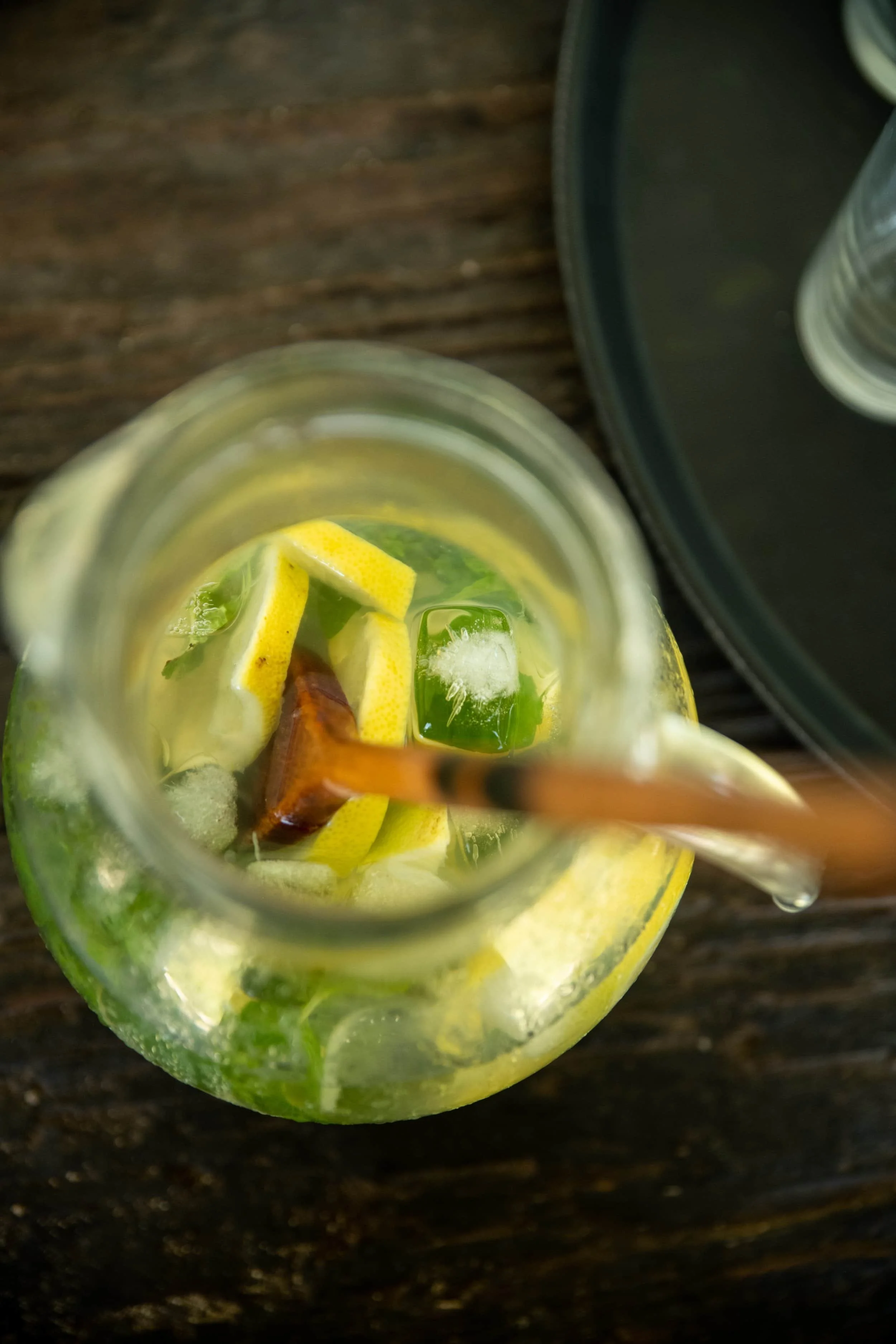
Our version has become a favourite at Estancia Los Potreros thanks to the addition of fresh ginger, which gives the lemonade a gentle warmth and subtle spice. A touch of honey adds natural sweetness, while fresh mint from the garden makes every glass even more refreshing.

Whether you're remembering your visit to the estancia or bringing a little of Argentina into your own home, this recipe is wonderfully simple to recreate.

Estancia Lemonade Recipe

Ingredients

  • 3 lemons or limes, peeled

  • ½ root of fresh ginger

  • 2 tsp honey

  • Sugar, to taste

  • Cold water

  • Ice

  • Fresh mint sprigs to serve

Method

Place the peeled lemons, ginger, honey and a splash of hot water into a food processor. Blend until smooth, adding a little more water if needed to create a thick paste.

Pour the mixture through a fine sieve into a jug filled with ice. Top up with cold water and stir well, adding sugar to your preferred level of sweetness.

Serve immediately with plenty of ice and fresh mint for the ultimate refreshing drink.

At Estancia Los Potreros, it's often enjoyed after a morning ride, shared around the table before lunch, or served as guests relax and take in the spectacular views across the Córdoba hills. Sometimes, the simplest recipes become the ones that create the fondest memories.


Summer Asados, Outdoor Meals, and Red Wine

A Taste of Argentine Summer

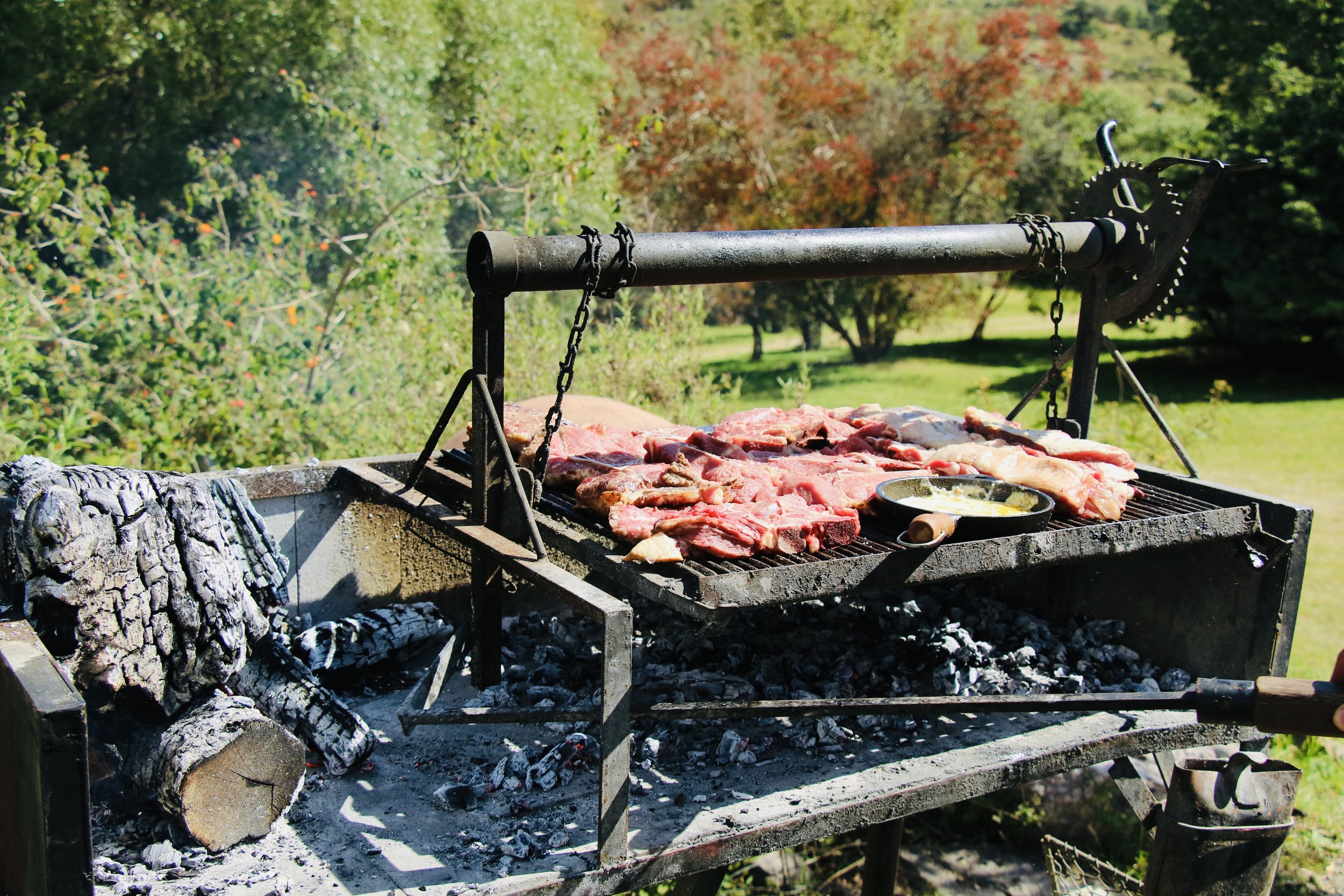
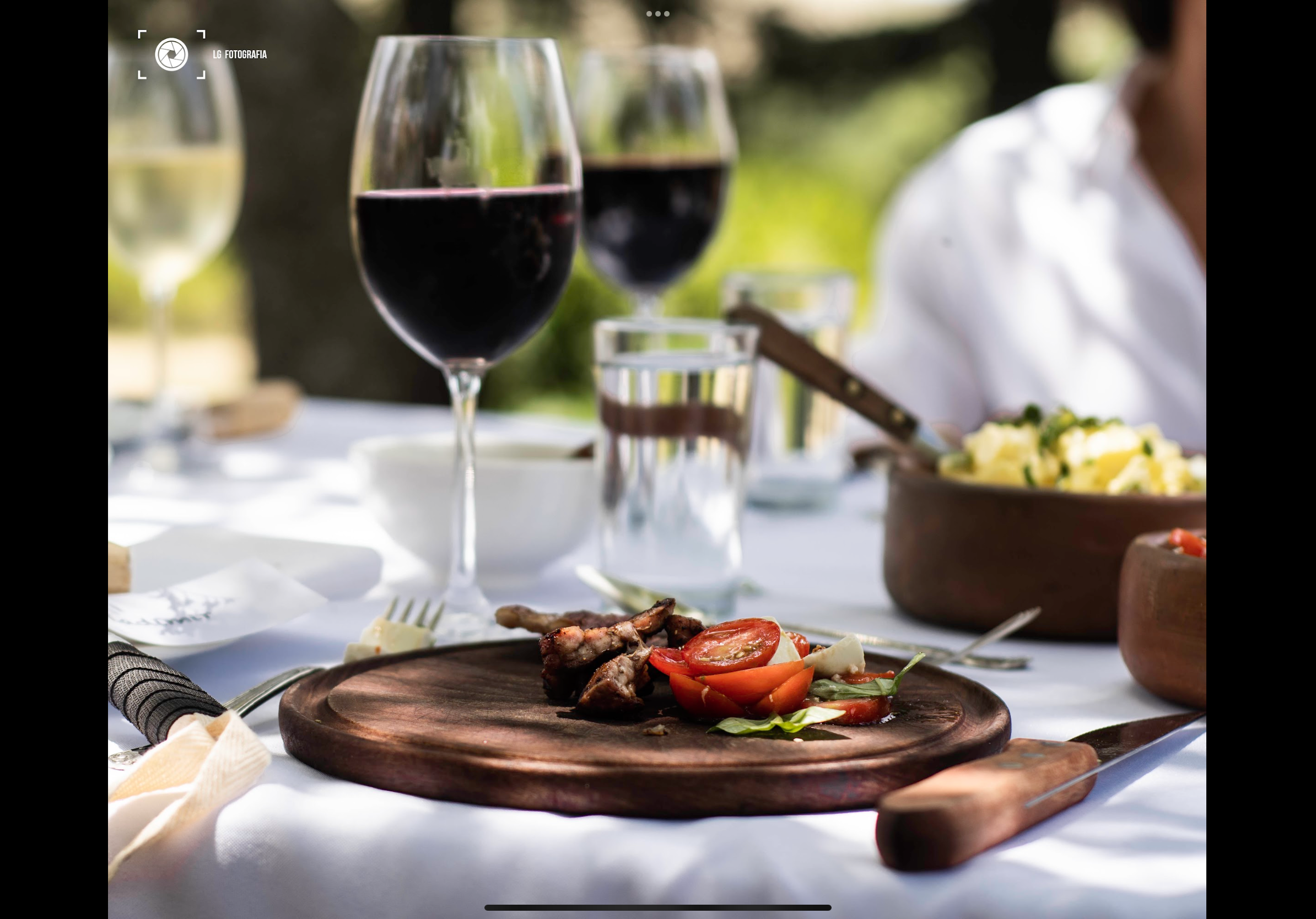
January in Argentina means summer at its peak long golden evenings, warm nights, and tables set outdoors under wide skies. At Los Pots Kitchen, we celebrate the season the way Argentines have for generations: gathered around the grill, plates piled high with what's fresh, and a glass of red wine close at hand.

The Asado Takes Center Stage

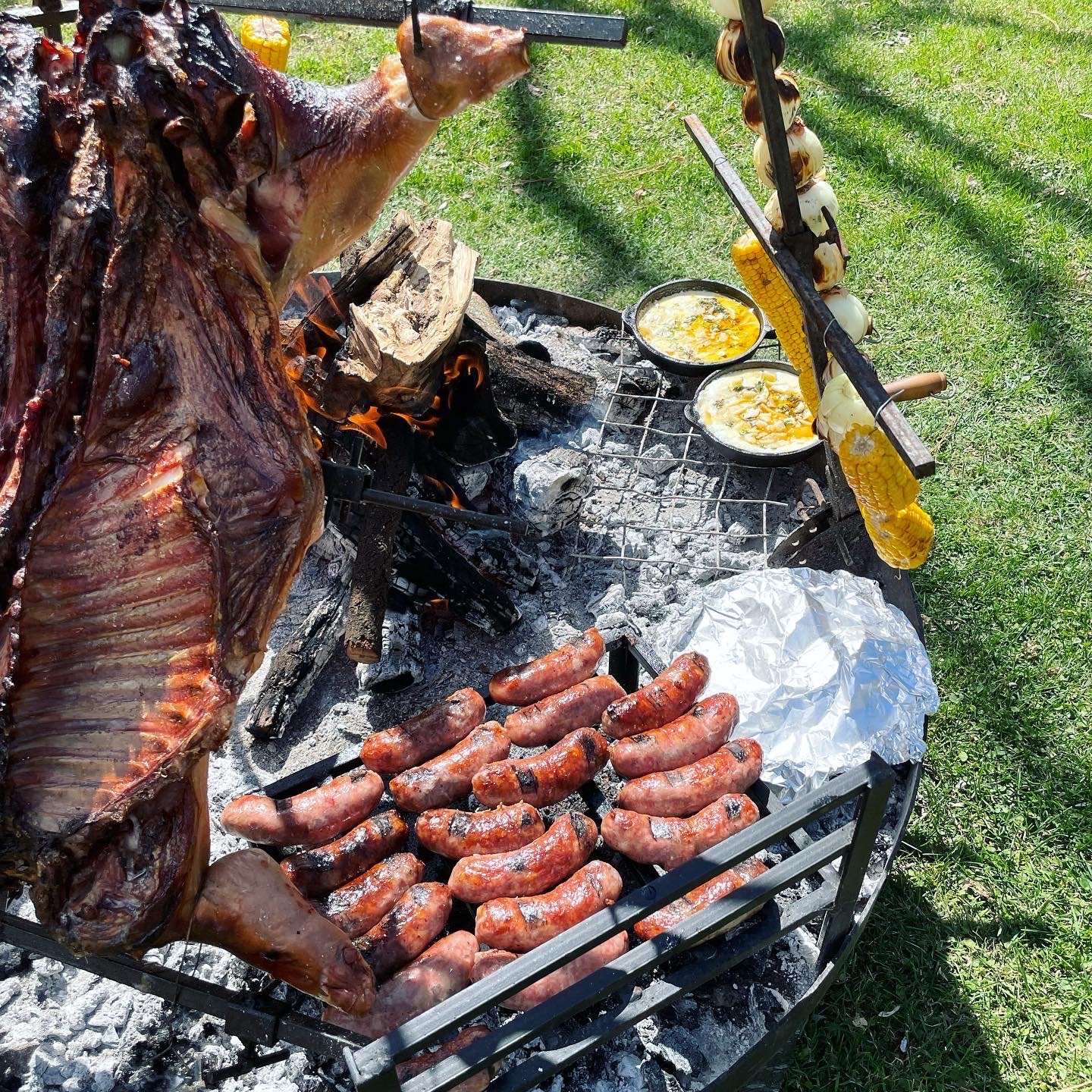
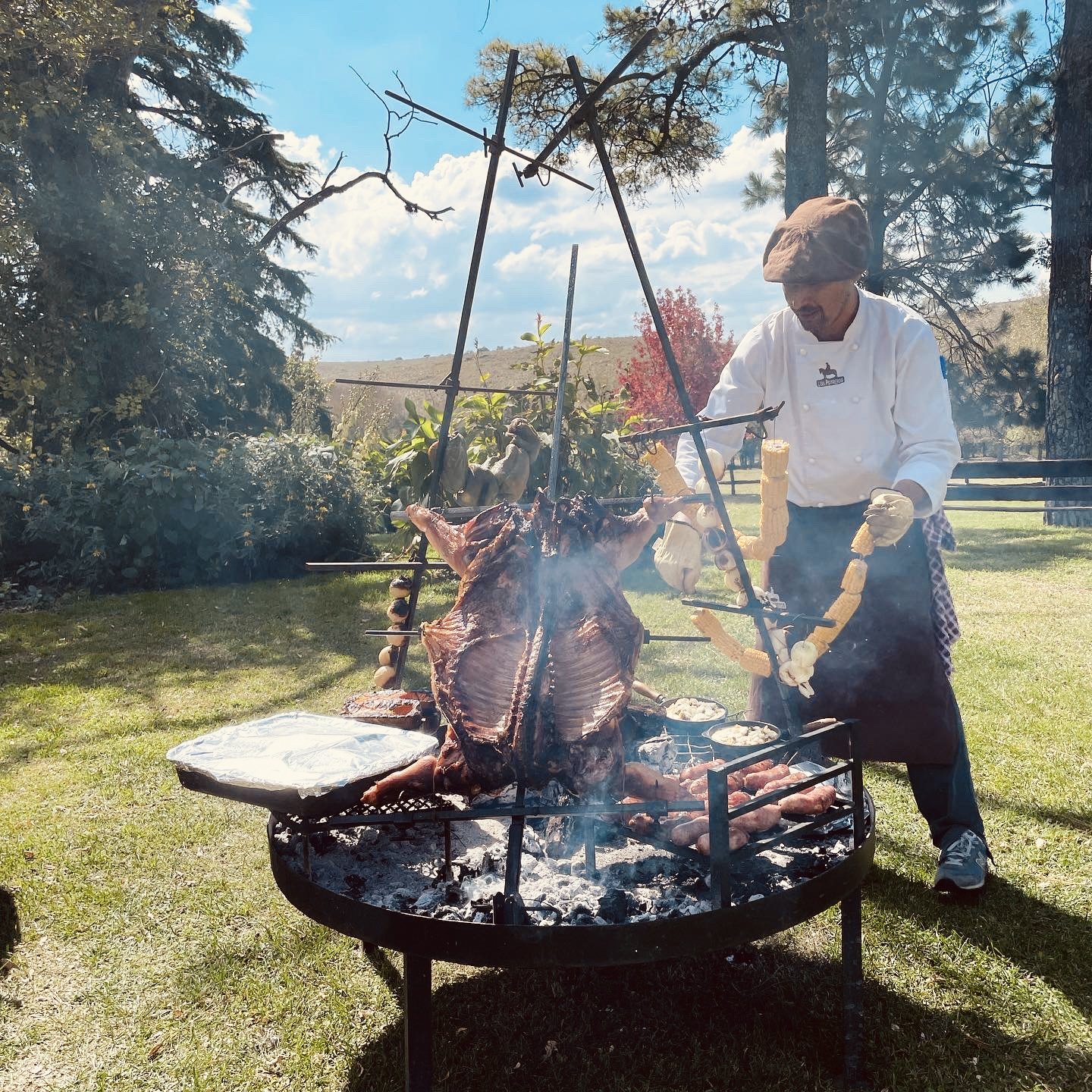
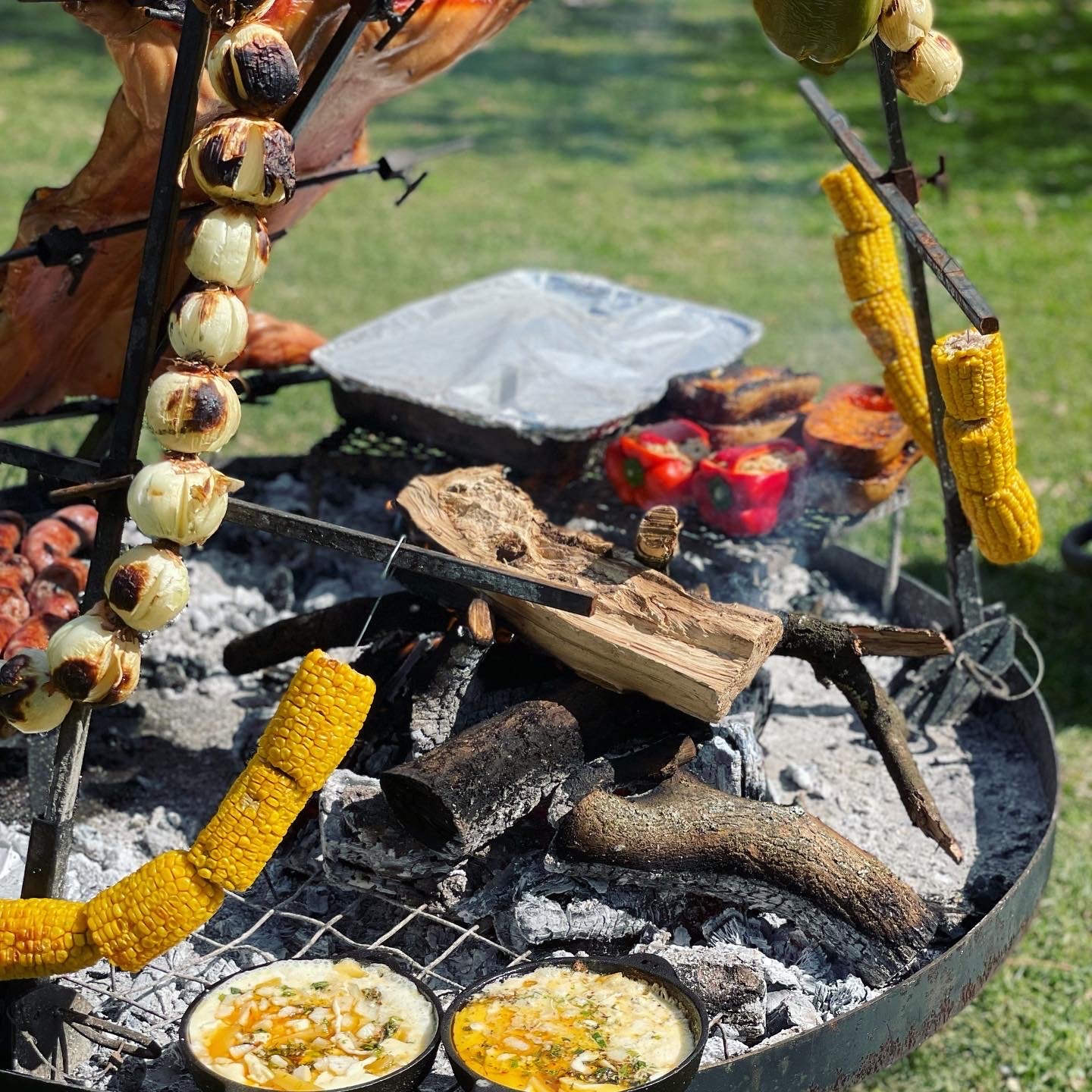
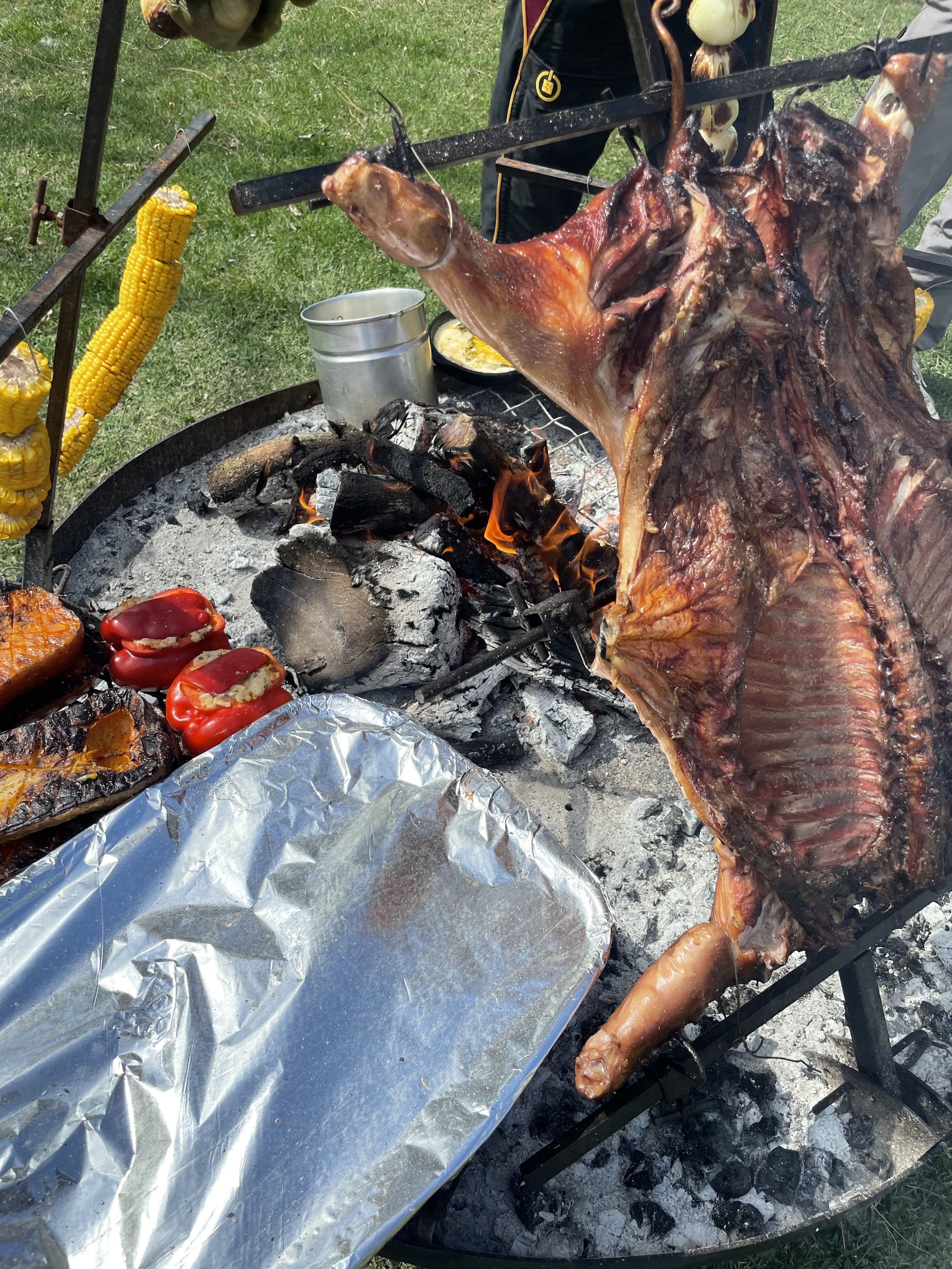
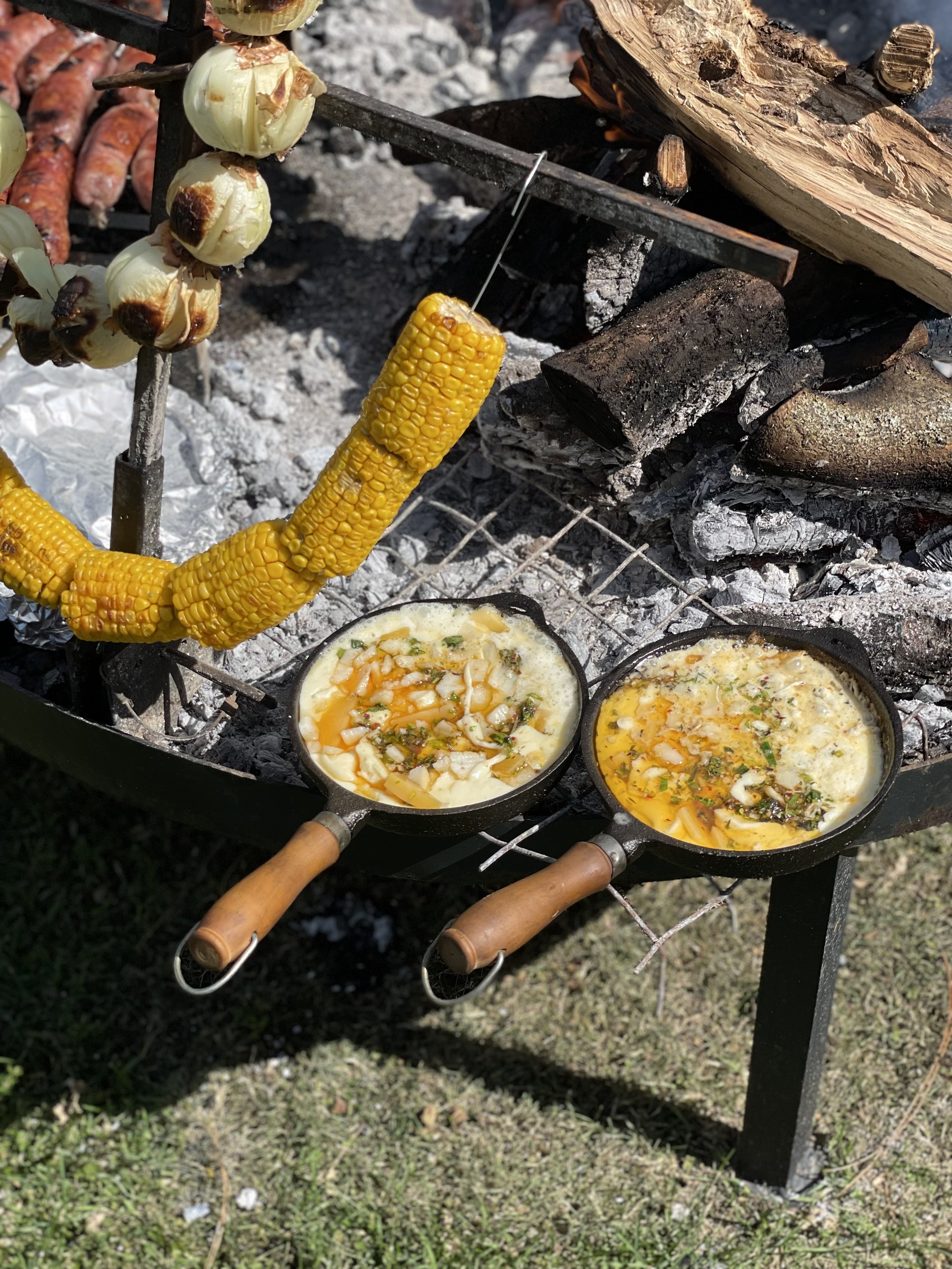
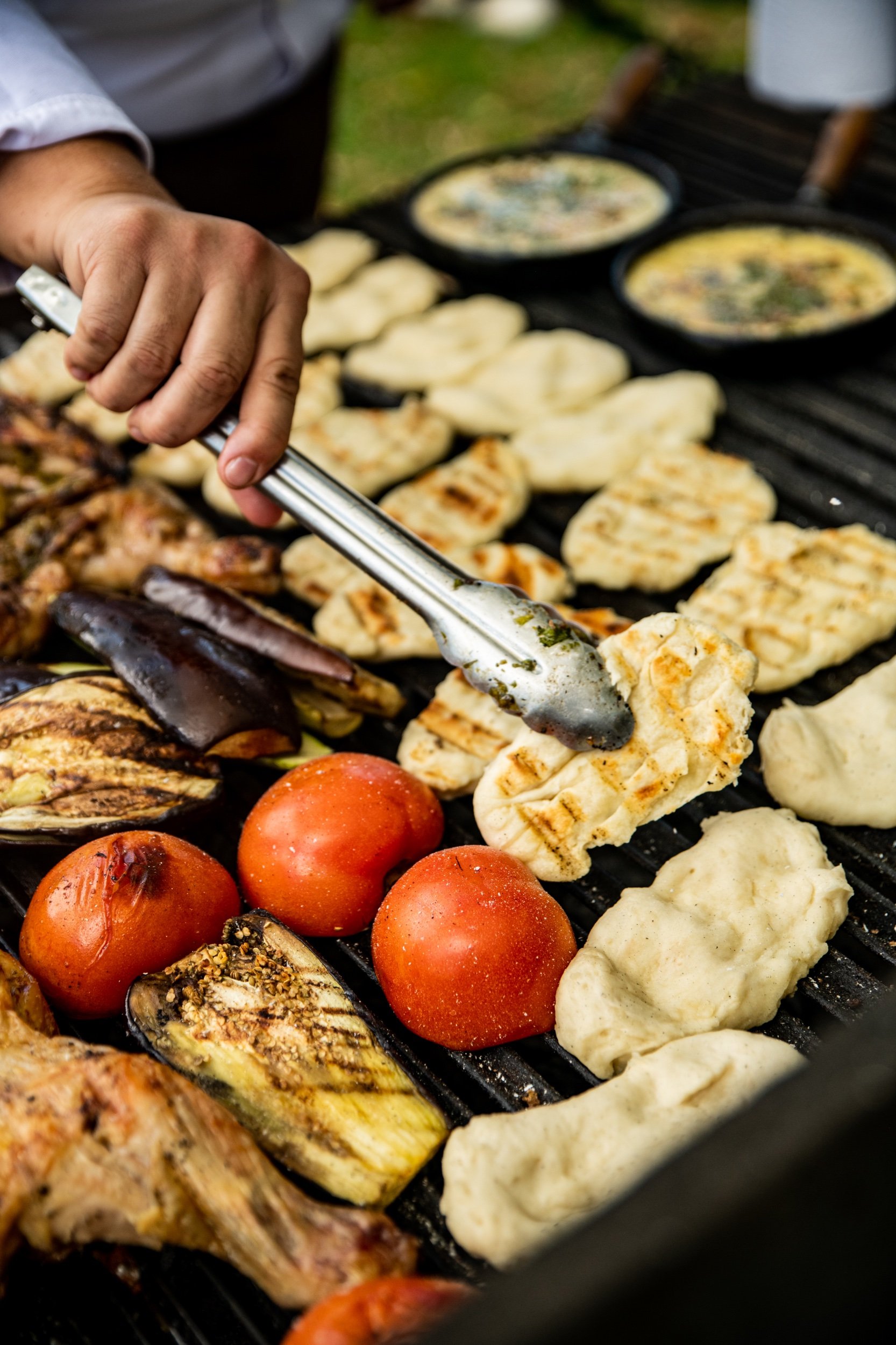
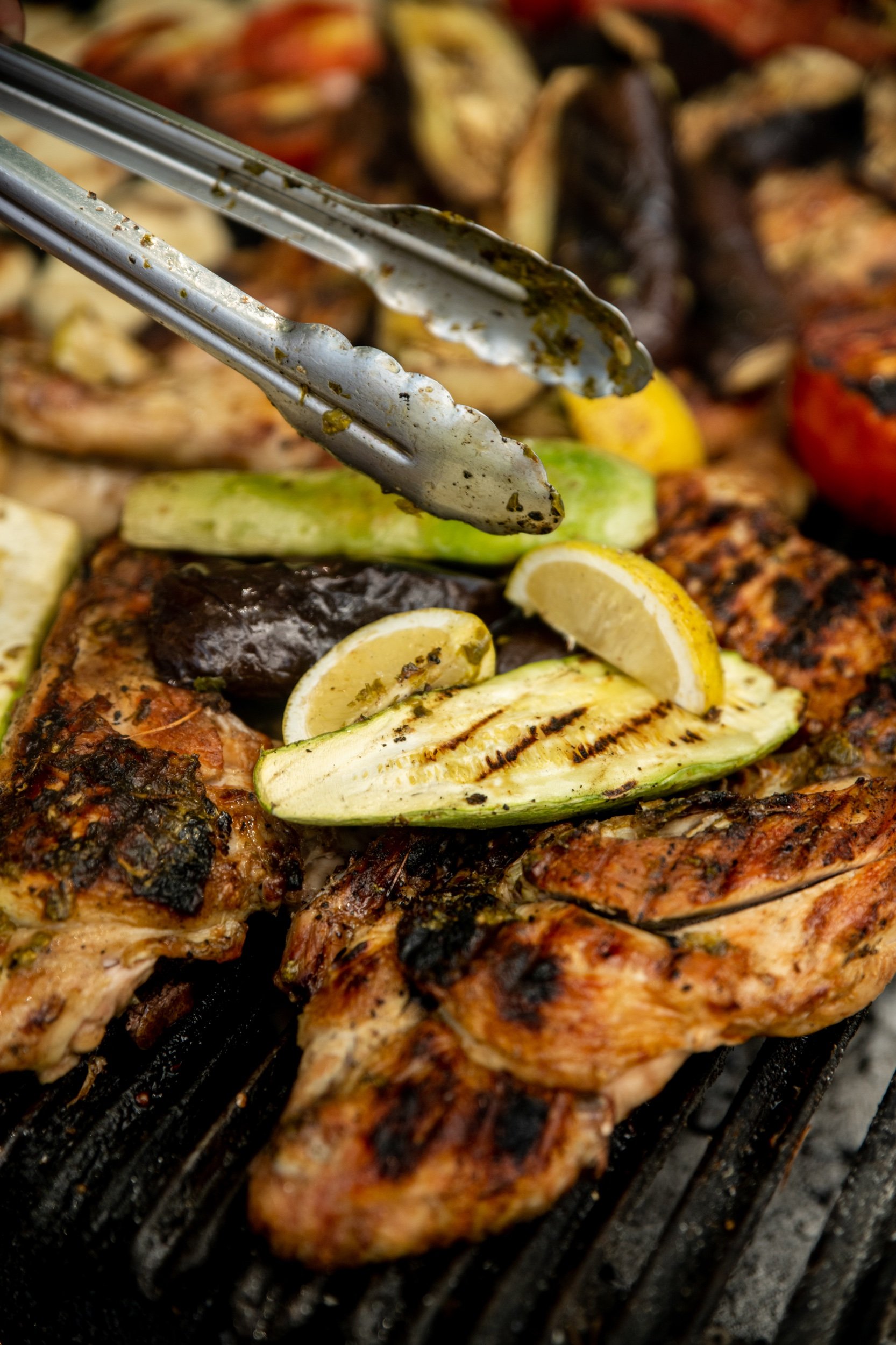
No Argentine summer is complete without the asado. This isn't just grilling - it's a ritual. Slow-cooked over wood or charcoal, cuts like asado de tira (short ribs), entraña (skirt steak), and chorizo develop deep, smoky flavour that no indoor kitchen can replicate. We pair the meat with classic chimichurri, a bright, herby sauce of parsley, garlic, oregano, and olive oil that cuts through the richness of the beef. It's simple food, done with patience and care, and it's the heart of our January menu.

What's in Season

January sits squarely in the middle of Argentina's summer harvest, and our kitchen leans into it. Tomatoes are at their sweetest right now, showing up in salads dressed simply with olive oil and salt to let their flavour shine. Sweet corn, peppers, and eggplant come off the grill alongside the meat, taking on their own char and smokiness. Stone fruits peaches, plums, and apricots are abundant this time of year, and we use them in light, fresh desserts that end the meal without weighing it down. Melon and watermelon, chilled and simple, are a favourite way to cool off between courses on a hot evening.

Argentina's coastal and inland regions also bring us excellent seafood and fresh empanada fillings this time of year, giving diners lighter options alongside the classic grilled meats perfect for a long, leisurely lunch in the shade.

Wine Under the Open Sky

Summer asados call for red wine, and Argentina delivers with Malbec, the country's signature grape. Grown in the high-altitude vineyards of Mendoza, Malbec has the structure and dark fruit character to stand up to grilled meat, while still feeling right for a warm summer night. We pour it generously, the way it's meant to be enjoyed alongside good food and good company.

Dining the Argentine Way

More than any single dish, what defines January at Los Pots Kitchen is the pace: unhurried meals, shared plates, and conversation that stretches as long as the summer light does. It's a tradition built on fresh, seasonal ingredients and the simple pleasure of eating outdoors. We invite you to pull up a chair, raise a glass, and join us for a true taste of Argentine hospitality.

Milanesas: Argentina's Favourite Crispy Comfort Food

Milanesas are simple but delicious, and found across Argentina - a thin slice of marinated beef, fried in hot oil and served with a variety of accompaniments. Every Argentine will tell you that the best milanesas are found at home cooked by their mothers! The dish is similar to an Austrian schnitzel but the roots of the milanesa stem’s back to Italy and more specifically Milan and the famous “Cotoletta alla Milanese”. The most simple version is served with a squeeze of lemon juice, and a side of creamy mashed potatoes or french fries, but it can often be served a caballo (on horseback) where a fried egg is served on top of the meat or a milanesa a la napolitana, which has a topping of tomato salsa, ham, and mozzarella cheese.


Serves 6

900g rump beef, thinly sliced (1 cm thick)

2 eggs, beaten

450g breadcrumbs

2 garlic cloves, diced

3 tbsp parsley, chopped

Vegetable oil (for frying)

Salt and Pepper


Slice the beef into cm thick steaks.

Cut off all the fat and trim the cutlets.

Tenderise the meat with a mallet until it is half a cm thick.

Whisk the eggs with chopped garlic, parsley, salt and pepper. 

Marinade the meat in the egg mixture for at least half an hour, storing them in the fridge during the process. 

Pour the oil into a deep frying pan and heat it up until a cube of bread dropped in starts to fry immediately. 

Coat the beef in breadcrumbs and fry them on both sides and then place on a paper towel to remove excess oil.


* They are traditionally served with a mixture of the following; french fries, mash potato, green salad, coleslaw or in a bread roll with tomatoes, lettuce and mustard. 

Homemade Fig Chutney Recipe: A Taste of the Estancia

Late summer at Estancia Los Potreros brings one of our favourite harvests of the year - figs. As the trees become heavy with fruit, there's always an abundance to enjoy fresh, share with friends, and preserve for the months ahead. One of our favourite ways to make the most of the harvest is with this homemade fig chutney recipe.

Made with both ripe and slightly unripe figs, this chutney perfectly balances natural sweetness with a gentle tang from apple cider and balsamic vinegar. The addition of apples, onions and thyme creates a rich, savoury flavour that pairs beautifully with cheeses, cold meats, roast pork or beef, and even a slice of warm homemade bread.

Preserving fruit has long been part of rural life in Argentina. On estancias, where gardens and orchards provide seasonal abundance, making jams, chutneys and preserves is a wonderful way to reduce waste and enjoy homegrown produce throughout the year. Every family has their own favourite recipe, often passed down through generations, making each jar a reminder of the changing seasons.

One of the secrets to this recipe is using a mixture of ripe and unripe figs. The ripe fruit provides natural sweetness, while the firmer, greener figs hold their shape during cooking and add texture to the finished chutney. Slow cooking is essential, allowing the fruit to soften completely and the flavours to develop into a rich, jam-like consistency.

Whether you're lucky enough to have a fig tree in your garden or you've found fresh figs at your local market, this recipe is an easy and delicious way to celebrate the season. At Estancia Los Potreros, this fig chutney is a favourite addition to our cheeseboards, showcasing the simple pleasure of preserving the very best of each season.

INGREDIENTS

  • 100g light brown soft sugar

  • 100ml apple cider vinegar

  • 50ml balsamic vinegar

  • 300g fresh figs, chopped

  • 1 apple, peeled, cored and diced

  • 2 onions, finely chopped

  • 2 sprigs fresh thyme

  • 1 tsp flaky sea salt

METHOD

Place all the ingredients into a large saucepan and bring to a gentle simmer.

Cook slowly for approximately one hour, stirring occasionally to prevent the mixture from sticking to the bottom of the pan.

As the chutney cooks, the figs will soften and the mixture will gradually thicken into a rich, glossy preserve. Once it has reached a sticky, jam-like consistency, remove the pan from the heat.

Spoon the hot chutney into sterilised jars and seal immediately with tightly fitting lids. Turn the jars upside down and leave them for 48 hours before storing in a cool, dark place.

The chutney will continue to develop in flavour over the following weeks and makes a wonderful accompaniment to a cheeseboard, charcuterie, roasted meats or sandwiches. It also makes a thoughtful homemade gift for family and friends.

061_Dining_TCunniffe.jpg

Merienda on the Estancia: Victoria Sponge

Merienda on the Estancia: Victoria Sponge with Fruit from the Loza Orchard

Afternoon tea first became popular in Argentina during the 19th century, brought over, it's thought, by British immigrants who settled in the country in search of new opportunities. Buenos Aires at the time was a melting pot of cultures, and as the British ritual of afternoon tea mixed with strong Italian and Spanish influences already shaping daily life, it slowly transformed into something distinctly Argentine: the ‘merienda.’

Today, merienda remains one of the most cherished rituals of Argentine life, and here on the estancia it's no different. Every afternoon, just before we saddle up for a ride through the Sierras Chicas, we gather for merienda together - a pause between the work of the day and the golden hours of riding still ahead. Our chefs take it in turns to spoil us with something sweet: warm biscuits fresh from the oven, delicate pastries, or, on the best afternoons, a cake still warm enough to melt the buttercream.

One of our favourite summer choices is a simple Victoria sponge, topped with whatever fruit is ripest that week in the orchard at Loza, plums in early summer, peaches as the season deepens, sometimes a handful of berries if the birds haven't beaten us to them. There's something wonderfully unfussy about a Victoria sponge: two soft layers of vanilla-scented cake, a good jam, and a cloud of buttercream in between. It travels well too, so if the ride runs long, there's usually a slice waiting when we get back.

If you'd like to bring a little estancia life to your own afternoon tea, here's how we make ours.

Ingredients

For the sponge

  • 200g caster sugar

  • 200g softened butter

  • 4 eggs, beaten

  • 200g self-raising flour

  • 1 tsp baking powder

  • 2 tbsp milk

For the filling

  • 100g butter, softened

  • 140g icing sugar, sifted

  • Vanilla extract

  • Strawberry jam

Method

Heat your oven to 190ºC/370ºF. Butter two 20cm sandwich tins and line the bases with non-stick baking paper, this makes turning the sponges out afterwards far less stressful than it sounds.

In a large bowl, beat the caster sugar, softened butter, beaten eggs, self-raising flour, baking powder and milk together until you have a smooth, soft batter with no lumps of butter left hiding at the bottom.

Divide the mixture evenly between the two tins and smooth the surface with a spatula or the back of a spoon, so both sponges rise level.

Bake for about 20 minutes, until golden on top and the cake springs back gently when pressed in the centre. Every oven runs a little differently, so keep an eye on it during the last five minutes.

Turn the sponges out onto a wire rack and leave them to cool completely before filling, a warm sponge will melt your buttercream into a puddle, however tempting it is to rush.

While the sponges cool, make the filling: beat the softened butter until smooth and creamy, then gradually beat in the sifted icing sugar along with a drop of vanilla extract, until light and fluffy.

To assemble, spread the buttercream generously over the flat side of one sponge, then top it with strawberry jam or a thin layer of sliced fresh fruit from the orchard. Sandwich the second sponge on top, flat side down, and dust the whole cake lightly with icing sugar before serving.

The cake will keep in an airtight container for up to two days, though on the estancia it rarely lasts that long. Serve it in thick slices alongside a pot of tea or mate, and you'll have everything you need for a proper Argentine ‘merienda of your own.

Homemade Guindado Recipe - Cherry Brandy

Homemade Guindado: A Traditional Argentine Cherry Liqueur from the Estancia

Some of the best recipes are the ones that begin with a little exploration, a seasonal harvest and a story passed down through generations.

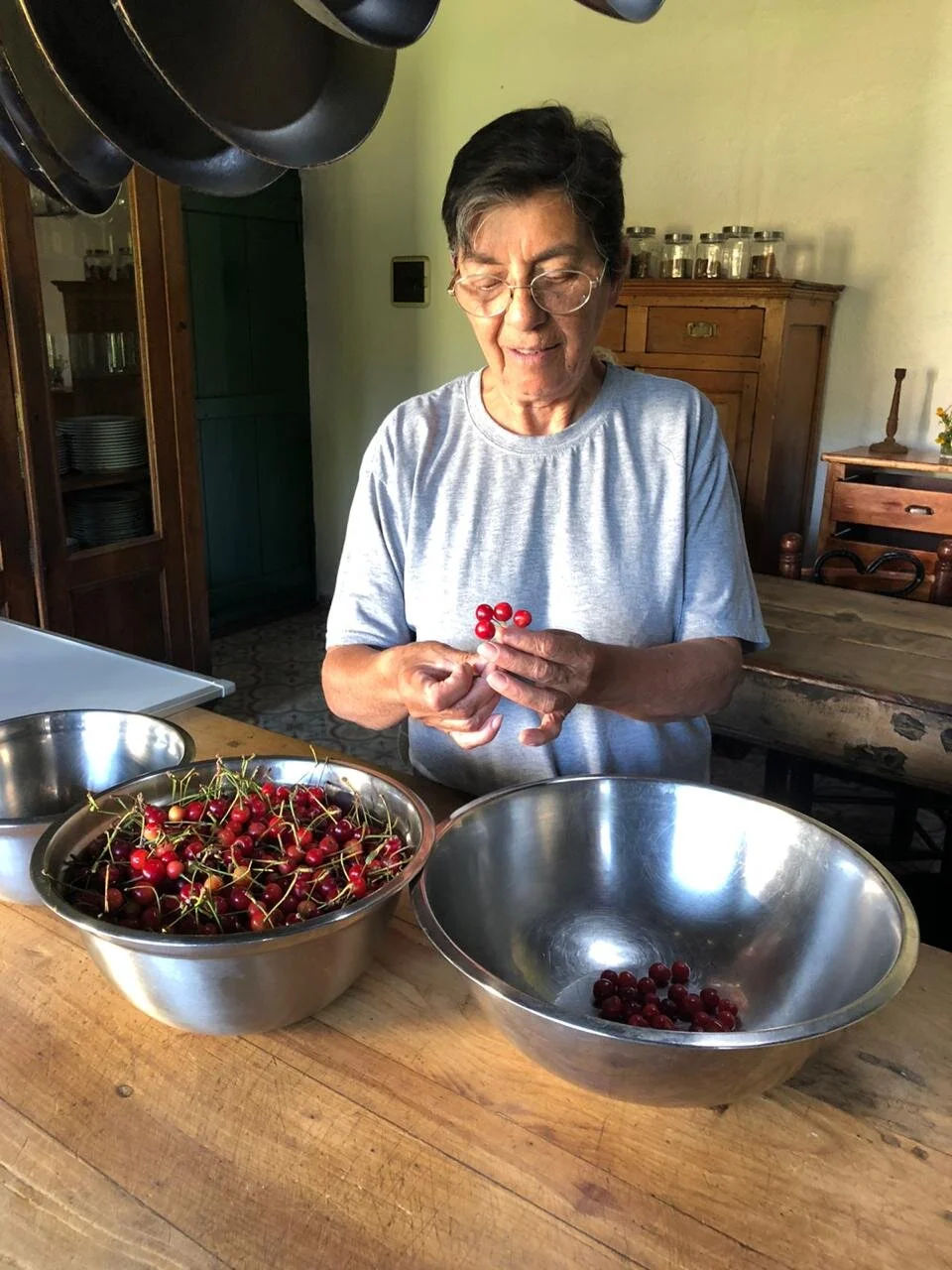
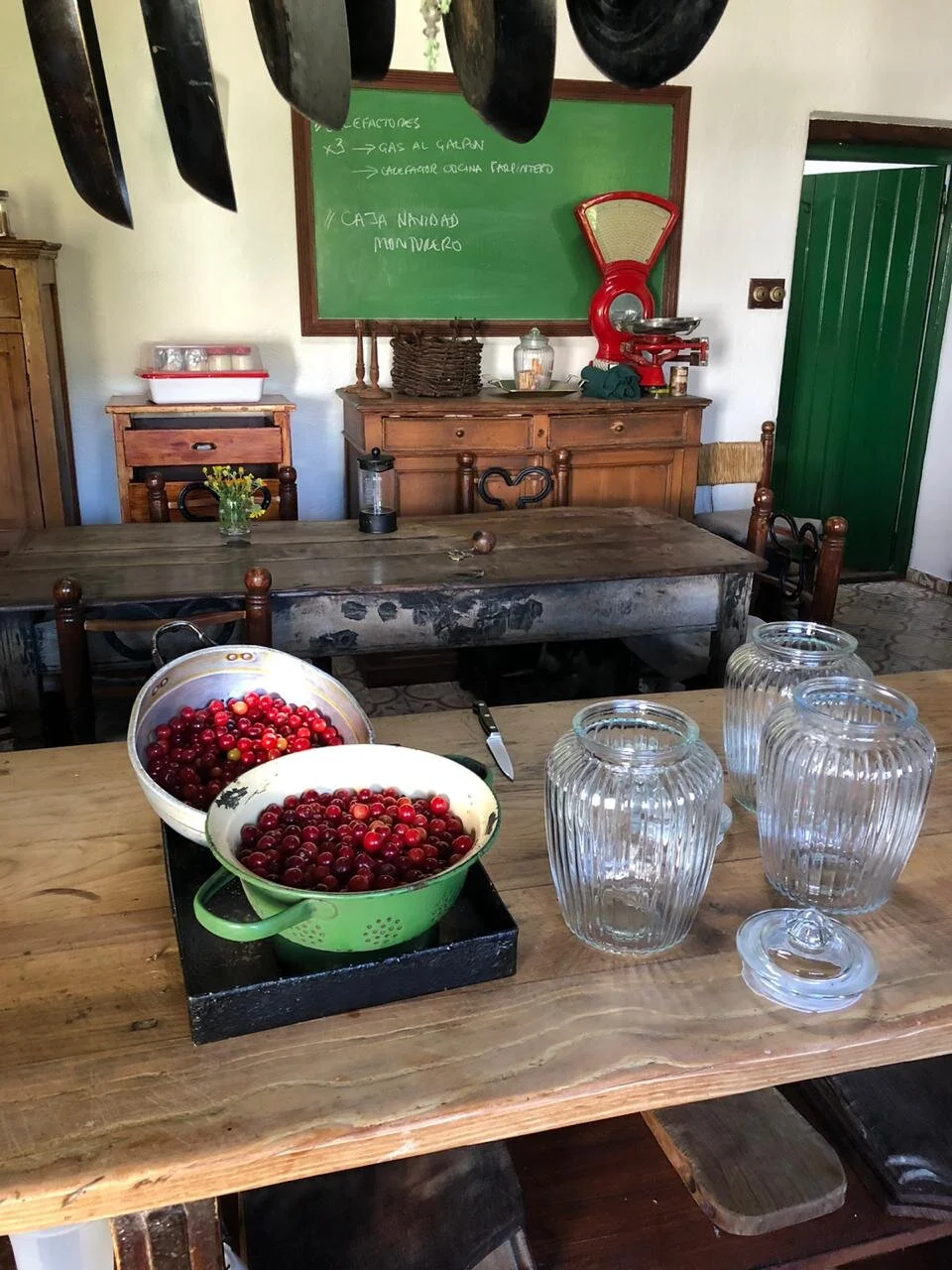
This year, with a little more time on our hands, we searched across Estancia Los Potreros and discovered an abundance of wild cherries growing throughout the property. Gathering the fruit by hand, we collected basket after basket of these small, tart cherries, knowing they were the perfect ingredient for something special.

Rather than simply enjoying them fresh, we decided to make Guindado, a traditional cherry liqueur that has been part of the Begg family’s recipe collection for generations.

Guindado is a beautifully simple preserve made with sour cherries, sugar and alcohol. Traditionally, it is prepared using brandy or another spirit, allowing the cherries to slowly release their flavour, colour and sweetness over time. At the estancia, we add our own local touch by using locally sourced gin, creating a version with a subtle botanical character that pairs beautifully with the cherries.

Making Guindado is a lesson in patience. The ingredients need time to come together, with the cherries slowly infusing the spirit over several months. The result is a rich, ruby-coloured liqueur with a balance of sweetness, fruitiness and warmth - a wonderful reminder of the landscape from which it came.

For generations, preserving seasonal produce has been an important part of rural life. Whether making jams, chutneys, pickles or liqueurs, these traditions allow families to enjoy the flavours of the land long after the harvest has passed. Each bottle tells a story of the season, the place and the people who made it.

Estancia Los Potreros Guindado Recipe

Ingredients

  • 500ml gin

  • 600g fresh cherries

  • 4 tbsp caster sugar

Method

  1. Stone the cherries and pack them into a large sterilised jar.

  2. Add the sugar and stir gently to coat the cherries.

  3. Pour in the gin and seal the jar tightly.

  4. Shake well to combine the ingredients.

  5. Store the jar in a cool, dark cupboard for approximately two months.

  6. Shake the jar occasionally to help the flavours develop.

  7. Once infused, strain the liquid through a sieve lined with two layers of cheesecloth, muslin or paper towels to remove the cherries.

  8. Pour into a clean bottle and store until ready to enjoy.

Guindado is wonderful served on its own as an after-dinner drink, poured over ice, or used to add a special touch to cocktails and desserts.

For us, this bottle represents more than just a homemade liqueur. It captures a little piece of estancia life - the wild cherries growing among the hills, the traditions shared around the kitchen table and the joy of making something by hand from what the land provides.

Maga beginning the task of de-stoning the cherries.

Maga beginning the task of de-stoning the cherries.

205354b1-880a-4a99-a954-0d5ebca51852.JPG

Quince Jelly and Dulce de Membrillo

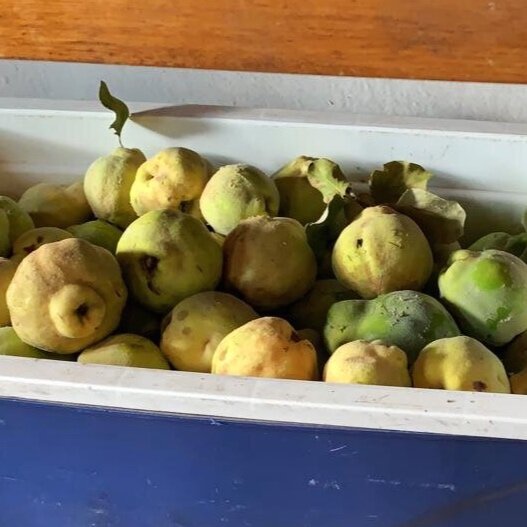
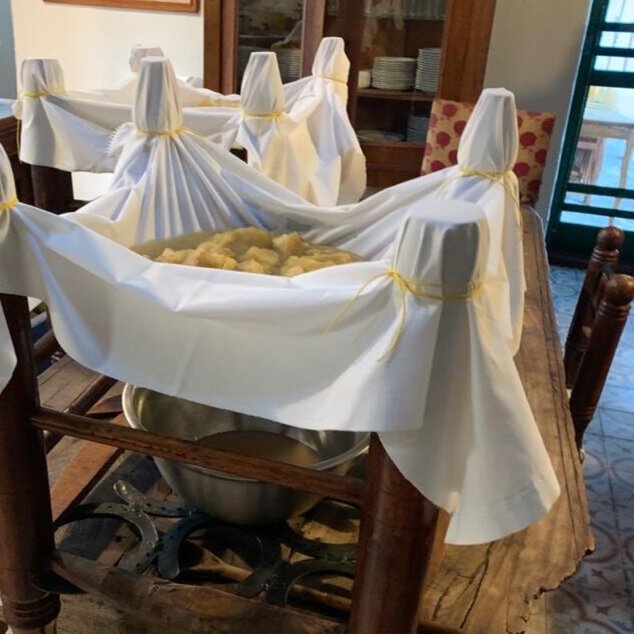
Inside all bakeries in Argentina, there are glass display cases overflowing with coconut-rimmed tarts filled with glistening, red jam. These are all made using 'dulce de membrillo’, which is a quince paste.  The Begg’s fondly remember their grandmother, making quince jelly and paste at Potrero de Niz when they were children. Tying a tea towel around the legs of a chair she would construct a sieve to drain the quince separating the paste from the jelly. Inedible raw quinces look like a cross between a pear and a golden apple, once cooked they turn sweet, with a vibrant red colour and have an incredible floral smell and taste. 


Quince Jelly

1.5kg quince, chopped roughly

1 lemon, zest peeled into strips, juiced

900g sugar 


Put the quince and lemon peel and juice in a large, deep saucepan. Cover with water (you'll need about 3 litres) and bring to the boil. 

Reduce to a simmer and cook for 90 minutes until the quince is very soft.

Line a colander with muslin cloth and put over a very large saucepan or heatproof bowl. Tip the quince into the lined colander, cover with a clean tea towel and leave to strain for 4-8 hrs until all the juice has dripped out. 

Keep the pulp for making ‘dulce de membrillo’. Measure out the strained juice and transfer to a large, deep saucepan (the jelly will bubble up high as it cooks). Add 500g sugar for every 600ml juice. Bring to the boil over a low heat, stirring to dissolve the sugar. 

Bring to a rapid bubble and cook until the temperature reaches 105ºC/221ºF on a sugar thermometer. Remove from the heat and ladle into hot sterilized jars and seal.  

Dulce de Membrillo 

Making membrillo is extremely easy. 

Take the quince pulp from the jelly and blend until smooth. Weigh the puree then put it in a large pot. Add an equal amount of granulated sugar to the mixture and place over a low heat. Stir the mixture constantly at first to dissolve the sugar, keep cooking until the mixture becomes thick (approx 1-2 hours). Once the mixture has thickened, it will stick to a wood spoon. 

Line a baking dish or lightly grease before pouring in the quince mixture. Allow the paste to cool, before placing in the oven on the lowest heat, dry the paste out (this can take up to three hours, if it has not set keep it in the oven checking it regularly). The surface should be glossy and not sticky to touch. Put the dish in the fridge and refrigerate overnight. 

Argentine Wine: Malbec, Torrontés and Córdoba

A Taste of Argentina's Wine Country at the Estancia

Argentina is one of the world's great wine countries, and during your stay you're likely to try wines from several of its regions. Vineyards stretch along the foothills of the Andes, where snowmelt, poor sandy soils, a dry climate and year-round sunshine make for ideal growing conditions. Most are planted with European grape varieties, and Malbec and Torrontés in particular have become famous around the world.

Córdoba's Wine History, from Jesuits to Friulians

Córdoba has a wine-growing tradition that goes back centuries. Vines were planted soon after the city was founded in 1573, and the Jesuit estancia at Jesús María had one of the largest wine cellars in the Spanish colony of the River Plate. Local legend has it that a wine from there, christened "Lagrimilla" (little tears), was the first from the Spanish Americas to reach the king of Spain.

Winemaking got a second wind when immigrants from Friuli in northern Italy founded Colonia Caroya in 1878, about 50 kilometres from Córdoba city, in the heart of the old Jesuit country. Their traditions, and even some of their dialect, live on today.

Small Family Wineries Worth Discovering in Córdoba

Córdoba's wines are yet to reach the fame of Mendoza or Salta, but the province is fast becoming one to watch for small, characterful wineries, many of them family-owned. Their wines tend to be elegant and balanced, with a real sense of place, and choosing local producers is a lovely way to support small businesses in our province.

Sharing Argentine Wine Around the Los Potreros Table

Whether it's a glass by the fire after a day in the saddle or a bottle shared over dinner with new friends, wine is part of every evening here. We choose the wines to suit each group, mixing well-known regions such as Mendoza, Salta and Patagonia with discoveries from Córdoba's smaller wineries. The Begg family are always happy to share an informal tasting, and trying the different wines of the region is great fun.

Red wine being poured at dinner at Estancia Los Potreros

Summer in the Los Pots Kitchen: Argentine Preserves

Winter leaves our fruit trees dormant, waiting quietly for spring and the first rains of the year. Then everything changes at once. By summer the estancia is bursting with produce, from wild asparagus sprouting across the hills to an orchard heavy with fruit. Our approach to all of it comes down to three words: pick, prepare, preserve. Our chefs spend the summer finding new ways to capture the harvest so it carries us through the winter ahead.

Building on What We've Learned in the Kitchen

We've written before about smoking our own meat, which has become a real success and one more step towards a more self-sufficient kitchen. Vegetables get the same treatment: we pick, preserve them in flavoured oils and turn the surplus into jams, jellies and chutneys. A bumper crop of aubergines becomes escabeche, a traditional pickled antipasto finished with chilli flakes, garlic and bay leaf.

From the Orchard at Loza to the Pantry Jar

The orchard at Loza gives us plums, peaches, apricots and wild cherries in abundance. We fill jars with wild cherries and sugar to start a batch of guindado, a cherry liqueur that's ready after three months. It's traditionally made with brandy, but our estancia recipe has always used locally made gin.

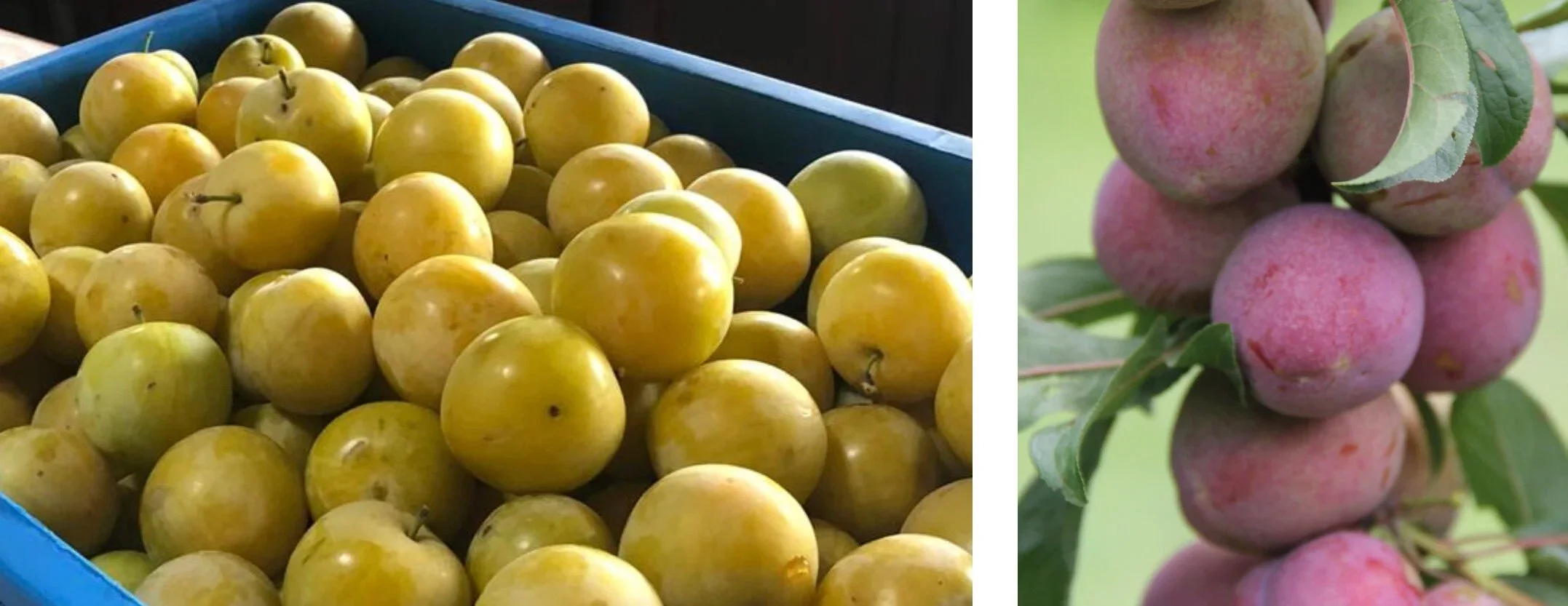
The soft fruit goes into jams, is poached in red wine and amaretto, or becomes compotes for topping fresh yoghurt. We forage mirabelles, a sweet yellow plum, from the trees near the waterfall, and the apples from Los Melados become jar after jar of jam.

As summer stretches on, the figs ripen everywhere from the cattle station to the garden at Potrero de Niz. Sweet on their own, they also pair beautifully with cheese and meat, so alongside fig jam and chutney we like to make honey-poached figs with orange and spices from the last of the harvest.

Quince: The Last Fruit of the Orchard to Ripen

Quince is always the last to ripen. You know it's ready when the fruit turns a deep golden yellow and gives off its floral scent. Taking a lead from the Mediterranean, we cook some of the quinces in a sweet syrup to serve over homemade yoghurt or fresh cheeses like labneh, something Kevin has been perfecting in the kitchen.

Nothing says Argentine tradition quite like quince jelly and membrillo, made together in one process. First the fruit is boiled with sugar until the colour deepens from pale yellow to a rich reddish pink. Then, following a method passed down from Louie Begg, we strain it through a sieve rigged from an upturned chair with a tea towel tied around its legs, separating the clear jelly from the thicker quince paste, the membrillo.

Walnuts, Topinambur and the Months Ahead

As autumn arrives, the walnuts start falling from the trees and the topinambur, or Jerusalem artichokes, are ready to dig up and store for winter. There's always something to harvest and a new way to preserve it, and we love finding ways to use what the land gives us and waste less, season after season.

Quinces ripening on the trees in the estancia orchard

Pan Dulce: A Sweet Argentine Bread Tradition

One of our favourite sweet breads is pan dulce, the perfect accompaniment to some Argentine cheese and a treat often baked during our evenings in the kitchen. There's something wonderfully simple about the ritual of baking bread in the evenings on the estancia - the smell of it filling the kitchen, the kettle going for mate, and everyone gathering round to see how it's turned out.

Typically, we use dark muscovado sugar, a cane sugar containing molasses - the reason behind its dark colour and texture, which resembles wet sand. Muscovado sugar brings a deep, almost caramel-like richness to the bread that white or light brown sugar simply can't match, and it's part of what gives pan dulce its distinctive character.

A Bread Rooted in Tradition

Sweet breads like this one have long been part of Argentine baking traditions, often appearing at teatime, alongside a cheese board, or as a treat to share after a long day out on the land. While pan dulce is perhaps best known in its more elaborate, fruit-and-nut-studded holiday form, this simpler everyday version is just as beloved in kitchens across the country, and it's the one we return to again and again at Los Potreros.

Dried fruit, almonds, and hazelnuts give the bread texture and bursts of natural sweetness throughout, while a cup of mate cocido tea worked into the dough adds a subtle, earthy depth that ties the whole thing back to one of Argentina's most iconic traditions. It's a lovely example of how everyday Argentine cooking borrows from the country's broader culinary heritage.

Pan Dulce Recipe

Ingredients:

  • 500g self-raising flour

  • 1 egg

  • 25g butter

  • 1 cup mate cocido tea

  • 75g dark muscovado sugar

  • 150g dried fruit

  • 75g almonds

  • 75g hazelnuts

Method:

  1. Mix all the dry ingredients together, except the flour.

  2. Add the butter and egg, and mix thoroughly with your hands.

  3. Gradually add the flour and tea to form a dough - it's ready once it no longer sticks to your hands.

  4. Once the dough is ready, shape it and place it on a baking tray lightly sprinkled with flour to prevent sticking during cooking.

  5. Bake at 180ºC/355ºF until a skewer comes out clean, usually around 20 minutes.

Serving Suggestions

This rustic Argentine sweet bread makes a lovely addition to any tea table or evening spread. We love serving it warm, sliced thickly, alongside a good local cheese and a cup of mate, though it's equally delicious on its own the next morning with a little butter.

Like so many recipes passed down in the kitchen here, this one has been adapted and tweaked over the years by whoever happens to be baking that evening - a little more fruit here, a touch more sugar there - and that's really the spirit of it. Pan dulce isn't meant to be exact. It's meant to be shared.

Discover the Art of Homemade Pasta 7 & Recipe

At Los Pots Kitchen, we take great pride in creating dishes that highlight the flavours of Argentina, infused with rustic charm and the best local ingredients. This homemade pasta recipe is a perfect example of how simple, fresh components come together to create an unforgettable meal. Whether you're a seasoned cook or completely new to making pasta from scratch, our step-by-step guide will help you master this timeless craft and bring it into your own kitchen.

A Recipe Rooted in History

Argentina's love affair with pasta dates back to the late nineteenth and early twentieth centuries, when waves of Italian immigrants arrived on its shores and brought their culinary traditions with them. Over generations, these recipes wove themselves into the fabric of Argentine cuisine, blending with local ingredients and techniques until pasta became a true staple of the national table. Today, across the country, menus proudly feature an incredible variety of pasta dishes, each carrying echoes of that immigrant heritage while reflecting a distinctly Argentine character. From humble family kitchens to the finest restaurants, pasta night is a cherished tradition that brings people together.

Homemade Pasta Recipe

Serves 4-6

Ingredients:

  • 400g 00 flour, plus extra for dusting

  • 4 large eggs

  • 1/2 tsp salt

  • 1 tbsp olive oil

Method:

  1. Pile the flour onto a clean work surface (or into a large bowl) and make a well in the centre.

  2. Crack the eggs into the well, add the salt and olive oil, and beat gently with a fork.

  3. Gradually draw the flour into the eggs, mixing until a shaggy dough forms.

  4. Knead the dough by hand for 8-10 minutes, until it's smooth, elastic, and no longer sticky. Add a touch more flour if needed.

  5. Wrap the dough in cling film and let it rest at room temperature for at least 30 minutes - this relaxes the gluten and makes rolling much easier.

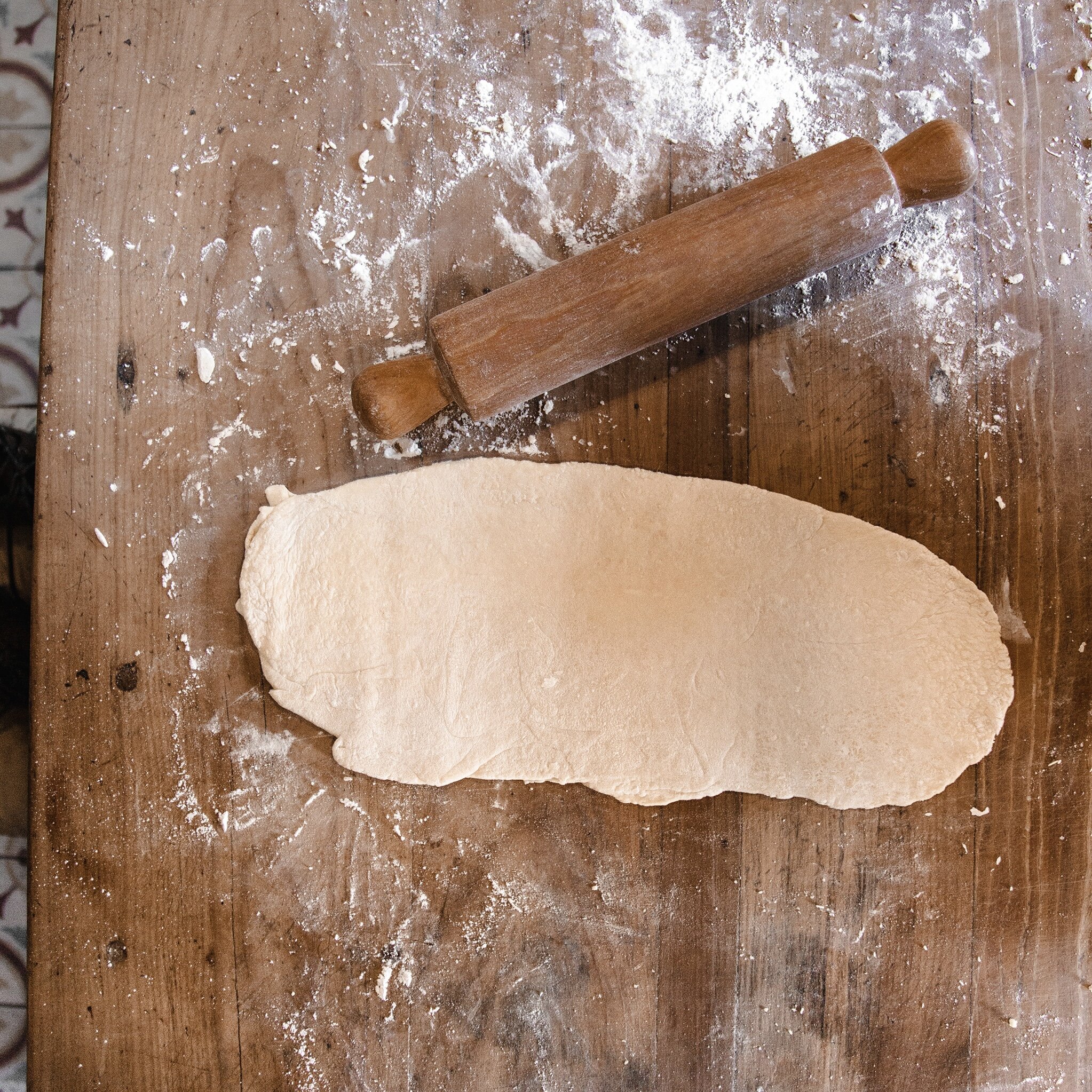
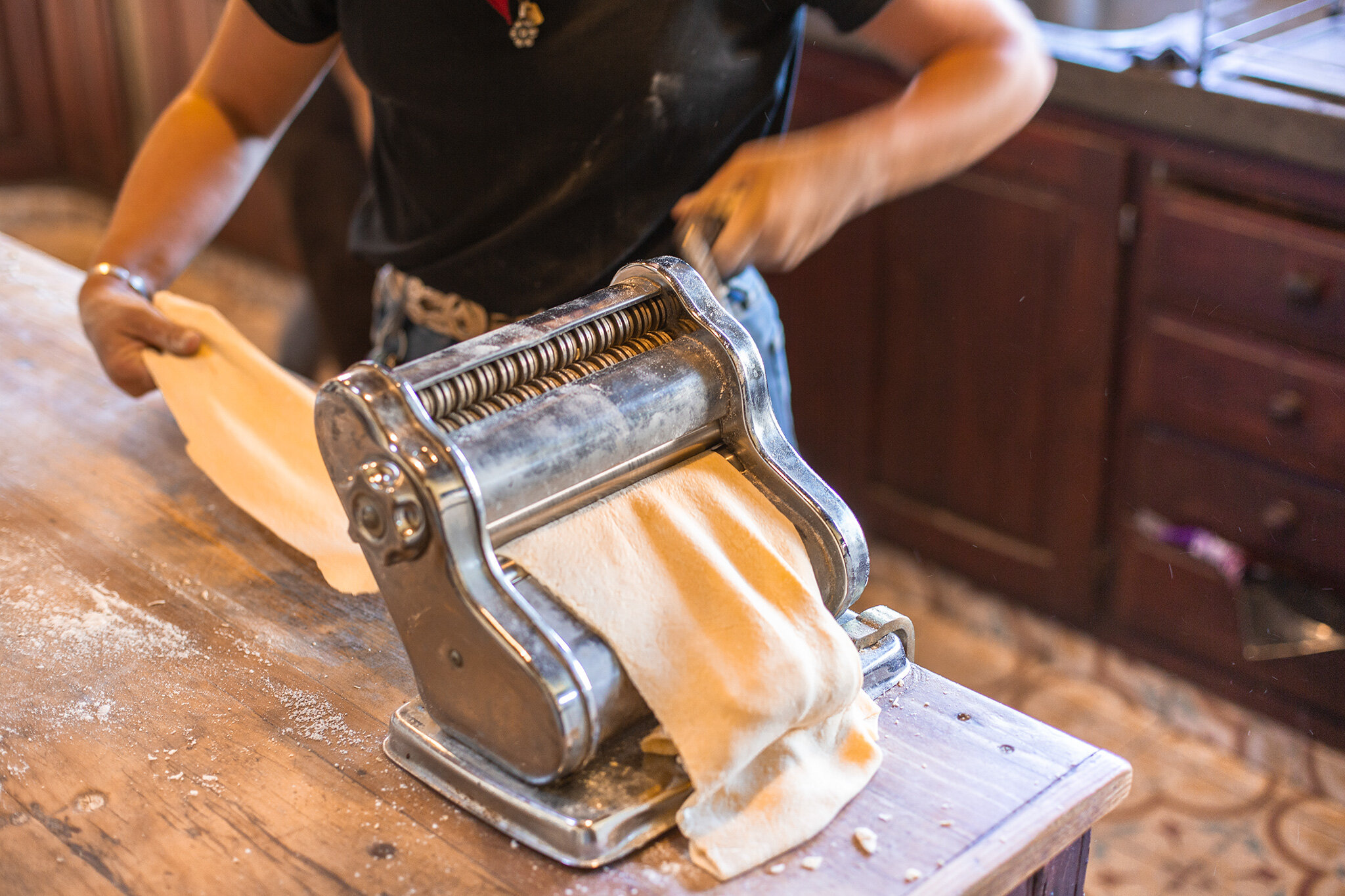
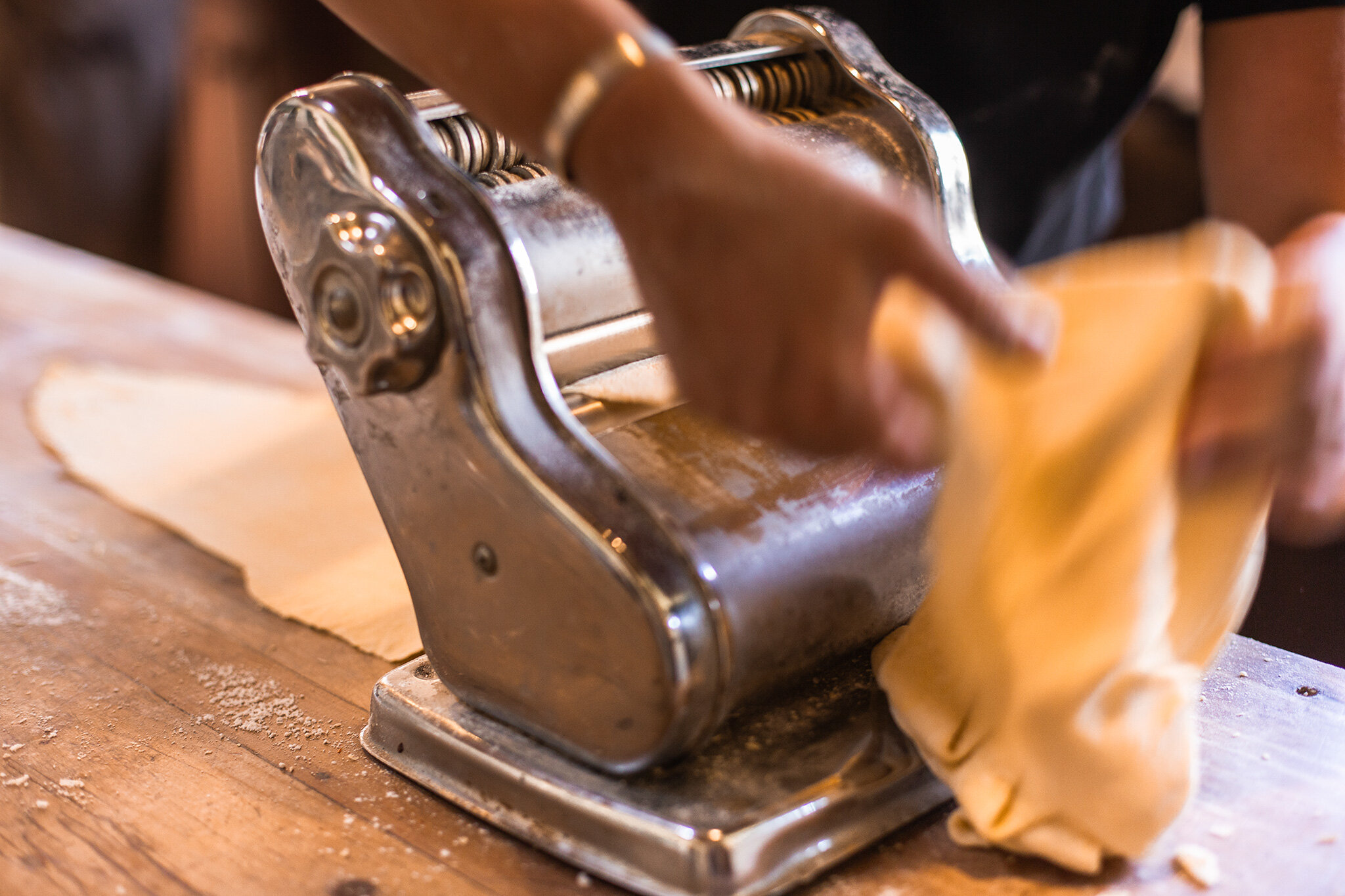
  6. Divide the dough into portions and roll each one out thinly, either by hand with a rolling pin or through a pasta machine, dusting with flour as you go.

  7. Cut into your desired shape: wide sheets for lasagne, ribbons for spaghetti, or squares for ravioli.

  8. Cook fresh pasta in plenty of salted, boiling water for just 2-3 minutes, until it floats to the surface.

From One Sheet, Endless Possibilities

Here at our estancia, this history comes alive every day in our kitchen. There is something almost meditative about watching our chefs work the dough, kneading it with practiced hands until it reaches just the right texture, elastic yet tender. The rolling of the pasta is where the real artistry shines through. It takes years of practice to develop the feel for how thin to stretch the dough, how much flour to dust beneath it, and how to sense when it's ready to be shaped. Watching our chefs roll it out, layer by layer, is always a delight for guests, many of whom have never seen fresh pasta made entirely by hand.

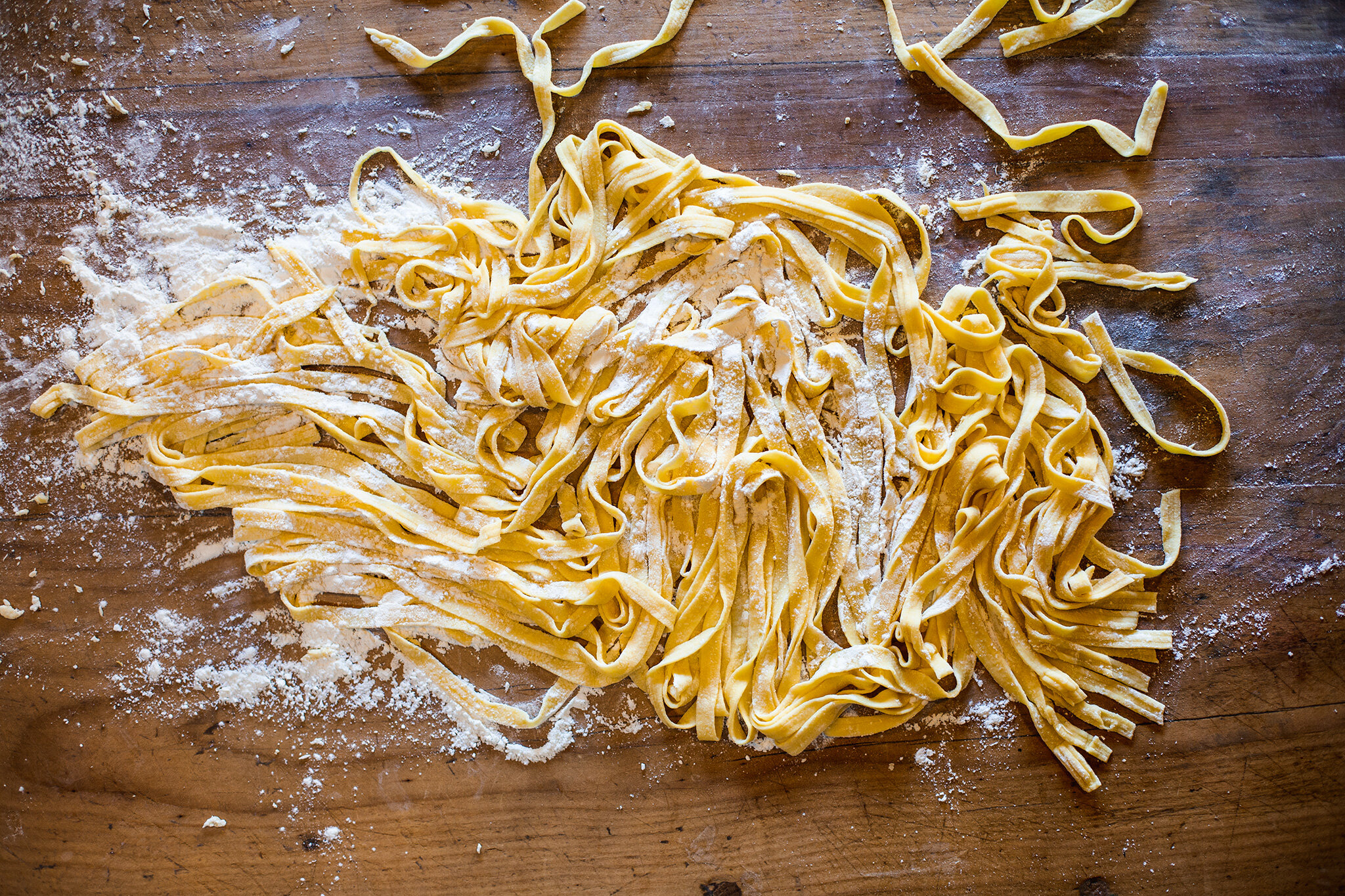
From that single sheet of dough, an entire world of dishes unfolds. With a bit more thickness and careful layering, it becomes lasagne sheets, ready to be baked with rich sauces and melted cheese. Cut into wide ribbons or delicate squares, it transforms into fresh ravioli, filled with anything from ricotta and spinach to slow-braised meats sourced from our own land. Rolled thin and cut into long strands, it becomes spaghetti, simple yet endlessly versatile, equally at home with a rustic tomato sauce or a silky butter and sage preparation.

Italian Technique, Argentine Soul

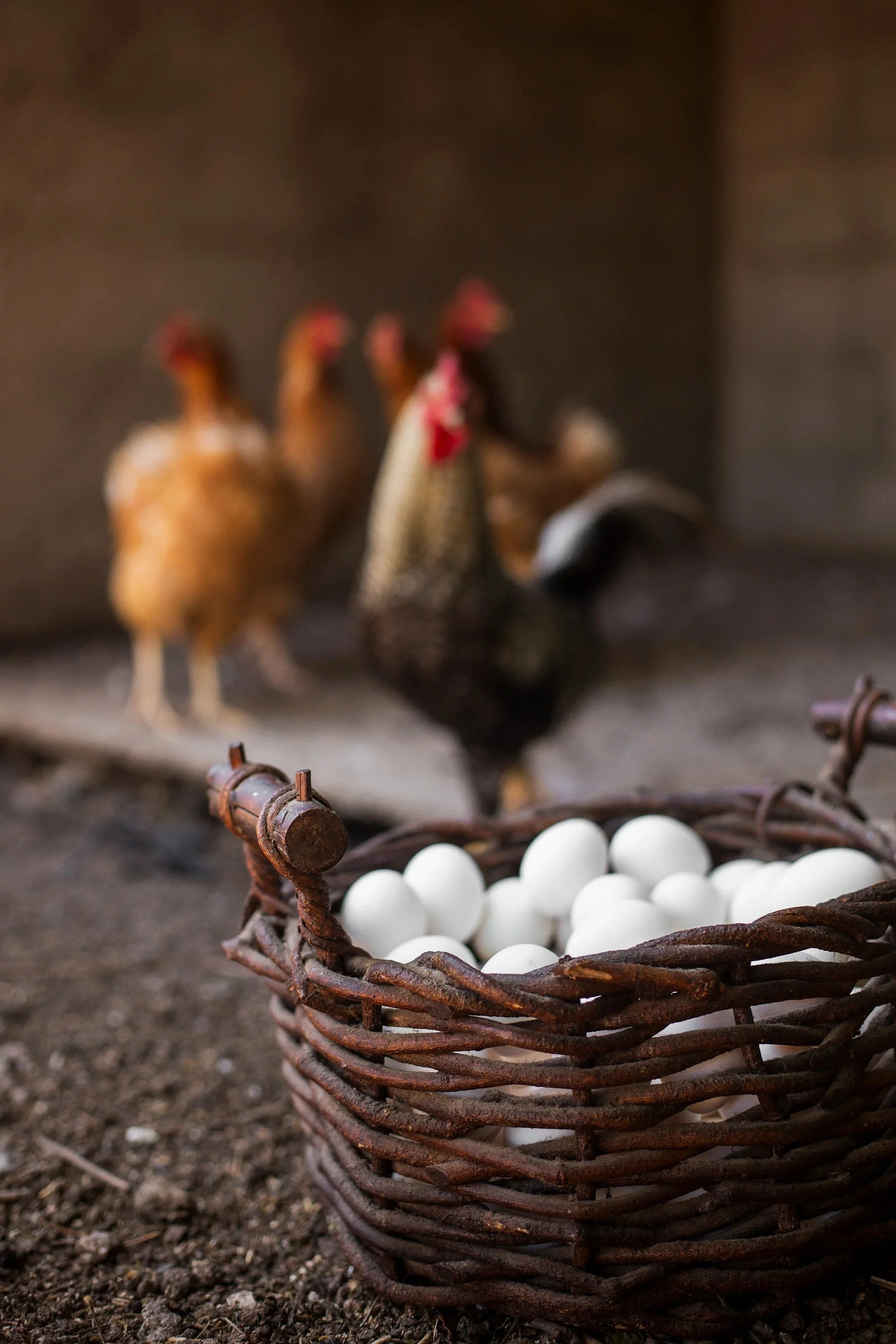
What makes our approach special is the marriage of Italian technique with Argentine soul. We use eggs from free-range hens, flour milled with care, and seasonal vegetables and herbs grown nearby, all combined with the sauces and fillings that reflect our region's character, from grass-fed beef to sun-ripened tomatoes. The result is pasta that feels both familiar and entirely its own, a dish that tells the story of two cultures meeting on one plate.

We invite you to try your hand at this rewarding process. Making pasta from scratch is not just about the final dish, it's about slowing down, working with your hands, and connecting with a tradition passed down through generations. Follow our guide, be patient with the dough, and you'll discover just how easily the authentic taste of Argentina can find a home in your own kitchen.