
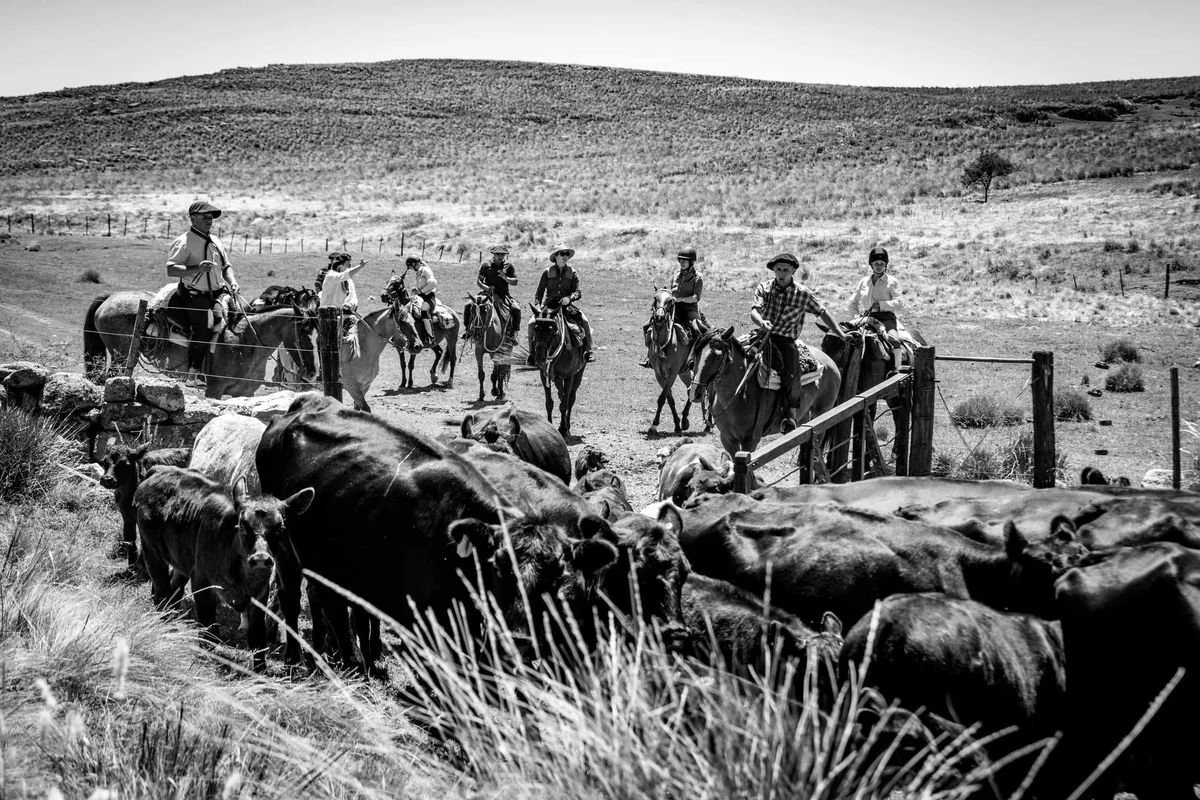
Argentina's Iconic Cowboy Culture
If you picture Argentina, chances are the image that comes to mind is tango, steak, and Messi. But there is an older, quieter symbol woven into the country's DNA - the gaucho. For centuries, these skilled horsemen of the South American plains have shaped Argentine identity in ways that still resonate today, from literature and politics to the food on your plate. Whether you are planning a trip to Buenos Aires or dreaming of wide-open estancias, understanding gauchos Argentina and gaucho culture will give your experience a depth that no guidebook map can provide.
The Origins of the Gaucho
The word "gaucho" likely derives from the Quechua term huachu, meaning orphan or vagabond - a fitting label for the nomadic men who first appeared on the Argentine and Uruguayan pampas during the 17th and 18th centuries.
Gauchos were born from cultural collision. Spanish colonizers brought cattle and horses to the Río de la Plata region in the 1500s, and many animals escaped into the wild, multiplying across the vast grasslands. The people who eventually went out to hunt and herd them were a mix of mestizos (of Spanish and Indigenous descent), freed African slaves, and criollos (American-born colonials of European ancestry). Living at the frontier of colonial society, they belonged fully to none of it.
From Outlaws to National Heroes
Early Spanish colonial authorities viewed gauchos with deep suspicion. They were seen as lawless drifters - skilled with a blade, loyal to no landowner, and impossible to tax. Vagrancy laws in the late 18th century tried to force them into the formal labor economy, often with violent results.
The tide turned during the Argentine War of Independence (1810–1818). Gaucho militias, fighting under leaders like Martín Miguel de Güemes, proved to be some of the most effective guerrilla fighters against the Spanish royalist forces. Their intimate knowledge of the land, their horsemanship, and their fierce independence made them military assets overnight. The same qualities that had made them suspect now made them heroes - and that paradox sits at the heart of gaucho history to this day.
Life on the Pampas
To understand gaucho culture, you need to understand the pampas: a seemingly endless expanse of flat, fertile grassland that stretches across central Argentina, Uruguay, and parts of southern Brazil - roughly 750,000 square kilometers of open sky and wind-bent grass.
This landscape shaped every aspect of the gaucho lifestyle. There were no natural landmarks to navigate by, few trees for shelter, and predators - both animal and human - lurking at the edges. The gaucho's response was to become extraordinarily self-sufficient. He lived on horseback, slept under the stars, and ate almost exclusively beef, often roasted directly on an open fire in a method still celebrated today as the asado.
The Horse as Partner
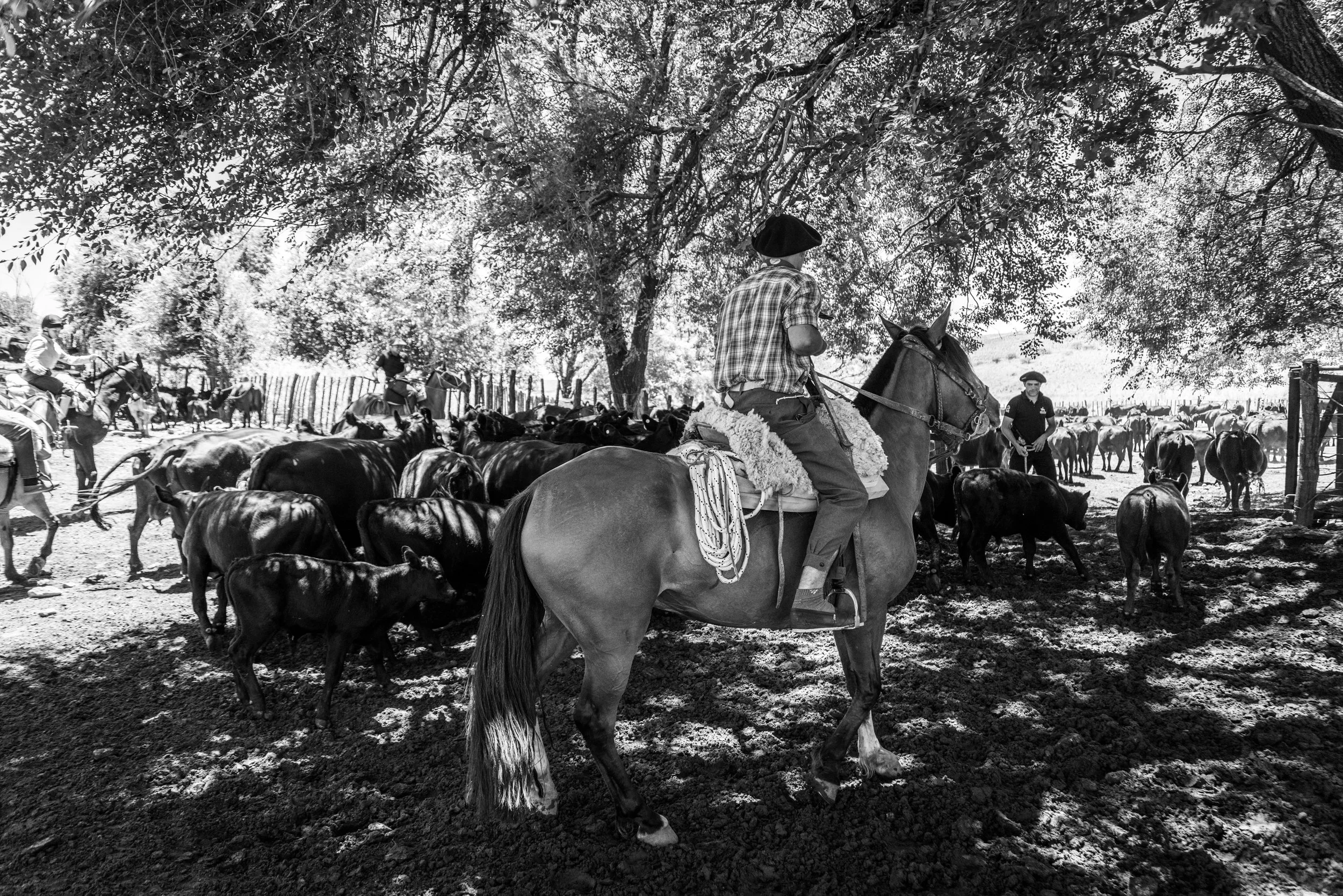
A gaucho without a horse was not a gaucho at all. The relationship between rider and animal was one of complete mutual reliance. Gauchos were known to speak softly to their horses, spend hours on grooming, and choose a mount the way another man might choose a lifelong companion. The style of riding they developed - balanced, relaxed, and deeply communicative - influenced horsemanship traditions across South America.
Cattle work was equally central to pampa culture. Before the great estancias (large ranches) fenced in the land during the 19th century, gauchos moved freely, hunting wild cattle for their hides and tallow, which were the primary exports of the colonial economy. Later, as ranching became formalized, many gauchos became the skilled hired labor that made those estates function.
Gaucho Clothing: Function Meets Identity
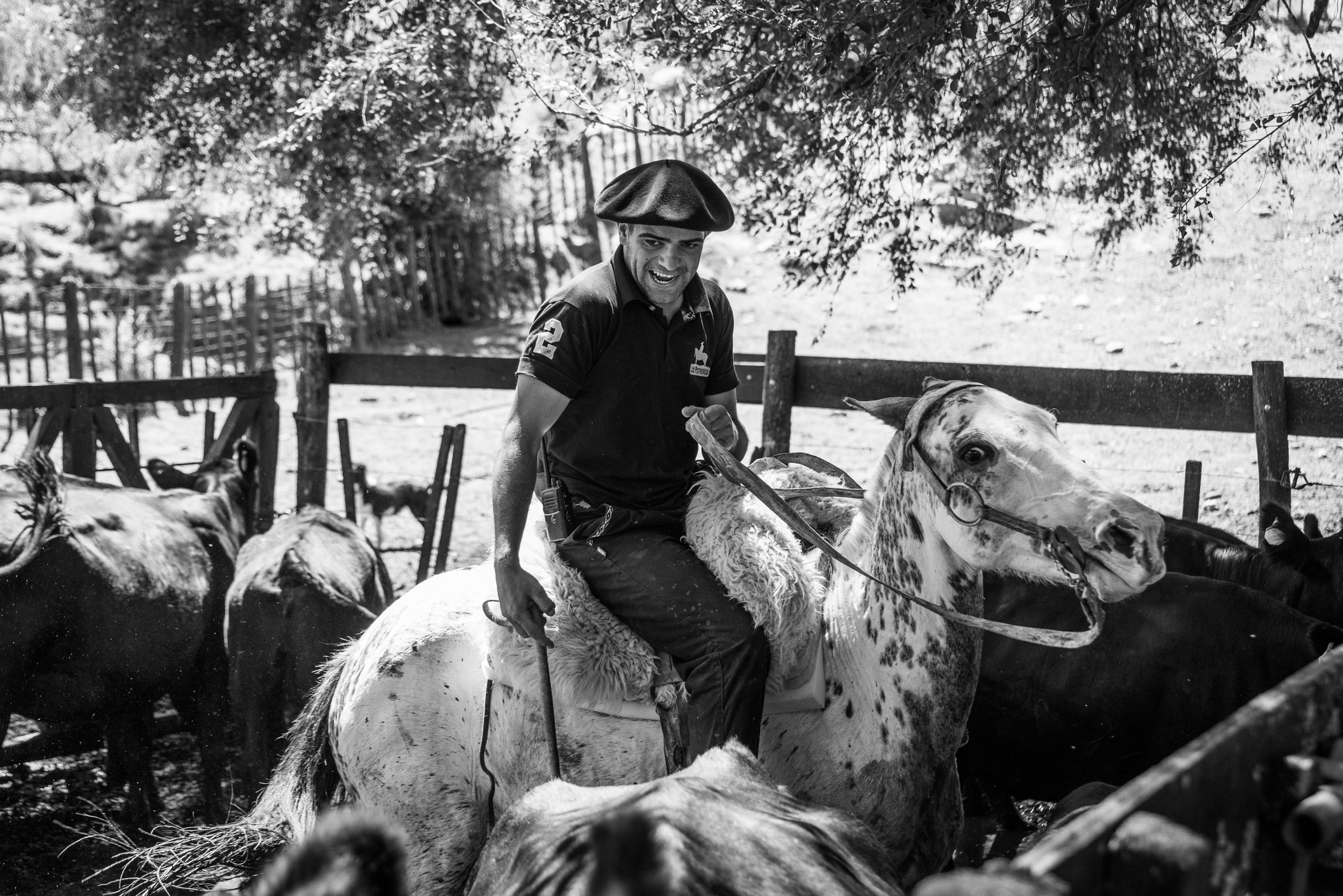
Few things are more immediately recognizable than the gaucho's distinctive dress. Every piece of traditional gaucho clothing developed from a practical need, then became a badge of identity that is still worn with pride at festivals and rural gatherings.
The Key Garments
• Bombachas - Loose, pleated trousers that taper at the ankle and tuck into boots. They allow freedom of movement on horseback while protecting the legs from saddle wear. Today you will find them in every rural goods store across Argentina.
• Poncho - The multi-purpose outer layer. It serves as a cloak against rain and wind, a blanket at night, and - in a pinch - a shield in a knife fight. Regional ponchos vary dramatically in color and weave, acting as a visible marker of where a gaucho came from.
• Rastra - A wide leather belt decorated with silver coins, medallions, and ornamental clasps. A gaucho's rastra was often his most valuable possession and a direct display of his wealth and status.
• Botas de potro - Traditional boots made from the skin of a horse's leg, shaped and dried around the foot. These have largely been replaced by leather boots, but the style is preserved in festivals.
• Sombrero - A flat-brimmed felt hat, typically black or brown. In some regions, especially Entre Ríos, a broader-brimmed straw hat is common.
The overall effect is one of quiet elegance - earthy tones, fine leather, silver accents. Gaucho clothing was never showy for its own sake; its beauty came from craftsmanship and utility.
Tools of the Trade
A gaucho carried his livelihood on his belt and saddle. These tools were not decorative - they were survival equipment refined over generations.
The Facón
The facón is a long, single-edged knife, usually with a blade between 25 and 45 centimeters, carried at the back of the belt. It was used for everything: butchering cattle, cutting rope, preparing food, whittling wood, and, when necessary, self-defense. Skilled bladesmanship was a point of masculine pride, and knife duels - rarely to the death, more often until one man bled - were a common way to settle disputes.
The Boleadoras
Perhaps the most uniquely South American weapon in the gaucho's arsenal, boleadoras consist of two or three stone or metal balls wrapped in leather and connected by cords. Swung overhead and released, they wrap around the legs of a running animal, bringing it down without injury. Gauchos inherited this tool directly from the Indigenous peoples of the pampas, particularly the Tehuelche and Mapuche, who had used it for hunting guanaco and rhea for centuries.
The Lazo
A long leather lasso used for roping cattle. Unlike the hemp lassos of North American cowboys, the gaucho's lazo was typically made from braided rawhide - supple, strong, and precisely weighted for throwing at speed from horseback.
Gaucho Traditions and Social Customs
Gaucho traditions were not just working practices - they formed a complete social code that governed how men related to one another, to women, to strangers, and to the land.
The Payada
Music was essential to gaucho identity. The payador was a travelling singer-poet who accompanied himself on a guitar and improvised verses - often in competition with another payador in a verbal duel called a payada de contrapunto. Themes ranged from love and loss to philosophy, current events, and sharp political commentary. The payada tradition is recognized by UNESCO as part of Argentina's intangible cultural heritage, and it survives in festivals and competitions across the country.
Mate: The Shared Cup
No custom is more central to gaucho traditions - or Argentine life generally - than the ritual sharing of mate. This bitter, caffeinated herbal drink, prepared in a gourd and sipped through a metal straw called a bombilla, is offered as a gesture of friendship and belonging. Refusing it is considered rude. Among gauchos, passing the mate around the fire at dawn or dusk was (and remains) a moment of quiet solidarity.
The Gaucho in Argentine Identity and Art
By the mid-19th century, the gaucho's way of life was already in decline. Barbed-wire fencing transformed the open pampas into enclosed estancias. The railroad connected remote regions to Buenos Aires, bringing wage labor and market forces that made the nomadic lifestyle impossible. The gaucho who had once roamed freely now worked for a landowning patrón or drifted to the cities.
Yet at precisely the moment the gaucho was disappearing, Argentine writers and intellectuals began to mythologize him. The most important work in this tradition is José Hernández's epic poem Martín Fierro (1872), which follows a gaucho displaced by military conscription and forced labor — a scathing critique of government policy disguised as a folk ballad. The poem became the unofficial bible of Argentine nationalism. Martín Fierro is to Argentina roughly what Don Quixote is to Spain: a flawed, noble figure whose story defines how a culture sees itself.
The gaucho also became a potent political symbol. From the Peronist movement of the 1940s onward, politicians across the spectrum invoked the gaucho as proof of Argentine authenticity, independence, and working-class dignity. His image appears on coins, stamps, provincial flags, and the logos of countless Argentine businesses.
The Gauchos of Argentina have given the country its most enduring national myth - the free, self-reliant man of the open plain who lives by his skill, his horse, and his word. Gaucho culture is not nostalgia; it is a thread that runs from the colonial frontier straight through to the asado in your neighbor's backyard and the mate cup passed around at dawn. Understanding that thread changes the way you see Argentina entirely.
