The Modern Luxury of Responsible Travel

As countries around the world begin to relax their rules on quarantine, we can begin to think about turning our lock-down dreams into realities and begin to travel again. Over the last few months we have begun to witness a change in the natural world, perhaps a silver lining to such an overcast time. Air and water qualities have improved, wildlife across the world has begun to return to our cities and has begun to thrive in areas where they were once under threat, carbon emissions have started to drop and as a result so has air pollution.

This is a time to change how we travel, supporting hotels and destinations which have an ethos of responsible tourism and sustainable practices. Both of these are huge parts of life at Estancia Los Potreros. Still a working cattle estancia, we work hard to remain true to our original values.

We produce the majority of our energy through renewable resources mainly wind and solar all our farming is based upon organic principles. We try to minimise our impact on the land and allow nature to dictate our course, managing our herd carefully we prevent over-grazed and eroded land, ensuring we have sufficient grass for both our horses and cattle throughout the year. 

Located on a provincial reserve of the Sierras Chicas we have a farming style which continues to encourage the presence of incredible wildlife including the elusive puma, wild boar, foxes, hairs, and with regularly sightings of the Andean Condors, whose habitat lies across the Punilla valley, in the Sierras Grandes.Although we are known for our world class riding we have an incredible variety of birdlife year round, from the commonly spotted burrowing owls, field flickers and southern lapwings to visits from the more exotic peregrine falcons, black vultures and American kestrels. 

Supporting our community is very important to us, the majority of our staff are a part of our family. Many have followed in the footsteps of their elder brothers, fathers, grandfathers, and even great grandfathers, who have worked alongside the Begg family for generations. We have long supported the local rural school, with the help of our guests. By running a small shop on the estancia, we donate all the income to the school, which is where many of our gauchos studied, and is now attended by their children. 

Our commitment to responsible tourism was born out of a necessity, as our location is off the grid, and we have to be as self-sufficient as possible, but now more than ever we are working on minimising our impact on our environment. Although this doesn’t mean we are for-going luxury, we are redefining the way we live. Even mealtimes celebrate each season of fruit and vegetables accompanied by tender delicious beef from the estancia.

One of life’s great luxuries should be to leave a positive impact on the places we love to visit, helping them to protect their culture and history but more importantly ensuring we will be able to visit time and time again for years to come.

056_Architecture_TCunniffe.jpg

A Day in the Life: Herding Cattle at Los Potreros

The world has been hugely affected by the ongoing pandemic of 2020 and it is something I am sure many of us will forget; from the shortage of toilet paper to the extensive period of social distancing, disruption has been widely felt and Argentina is no exception. Although life on a working cattle estancia continues one of our guides Sammie has decided to share with us an insight into quarantine at Estancia Los Potreros.

Herding Cattle with Sammie and Pachi.JPG

"Que estamos separando? What are we separating?" "Las lindas de las feas. The beautiful from the ugly."

A year ago, if you'd told me I'd spend my morning on foot in a corral, sorting cows into "good looking" and "ugly," I'd have laughed you off. But that's exactly where I found myself as a guide at Estancia Los Potreros.

Starting Before Sunrise

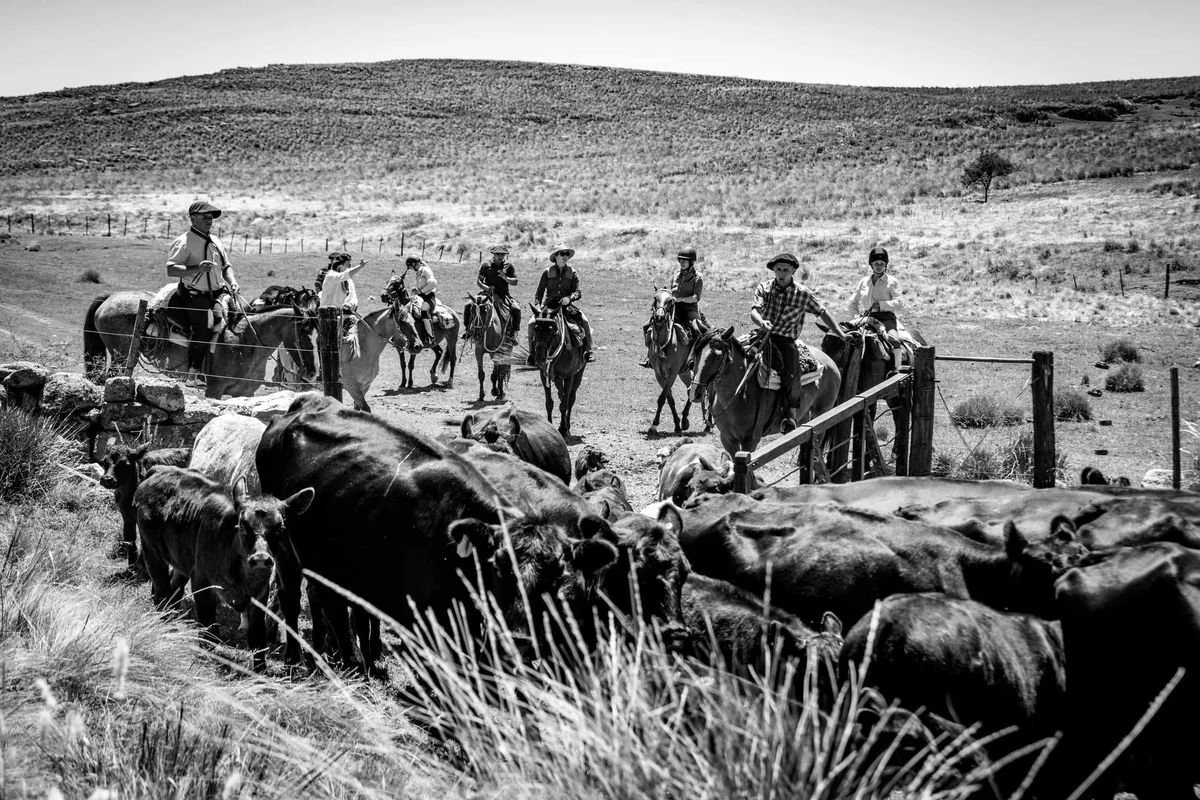
Life on a working cattle ranch doesn't pause for much, and this week it was time to pregnancy test our Aberdeen Angus herd. Six of us saddled up while the sky was still glowing tangerine and rode out into the campo to find the cattle and bring them down to the cattle station.

Riding alongside my compañero Pachi, we headed across the sierras - hills that felt every bit as steep as Ben Nevis. "Go over that hill, and push any cows you find over the next one," he instructed, unhelpfully. Wanting to prove myself, I cantered up and over, and found cattle scattered across rock and crag. My horse, Muchacho, was far more sure-footed than I was and picked his way through the terrain without hesitation.

Learning the Gaucho Way

Months in, I still can't whistle like the gauchos do, but I've picked up their calls and a fair bit of Spanish vocabulary that certainly wasn't part of my schooling. Pachi and I eventually reconvened, and three lines of cattle converging from different directions became one herd, pushed together toward the station.

A Day's Work on the Estancia

Once the cows were gathered, everyone took a station. Georgie worked her horse in the corral, pushing small groups through; Pachi guided them into the chute; I shut the gate behind each one; our headman Dani held the head steady; the vet checked how far along each cow was with her calf. We only paused for an asado lunch before starting again.

Work continued after the vet left, this time separating male and female calves on foot - closer to a game of dodgeball with live cows than anything else, especially once I realised the gauchos had rebenques and we didn't. By the end, we'd picked out the 70 best female calves, the future mothers of the herd, chosen for their build, their longer legs suited to the rocky ground, and a "nice face" I still can't quite define.

Riding Home

We rode back as the sun dropped, exhausted, filthy, and thoroughly content. Days like this are what estancia life is really about - hard work, a bit of chaos, and a growing sense of belonging to this place and its rhythms. I'm still not sure if I'll leave here more fluent in Spanish or in cow, but either way, I wouldn't trade the lesson.

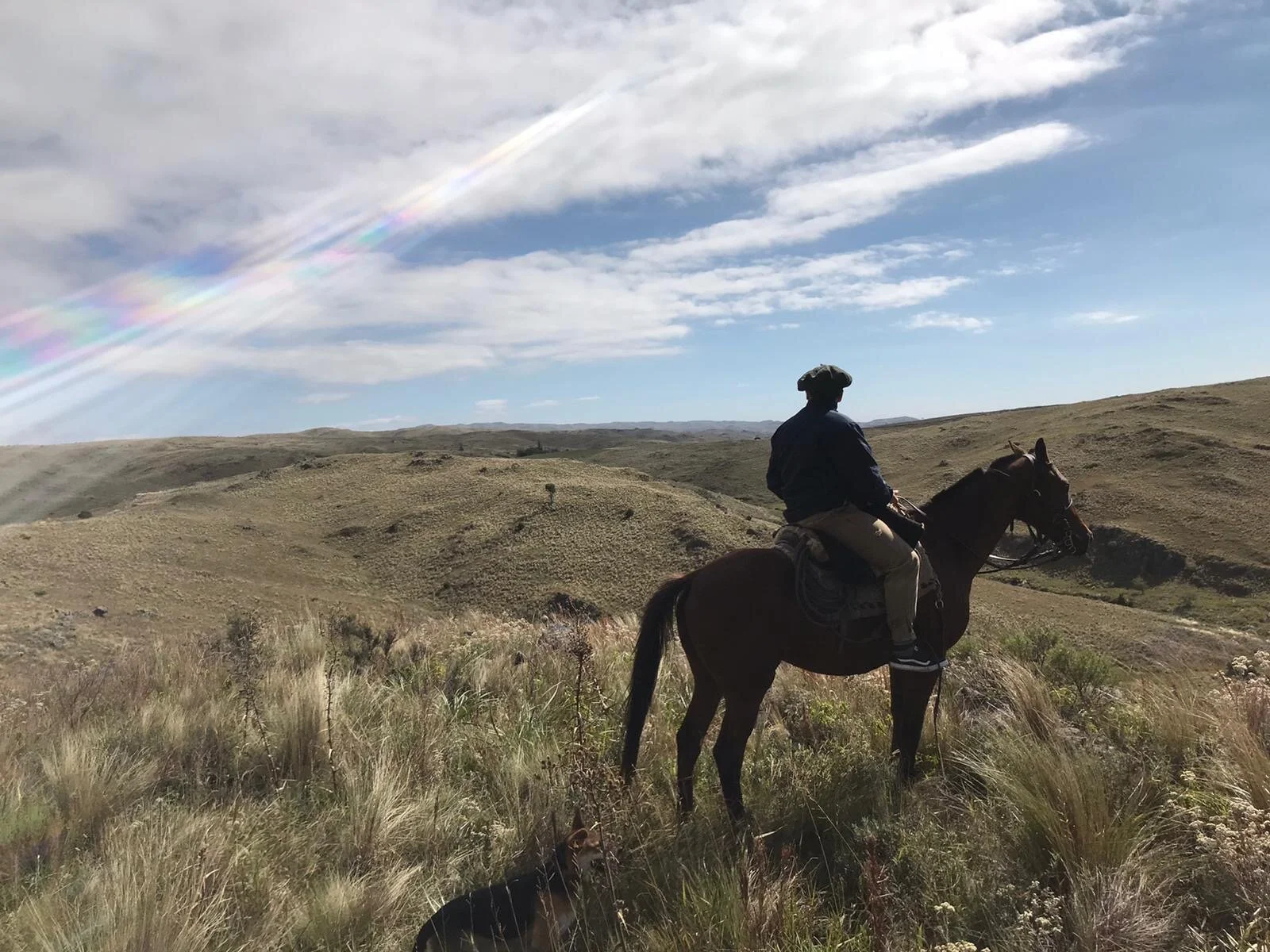
A gaucho looking at over the sierras chicas.

Tradition, Community & Cattle: Our Annual Estancia Sale

Tradition, Community & Cattle: Our Annual Estancia Sale

The annual cattle sales are one of the major events of the estancia year. Preparation starts a few months before when the animals are selected for sale, and a few days before the auction they are tagged and then transported to the auction yards, about an hour away from the estancia. It is always exciting to visit the auction and see the auctioneer in action.

Through the Lens: Kevin Faingnaert at Estancia Los Potreros

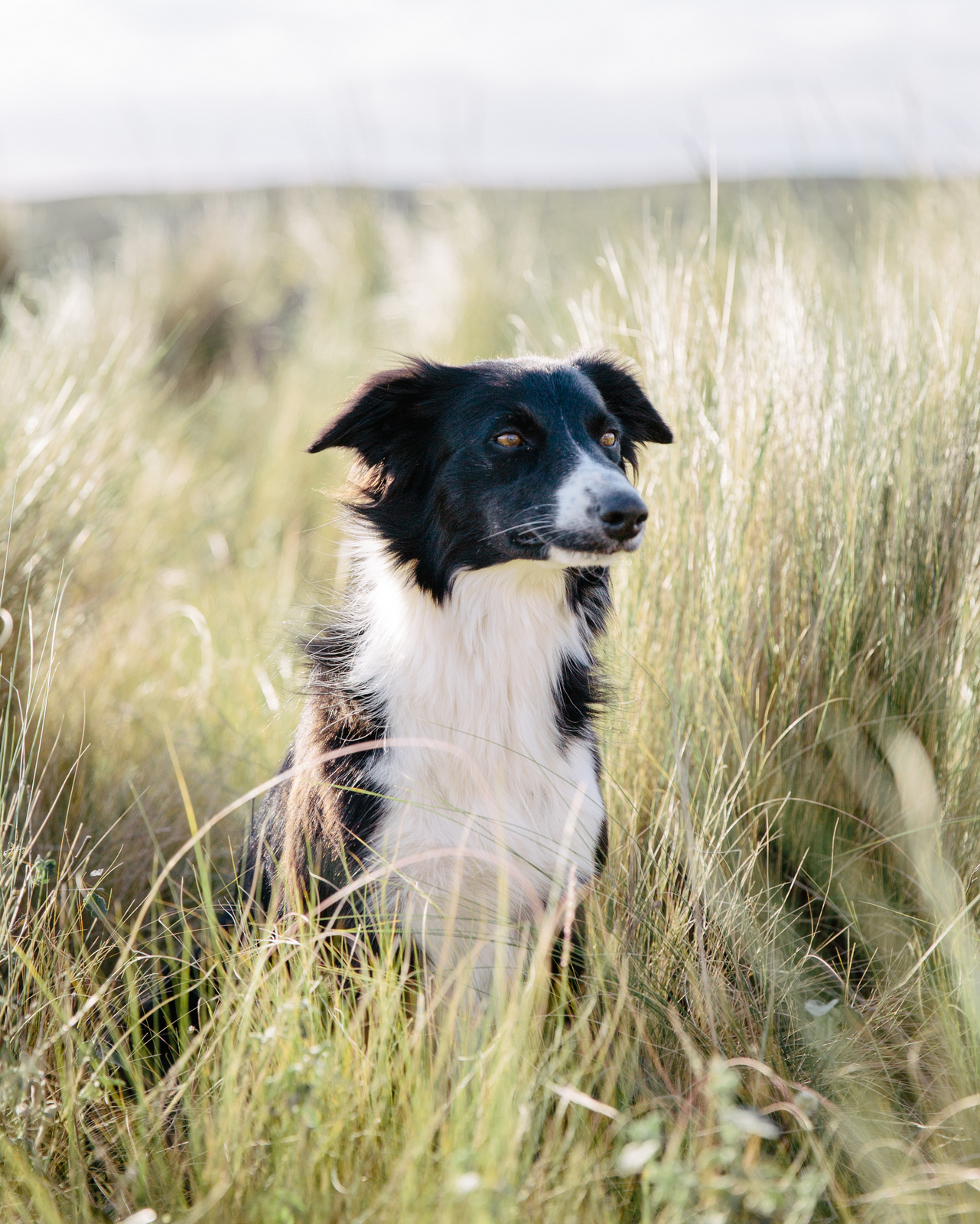
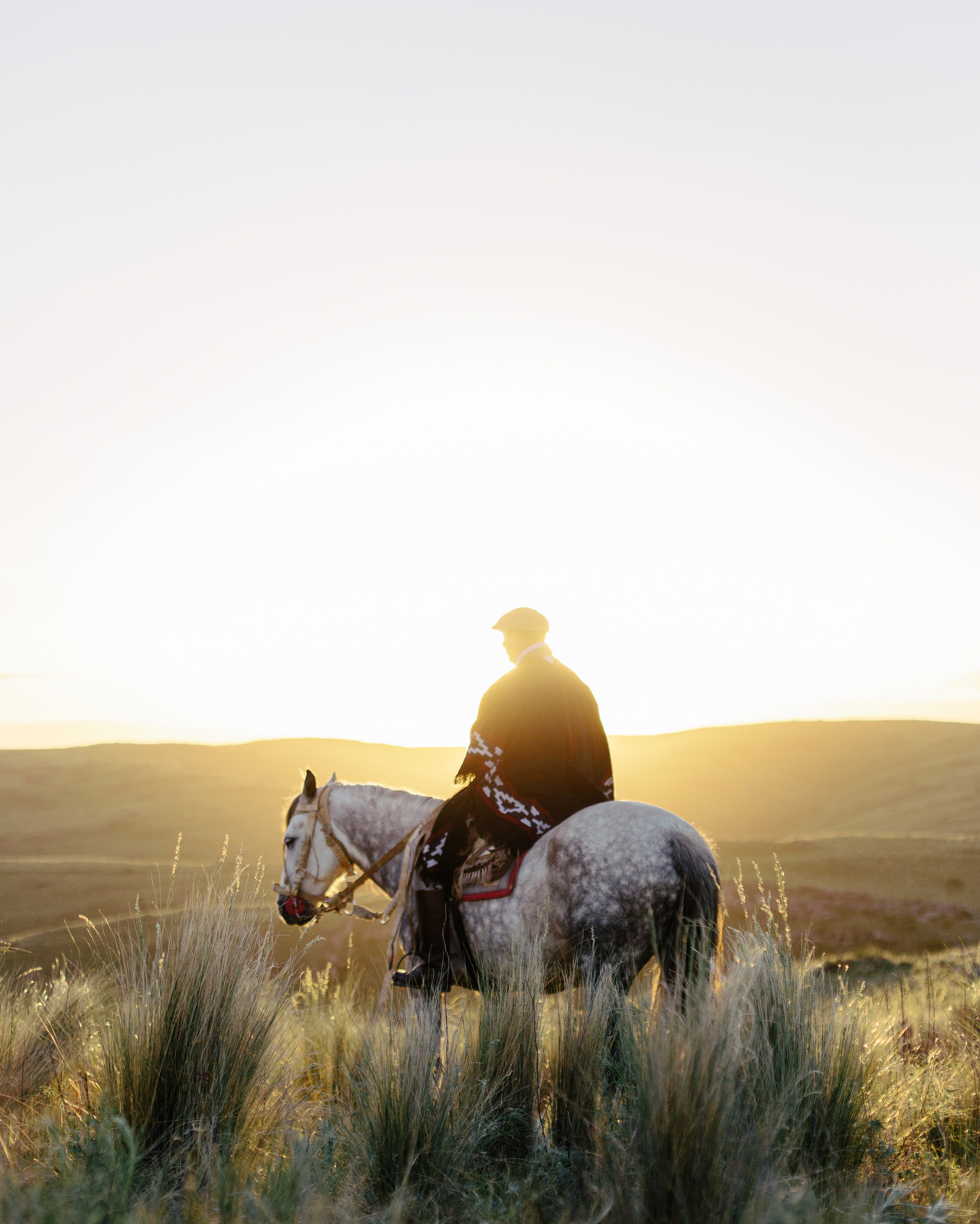
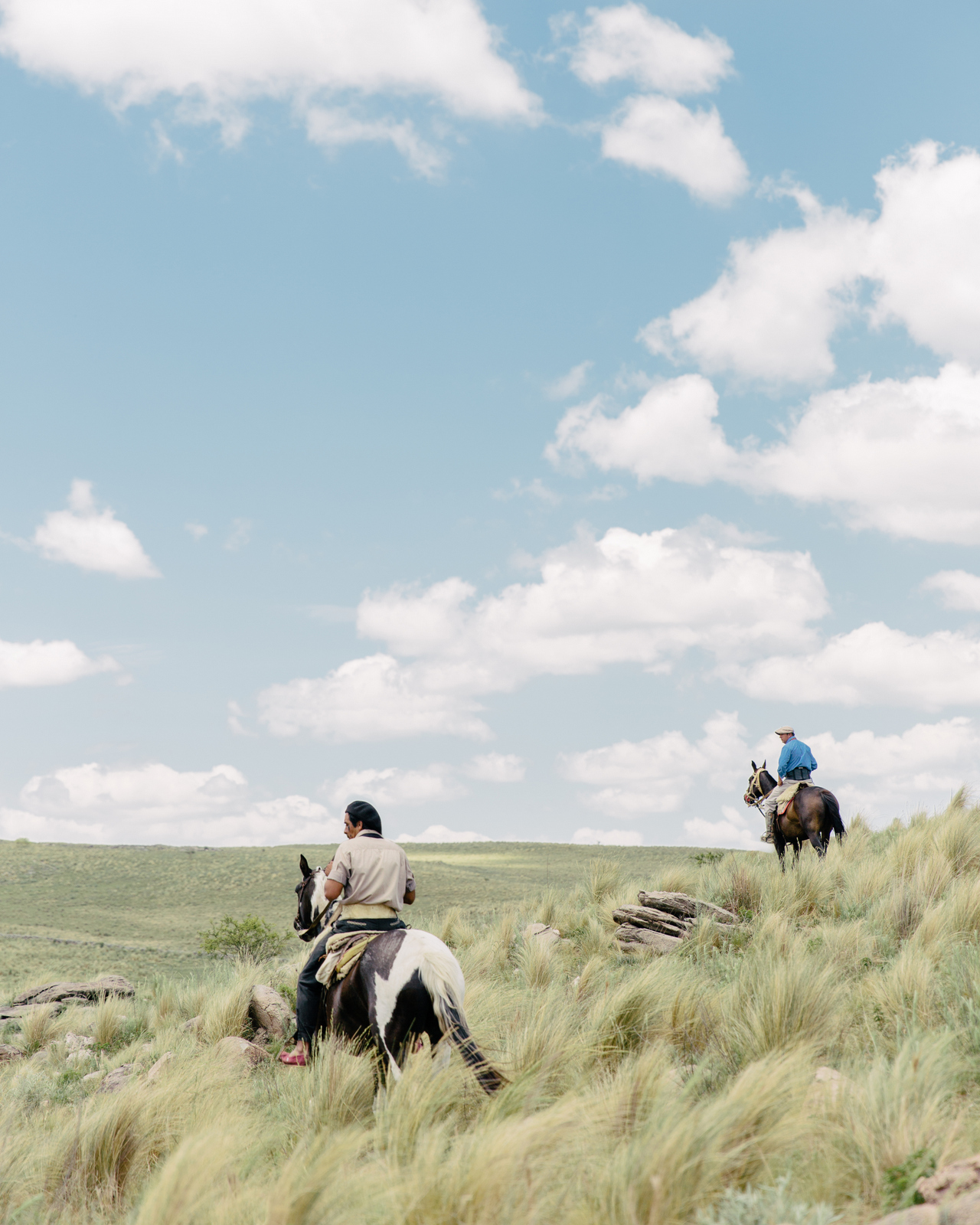
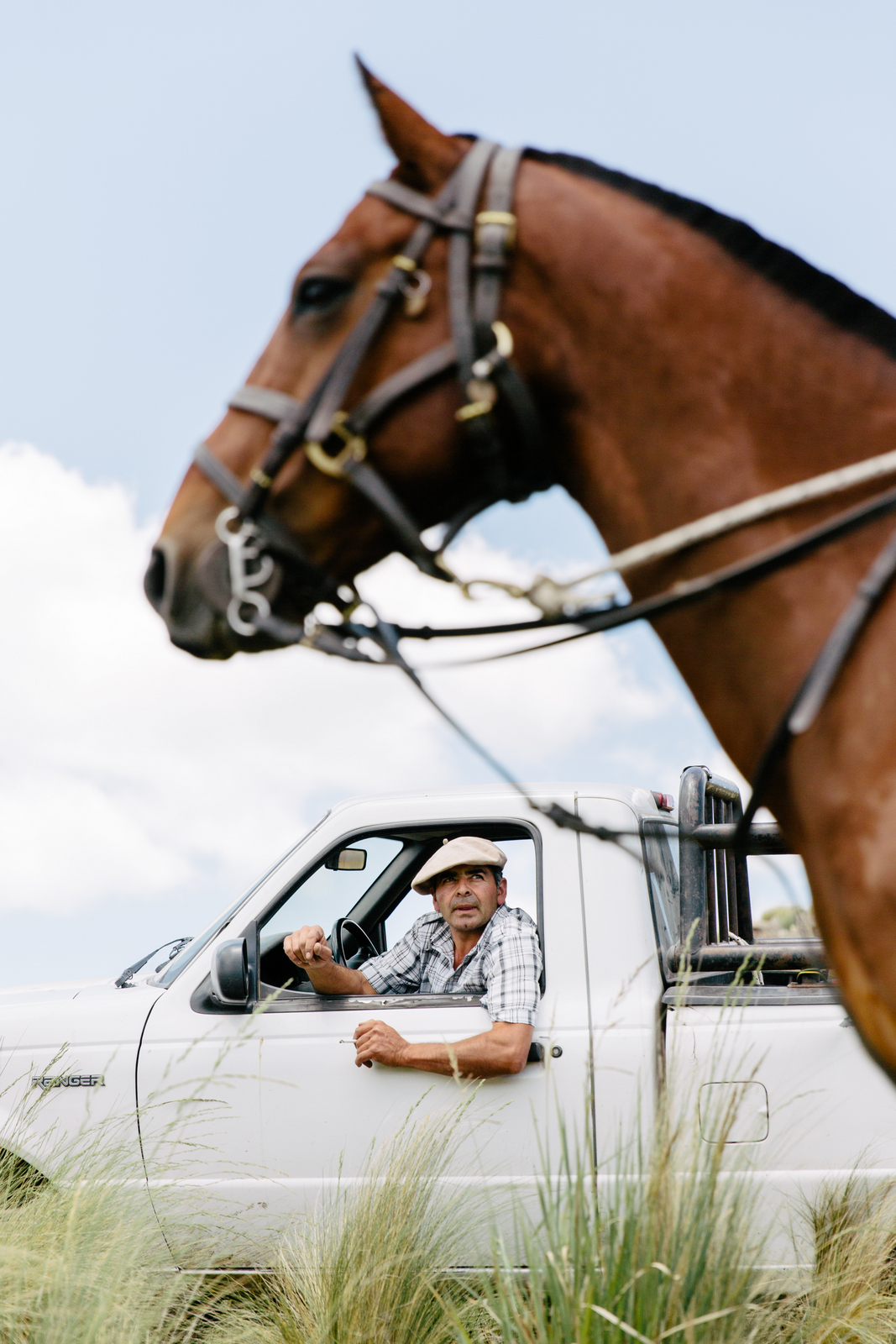
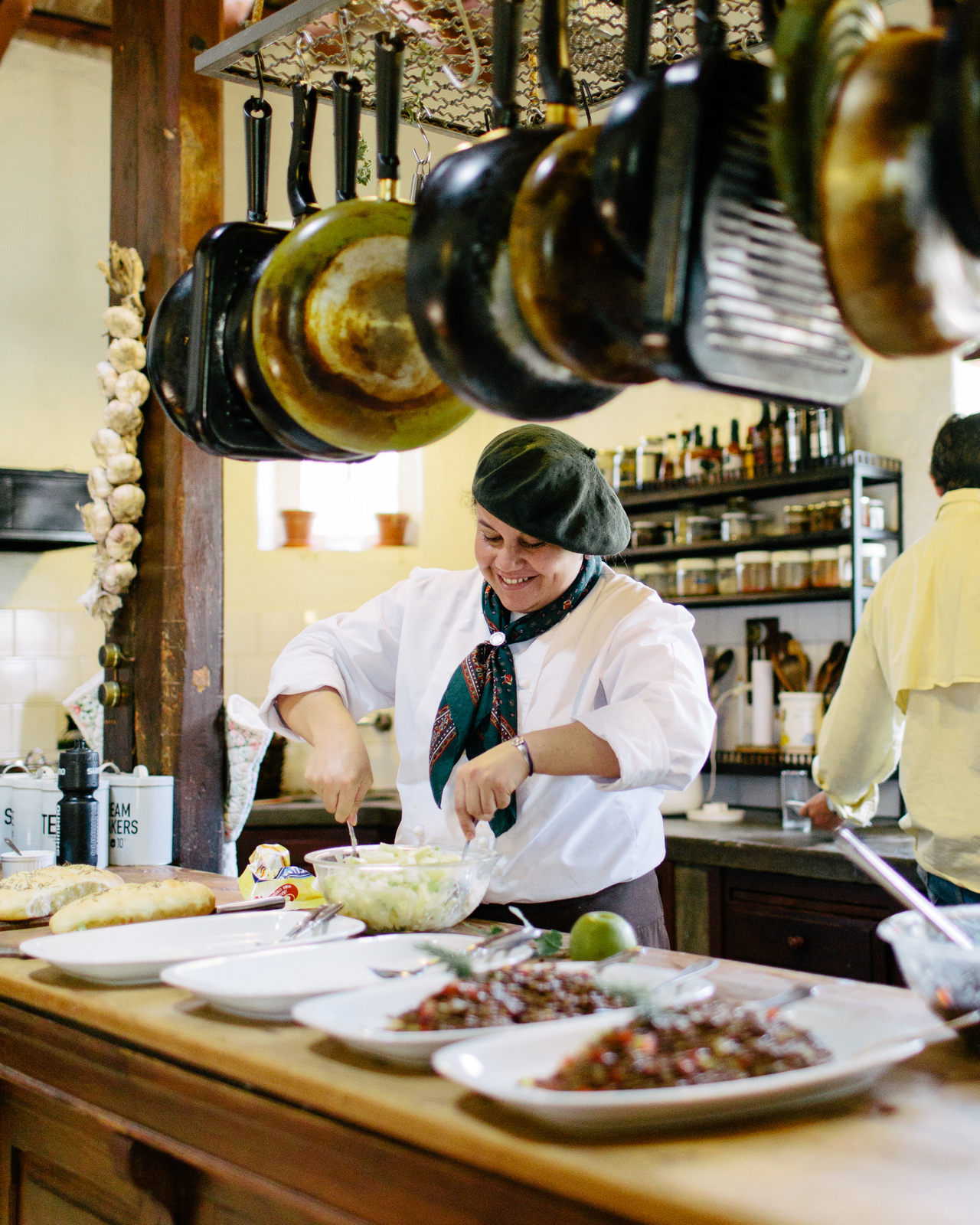
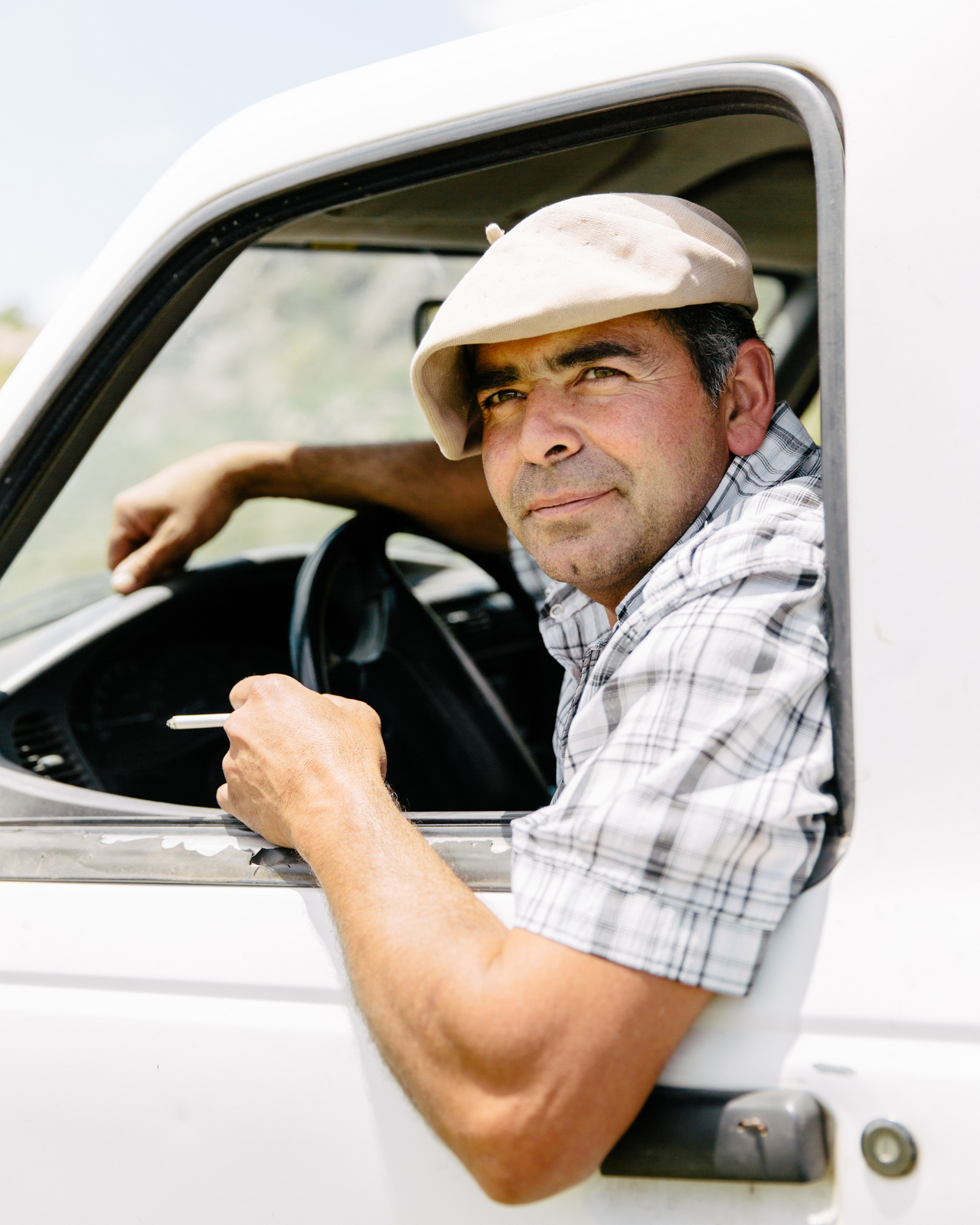
A few weeks ago, we had the pleasure of welcoming renowned Belgian documentary photographer Kevin Faingnaert to Estancia Los Potreros. As part of a three-month journey through Argentina, Peru and Bolivia, Kevin contacted us to ask if he could spend a few days on the estancia, immersing himself in life on the farm and photographing the landscapes, horses and people that make this place so special.

Based in Ghent, Belgium, Kevin is an internationally recognised documentary photographer whose work has been featured by publications including National Geographic, The New York Times and The Atlantic. Before becoming a full-time photographer, he studied sociology, and this background is evident throughout his work. Rather than simply documenting places, Kevin is interested in understanding the people who live there, the traditions they uphold and the communities that shape their identity.

His approach to photography is thoughtful and immersive. Instead of arriving, taking a few photographs and moving on, Kevin spends time getting to know the people and places he visits. By living alongside local communities and experiencing their daily routines, he is able to create images that feel genuine and deeply personal. His photographs are not only beautiful, but also tell stories of culture, heritage and the connections between people and their environment.

During his travels across South America, Kevin deliberately chose to focus on everyday life rather than the continent's most famous landmarks. His project, which he describes as "A Love Letter to Peru, Bolivia and Argentina," captures quiet moments that might otherwise go unnoticed: the changing light across vast landscapes, conversations shared over a cup of maté, the rhythm of daily work and the traditions that continue to define rural communities.

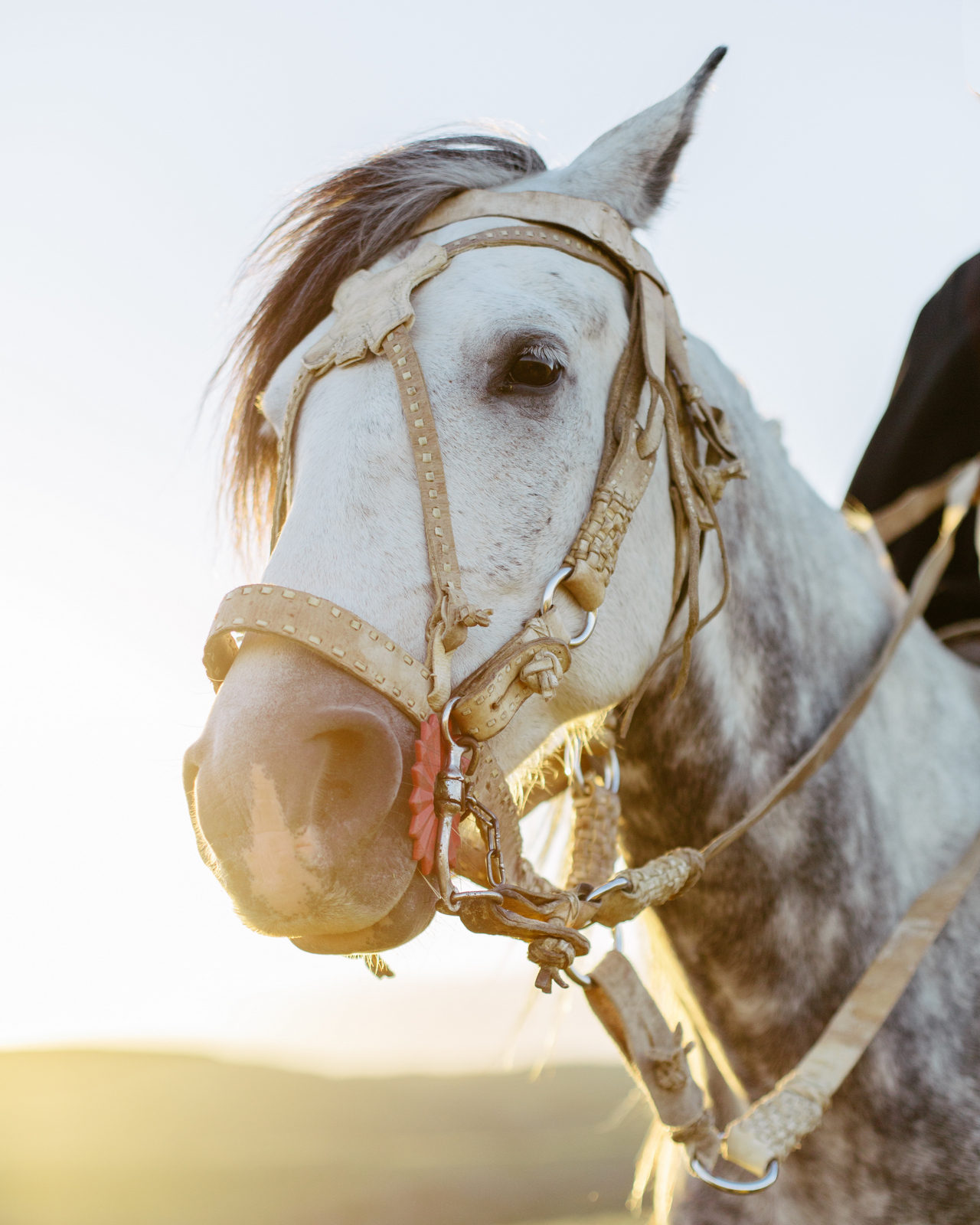
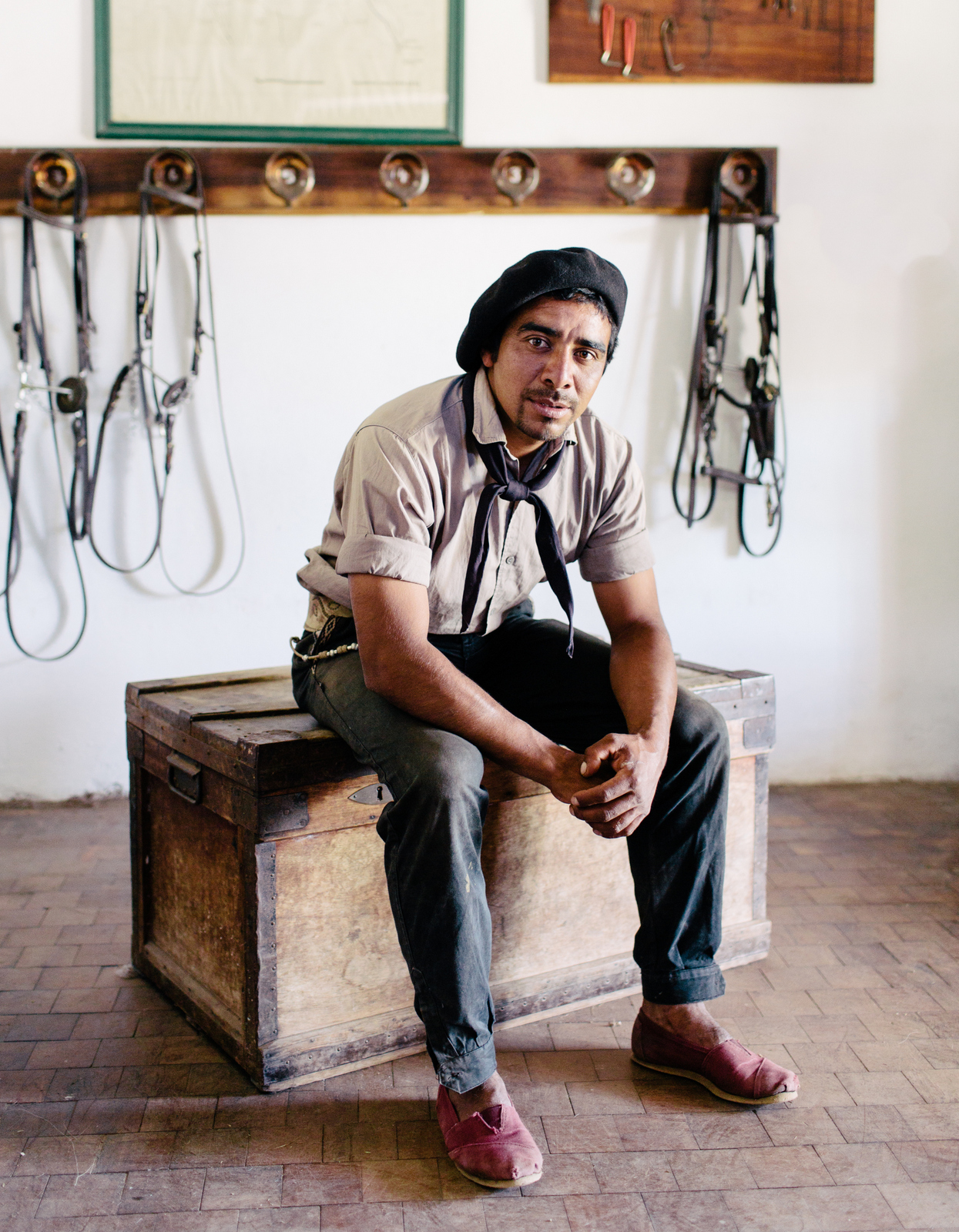
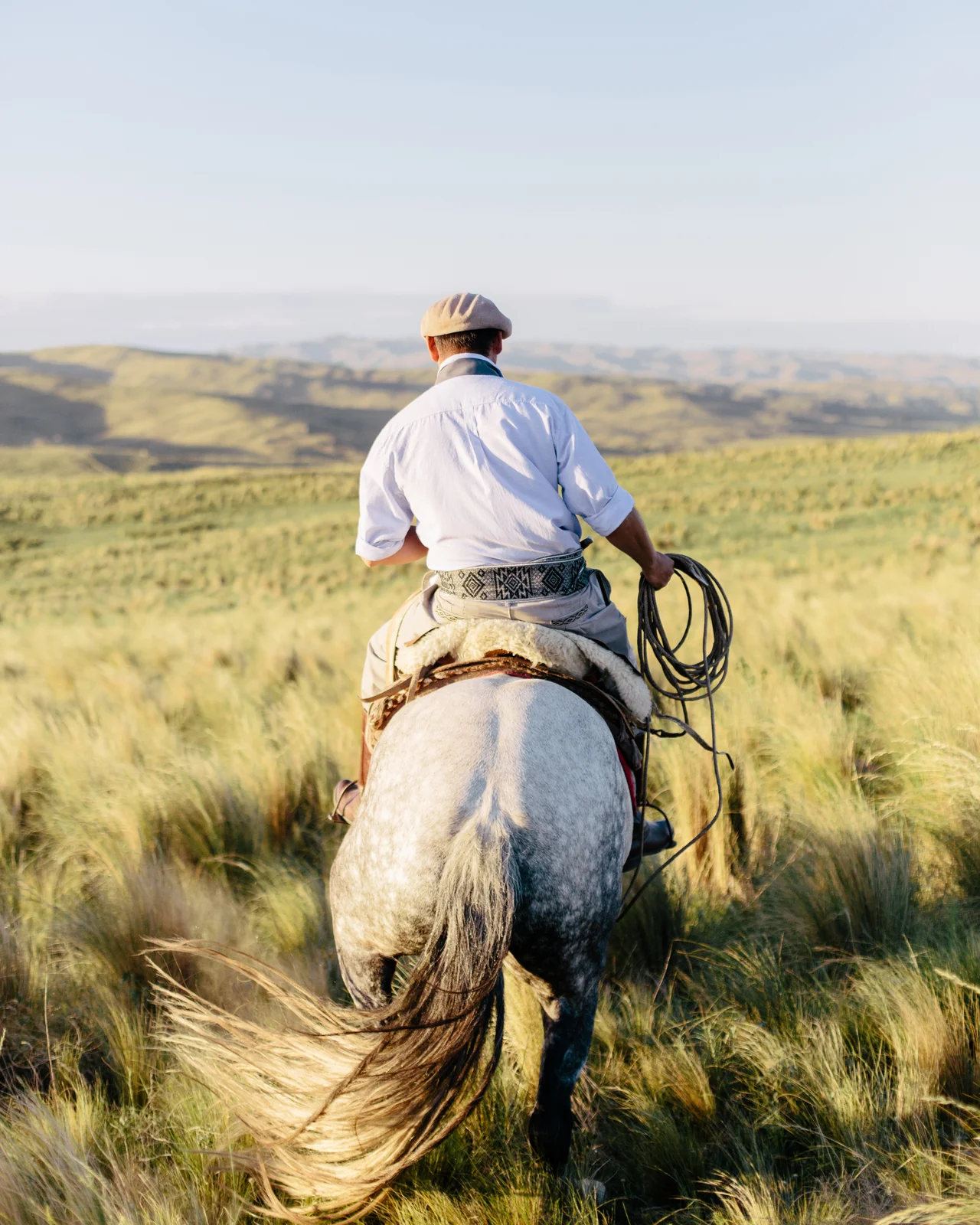
His time at Estancia Los Potreros perfectly reflected this approach. Rather than directing scenes or searching for dramatic moments, Kevin observed life as it unfolded naturally. From gauchos working with horses and cattle to peaceful mornings in the Sierras Chicas, his photographs capture the authenticity of life on an Argentine estancia. The soft natural light, muted colours and carefully composed images create a sense of calm that beautifully reflects the pace of life here.

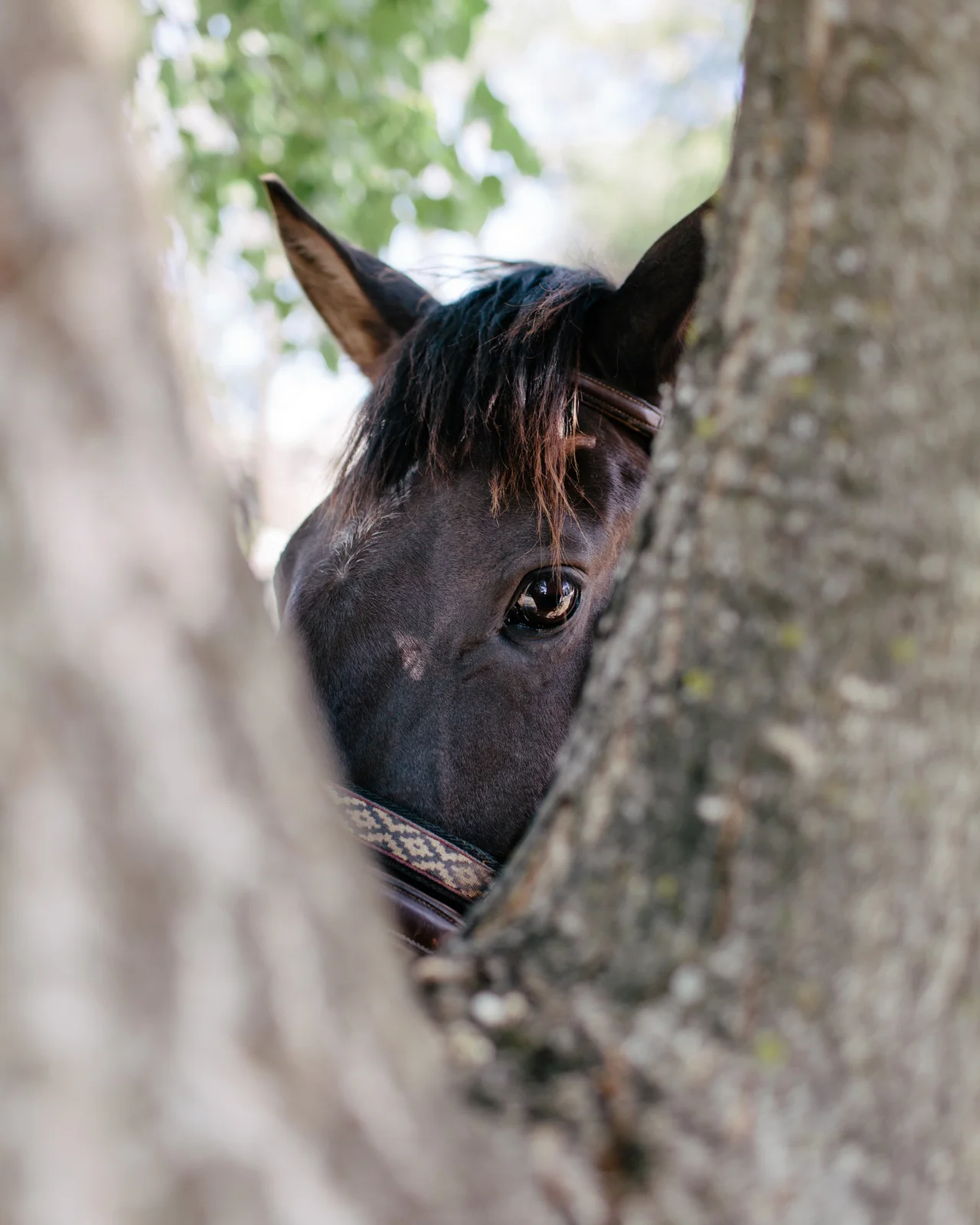
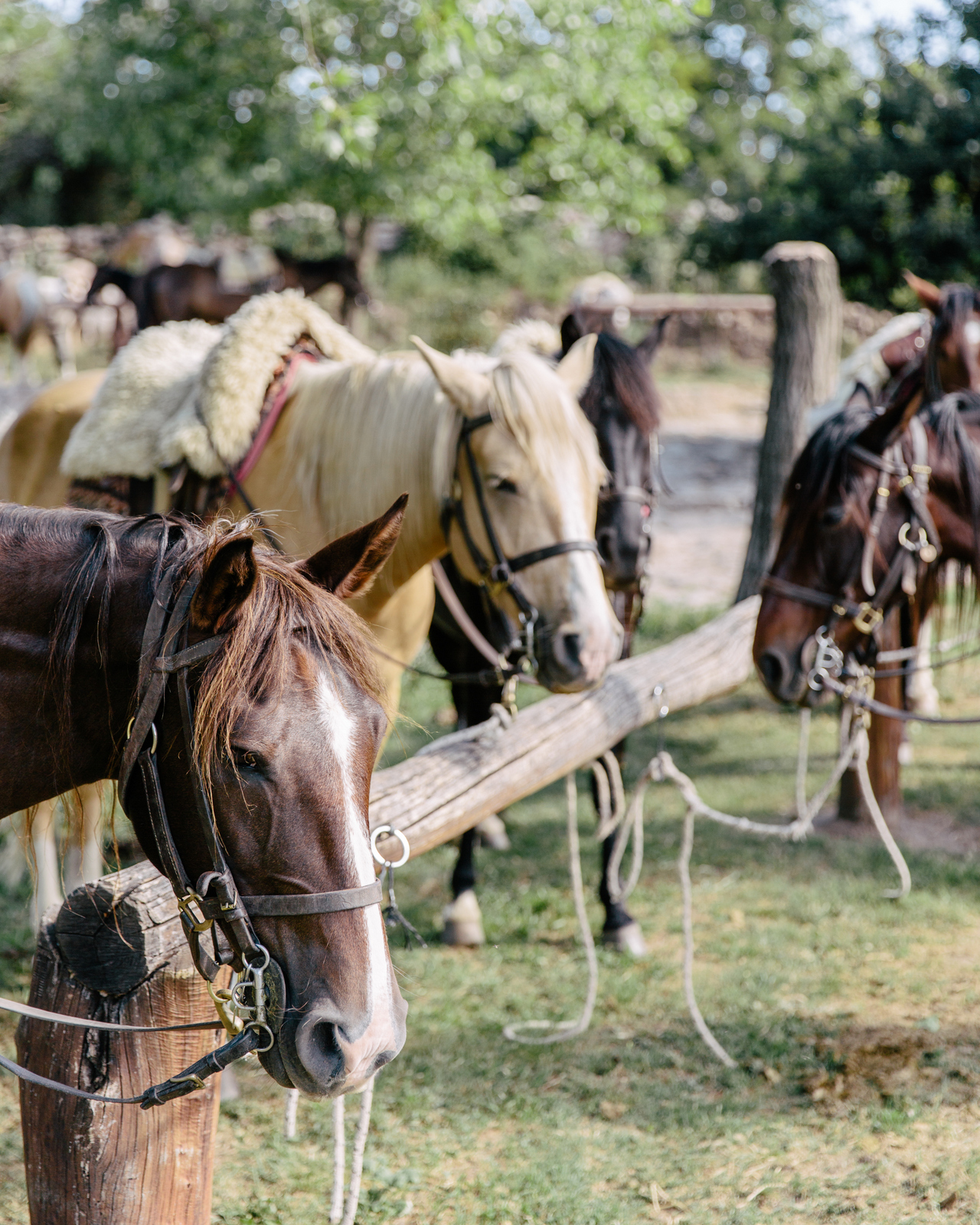
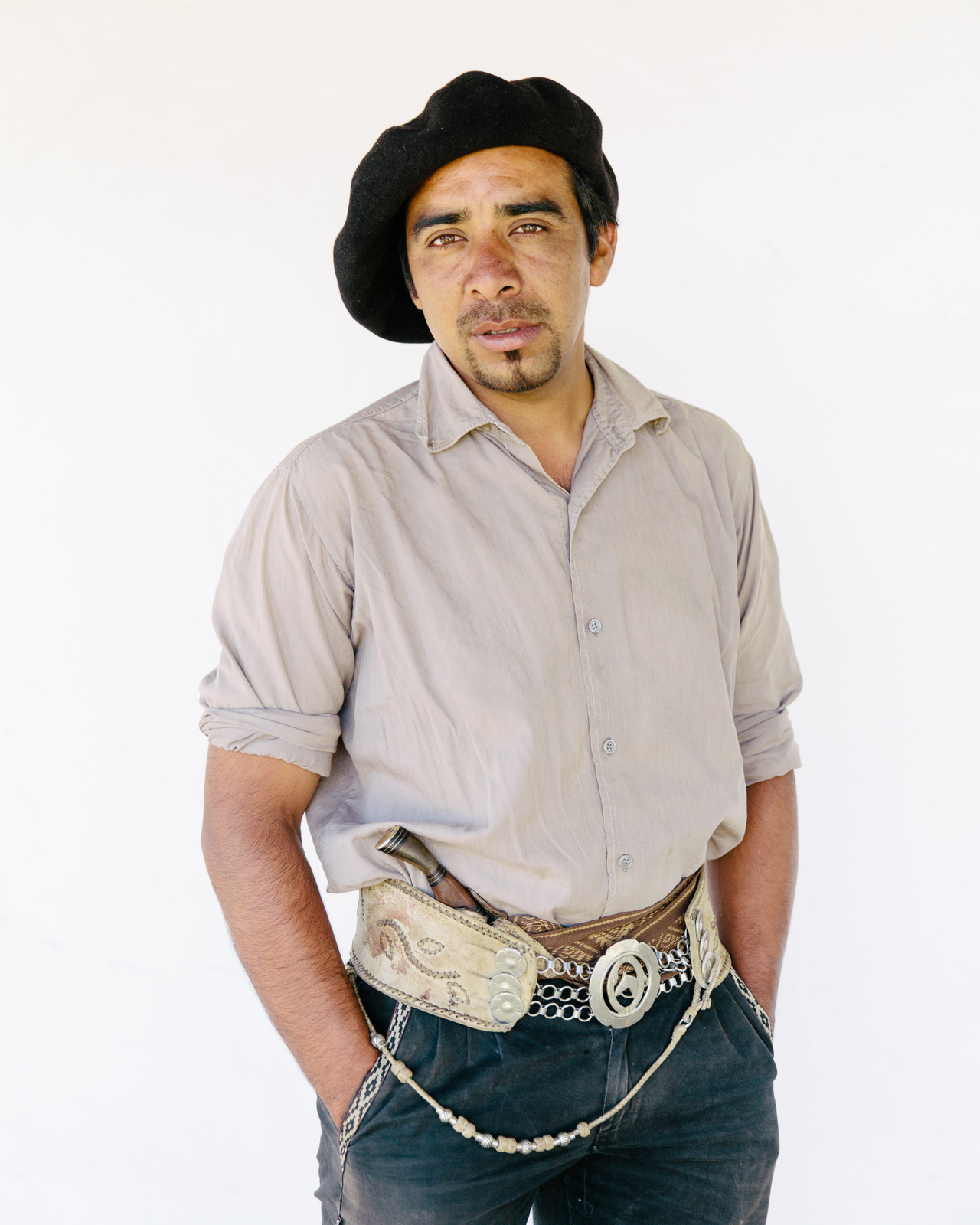
We are delighted to share a small selection of Kevin's photographs from his stay with us. They offer a unique perspective on the estancia and remind us that some of the most meaningful stories can be found in everyday moments.

If you enjoy documentary photography or simply appreciate authentic travel stories, we highly recommend exploring more of Kevin's remarkable work.