The world has been hugely affected by the ongoing pandemic of 2020 and it is something I am sure many of us will forget; from the shortage of toilet paper to the extensive period of social distancing, disruption has been widely felt and Argentina is no exception. Although life on a working cattle estancia continues one of our guides Sammie has decided to share with us an insight into quarantine at Estancia Los Potreros.

"Que estamos separando? What are we separating?" "Las lindas de las feas. The beautiful from the ugly."
A year ago, if you'd told me I'd spend my morning on foot in a corral, sorting cows into "good looking" and "ugly," I'd have laughed you off. But that's exactly where I found myself as a guide at Estancia Los Potreros.
Starting Before Sunrise
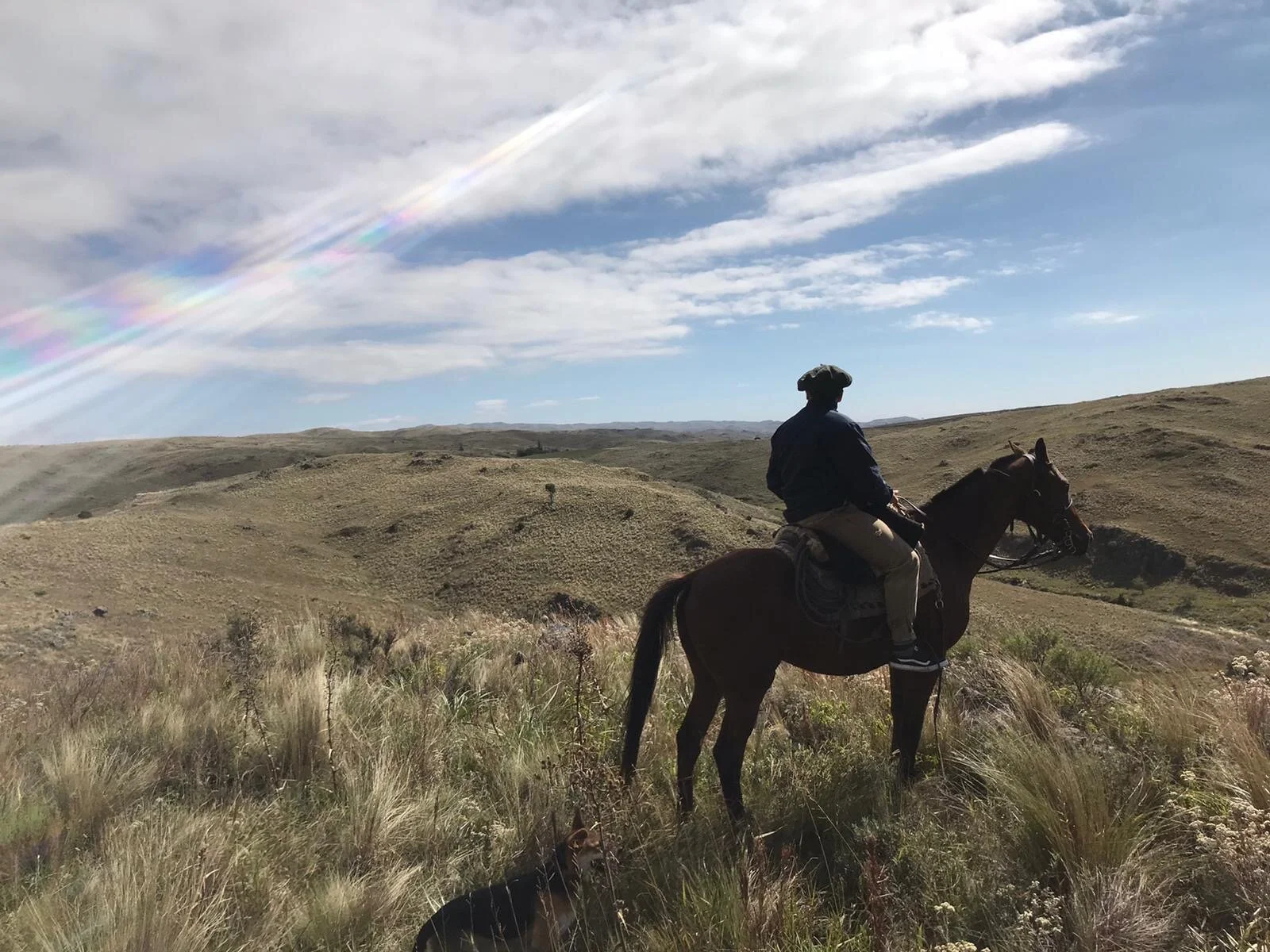
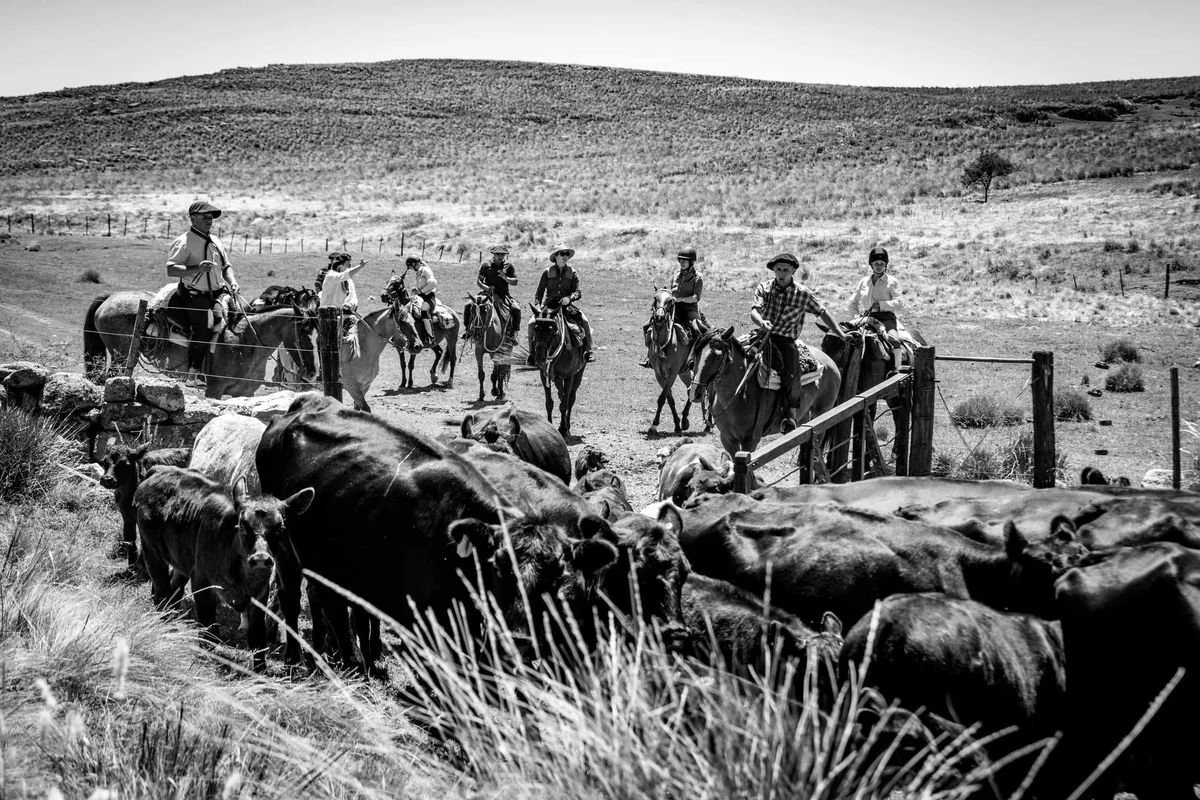
Life on a working cattle ranch doesn't pause for much, and this week it was time to pregnancy test our Aberdeen Angus herd. Six of us saddled up while the sky was still glowing tangerine and rode out into the campo to find the cattle and bring them down to the cattle station.
Riding alongside my compañero Pachi, we headed across the sierras - hills that felt every bit as steep as Ben Nevis. "Go over that hill, and push any cows you find over the next one," he instructed, unhelpfully. Wanting to prove myself, I cantered up and over, and found cattle scattered across rock and crag. My horse, Muchacho, was far more sure-footed than I was and picked his way through the terrain without hesitation.
Learning the Gaucho Way
Months in, I still can't whistle like the gauchos do, but I've picked up their calls and a fair bit of Spanish vocabulary that certainly wasn't part of my schooling. Pachi and I eventually reconvened, and three lines of cattle converging from different directions became one herd, pushed together toward the station.
A Day's Work on the Estancia
Once the cows were gathered, everyone took a station. Georgie worked her horse in the corral, pushing small groups through; Pachi guided them into the chute; I shut the gate behind each one; our headman Dani held the head steady; the vet checked how far along each cow was with her calf. We only paused for an asado lunch before starting again.
Work continued after the vet left, this time separating male and female calves on foot - closer to a game of dodgeball with live cows than anything else, especially once I realised the gauchos had rebenques and we didn't. By the end, we'd picked out the 70 best female calves, the future mothers of the herd, chosen for their build, their longer legs suited to the rocky ground, and a "nice face" I still can't quite define.
Riding Home
We rode back as the sun dropped, exhausted, filthy, and thoroughly content. Days like this are what estancia life is really about - hard work, a bit of chaos, and a growing sense of belonging to this place and its rhythms. I'm still not sure if I'll leave here more fluent in Spanish or in cow, but either way, I wouldn't trade the lesson.