
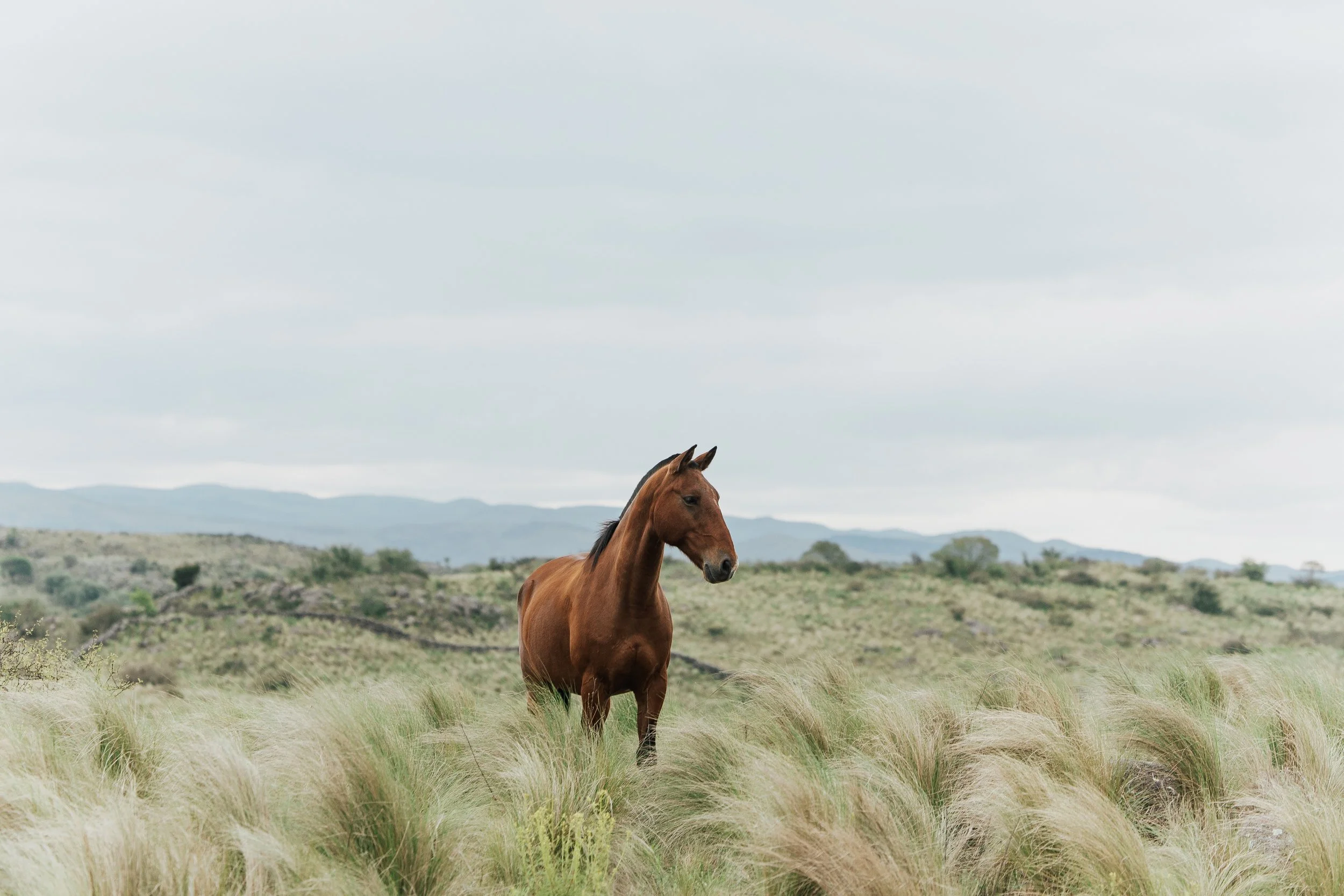
If one horse could tell the story of Argentina, it would be the Criollo. These tough, clever horses have carried gauchos, soldiers and settlers across the country for centuries - and today they carry our guests through the hills of the Sierras Chicas. Here's the remarkable story of how the Criollo came to be.
Spanish Horses Arrive in the Río de la Plata
The story starts in 1536, when the Spanish explorer Pedro de Mendoza founded the first settlement of Buenos Aires and brought horses with him from Spain. These horses were of Andalusian and Barb descent - hardy, intelligent animals used to hot, dry conditions.
The first settlement didn't last long. Within a few years it was abandoned, and some of the horses were left behind. With endless grassland, few predators and no one to stop them, they began to roam free.
The Wild Herds That Roamed Across the Pampas
Over the next few centuries, those few horses multiplied into enormous wild herds, known as cimarrones, that spread right across the Pampas. Life was tough - scorching summers, freezing winters, droughts and long distances between water - and only the strongest survived.
This was natural selection at its most ruthless, and it shaped the Criollo into the horse we know today: compact, strong, sure-footed, with hard hooves, incredible stamina and the ability to thrive on very little.
Partner of the Gauchos and the Original Working Horse
As people settled the Pampas, they caught and tamed these wild horses, and the Criollo quickly became indispensable. For the indigenous peoples and the gauchos, the horse was everything - transport, work and a way of life.
The Criollo's original job was working cattle across vast, open country, and it was brilliant at it - quick, agile, brave and able to keep going all day. Criollos also carried soldiers in Argentina's wars of independence, and helped open up the country as people moved further into the interior.
Saving the Breed and the Famous Ride to New York
By the late 1800s, many Argentine breeders were importing larger European horses and crossing them with their native stock, and the pure Criollo was in danger of disappearing. In the early 1900s, Dr Emilio Solanet set out to save the breed, seeking out the toughest native horses he could find, including from the herds of the Tehuelche people in Patagonia. His work led to the founding of the breed society in 1923.
To prove what the Criollo could do, a Swiss-born schoolteacher called Aimé Tschiffely set off from Buenos Aires in 1925 with two of Solanet's horses, Mancha and Gato. Around three years and roughly 10,000 miles later, he reached the United States, having crossed deserts, jungles and the Andes. Mancha and Gato became national heroes, and the ride is still celebrated today.
The Criollo Today and Our Herd at Los Potreros
Today the Criollo is Argentina's best-loved working horse, still used on ranches across the country and celebrated in endurance and working competitions that test exactly the qualities that made the breed famous.
Here at Los Potreros, our Criollos are the heart of the herd. Horses like Repu, Campeón and Loquillo carry our guests up and down the rocky hills of the Sierras Chicas, work cattle with our gauchos and settle in happily for a picnic lunch at the end of a long morning. Centuries after their ancestors roamed the Pampas, they're still doing exactly what they were made for.