
If you've started planning a trip to Argentina, you've almost certainly come across the word "estancia". It pops up in travel guides, on itineraries and in pretty much every conversation about the Argentine countryside. But what actually is an estancia, and what is it like to stay on one?
What Does the Word Estancia Mean in Argentina?
Put simply, an estancia is a large rural property - usually a cattle ranch. The word comes from the Spanish verb "estar", to stay or to be, and originally described a place where people settled down on the land.
Traditionally, an estancia was its own little world. There was the casco, the main house where the family lived, the homes of the gauchos who worked the land, the corrals, the horses and, stretching out in every direction, hills and grassland for the cattle to graze.
A Short History of Argentina's Great Estancias
The story starts with the Spanish, who arrived in the 1500s with cattle and horses. The animals absolutely thrived on Argentina's vast grasslands, and huge areas of land were handed out to settlers to raise them.
Córdoba has a particularly special place in this story. In the 1600s and 1700s, the Jesuits ran a network of estancias across the province to fund their university and colleges in the city. They raised cattle, sheep and mules - lots of mules, many of them heading north on the long journey to the silver mines of Potosí. Today the Jesuit Block and Estancias of Córdoba are a UNESCO World Heritage Site, and well worth a visit.
Then in the late 1800s Argentina became one of the world's great beef exporters, estancias boomed and many of the grand old houses you can still see today were built.
What Is It Really Like to Stay on an Estancia?
Lots of estancias are still working farms, and plenty now welcome guests - but no two are the same. Some are grand country houses where the main event is lying by the pool, while others are working ranches where you can roll up your sleeves and get stuck in.
Wherever you go, you can expect big skies, horses, long lunches and, of course, an asado - beef cooked slowly over the coals of the parrilla. If you want a real taste of country life, our tip is to ask whether the estancia is still a working ranch and how much you can get involved.
Life on Our Working Cattle Ranch in Córdoba
Here at Los Potreros, we're a family-owned working cattle ranch, now in our third generation, tucked into the rolling hills of the Sierras Chicas in Córdoba. We only have nine rooms, each one individually decorated, so it feels much more like staying with friends than checking into a hotel.
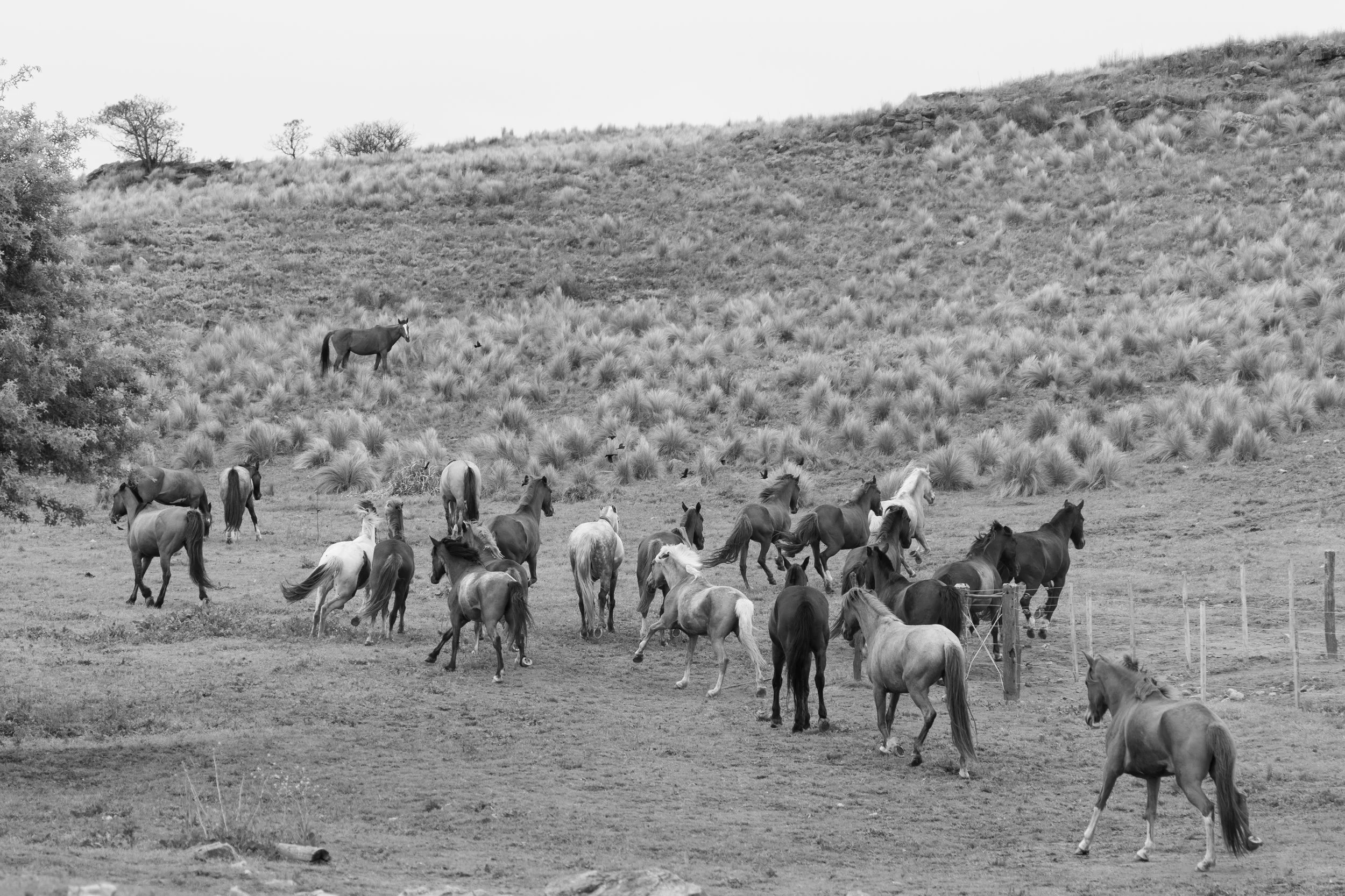
Horses are at the heart of everything we do. You'll ride in the morning and again in the afternoon, swapping horses so you get to know lots of different characters in the herd, and there are all-day picnic rides out into the hills. You can help our gauchos move the cattle, watch them at work in the corrals and then, come evening, gather round the parrilla for an asado and a glass (or two) of Argentine wine.
Your Questions About Estancia Stays Answered
Do I need to be an experienced rider?
Not at all. Whether you've ridden your whole life or never sat on a horse, our Criollos are calm, sure-footed and brilliant at looking after their riders.
Can children come?
It varies from estancia to estancia. At Los Potreros, our minimum age is 10.
Is there a weight limit for riding?
Most riding estancias have one. Ours is 90kgs, we are strict, because of the terrain, the size of our horses and because you'll ride lots of different horses during your stay.
How do I get to an estancia in Córdoba?
Córdoba has an international airport with regular flights from Buenos Aires, and we can arrange your transfer from the airport to the farm.
What should I pack?
Comfy riding trousers, plenty of layers and your own wet weather gear - we don't have spare riding clothes to lend.
Staying on an estancia really is one of the best ways to get under the skin of Argentina. Come and see for yourself - the horses are waiting!