
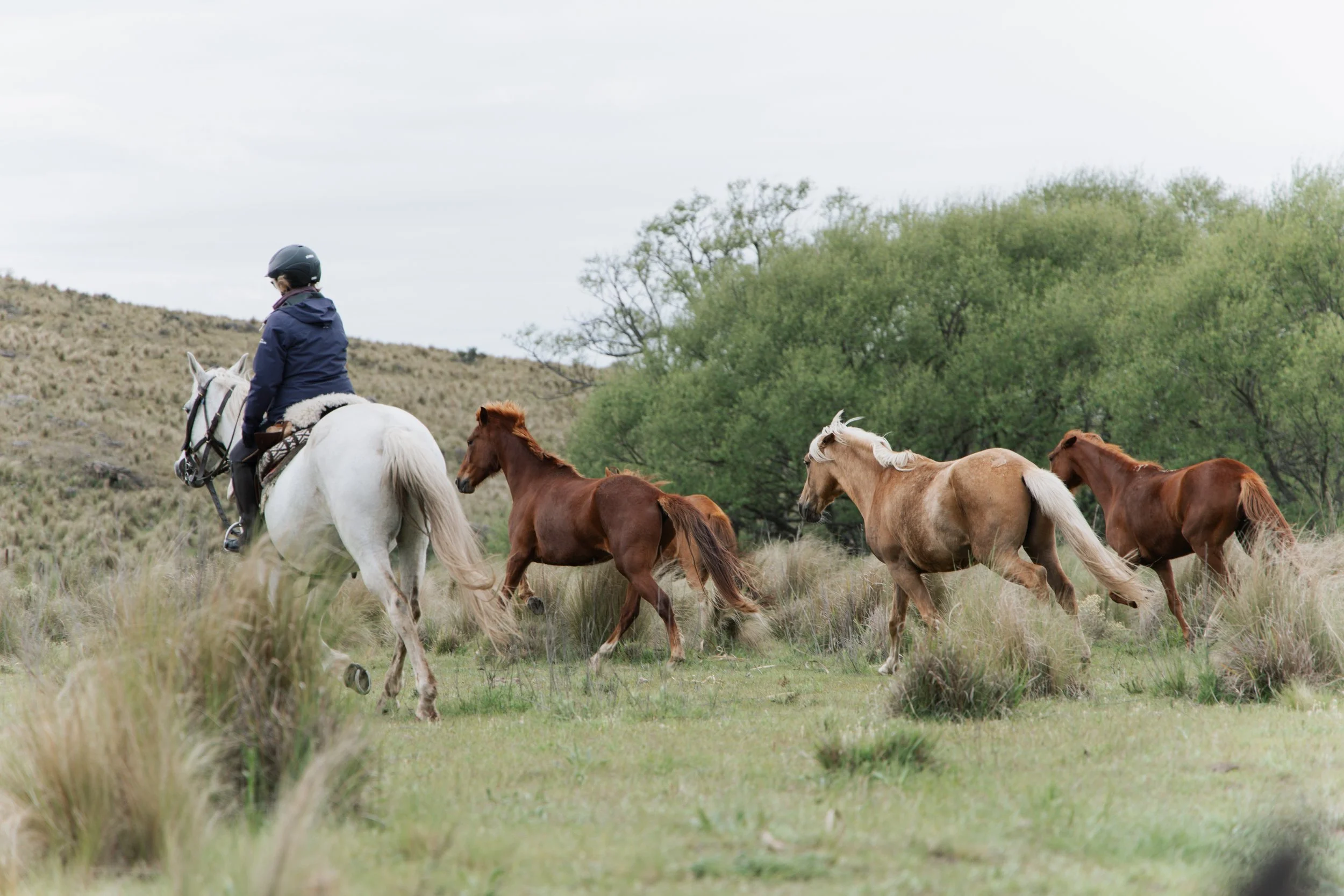
There are plenty of ways to explore Argentina, but few feel quite as authentic as seeing it from the back of a horse. With vast open plains, rolling sierras, rugged mountains and endless countryside, it almost feels as though the country was built to be explored on horseback.
But what makes riding here so special isn't just the scenery. It's the combination of landscape, horses, riding style and a way of life that seems suspended in time. Here's everything you need to know to plan yours.
Where to Ride in Argentina: The Best Regions
Argentina is enormous, and every region offers something different from the saddle:
The Pampas - seemingly endless grasslands and historic estancias, surrounded by cattle and wide-open skies.
Córdoba - rolling hills, rocky valleys, rivers and native woodland. This is where we are!
Salta and the northwest - colourful canyons, cactus-covered valleys and proper high-altitude adventure.
Mendoza and the Andes - vineyards below, dramatic mountain trails above and multi-day crossings into Chile.
Patagonia - lakes, forests and wild steppe on a truly epic scale.
The beauty of riding is that you see all of this at the pace of the horse. You notice the changing plants, hear the birds in the trees and discover corners of the countryside you'd zoom straight past in a car.
Meet the Horses: Criollos and Peruvian Pasos
No riding holiday would be complete without the horses, and Argentina is famous for its Criollos. They're a hardy breed, developed to cope with the country's varied and often demanding landscapes. Strong, tough and incredibly sure-footed, they know exactly how to pick their way up and down steep, rocky hills - and they still have a surprising turn of speed when you want it. Ours are the kind of dependable companions you'd want beside you anywhere.
We've also spent the last year building a new herd of Peruvian Pasos, a smooth gaited breed, sourced from across Argentina. They're big personalities with plenty of energy, so they're best suited to experienced, calm riders, and we use them on shorter gaited rides alongside our Criollos.
How Riding Like a Gaucho Differs From English Style
There's also something special about the way people ride here. Traditional gaucho horsemanship is practical, relaxed and all about building a partnership with your horse. Rather than constantly directing, you learn to work with the horse and let it move naturally over the terrain, steering one-handed with a light touch on the neck.
For many people it's a completely different way of riding - but after a few hours of a deep seat, long legs and a comfy sheepskin on your saddle, it's very hard to go back to riding English style!
A Typical Day on a Riding Holiday at Los Potreros
At Los Potreros, riding is woven through every day. You'll head out in the morning, come back for a long lunch, then saddle up again in the afternoon. We swap horses twice a day, so you'll get to know lots of characters in the herd - except on our all-day picnic rides, when you keep the same trusty horse from start to finish.
You can help our gauchos push the cattle from one pasture to the next, and even if it's your first time doing it, your horse will know exactly what to do. Keep your eyes open as you ride, too - you might spot foxes, armadillos, birds of prey or even a condor soaring overhead.
Sundays are a little slower, with just a morning ride, leaving the afternoon free for a siesta, a book or a wander.
Practical Tips for Planning Your Riding Holiday
Weight limit - most riding holidays have one, and ours is strict because of the terrain and the size of our horses. Our weight limit is 90kg.
Age - our minimum age is 10.
What to pack - layers, comfy riding trousers and your own wet weather gear, as we don't have spare riding clothes to lend.
Getting here - fly into Córdoba and we can arrange your transfer to the farm.
Put it all together and you begin to understand why a horse riding holiday in Argentina is so memorable. You're not just riding through the countryside - you're experiencing its landscapes, animals, traditions and rhythms from the saddle.