Guindado

This year with a little more time on our hands we searched across the estancia and harvested an abundance of wild cherries. With the time to make something special we set about making “Guindado”, using a recipe which has been passed down in the Begg family for generations. Guindado is a liquor of sour cherries, sugar and a liquor (typically brandy but we use a locally sourced gin).


500ml gin

600g cherries 

4 tbsp caster sugar


Stone your cherries and pack them into the jar.

Add the sugar and stir well. 

Pour in the gin and seal the jar.

Shake well and put away in a cool dark cupboard for about 2 months.

Shake the jar occasionally.

Pour through a sieve lined with 2 layers of cheesecloth/muslin or paper towels to remove the cherries. 

Maga beginning the task of de-stoning the cherries.

Maga beginning the task of de-stoning the cherries.

205354b1-880a-4a99-a954-0d5ebca51852.JPG

Quince Jelly and Dulce de Membrillo

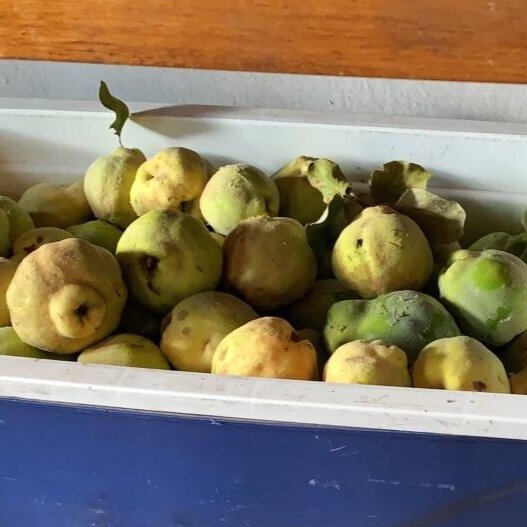
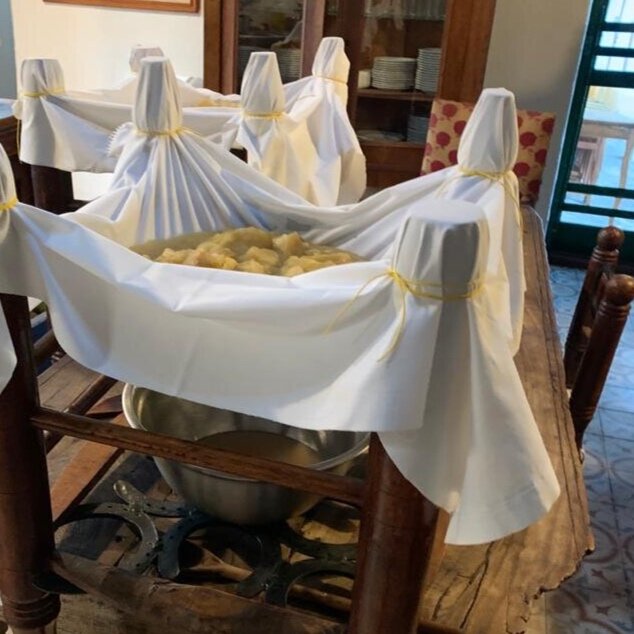
Inside all bakeries in Argentina, there are glass display cases overflowing with coconut-rimmed tarts filled with glistening, red jam. These are all made using 'dulce de membrillo’, which is a quince paste.  The Begg’s fondly remember their grandmother, making quince jelly and paste at Potrero de Niz when they were children. Tying a tea towel around the legs of a chair she would construct a sieve to drain the quince separating the paste from the jelly. Inedible raw quinces look like a cross between a pear and a golden apple, once cooked they turn sweet, with a vibrant red colour and have an incredible floral smell and taste. 


Quince Jelly

1.5kg quince, chopped roughly

1 lemon, zest peeled into strips, juiced

900g sugar 


Put the quince and lemon peel and juice in a large, deep saucepan. Cover with water (you'll need about 3 litres) and bring to the boil. 

Reduce to a simmer and cook for 90 minutes until the quince is very soft.

Line a colander with muslin cloth and put over a very large saucepan or heatproof bowl. Tip the quince into the lined colander, cover with a clean tea towel and leave to strain for 4-8 hrs until all the juice has dripped out. 

Keep the pulp for making ‘dulce de membrillo’. Measure out the strained juice and transfer to a large, deep saucepan (the jelly will bubble up high as it cooks). Add 500g sugar for every 600ml juice. Bring to the boil over a low heat, stirring to dissolve the sugar. 

Bring to a rapid bubble and cook until the temperature reaches 105ºC/221ºF on a sugar thermometer. Remove from the heat and ladle into hot sterilized jars and seal.  

Dulce de Membrillo 

Making membrillo is extremely easy. 

Take the quince pulp from the jelly and blend until smooth. Weigh the puree then put it in a large pot. Add an equal amount of granulated sugar to the mixture and place over a low heat. Stir the mixture constantly at first to dissolve the sugar, keep cooking until the mixture becomes thick (approx 1-2 hours). Once the mixture has thickened, it will stick to a wood spoon. 

Line a baking dish or lightly grease before pouring in the quince mixture. Allow the paste to cool, before placing in the oven on the lowest heat, dry the paste out (this can take up to three hours, if it has not set keep it in the oven checking it regularly). The surface should be glossy and not sticky to touch. Put the dish in the fridge and refrigerate overnight. 

Argentine Wines

Argentina is the fifth largest producer of wine in the world. 

Argentina is a vast producer of wine and so throughout your stay in the country you are likely to try a number of different wines from different regions. Large areas of fertile vineyards stretch along the foothills of the Andes dotted with more than 3,000 wineries. The vineyards are based almost entirely on European grape varieties. The region is blessed with a combination of plentiful water from snow melt, sandy harsh soil, a dry a climate with year-round sunshine, which makes for enormous yields.

Cordoba has a wine growing tradition that goes back some centuries. Records show that 10,000 vines were planted the year after the foundation of Cordoba in 1574. The wine cellar of the Jesus Maria Jesuit farm was the largest in the Spanish colony of the River Plate. From this cellar, the very first bottle of wine from the Spanish Americas was sent to the king in Spain. This wine was christened "Lagrimilla" (tear drops), which we still drink as a dessert wine at Los Potreros today!

Wine production in Cordoba had a second wind when immigrants arrived from the region of Friuli Venezia Giulia in northern Italy. They founded "Colonia Caroya" in 1878 only 50 kilometers from Cordoba city in the heart of the old Jesuit country. The spirit of those pioneers still continues, as do some of their traditions and dialects.

Today riders, drivers, walkers and birdwatchers alike all enjoy the Cordoba wine produced by   Bodega La Caroyense among others. Trying the different wines of the region is great fun; La Caroyense offers us history, Bodega La Matilde organic and biodynamic wines, Terra Camiare fresh modern wines.

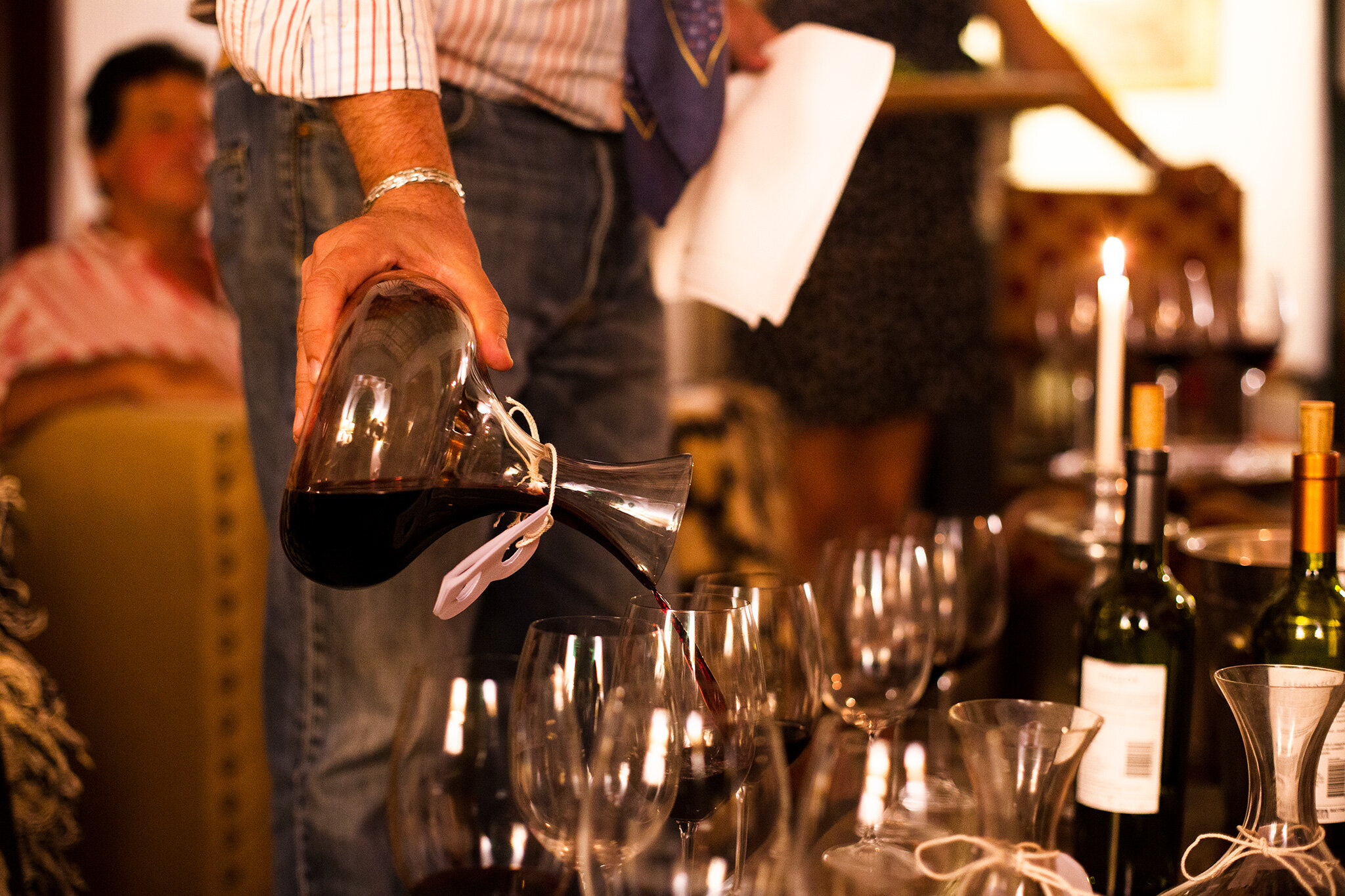
The popularity of Malbec and Torrontes grape varieties is now spreading all over the world and the Beggs are always keen to share informal wine-tastings with their guests. Mendoza, Cafayate and the end of the world, Patagonia, just but a few options at the Los Potreros table.  

165_Dining_TCunniffe copy.jpg

Summer in the Kitchen - Part 2

As the summer stretches on we begin to harvest the figs - found across the estancia from our cattle station to the garden at Potrero de Niz. Whilst they are sweet they work perfectly with cheese, meat and other savoury foods. This year we have made lots of fig jams and chutney and with the final harvest we are going to try out hand a honey poached fig with orange and spices.  

The quince is always the last fruit of the orchard to ripen, when they turn a golden yellow, and omit a floral scent, you know it is time to get picking. To preserve the quince we looked at lots of different ideas and followed the Mediterranean influence of cooking the quinces in a sweet syrup to be enjoyed on our homemade yoghurt or even on fresh cheeses like labneh (something Kevin has been learning to prepare). 

Of course, there is nothing more Argentine and traditional than making quince jelly and membrillo, which go together hand in hand. First you make the quince jelly, boiling the fruit with sugar and allowing the colour to turn from yellow to a rich reddish pink. Following in the footsteps of Louie Begg, we separate the quince through a sieve constructed by a chair turned upside down and a tea-towel tied around the legs. This divides the quince jelly from the quince paste (the membrillo). 

In the coming weeks the walnuts will be falling from the trees and the  artichokes “topinambur” will be ready to be dug up and stored for the winter. Throughout the year there is always something to do and ways to save the fresh produce for the months ahead. We are looking forward to continuing this research into preserving foods and how we can learn to use nature to help us in reducing our overall carbon footprint. 
IMG_1859.jpeg
IMG_1885.jpeg

Summer in the Kitchen - Part 1

In the winter most of our fruit trees are dormant waiting for the spring and the first rains of the year, then they burst into life and by summer we have an abundance of produce marked by the sprouting of the wild asparagus on the hills.  

“Pick, prepare, preserve” is our ethos over summer. Our chefs are working hard on finding delicious new ways to preserve the harvest from the summer months to last us into the winter. 

In previous posts we have talked about our new efforts of smoking meats and this has been a great success and a step in the right direction. We are constantly finding new solutions. Throughout the last few months we focused on picking vegetables, preserving in flavoured oil alongside making jams, jellies and chutneys to last into the winter.

This year, like many years before we have had a bumper harvest of aubergines and have made “escabeche” or pickled aubergine a traditional antipasti, flavoured with chilli flakes, garlic and bay leafs.

The orchard at Loza is filled with plums, peaches and apricots and wild cherries. We began by filling jars with wild cherries and sugar to make a cherry brandy, that will be ready in just a few weeks time after three months of brewing. The ‘guindado’ is traditionally made with brandy but our estancia recipe has always used locally sourced gin. 

The soft summer fruits have been used in jams, poached in red wine and amaretto, or fruit compotes for topping yoghurt. 

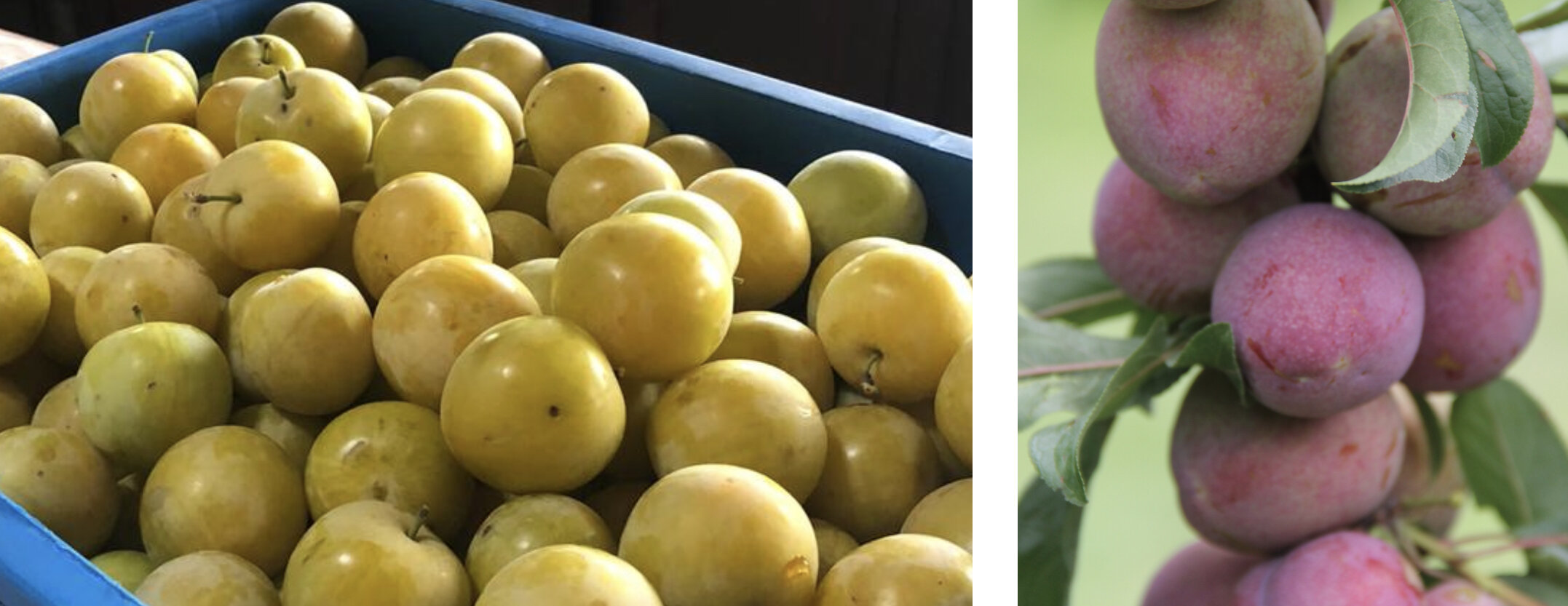
We foraged the trees from the waterfall to pick the Mirabelles (a sweet yellow plum). The apples from Los Melados have also been turned into a vast array of jams.  

IMG_1846.jpeg

Pan Dulce

One of our favourite sweet breads is ‘Pan Dulce’ and it is the perfect accompaniment to some Argentine cheese and is often cooked at our evenings in the kitchen. Typically we use dark muscovado sugar, which is a cane sugar containing molasses - the reason behind its dark colour and texture which resembles wet sand. 


500g Self Raising Flour

1 Egg

25g Butter

Cup of Mate Cocido Tea

75g Dark Muscovado Sugar

150g of Dried Fruit

75g Almonds

75g Hazelnuts


Mix all the dry ingredients except the flour. 

Add butter and egg, mix with hands throughly. 

Add flour and tea accordingly to make the mixture into a dough, it is ready when it no longer sticks to your hands. 

Once the dough is ready, form it and place on a baking tray which is sprinkled with a little flour to ensure it does not stick during the cooking process. 

Cook in oven of 180ºC/355ºF until a skewer comes out clean. 

This usually takes around 20 minutes.

Pasta

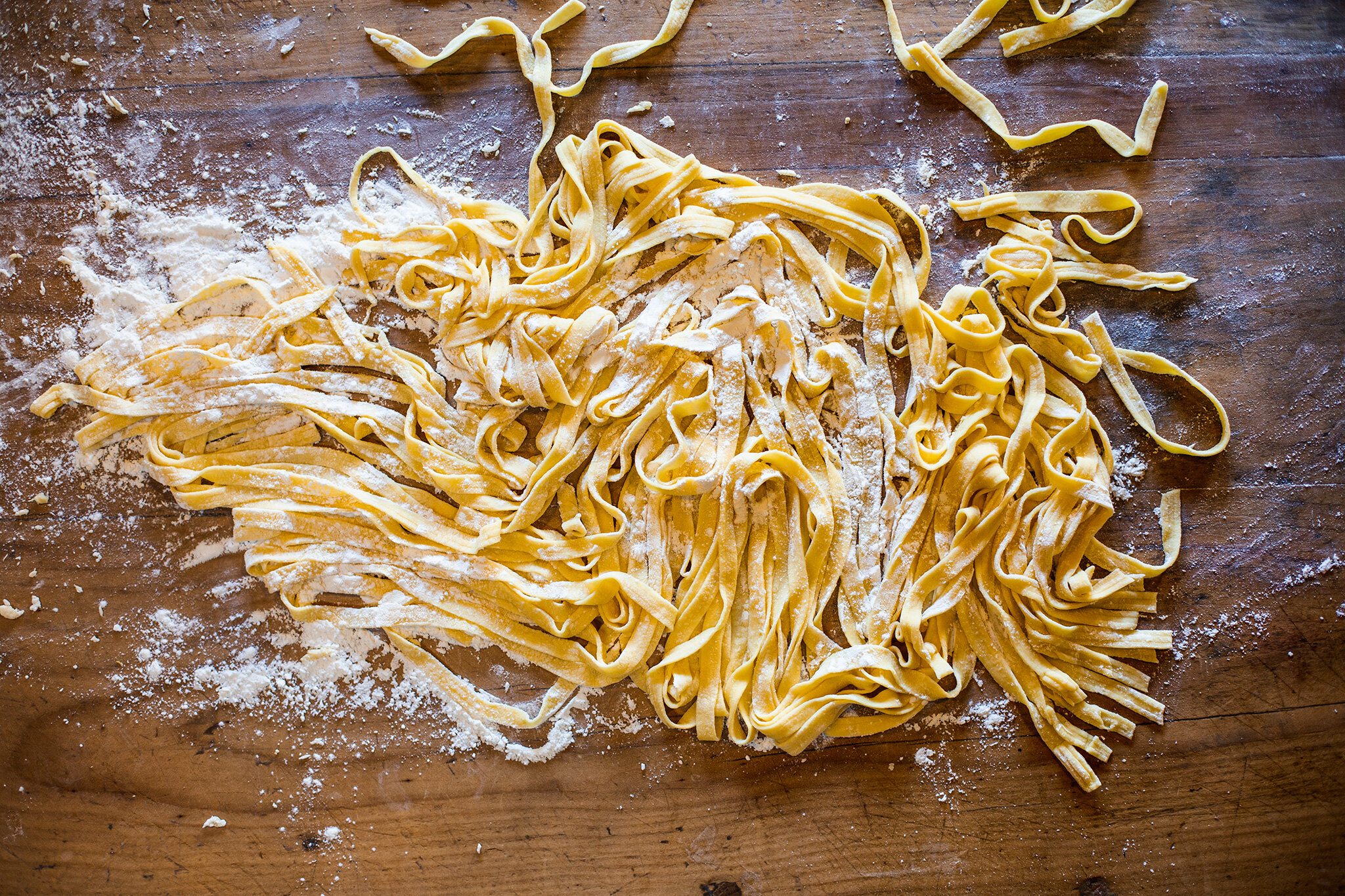
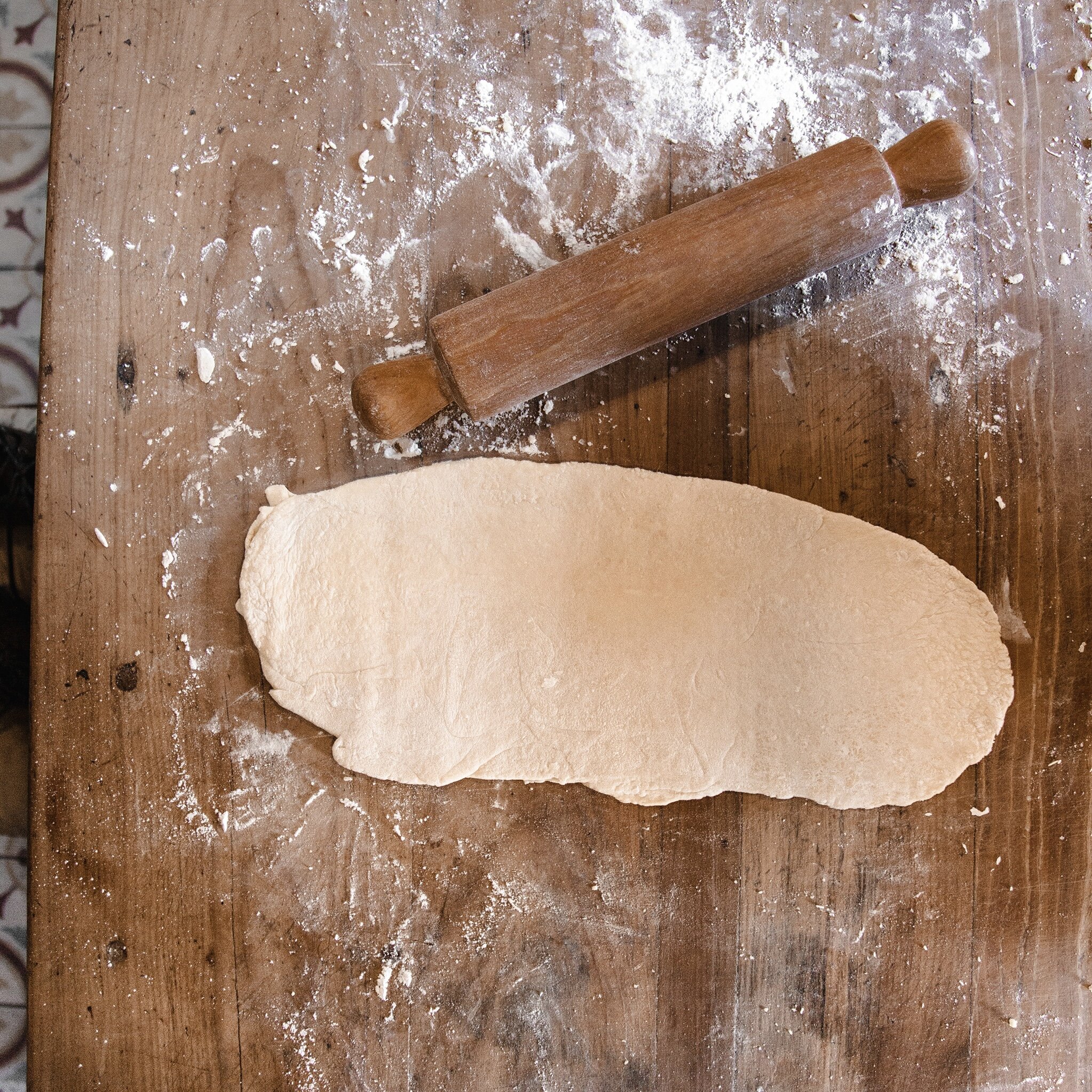
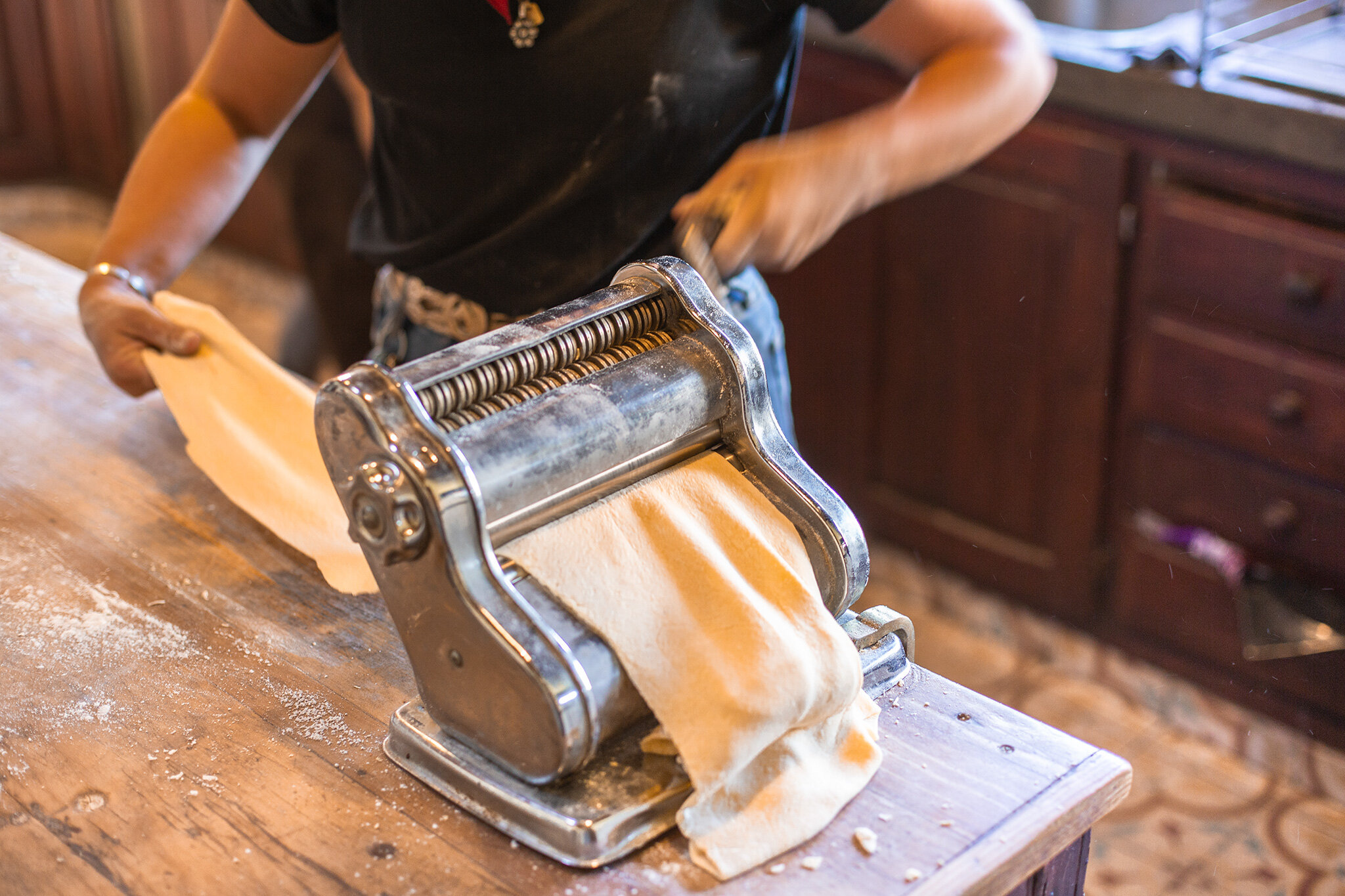
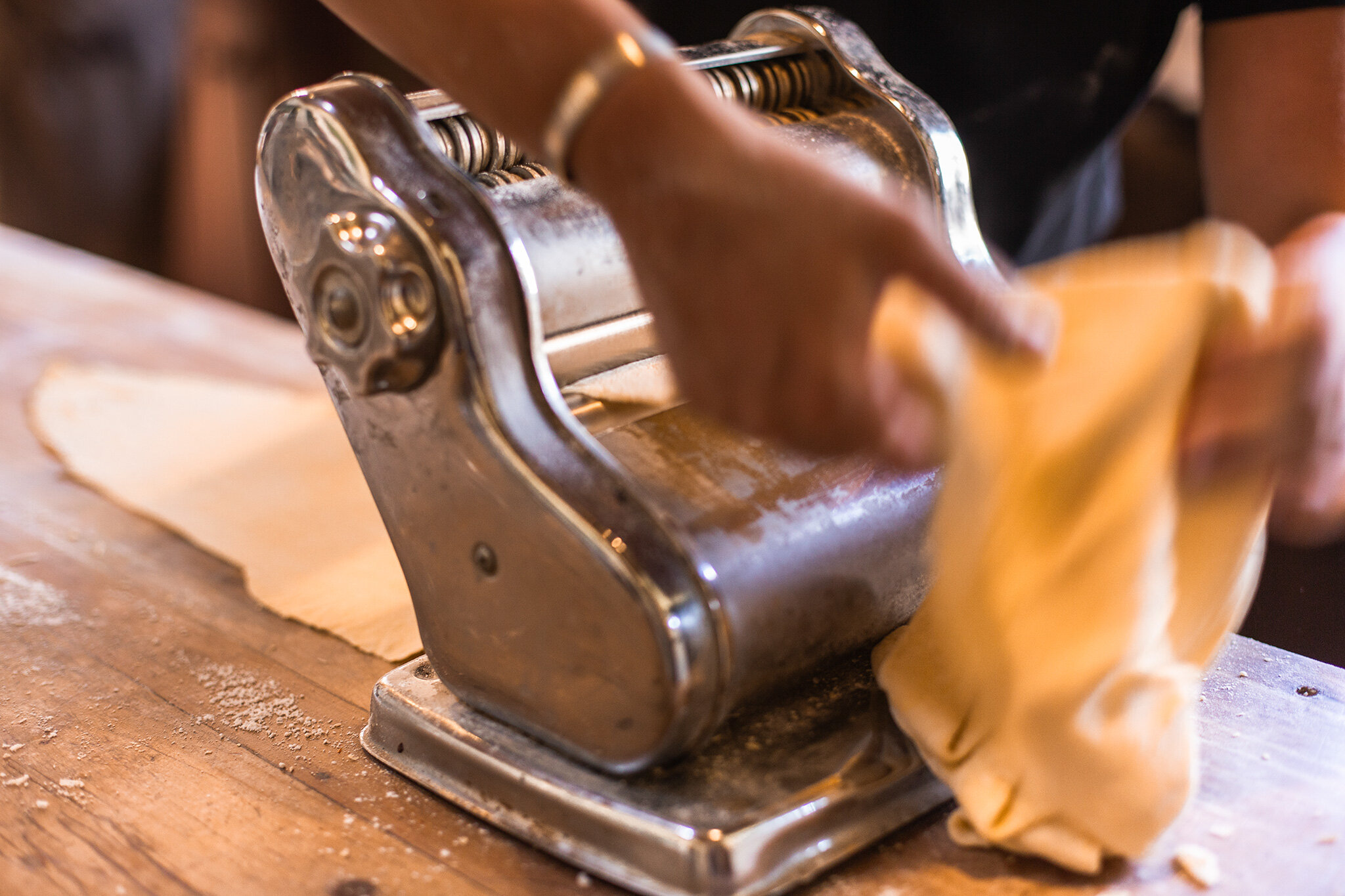
In the Los Pots Kitchen, we take great pride in creating dishes that highlight the flavors of Argentina, infused with rustic charm and local ingredients. This pasta recipe is a perfect example of how simple, fresh ingredients come together to create an unforgettable meal. Whether you’re a seasoned cook or new to making pasta from scratch, our step-by-step guide will help you master the art of homemade pasta. You’ll be amazed by how easily you can bring the authentic taste of Argentina into your kitchen. Across the country menus feature a variety of pasta dishes that the Italian immigrants of the late nineteenth and early twentieth century brought with them. The rolling of the pasta dough is a true art and it is always a delight to see our chefs effortlessly rolling out the dough to make anything from lasagne sheets to fresh raviolis or spaghetti. 

Follow the link for our basic pasta dough recipe and why not try making out sorrentino’s.

Mate

116_Dining_TCunniffe.jpg

‘Mate’ is integral to the gaucho culture and learning how to drink it is an art. Pronounced mat-aay, mate is the name of the pot or gourd from which you drink it. The tea or herb is simply called ‘Yerba’. The drinking of mate is offered by the server, the ‘cebador’. The leaves are covered with hot water, not boiling, and the liquid is sipped through a ‘bombilla’, the metal straw. It is often passed around between friends and family, mate is a shared experience. One mate gourd is passed around the room for all share, whether you are family, friends or strangers. The yerba mate grows wild in the subtropical jungles of Argentina, Paraguay, Uruguay, Brazil and Bolivia. It is renowned for its energetic properties and is an old Guarani tradition from the native Indians in South America. 

Mate is one of the drinks which falls into the category of needing an acquired taste. It is not uncommon to see Argentines walking down the street with a thermos of hot water under their arm and a mate gourd in their hand, as they drink, talk and walk. During the long process of Argentina’s independence in the 19th century, the tradition of mate gained strength across the country and the gauchos adopted mate as a part of their culture. Mate is particularly popular with Argentines especially in the morning as it contains a high amount of caffeine. Alongside a high caffeine content, it is also full of anti-oxidants and vitamins containing seven of nine essential amino acids.

113_Dining_TCunniffe.jpg

Osobuco

Osobuco

One of our favourite and most celebrated meals on the estancia is Osobuco. There is nothing nicer than walking in for dinner to be greeted by the aroma of red wine and rosemary. The chefs prepare the osobuco at lunchtime and the meat braises for at least 5 hours throughout the afternoon, ensuring the meat is soft and full of flavour when they go to take it for dinner the beef falls spectacularly off the bone.

Gnocchi

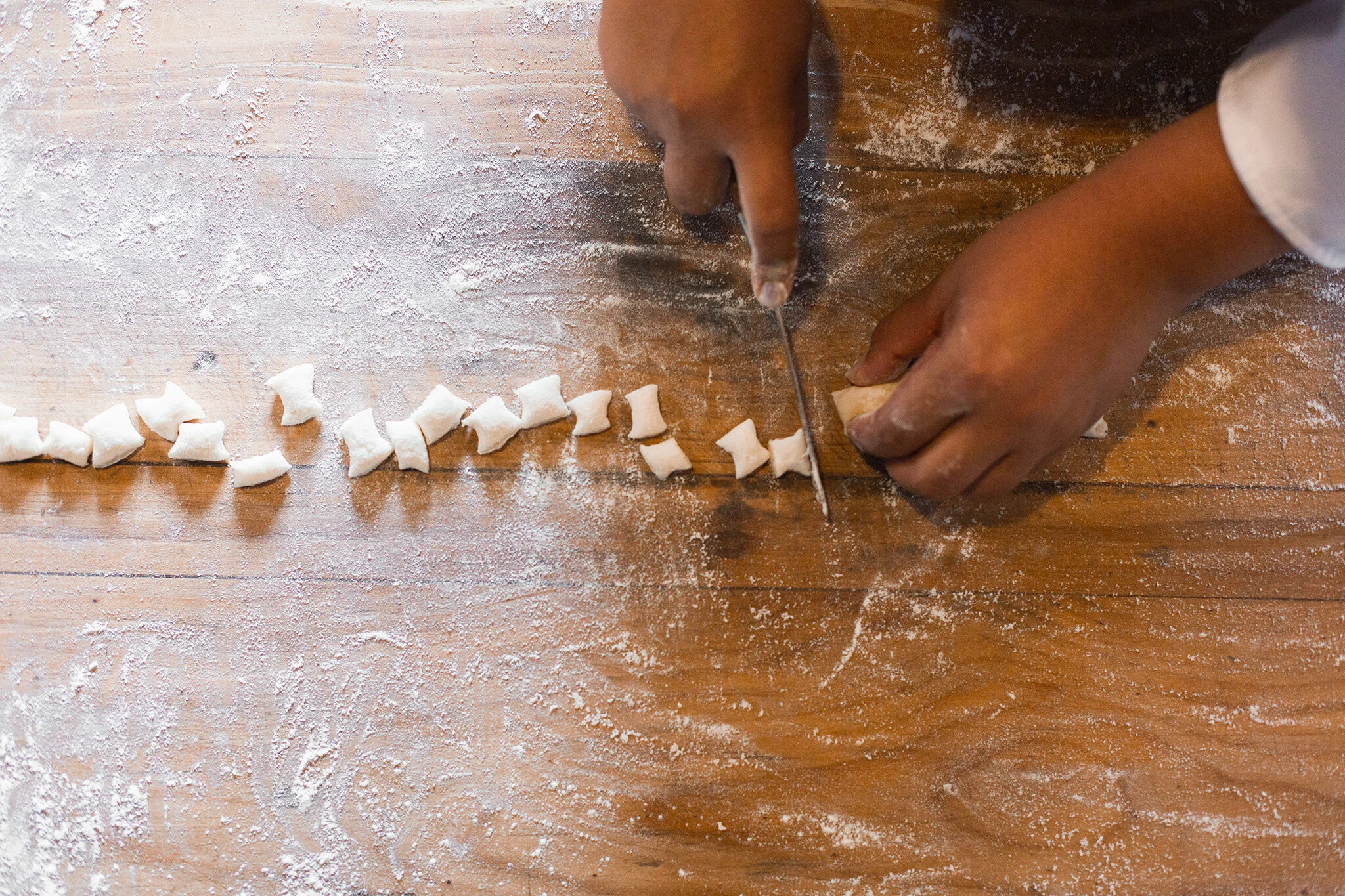
In Argentina the 29th day of the month is the chosen day to eat gnocchi (Ñoqui in Spanish). The story of the tradition is pretty simple. The 29th of the month was just before payday — people got paid on the last day of the month — so by the end of the month, money was tight and all that was left in the larder was potatoes and flour. Gnocchi are the perfect solution as they are filling and not expensive. Eating gnocchi on the 29th is also considered to bring financial luck. To ensure a prosperous month ahead many Argentines will place money under the place mat whilst they eat. Like many traditions in Argentina this has come from Italian immigrants who came to work and live here in the 19th century.


Quantities for 6 people

5 big potatoes*

4 Egg

3 cups of flour


Wash potatoes and boil with skins on. Peel the potatoes and mash one at a time. Let the potatoes cool by pushing out onto a surface, the larger the surface area the quicker they will cool. Once you have the potatoes cooled and flat on the counter crack one egg into the middle and mix well. Mix in flour, folding and pressing the mixture out to ensure the flour and potatoes are combined. Always add more flour until they become firm but still malleable. Cut the mixture into equal parts and roll into a sausage and cut into small pieces about 2cm x 1cm. Prepare the sauce. Cook the gnocchi in hot water, when they rise to the surface they are cooked. Have a dish ready to put in the oven to keep the gnocchi warm whilst you cook the rest. Layer the sauce first in the pan followed by the cooked gnocchi. Place it in the oven and once you have the next batch ready place more sauce over the first batch and then add the next round of gnocchi. 

* The fresher the potatoes are the better the gnocchi - use one potato per person and then three more.

065_Dining_TCunniffe.jpg
066_Dining_TCunniffe.jpg
067_Dining_TCunniffe.jpg

Chicken Asado

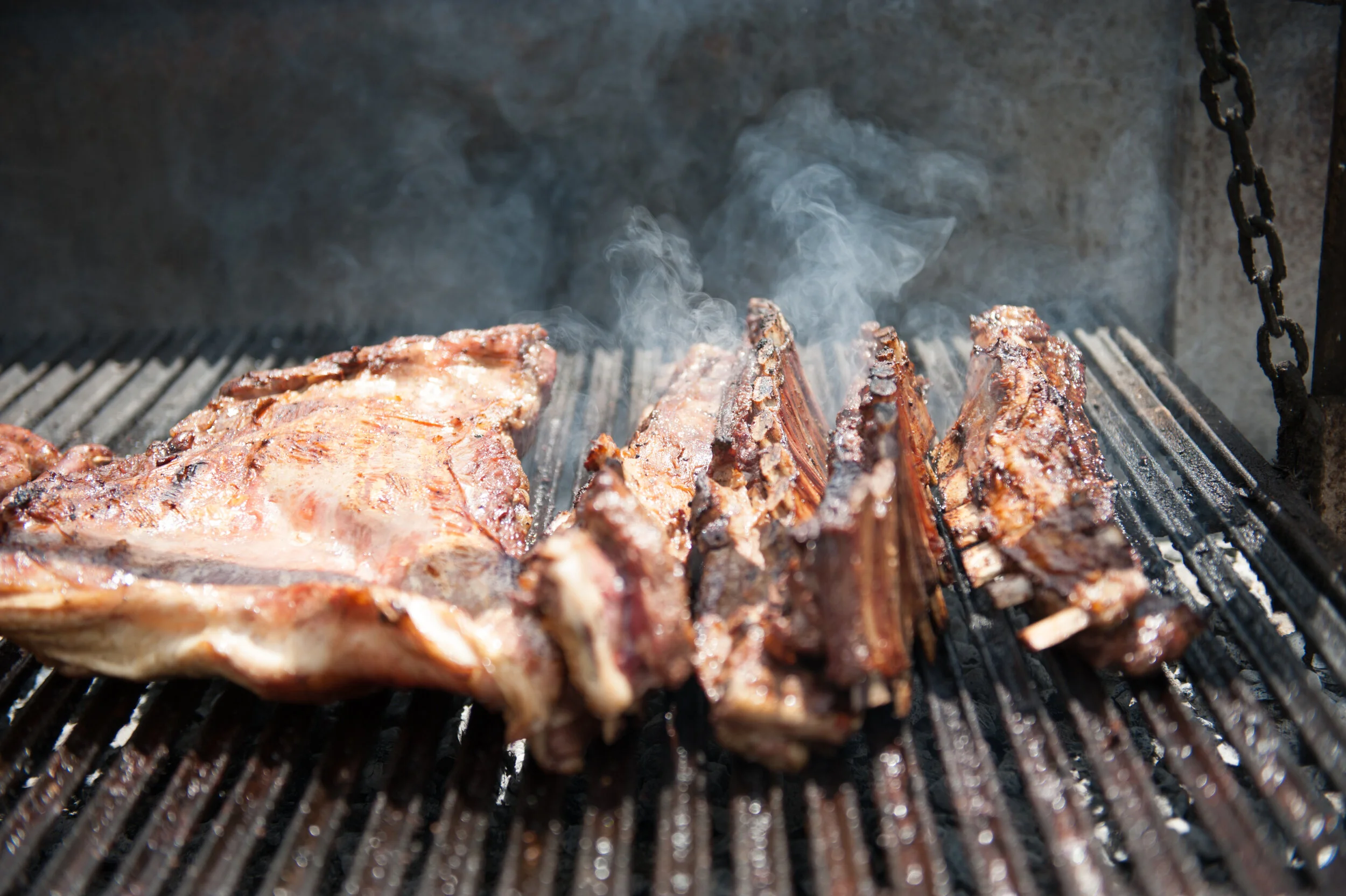
The asado originated in the 19th century with the gauchos, the word is used to describe both the occasion and the meat itself, traditionally wood from the White Quebracho tree would be used as it is relatively smokeless and produces good coals. Whilst beef is the focus of the asado many argentines also choose to cook chicken. Lunches at Los Potreros include both options but we particularly love a chicken asado. Chicken cooked on the parrilla marinated with lemon, onion, garlic, fresh herbs and olive oil. The preferred method is cooking the chicken as a whole butterflied. 

1 Chicken 

3 Onions

4 Garlic Cloves

Lemon Juice 

Fresh thyme & rosemary

Olive oil 

To prepare the parrilla for cooking you will need a lot of coals and a higher temperature than cooking beef, so ensure you light the fire around 30 minutes earlier than if you were cooking a normal asado. Light the fire around 11am to have sufficient time to begin cooking for a 1330 lunch. You will need minimum of one and a half hours to cook the chicken and must always put chicken on the parrilla for half an hour more than any red meat. Using a butterflied chicken place on the parrilla bone face-down and allow the chicken to start cooking. To check if the grill is hot enough hold your hand above it and if you can hold it for longer than 10 seconds you need to add more coals. Peel the onions and garlic and blend with the lemon juice and olive oil until it produces a thick paste and roughly cut the fresh herbs and add them to the mix. Brush the chicken with the paste whilst cooking, 3 or 4 times until serving, to ensure the chicken stays moist and does not become too dry. Turn the chickens regularly so they don’t burn and to allow for even cooking.

*   goes really well with a fresh salad and bread cooked on the parrilla. Top the bread with fresh tomatoes diced with oregano, diced onions and a little olive oil.

 
ELP food and drink by Tony Clerkson (32).jpg
 

Our Sustainable Kitchen

Our Sustainable Kitchen

Every chef across the world, pays close attention to what goes into their food but here at Los Potreros we are also concerned about what our food is doing to the environment. Our chefs have always had a “no waste mentality” and now more than every they are minimizing what they throw out and developing a menu to ensure they can continue to cut down what little waste we still have, throughout the last few months we have begun to test out new ideas with great success.

Pollo Al Disco

Food prepared “al disco” does not refer to a particular recipe but rather a cooking style. 

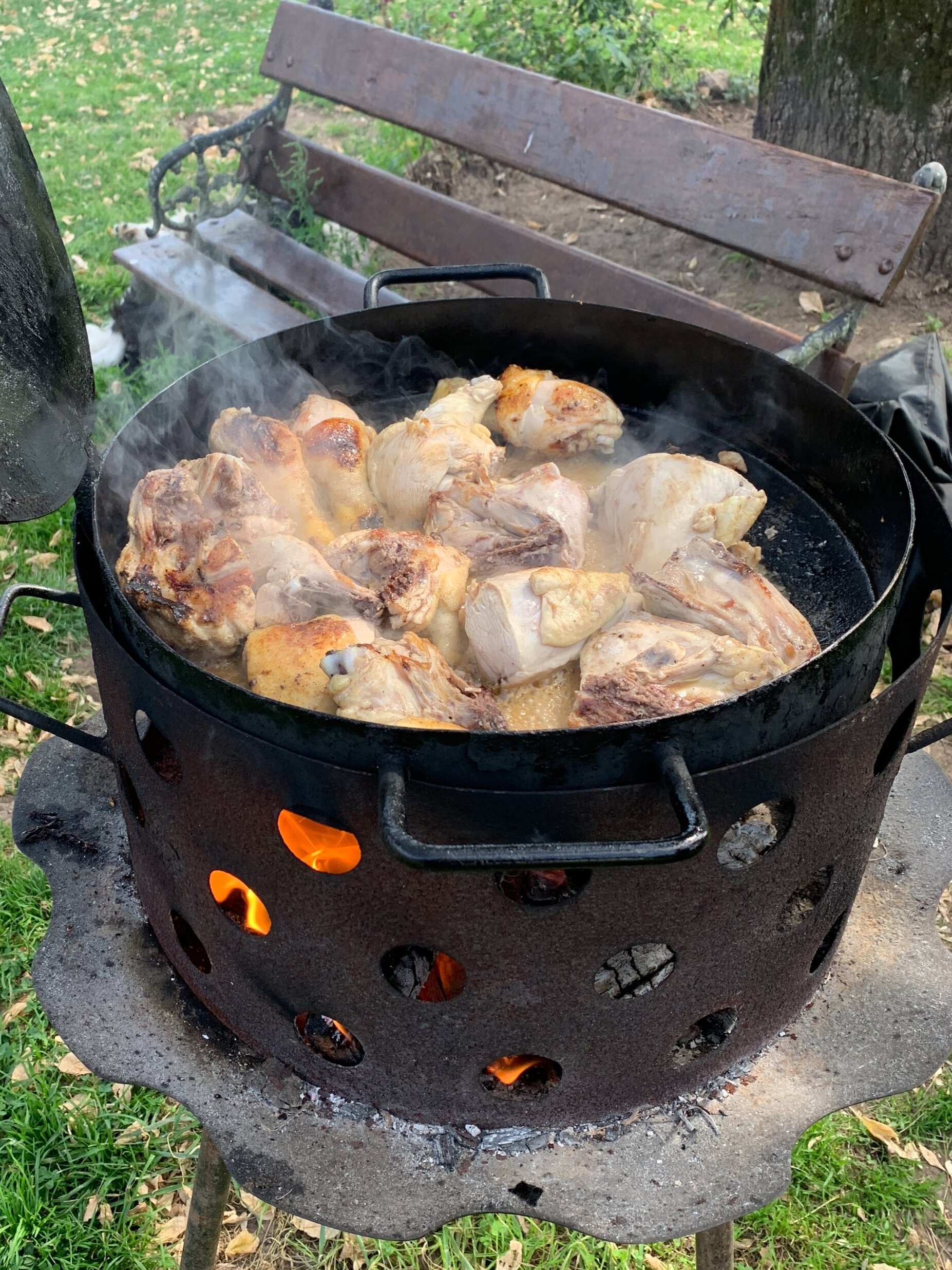
Traditionally farm workers would use the blade of their plough; flipped on its side, wiped clean and with a fire lit below - these days we use a huge iron plow disc heated over a wood fire, but you can recreate this in a heavy bottom pan. Discos provide a large surface area for cooking while remaining easily portable, they are particularly useful for preparing meals away from the kitchen. 

The following recipe for pollo al disco is using white wine, but this can be substituted with beer.


IMG_9375.JPG

Serves 4  

3 x chicken breasts - either cooked whole or cut into chunks

2 onions

2 red peppers sliced

2 green peppers 

A handful of fresh herbs chopped

2 diced garlic cloves

Cream

Chilli flakes

Paprika 

2 bay leaf

White wine

Water

Olive oil


To prepare the chicken use breast meat or cut into chunks on the bone (if leaving pieces on the bone it will take longer to cook).  Once the disco is placed over the flames begin cooking immediately or it will burn and smoke. Add a splash of oil and sauté the chicken, stirring often until the chicken has colour all over. Once the chicken has begun cooking add the onions and garlic, allow to soften. Then add white wine, peppers, spices and herbs - flavor according to taste. Continue to add wine and water throughout cooking to ensure the meat doesn’t dry out. Stir often. Do not taste the sauce until the chicken is cooked. 

Once the chicken has been cooked, and you are ready to serve drizzle some cream over the chicken, as you plate it.  

 
IMG_9378.jpg
 

The History of Dulce de Leche

Eaten with almost everything in Argentina, dulce de leche is spread on toast, used to fill facturas, decorate flans, or just eaten straight from the jar. 

As the local legend tells it, the birth of dulce de leche can be put down to a culinary accident that occurred in 1829. 

With the hope of ending a period of civil war in Argentina, the leaders of opposing political and military forces, Juan Manuel de Rosas and Juan Lavalle, decided to call a truce. Rosas invited Lavalle to sign the Cañuelas Pact at his headquarters on a large ranch called La Caledonia. Lavalle arrived at the ranch tired from the journey, and he decided to rest a bit before meeting with Rosas. He decided to take his siesta in the tent where Rosas normally slept.

Meanwhile, one of Rosas’ servants was busy preparing the ‘lechada’ - hot milk with sugar - that was drunk as an accompaniment to mate during that period. When the servant went to take some mate to Rosas, she found Lavalle in Rosas’ tent and panicked. Unaware of the planned meeting between the two leaders, she alerted the troops to the presence of the “enemy,” leaving the lechada unattended on the stove in the chaos. When she finally returned, she discovered that the contents of the pot had turned into a thick, gooey spread—what we know today as dulce de leche.


Butternut Squash Sorrentinos with Blue Cheese Sauce

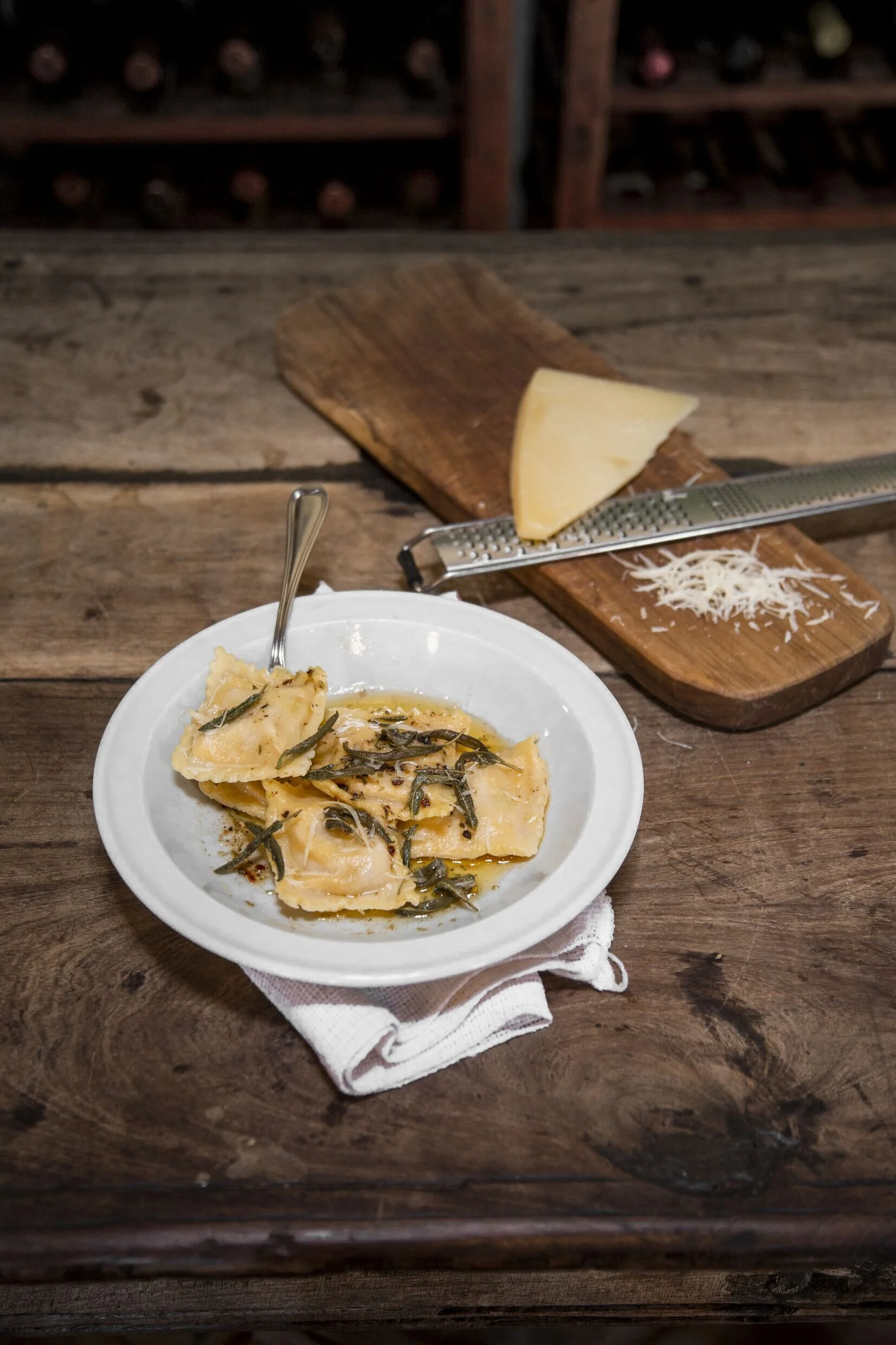
Argentines claim that there’s nothing in Italy quite like a sorrentino, making them an Argentine invention. Unlike their close relative the ravioli, which aims for a balance between dough and filling, sorrentino’s are plump and overstuffed. As with other stuffed pastas, both the sorrentino dough and the filling can be imaginatively flavoured to create an endless number of options. The choice of sauce also plays an important role in the dish. A favourite on the estancia is a butternut squash with a butter, sage and garlic sauce or for the more adventurous a blue cheese sauce.

090_Dining_TCunniffe.jpeg

Sage and Butter Filling - fresh sage, butter, garlic, dried herbs, salt and pepper

Blue Cheese - a strong blue cheese we like roquefort melted with a splash of double cream

Pasta Dough

To make the stuffing, cut the butternut squash in half down the middle and then roast in the oven, with garlic until it is soft and both will peel away from the skin. 

Mash the butternut squash, sprinkling in salt, pepper, finely chopped chives and a handful of chilli flakes.

Begin rolling out the pasta using a pasta machine or rolling pin. If using a pasta machine roll through until about 4mm.

Use this mixture to fill the raviolis, whilst the pasta is cooking make a simple sauce. 

For the sage and butter sauce, simply melt butter in a pan and throw in handfuls of fresh sage, dried herbs, chilli flakes and diced garlic.. 

If you want a blue cheese sauce, simply melt the blue cheese of your choice, with a piece of butter and a splash of cream. 

ELP_Sorrentinos

A Los Potreros Asado

No visit to Argentina is complete without an asado, and at Los Potreros no matter the occasion we try to enjoy weekly asado’s ranging from suckling pig, cuts of beef, potatoes to a whole host of vegetables.

Empanadas Arabes

Empanadas Arabes

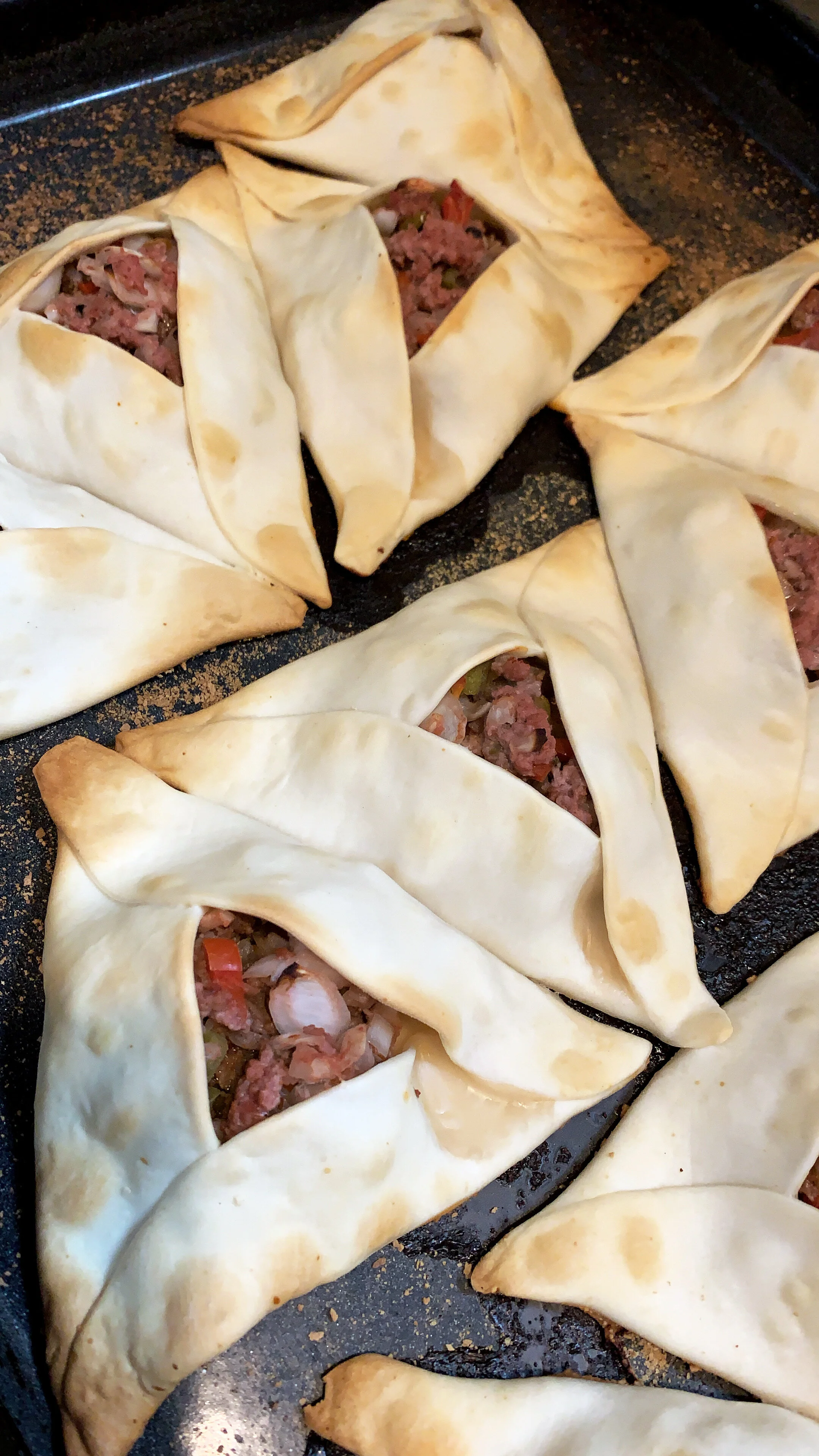
Alongside the European immigrants into Argentina, there were also large number from Syria and Lebanon. Whilst many dishes have Italian or Spanish heritage on for two from the middle east have left their mark on the country. One of which is the delicious empanada arabe. A combination of lemon, onion, tomato and fresh mint pairs perfectly with the beef.

Traditional Argentine Beef Empanadas (Empanadas de Carne)

Derived from the word “empanar” meaning to wrap or coat, we have the empanada - a stuffed or fried pastry traditionally filled with a combination of meat, vegetables or even dried fruits. Across the country they are a fast food staple and every region including Cordoba, prepares their own variation of a filling. Typical empanadas in Argentina are much smaller in size than those in Chile, normally fitting into the palm of your hand.

Empanada Pastry

2 cups plain flour

2/3 cups unsalted butter (cold)

2 tsp baking powder


To make the pastry, combine the flour, baking powder and 1 teaspoon of sea salt in a large bowl. 

Finely chop or coarsely grate the butter, then rub into the dry mix until it resembles fine breadcrumbs.

Mix in just enough cold water to bring it together, then wrap in clingfilm and pop in the fridge for 1 hour.

Roll out the pastry using a rolling pin or pasta maker and cut into large circles. 

image.jpg

A Traditional Argentine Filling

Empanadas in the Cordoba province are famous for being dulce salada, which means ‘sweet and salty’. You can use this recipe and by adding a couple more handfuls of raisins and a few teaspoons of white sugar they will become empanadas cordobesas. 

4 cups of ground beef or meat finely cubed  

6 white onions finely diced  

4 hard boiled eggs

1 can of tinned tomatoes 

1tbs paprika

2 handfuls of green olives

2 handfuls of raisins

A bunch of spring onions

1tbs chilli flakes

Salt and pepper 

Finely cube meat, or use ground beef sauté until cooked. 

In a separate pan sauté the onions until soft and then combine with the cooked meat, add the tomato sauce and season with salt and pepper. 

Add the remaining ingredients except the egg and allow the mixture to simmer and reduce down so that it is not-too liquidly. 

Allow the mix to cool completely. 

Roughly chop the eggs up and add with the spring onions and sliced olives into the mixture , stirring throughly. 

Fold the empanadas using the accordion fold and cook.

Place the assembled empanadas on a lightly greased baking sheet. Bake in an oven preheated to 180ºC/355°F for approximately 20 minutes or until the dough turns golden brown.

For a demonstration on folding empanadas check out our video here.

For a downloadable version click here.