
History

Five Minutes with Kevin Begg of Estancia Los Potreros

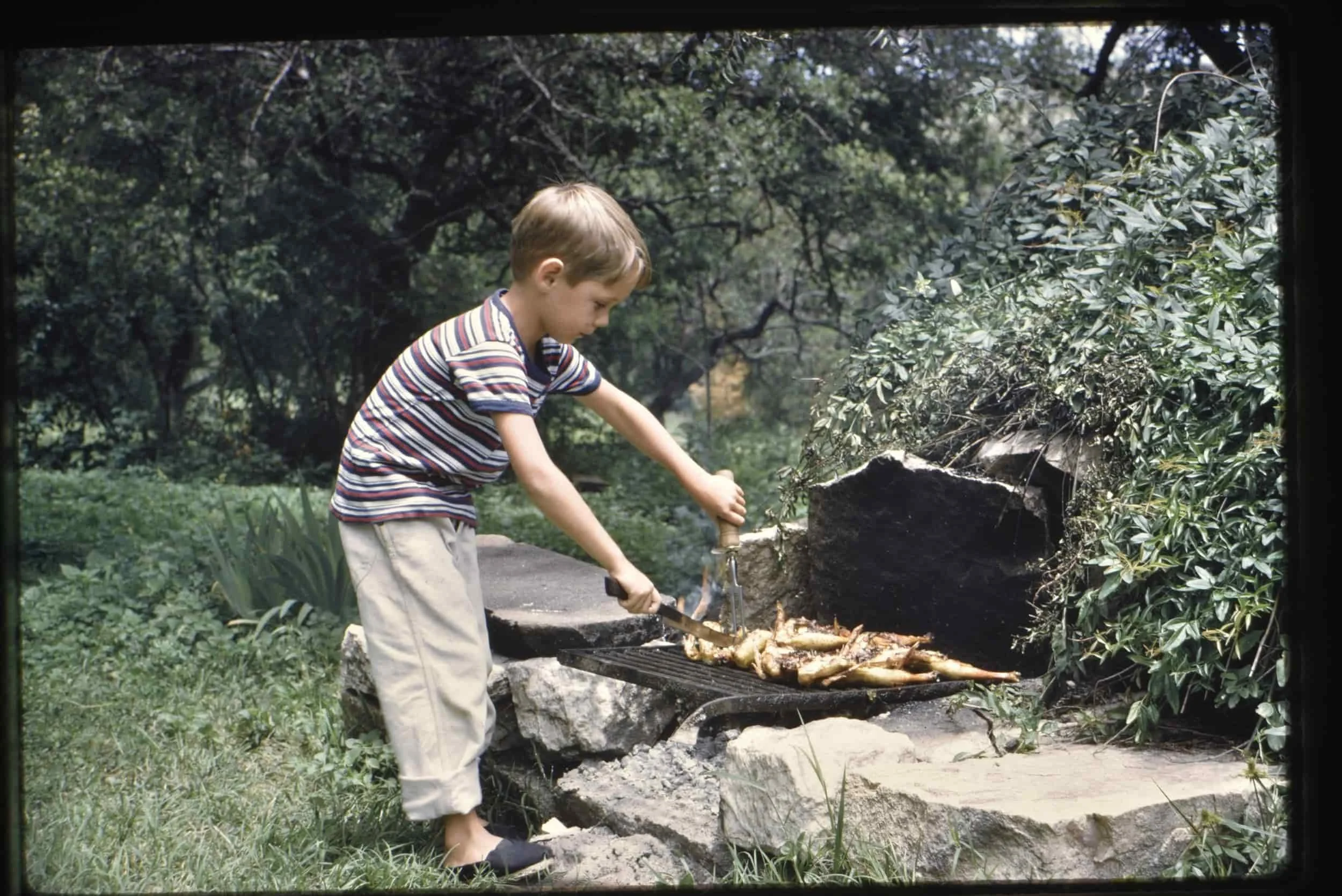
A young Kevin Begg, cooking an asado in the garden of the estancia

As owner of Estancia Los Potreros, Kevin Begg is far more than a host. Having grown up on the estancia, he knows every valley, river crossing, hidden trail and mountain ridge by heart. Today, he continues to live and work on the farm, welcoming guests personally and sharing the landscapes, horses and traditions that have shaped his life. For Kevin, Los Potreros is more than a destination; it is home. His connection to the estancia stretches back three generations, from childhood days spent roaming freely across the hills to the present day, where he remains deeply involved in every aspect of life on the farm. Whether joining a ride, sharing stories over dinner or introducing guests to the horses, Kevin's passion for the estancia is at the heart of every stay.

Kevin's Role at Estancia Los Potreros Today

Kevin runs the estancia day to day, from the Aberdeen Angus herd and the horse breeding to the rides and activities guests enjoy. He loves sharing gaucho life and rural Argentine culture with the people who stay, and he cares deeply about looking after the Sierras Chicas for the next generation. Known for his warm, easy hospitality, he's never happier than when telling the stories of Los Potreros, whether out on a ride or around the fire at an asado.

We sat down with him to talk about his earliest memories, the horses that have left their mark, and the special places that continue to inspire him after a lifetime spent in the Sierras Chicas.

What is your earliest memory of the estancia?

My earliest memories are of freedom and space: running around the estancia as a young child with very few rules. I remember my grandmother, the matriarch of the family, sounding a great gong at lunchtime to tell us we had fifteen minutes before we had to come in. She lived to be 104 and was a very strong presence throughout my childhood. I also remember riding with my father when he came up from work at weekends, and my elder brother, Robin, leading my horse and teaching me to ride. 

Which horse stands out as one in a million, and why?

There have been many memorable moments: my first canter, the first time I fell off, riding to the waterfalls and discovering the secret corners of the estancia that we rarely visited. I remember my first horse, Regalito, who was given to me by my parents when I was very young and on whom I learned to ride. But perhaps the horse who stands out most is Negro El Once, or Black Eleven, named after what is considered a lucky roulette number in Argentina. He was the horse I found and rode when I returned to Argentina to live at the estancia in 2001. Through him, I rediscovered the connection with horses that I had lost during my years away. He helped bring me home in more ways than one.

If you could take guests to just one spot, where?

The obvious choices would be the estancia's iconic places: the Cascada de los Condores, our waterfall, or the Top of the World, the highest point on the farm. They are spectacular and naturally form part of the experience. But personally, I would choose one of the quieter corners that we seldom visit. When I lead a ride, I enjoy leaving the well-trodden paths and taking guests somewhere even our guides and gauchos do not often go. Those places bring back childhood memories for me, and they allow guests to feel that they are genuinely discovering a private and almost forgotten part of the estancia.
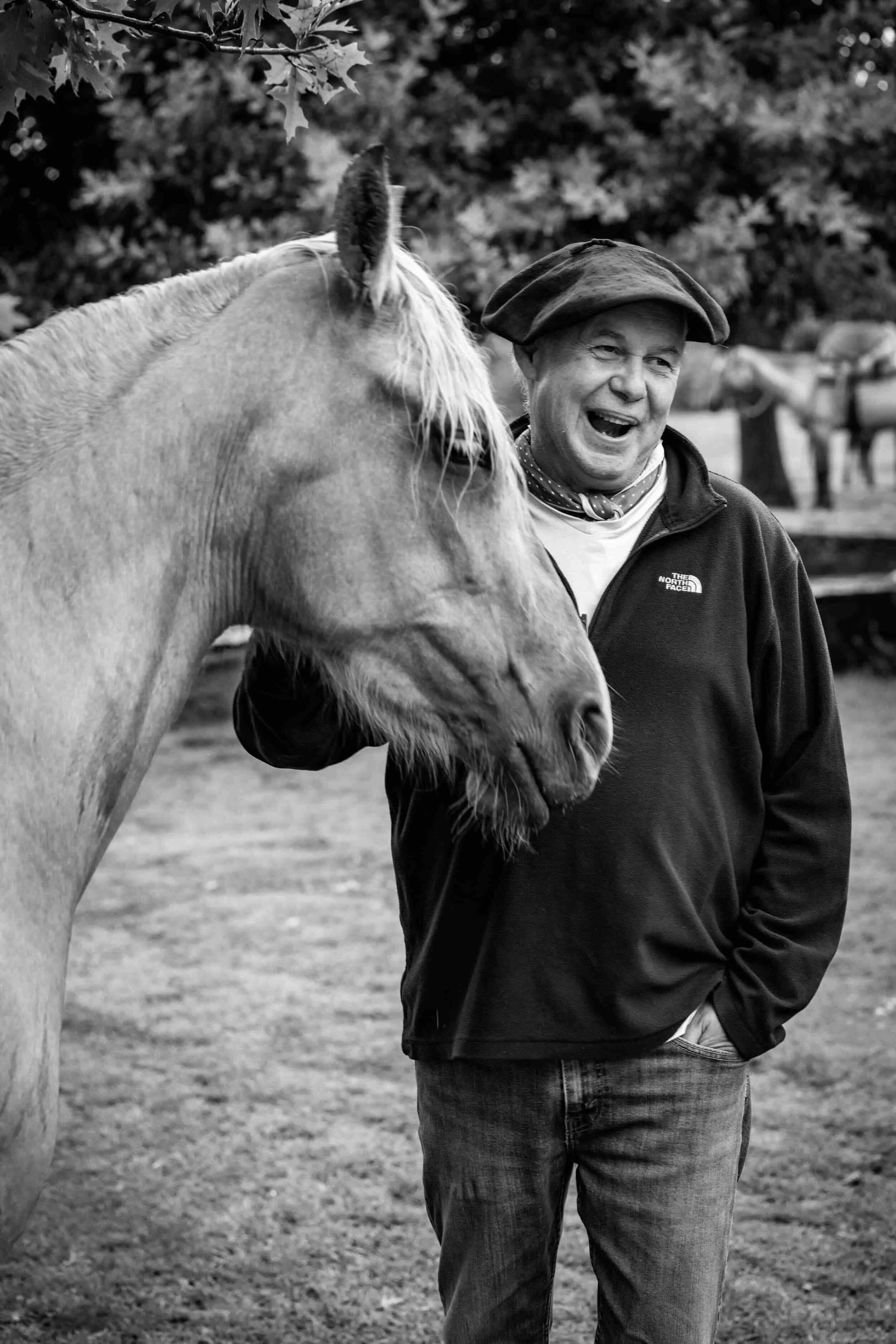
Kevin Begg, owner and Director of Estancia Los Potreros

What has a lifetime with horses taught you?

Horses have taught me that trust cannot be demanded - it has to be earned. You need patience, consistency and quiet confidence. A horse responds to who you really are, not to who you pretend to be, and it quickly senses tension, impatience or uncertainty. Horses also teach humility: however experienced you may think you are, there is always more to learn. 

After a perfect day, what would you open, and with whom?

I would open a bottle of Angelica Zapata, a red wine I particularly enjoy, and I would share it with my father, although he might well have preferred a glass of whisky. He was the person who created the estancia as I remember it and shaped so much of what it became. Some of my fondest memories are of being here with him. To sit together after a perfect day, looking out over the land and sharing a drink, would be very special.
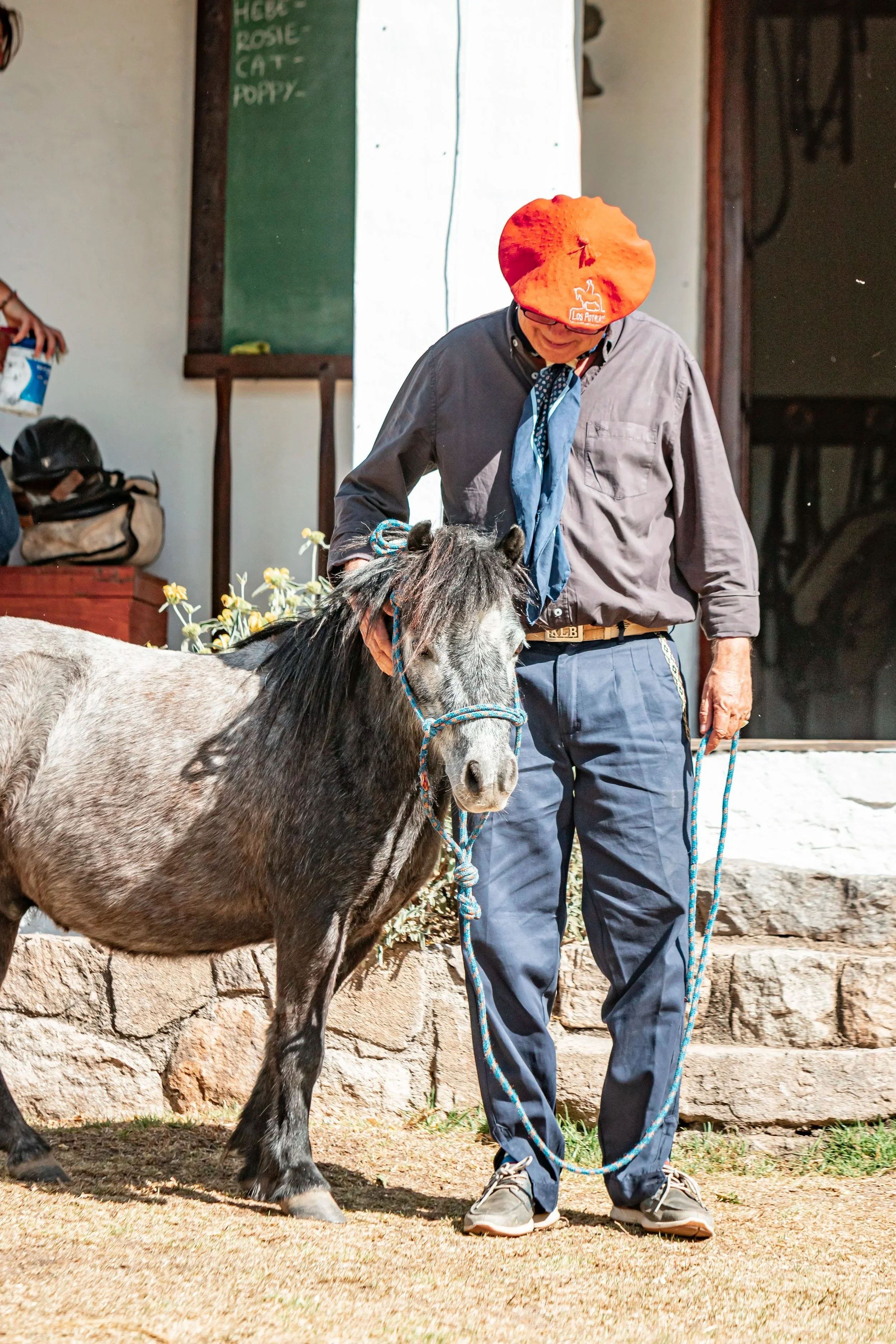
Kevin Begg with Chimichurri, the estancia's mini pony

The Early History of Los Potreros

The Early Roots of Estancia Los Potreros: A Journey Through Time

On 8 August 1825, William Grierson sailed across the Atlantic aboard the ship Symmetry as part of the first organised migration to Argentinafrom Leith, Edinburgh. Two and a half months and 7,000 miles later, he and more than 200 compatriots docked in Buenos Aires with the hopes of laying the foundations of a pioneering Argentine colony of Scottish farmers. The intervening years were fraught with immense challenges, but today nearly two centuries later, the Begg family have not been dissuaded from farming. In the central province of Córdoba amidst the rolling hills of the Sierras Chicas, lies Estancia Los Potreros, run by the direct descendants of William Grierson.

The Begg family first settled in the Córdoba region in the early part of the 20th century. Robin Glassford Begg and his wife Louie regularly came to holiday at Potrero de Loza, which was owned by the Keene family. They used to stay in the Muñecas cottage (or Dollshouse), which was built for them beside the main house. The Beggs later lived at Los Melados, which they rented from Guy Keene, and eventually built their own house on the land that they purchased, Potrero de Niz.

After Robin’s death in 1949, Louie began taking paying guests. They usually stayed for around a month or two. Before long Louie introduced the practice of keeping a guestbook, a tradition that is still maintained today. Over the years people have shared their lyrical memories of their time on the estancia, which has been described as ‘heaven among the hill tops’. Louie lived to see three centuries, passing away at the impressive age of 104. She and had three children Jean, Margaret and Robert.

Capilla de Buffo: A Hidden Sanctuary of Love

Tucked away on the edge of our rolling hills is the Capilla de Buffo is far more than a chapel—it's a deeply personal monument, a blend of art, science, and eternal love. Built in the 1940s by Guido Buffo, an Italian-Argentine scientist, painter, and philosopher, this unique space serves as both a mausoleum and a spiritual refuge.

The chapel was created by Buffo in memory of his beloved wife Leonor Allende and their daughter Eleonora, both of whom passed away at young ages. Heartbroken but inspired, Buffo poured his grief into constructing a sanctuary that would honour their memory forever. The building’s design takes inspiration from the cardo santo (holy thistle) flower, a symbol of purity and fleeting beauty.

Every architectural detail, from the layout to the hand-carved symbols, reflects Buffo's emotional and spiritual connection to his lost family.

Guido Buffo was not only a spiritual man, but also deeply rooted in scientific thought. Inside the chapel, he installed three Foucault pendulums, instruments used to demonstrate the Earth’s rotation. These pendulums are not just scientific tools, they lend the space a mysterious, almost mystical ambiance.

In addition, the chapel’s acoustics were carefully designed to amplify even the softest sounds, creating an immersive sensory experience for visitors, one that balances silence with the subtle rhythms of nature and science.

On Sunday mornings, we like to ride down to the chapel and spend some time down their taking a tour and having an opportunity to witness something so unique and special. The memorial itself is filled with little symbols to honour both his wife and daughter, including circular metal discs on the floor which represent the star constellations on the night his wife died. Another fascinating element is every year on the birthday of his wife, a ray of sunlight, enters through the skylight on the roof and illuminates the alter.

Murals on the walls of the Capilla de Buffo chapel in Córdoba, Argentina
Painted murals inside the Capilla de Buffo near Estancia Los Potreros
Capilla de Buffo chapel in Córdoba, Argentina

The Legacy of Our Aberdeen Angus Herd

A Herd That Has Grown Up With the Estancia

Our herd of Aberdeen Angus has been part of the estancia since the Begg family first settled here. In the early days the cattle were bred mainly for the family and the farm. Today the herd is much larger and part of a commercial operation, but it's still at the heart of life on the estancia. The cows and their calves are a familiar sight on rides across the farm, grazing the open hills and valleys.

Breeding Cattle That Thrive in the Sierras Chicas

Life in the hills asks a lot of a cow. Winters are dry, the grass is poorer, and the herd covers steep, rocky ground. So every year we work on developing the bloodlines further, choosing animals that calve easily and thrive on the winter grass. We've also brought in bloodlines that go directly back to Scotland and some of the original Angus cattle, a link to the breed's roots we're very proud of. Alongside this, we've been bringing back traditional ways of working that have long been part of estancia life in Argentina.

Round-Up Time: Preparing for the Annual Cattle Sales

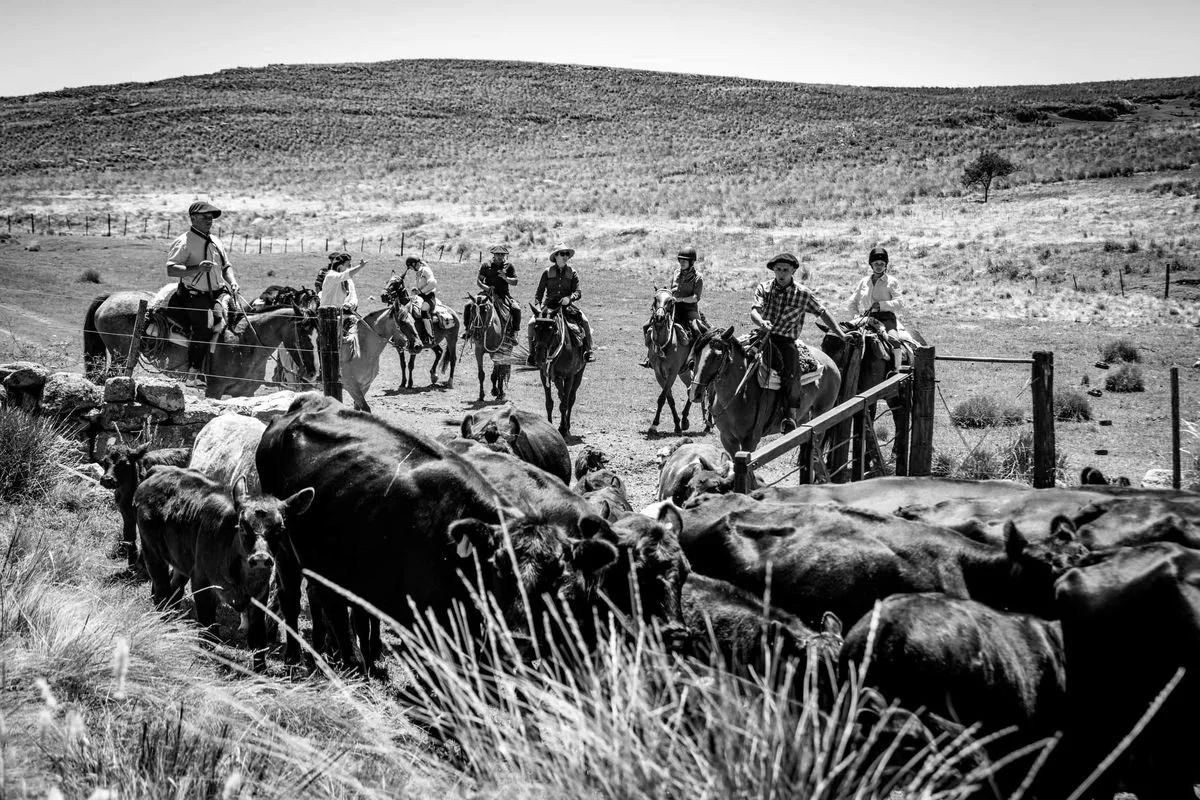
Each year the herd is rounded up from the surrounding hills and valleys ahead of the annual cattle sales, and the job of separating the animals begins. Every animal is vaccinated and thoroughly checked before sale. Despite the clouds of dust that surround the corrals, the gauchos sort the herd with remarkable skill, reading each animal and moving it calmly to where it needs to go.

Riding With the Herd: How Guests Can Join In

Guests are welcome to ride out with the gauchos when they're working the cattle, whether that's helping bring the herd down from the hills or watching the sorting in the corrals. It's a rare chance to see a working estancia up close. And once the work is done, gauchos, guests, guides and neighbours sit down together for an asado at a long trestle table, ready for another day.

Gaucho on horseback sorting cattle in the dusty corrals
Gaucho working the herd in the corrals in golden evening light
Long table lunch outside the estancia house after a day working cattle