
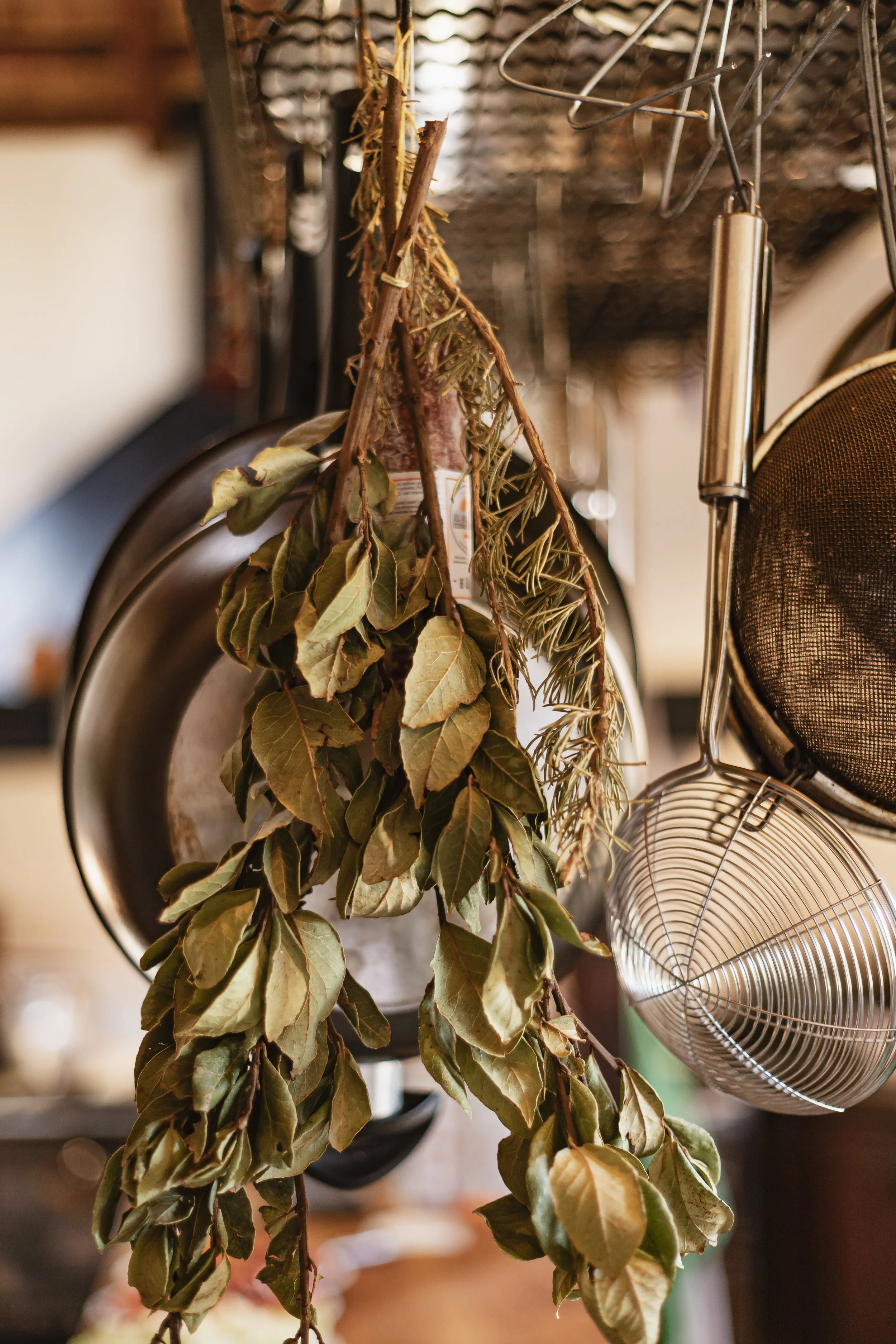
As the days begin to cool and summer slowly gives way to autumn, it's the perfect time to start preserving a little of the garden for the months ahead. Drying herbs is one of the oldest and simplest ways to capture the fresh flavours and aromas of the season, ensuring they're ready to enjoy long after the growing season has ended.
At Estancia Los Potreros, the herb garden is an important part of the kitchen. Fresh oregano, mint and bay leaves are picked throughout the warmer months, adding vibrant flavour to everyday cooking. As autumn arrives, we gather the final harvest and dry what we can, filling our pantry with herbs that will flavour soups, stews, roasted vegetables and slow-cooked dishes throughout the winter.
Drying herbs not only helps reduce waste but also preserves the essential oils that give each herb its distinctive taste and fragrance. It's a simple tradition that requires very little equipment and rewards you with homegrown ingredients that are often far more aromatic than shop-bought dried herbs.
How to Dry Herbs for Winter
YOU'LL NEED
Freshly picked herbs
Kitchen string or twine
A warm, dry and well-ventilated space
Airtight glass jars for storage
METHOD
Harvest your herbs in the morning after the dew has dried but before the heat of the day.
Rinse gently if needed and pat the leaves completely dry.
Gather the herbs into small bunches and tie them securely with string.
Hang the bunches upside down in a warm, dry, well-ventilated place away from direct sunlight.
Leave them to dry for 1–3 weeks, depending on the humidity.
Once the leaves feel crisp and crumble easily between your fingers, remove them from the stems.
Store the dried herbs in airtight jars, keeping them in a cool, dark cupboard to preserve their flavour.
Our Favourite Herbs to Dry
Oregano is one of the easiest herbs to dry and becomes wonderfully fragrant. Sprinkle it over homemade pizzas, roasted vegetables, tomato sauces or grilled meats.
Mint retains its refreshing aroma and is perfect for herbal teas, desserts, fruit salads or adding a cooling touch to summer drinks.
Bay leaves are an essential ingredient in many slow-cooked recipes. Add a leaf to soups, stews, casseroles and stocks for subtle depth of flavour.
A Simple Seasonal Tradition
Preserving herbs is a small ritual that connects us to the changing seasons. Every jar represents a little of summer carefully stored away, ready to be enjoyed when the garden is resting.
There is something deeply satisfying about opening a jar in the middle of winter and finding the unmistakable scent of summer waiting inside. It's a reminder that the garden continues to nourish us long after the last harvest, bringing warmth and flavour to every meal.