
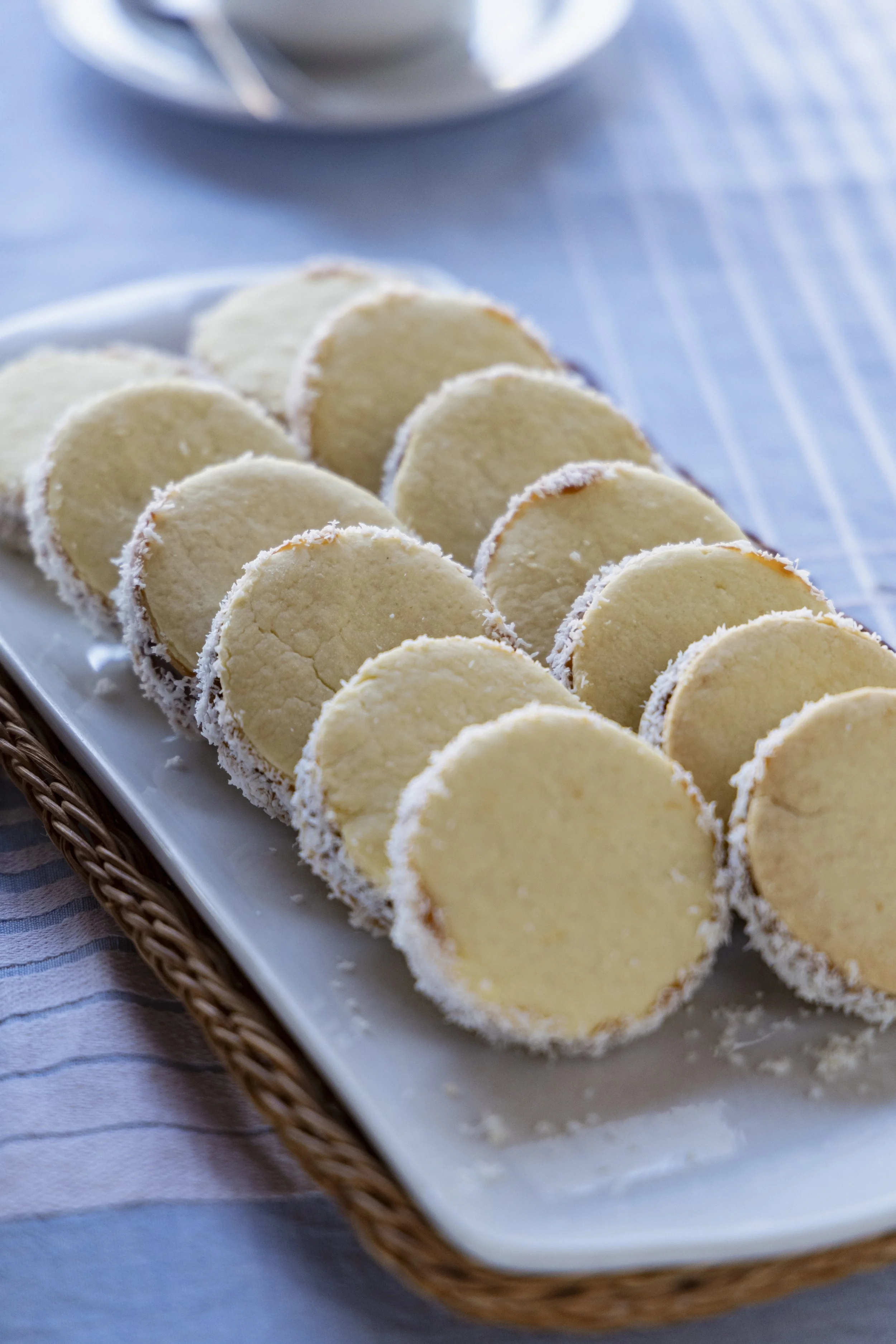
Soft, delicate, and filled with silky dulce de leche, alfajores de maicena hold a special place in Argentine hearts. Found in bakeries, family kitchens, cafés, and celebrations across the country, they are among Argentina's most beloved sweet treats.
While there are countless varieties of alfajores throughout South America, the alfajor de maicena has become a true Argentine classic, recognised by its tender texture, generous filling, and signature coating of coconut around the edges.
More than just a biscuit, it tells a story of cultural influences, family traditions, and the country's enduring love affair with dulce de leche.
The origins of the alfajor can be traced back centuries to the Arab world. During the Moorish occupation of Spain, sweet confections made with nuts, honey, and spices became part of the culinary landscape. The name itself is believed to derive from the Arabic word al-hasú, meaning "filled" or "stuffed." As Spanish culture evolved, these sweets adapted to local ingredients and traditions.
When Spanish settlers arrived in the Americas, they brought many of their culinary customs with them, including early versions of the alfajor.
Over time, the confection evolved differently in each region. In Argentina, it eventually became something entirely unique. By the nineteenth and early twentieth centuries, alfajores had become increasingly popular throughout Argentina.
The country's growing dairy industry made dulce de leche widely available, and it wasn't long before bakers began sandwiching biscuits together with generous layers of the caramel-like spread.
The introduction of cornstarch (maicena) transformed the texture of the biscuit itself. Instead of being crisp or dense, the biscuits became exceptionally light, crumbly, and delicate—melting in the mouth with each bite.
This innovation helped create the version now known and loved as the alfajor de maicena. Part of the appeal lies in their simplicity. The combination of buttery biscuits, dulce de leche, and coconut is familiar, comforting, and nostalgic. For many Argentines, alfajores de maicena evoke childhood memories of birthdays, Sunday visits to grandparents, school celebrations, and afternoon coffee shared with family.
Unlike some commercial alfajores coated in chocolate, the maicena version often feels homemade and deeply connected to family traditions.
Many households have a treasured recipe that has been passed down through generations, with slight variations that make each family's version unique.
Across Argentina, alfajores de maicena are often enjoyed during la merienda—the afternoon pause for coffee, tea, or mateaccompanied by something sweet.
Whether served at a café in Buenos Aires, a bakery in Córdoba, or around a family table in the countryside, they remain a favourite choice for sharing and conversation.
Their delicate appearance and rich filling make them equally suited to special occasions and everyday moments.
Today, alfajores are one of Argentina's most recognised foods, often carried home by travellers as gifts and enjoyed by visitors eager to experience local flavours.
Among all the variations available, the alfajor de maicena remains one of the most iconic. It reflects the country's Spanish heritage, the importance of its dairy traditions, and the enduring popularity of dulce de leche.
Most importantly, it represents something that Argentines value deeply: the simple pleasure of gathering around a table to share something sweet.
Few treats capture that spirit quite as perfectly as an alfajor de maicena.