
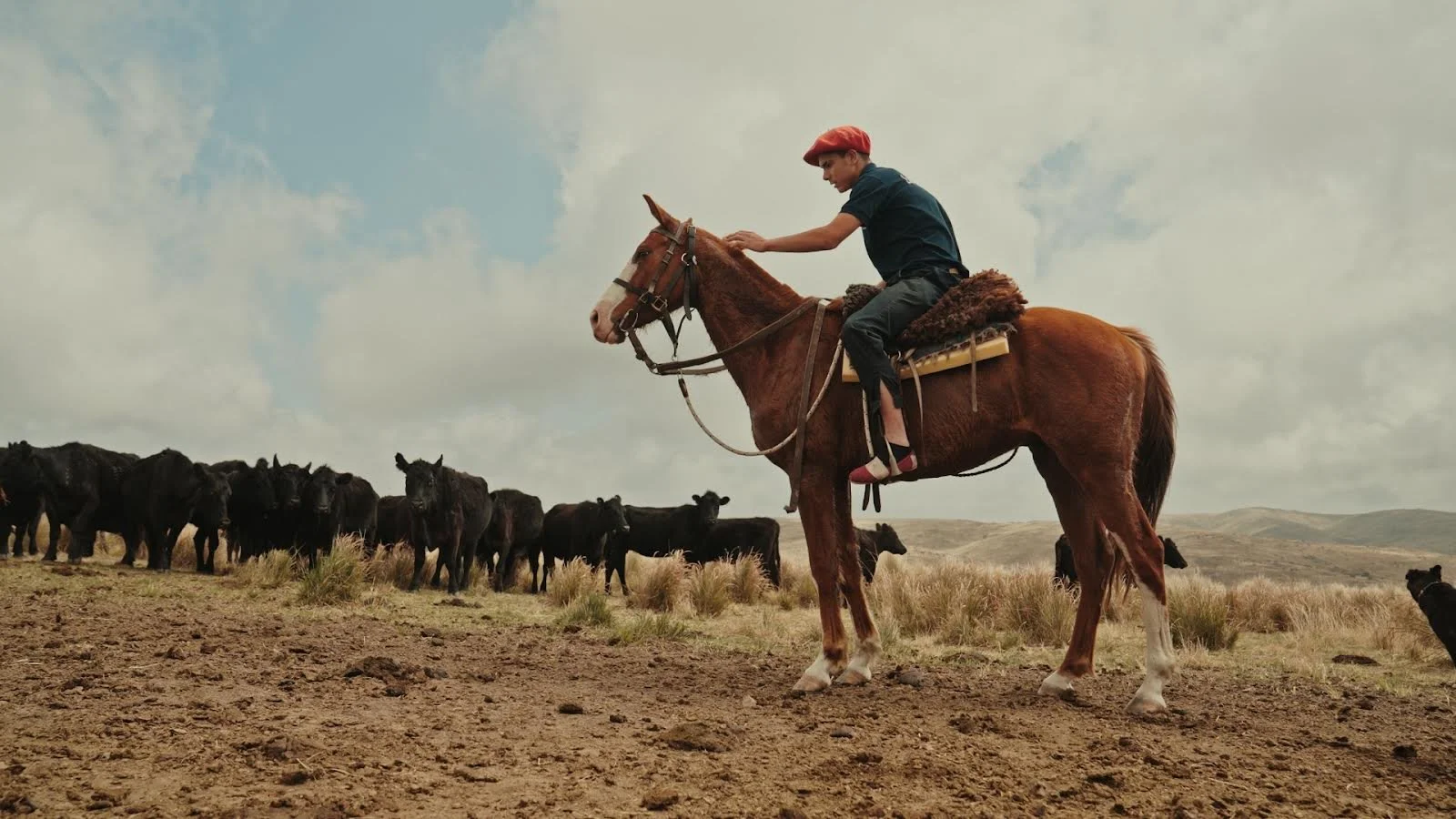
The story of Estancia Los Potreros is not merely written in history books; it is etched into the rolling hills and pastures the Begg family call home. While the family’s connection to the land began even earlier through a tenancy agreement, it was in 1965 that Robert Begg formalised the farming system that continues to shape the estancia today.
A LEGACY OF EXCELLENCE
The farming operations at Los Potreros are centred around two distinctive programmes:
Our Angus Cattle: The estancia raises a recognised herd of Aberdeen Angus cattle, with a breeding programme focused on quality, health and resilience.
A Diverse Equine Herd: Over the last two decades, the estancia has developed a collection of more than 120 horses, including Argentine and Chilean Criollos, Polo Ponies, Peruvian Pasos and Quarter Horses. Each breed brings its own character, versatility and traditions to life on the estancia.
LIVING WILD AND FREE
At Los Potreros, we believe that giving animals space to express their natural behaviours is an important part of good animal husbandry. Our approach centres on open pastures and allows cattle and horses to spend their time grazing, moving and socialising in their natural surroundings, wherever conditions and individual needs allow.
Rather than relying on intensive indoor housing or confined feeding systems, our farming approach makes use of the estancia’s grasslands and open landscape. This allows animals opportunities to graze, interact and move freely, while ensuring that their health, safety and welfare remain a priority.
For us, this is more than a farming choice. It is an important part of the way we care for our animals and maintain the traditions of the estancia.
CARING FOR THE LAND: LOOKING AHEAD
For Estancia Los Potreros, caring for the land is an ongoing responsibility. Our ambition is to manage the estancia in a way that supports the long-term health of the landscape, while recognising that meaningful environmental progress takes time, observation and continued effort.
The team works to maintain the natural character of the estancia and to care for the habitats and wildlife that share this landscape. Through our day-to-day farming practices, we aim to balance productive agriculture with the conservation of the surrounding environment.
We recognise that the health of the land is closely connected to the future of our farming operations. We therefore continue to explore how our management practices can support grassland health, habitat protection and biodiversity over time.
Our ambition is simple: to care for the land we have inherited and leave future generations with a landscape that continues to support farming, wildlife and the traditions of Los Potreros.
THE FIVE PILLARS OF ANIMAL WELFARE
Animal welfare is at the heart of the estancia. Our approach is built around five core principles that guide the work of our managers, gauchos and staff.
Freedom to Move: We aim to give animals generous space to move and graze, with appropriate management to meet their individual needs.
Natural Expression: We provide opportunities for animals to express natural behaviours, including grazing, movement and social interaction.
Environmental Well-being: Access to pasture, suitable shelter or natural protection, and appropriate care are important parts of our approach to animal welfare.
Nutrition: Our feeding practices are designed around the needs of the animals and the requirements of each farming programme. We do not use growth-promoting hormones, and our policy on feed additives and animal by-products reflects our approach to animal husbandry.
Expert Care: Our team is responsible for maintaining appropriate standards of animal care, recognising health concerns and ensuring that animals receive suitable attention when needed.
At Estancia Los Potreros, tradition and nature walk hand in hand. Our farming heritage connects us to the landscape, while our responsibility to the animals and land encourages us to keep learning, adapting and looking ahead. We want the estancia to remain a place where farming, wildlife and family traditions can continue side by side for generations to come.