
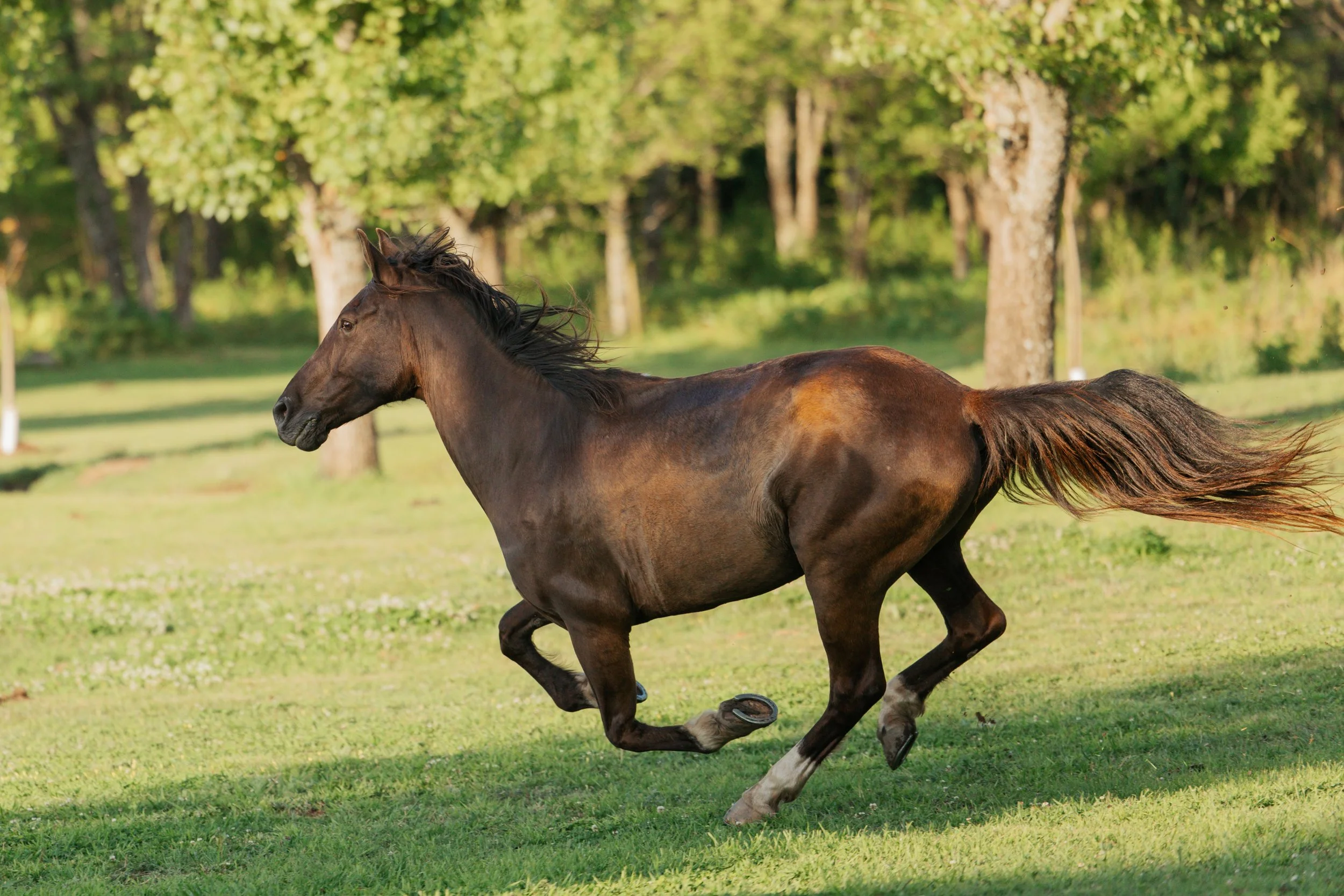
Our Peruvian Pasos are some of the most eye-catching horses on the farm, and guests are always asking where they come from. The answer is a story that stretches back nearly 500 years, across oceans, deserts and mountains - so grab a cuppa and let us tell you how this remarkable horse came to be grazing in the hills of Córdoba.
Spanish Horses and the Birth of a Gaited Breed
The story begins in the 1500s, when the Spanish arrived in South America with their horses. These were a mix of Andalusian, Barb and Spanish Jennet bloodlines, and the Jennet in particular was famous for its smooth, ambling gait - a prized quality at a time when riders spent days on end in the saddle.
In Peru, these horses were bred carefully for centuries, and because the country was so isolated, very little outside blood was ever added. Over time, breeders selected for the smoothest, most comfortable horses, and the result was the Peruvian Paso - a horse with a natural four-beat gait it's born with, rather than one that has to be taught.
The Original Use of the Peruvian Paso Horse
The Peruvian Paso was, first and foremost, a working horse. On the vast haciendas of Peru's coastal valleys, where sugar cane and cotton stretched as far as the eye could see, landowners and overseers needed to cover huge distances every day, often across sand and in the heat.
They needed a horse that was tough, willing and, above all, comfortable - one that could carry them for hours without wearing them out. The Peruvian Paso was perfect. Its smooth gait meant riders arrived fresh, and its stamina meant it could keep going all day.
The skilled horsemen who trained and rode these horses were known as chalanes, and with their ponchos and wide-brimmed straw hats, they became a symbol of the breed's elegance and tradition.
How Peru Protected Its National Treasure
In the 1900s, as roads and cars replaced horses on the haciendas, and land reforms in the late 1960s broke up the great estates, the Peruvian Paso faced an uncertain future. Thankfully, dedicated breeders in Peru and abroad worked hard to protect the bloodlines.
Today, the Peruvian Paso is officially recognised as part of Peru's national cultural heritage, and the breed is treasured around the world. It's also often confused with the Paso Fino, a different gaited breed from the Caribbean and Colombia - so if you want to impress a Peruvian, never mix the two up!
How the Peruvian Paso Found Its Way to Argentina
From Peru, the breed gradually spread across the Americas. In Argentina, Peruvian Pasos have found a particular home in the northwest, in provinces like Tucumán and Salta, where long distances and rugged terrain make a smooth, sure-footed horse so valuable. Today there's a dedicated community of breeders across the country, with horses bred for their gait, their looks and their spirited character.
Building Our Own Herd of Peruvian Paso Horses
Over the last year, we've been sourcing Peruvian Pasos from across Argentina, choosing horses for their bloodlines and awards across the Americas to build the foundation of our own herd. There's Coplero, a real sweetheart with a fantastic paso, Pequeño Bambi, the biggest horse on the farm and an award winner, and Juan, who came to us from Tucumán and has energy to spare.
Our Pasos are energetic horses with big personalities, so they're best suited to experienced, calm riders. We use them on shorter gaited rides, as a special part of a stay rather than every day - and every time we see them move, we're reminded of just how far this wonderful breed has come.