
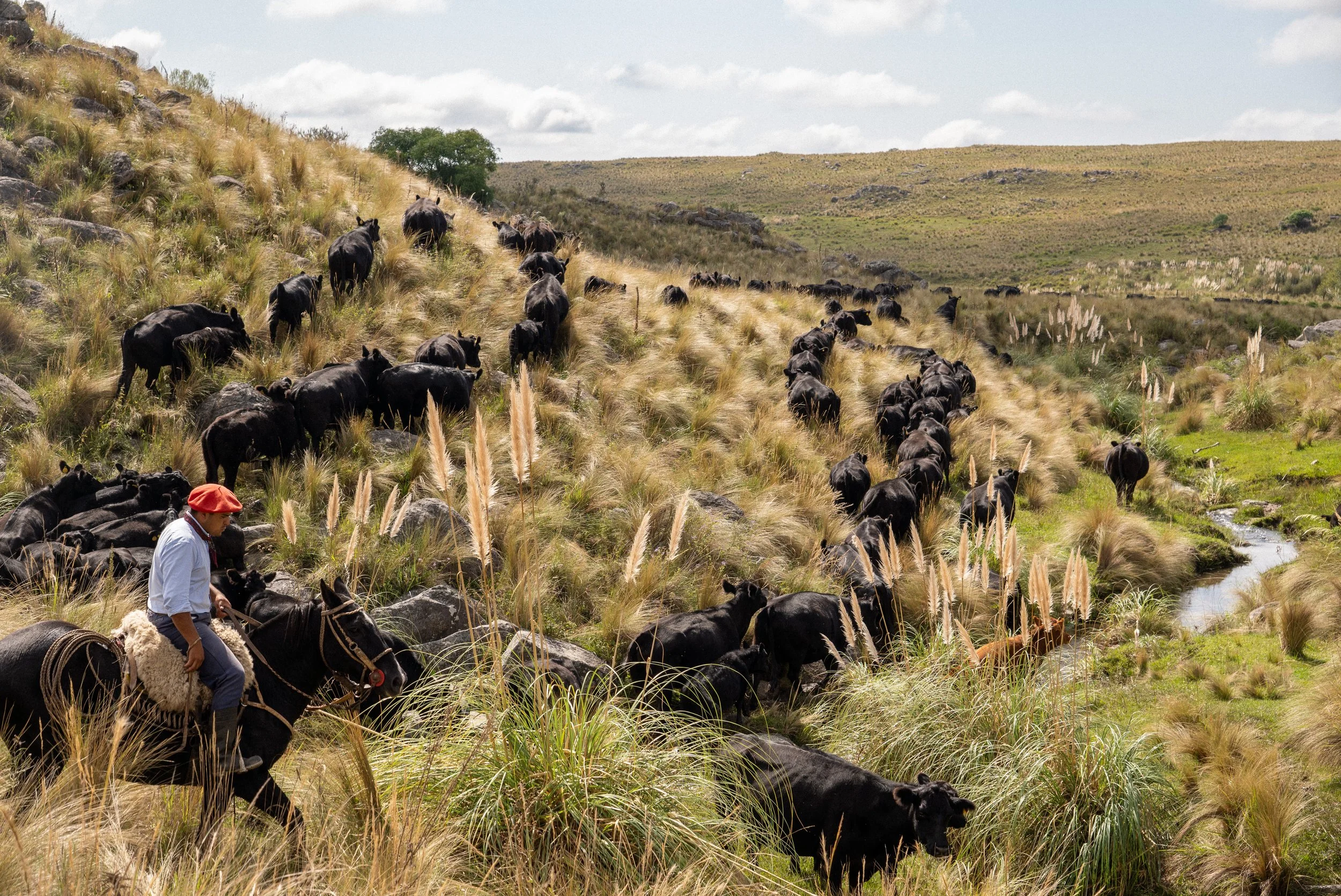
Estancia Los Potreros. Paradise for some. A working cattle ranch for others.
My name is Kevin Begg, although in Argentina I am also known as Lucas. Today, I own Estancia Los Potreros, a traditional - though perhaps not very typical - Argentine cattle ranch nestled in the hills of Córdoba.
For most of my life, I was not a gaucho. I was a banker.
I studied in London and spent years working in Milan, Madrid, Hong Kong, and eventually Buenos Aires. In 2001, I returned to Argentina to work for a German bank. Six months later, Argentina suffered one of the worst economic collapses in its history. Banks closed, governments fell, and overnight, everything changed.
My bank offered to transfer me abroad. But my parents were getting older, so I decided to stay in Argentina for a while longer. I returned to the estancia for what I thought would be just a weekend.
That weekend has now lasted twenty-five years.
I remember getting back on a horse again after years away. Something very simple happened: I felt at home. Not strategically. Not intellectually. Just instinctively.
Although my parents owned the estancia, I suddenly felt a deep responsibility — not simply to own the land, but to keep it alive.
People often ask me whether I became a gaucho at that moment. The truth is: no.
You are born a gaucho. It is not something you can imitate or easily become. My childhood friends were gauchos. We rode horses together, ran through the hills, and shared a freedom that shaped who we were. I may wear the boina, the traditional beret, but I do not pretend to be one of them.
Because real gaucho culture is deeper than clothing or folklore.
It is about quiet competence. Pride without show. Loyalty to family and land. It is about knowing your work without needing recognition.
You see it in the way cattle are moved - calmly and efficiently, often without words. It is in the care given to a horse at the end of the day, or the attention paid to preparing a saddle properly before sunrise.
And above all, it is about responsibility: to family, to the land, and to a way of life quietly passed down from one generation to the next.
Sadly, this culture is under pressure.
Modern agriculture requires fewer workers. Young people leave for the cities. Technology replaces tradition. When I first returned to the estancia, many of the gauchos wore New York Yankees baseball caps because traditional bombachas and boinas had become too expensive to buy.
That moment stayed with me.
The question became: how do you preserve a culture without turning it into a museum?
For us, the answer was tourism but not tourism in the traditional sense.
Estancia Los Potreros is not a hotel, and it is certainly not a spa. Guests do not come simply to be served. They come to participate.
They ride horses, work cattle, sit around the fire, and experience the rhythm of life on a real working ranch. It is slower. Simpler. More connected.
What many people discover here is not luxury in the traditional sense, but something far more valuable: connection to the land, to the people, and to themselves.
Tourism has allowed this community to continue living and working here with dignity. It has created stable work not only for gauchos, but also for their families. It has helped preserve horsemanship, food traditions, asados, and a rural way of life not as performances for visitors, but as something real and alive.
Today, our gauchos and chinas wear their traditional clothing with pride again.
Gaucho culture is not disappearing. It is evolving.
And perhaps that is the most important lesson of all: traditions survive not by standing still, but by finding meaningful ways to remain alive in the modern world.
I feel incredibly fortunate to play a small role in helping ensure that this community continues to thrive.