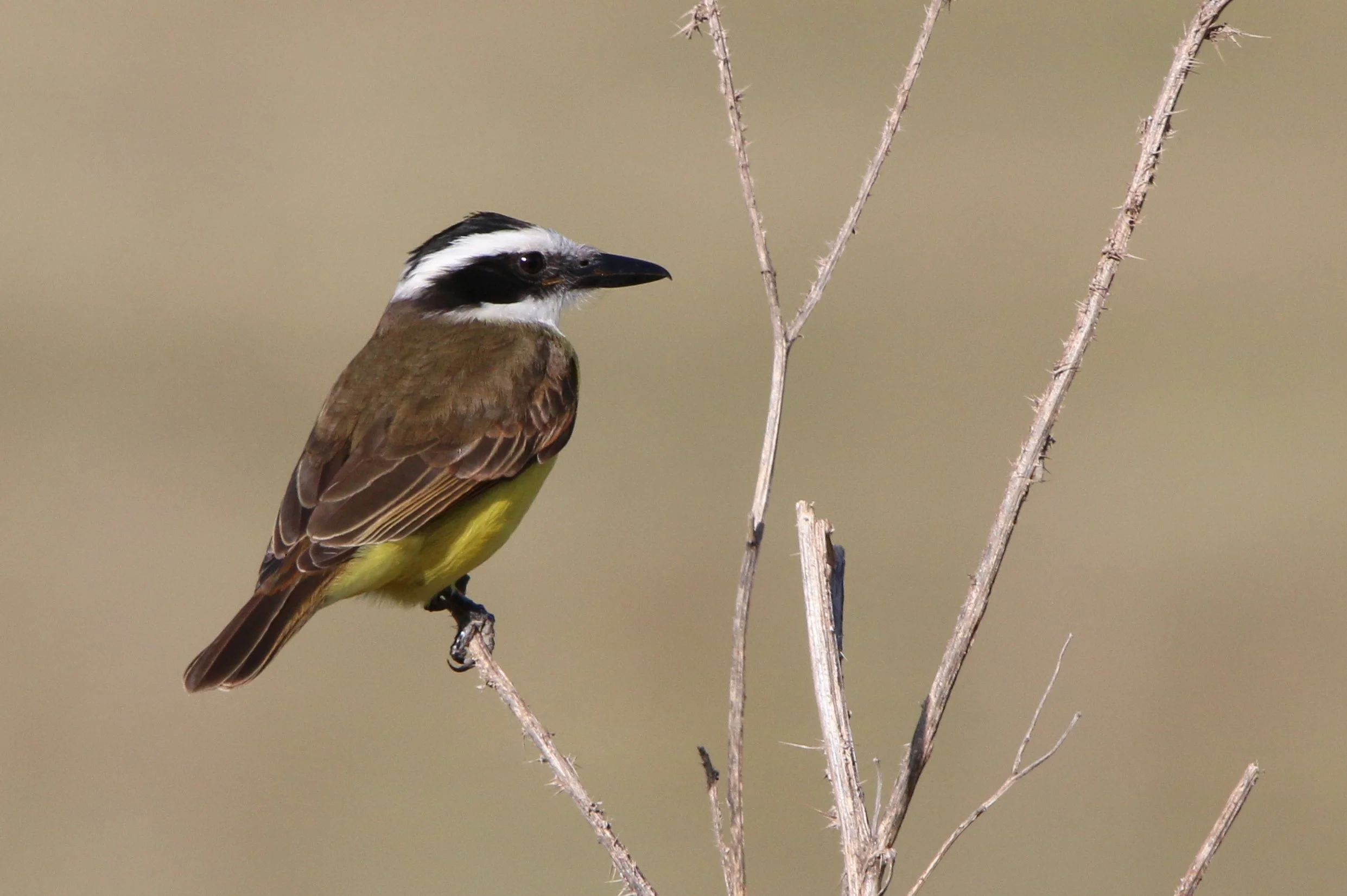
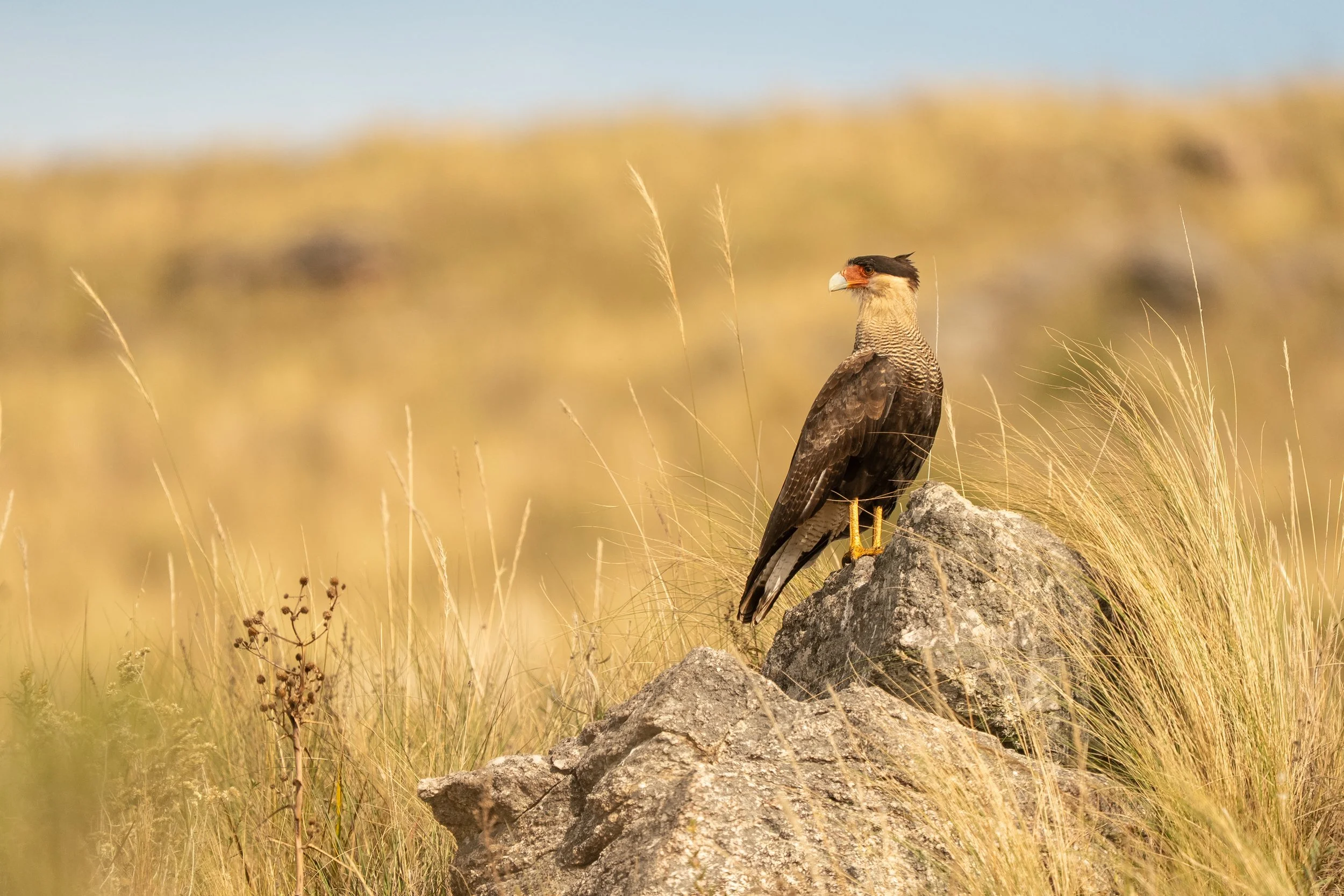
Crested Caracaras on the Estancia: The Clever Guardians of the Open Fields

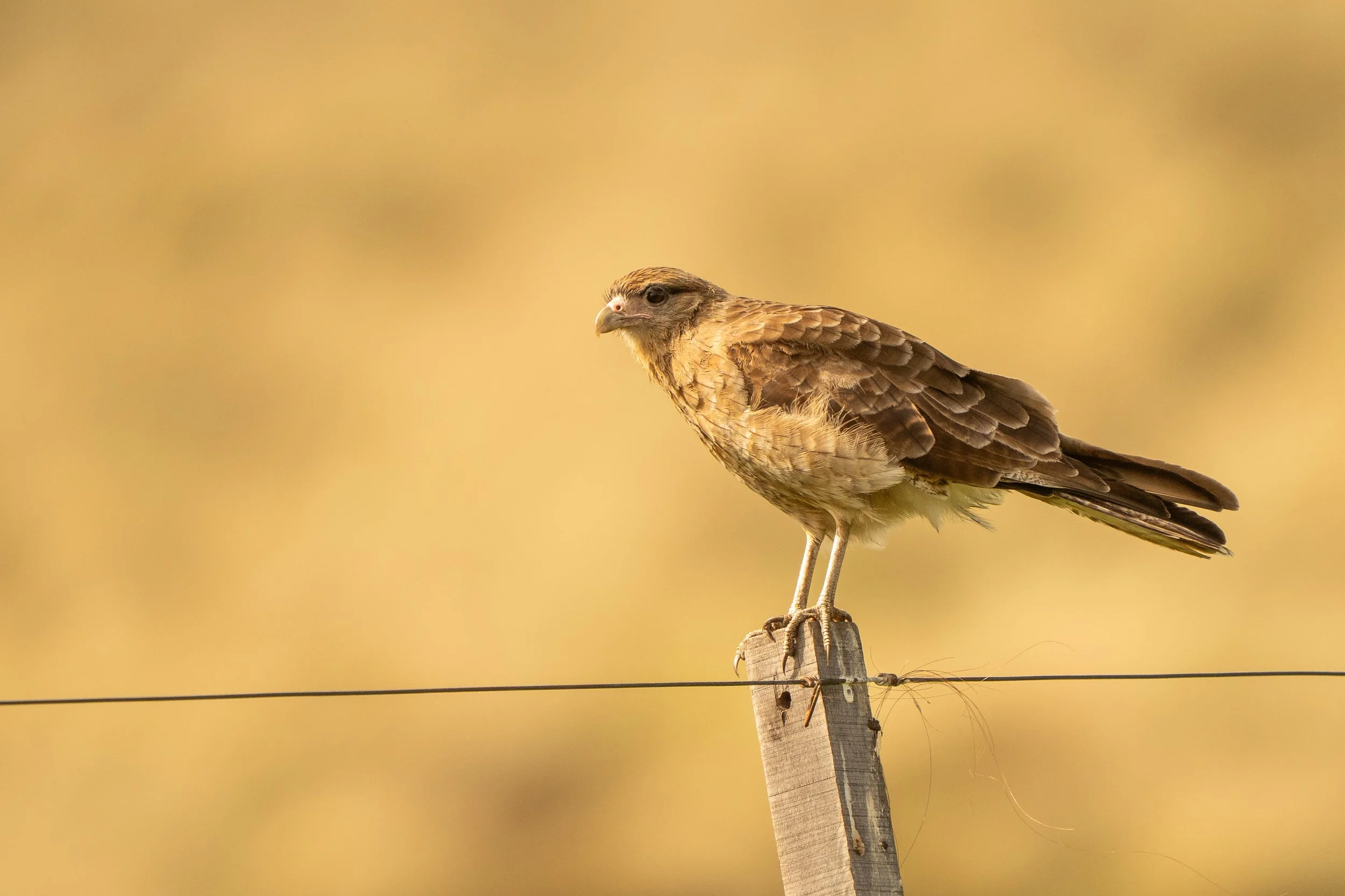
Among the many remarkable birds that call the estancia home, few are as instantly recognisable and as full of personality as the Crested Caracara. With its striking appearance, confident walk, and sharp intelligence, this bird is often one of the first that guests notice during their stay.

Unlike many birds of prey that spend most of their time soaring high above, the Crested Caracara is just as comfortable on the ground as it is in the air. It can often be seen walking across open grassland, perched on fence posts, or scanning the landscape from low branches with calm confidence. Its bold black cap, pale neck, orange facial skin, and strong hooked beak make it unmistakable.

The caracara is not only beautiful - it is also highly adaptable. Known for its problem-solving skills and opportunistic feeding habits, it is often described as one of the smartest raptors in South America. It feeds on insects, small animals, carrion, and even fruit when available, making it a true survivor in changing environments.
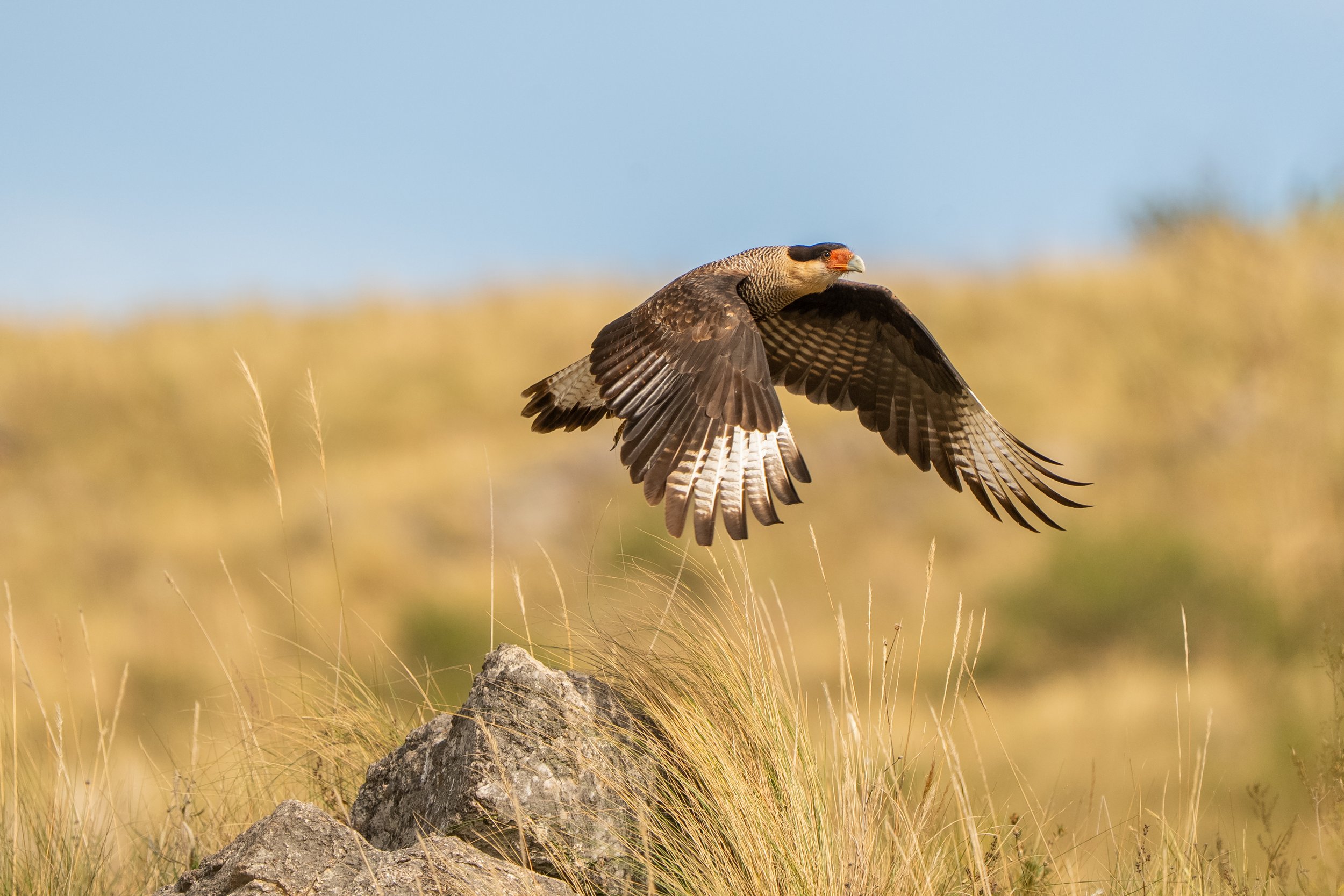
On the estancia, Crested Caracaras are frequent companions during long drives across the property. They often appear near grazing areas, roadsides, and open fields where they can easily search for food. Their curiosity makes them particularly memorable; they seem to observe people just as closely as people observe them.

There is something almost noble about the way they move - slow, deliberate, and always aware of their surroundings. While eagles may dominate the skies, the Crested Caracara brings a different kind of presence: grounded, intelligent, and deeply connected to the rhythm of the land.

For birdwatchers and nature lovers alike, spotting a Crested Caracara is always a highlight. It is a reminder that some of the most fascinating wildlife encounters happen not in dramatic moments, but in quiet observation across the everyday landscape of the estancia.
Meet the Newest Members of Our String

There is a particular kind of excitement that comes with welcoming new horses to the estancia. Each one arrives with their own history, their own quirks, and before too long their own place in the daily rhythm of life here. This season, we're delighted to introduce three horses who have already begun settling into that rhythm beautifully.

Baloo

Named after the beloved bear from The Jungle Book, Baloo lives up to his namesake in every way. He is a lovely, kind horse with a calm and dependable nature sweet, gentle, and always willing. Out working with cattle in the campo, he is exactly the sort of partner you want by your side on a long day: steady, sensible, and unflappable.

But like Baloo the bear, there's more to him than his easy-going charm suggests. Ask a little more of him, and he'll happily oblige, with just the right amount of spice and energy to keep things interesting. Reliable, kind-hearted, and full of character, he's already become a firm favourite around the estancia the sort of horse everyone finds an excuse to visit.

Borges

Our wise mestizo carries a name that could belong to no one else: Jorge Luis Borges, the celebrated Argentine writer. And somehow, it fits perfectly. There's something thoughtful in his eyes, something almost knowing in his expression, and he moves through the world with a quiet confidence that's hard not to admire.

Kind, willing, and full of good energy, Borges has a calming presence that guests and staff alike have come to rely on. He's the kind of horse who makes everything feel a little more settled simply by being there a trusted companion, and quickly becoming a favourite wherever he goes.

Mandarina

If Baloo is easy-going and Borges is contemplative, Mandarina is pure fire. Our vibrant Criollo cattle horse takes her name from her striking mandarin-orange coat, and with her bold cara blanca marking, she is genuinely impossible to overlook.

She's quick, agile, and always ready for a day's work with cattle the kind of horse who brings both athleticism and heart to everything she does. Eager to please and full of personality, Mandarina combines dependability with a spark that makes her utterly unforgettable. We have a feeling she's going to win over a great many hearts this season.

Three very different horses, three very different personalities and yet each one embodies exactly what we look for here at Estancia Los Potreros: quality, sure-footedness, and above all, a generous temperament that makes every ride a pleasure. Over the coming months, Baloo, Borges, and Mandarina will become familiar faces on the mountain trails, carrying guests through hidden valleys and along high ridges, and adding their own character to the rhythm of life in the Sierras.

We can't wait for you to meet them.

Five Minutes with Kevin Begg

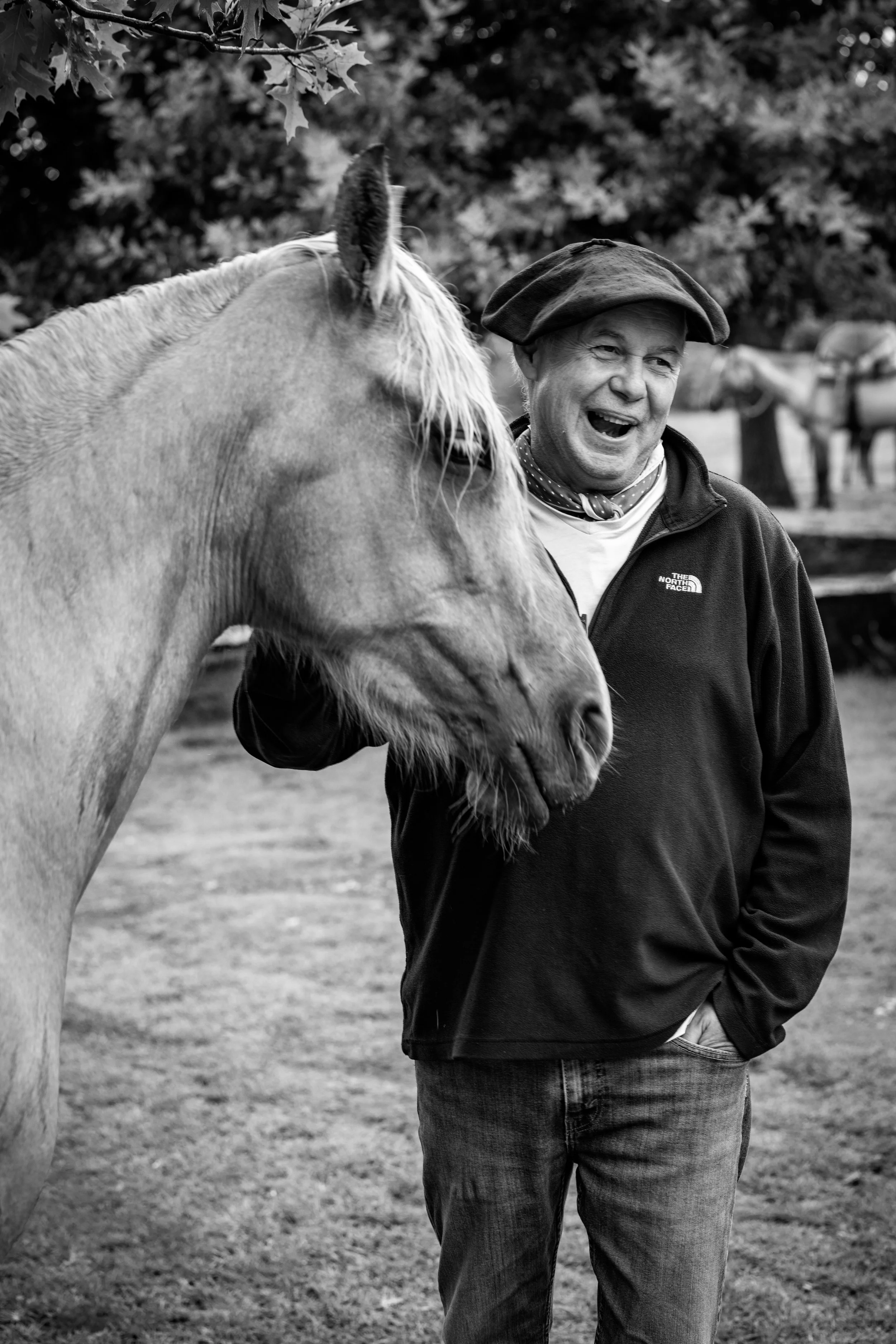
As owner of Estancia Los Potreros, Kevin Begg is far more than a host. Having grown up on the estancia, he knows every valley, river crossing, hidden trail and mountain ridge by heart. Today, he continues to live and work on the farm, welcoming guests personally and sharing the landscapes, horses and traditions that have shaped his life. For Kevin, Los Potreros is more than a destination; it is home. His connection to the estancia stretches back four generations, from childhood days spent roaming freely across the hills to the present day, where he remains deeply involved in every aspect of life on the farm. Whether joining a ride, sharing stories over dinner or introducing guests to the horses, Kevin's passion for the estancia is at the heart of every stay.

We sat down with him to talk about his earliest memories, the horses that have left their mark, and the special places that continue to inspire him after a lifetime spent in the Sierras Chicas.

What is your earliest memory of the estancia?

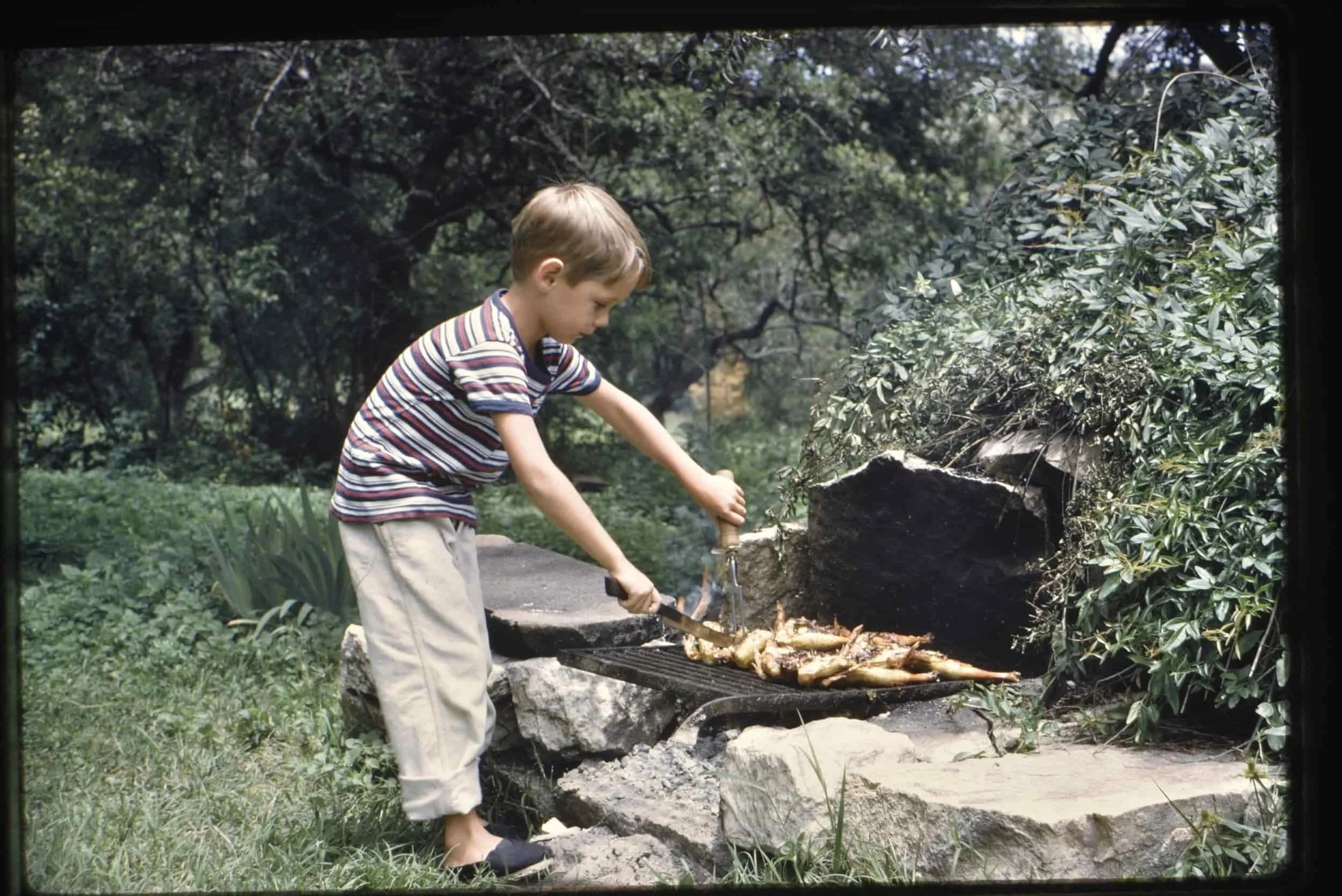
My earliest memories are of freedom and space: running around the estancia as a young child with very few rules. I remember my grandmother, the matriarch of the family, sounding a great gong at lunchtime to tell us we had fifteen minutes before we had to come in. She lived to be 104 and was a very strong presence throughout my childhood. I also remember riding with my father when he came up from work at weekends, and my elder brother, Robin, leading my horse and teaching me to ride. 

What has been your most memorable moment on horseback here? Is there a horse across your lifetime that stands out as one in a million, and why?

There have been many memorable moments: my first canter, the first time I fell off, riding to the waterfalls and discovering the secret corners of the estancia that we rarely visited. I remember my first horse, Regalito, who was given to me by my parents when I was very young and on whom I learned to ride. But perhaps the horse who stands out most is Negro El Once, or Black Eleven, named after what is considered a lucky roulette number in Argentina. He was the horse I found and rode when I returned to Argentina to live at the estancia in 2001. Through him, I rediscovered the connection with horses that I had lost during my years away. He helped bring me home in more ways than one.

If you could take guests to just one spot on the estancia, where would it be and why?

The obvious choices would be the estancia's iconic places: the Cascada de los Condores, our waterfall, or the Top of the World, the highest point on the farm. They are spectacular and naturally form part of the experience. But personally, I would choose one of the quieter corners that we seldom visit. When I lead a ride, I enjoy leaving the well-trodden paths and taking guests somewhere even our guides and gauchos do not often go. Those places bring back childhood memories for me, and they allow guests to feel that they are genuinely discovering a private and almost forgotten part of the estancia.
What's something about life with horses that has taught you an important lesson?

Horses have taught me that trust cannot be demanded, t has to be earned. You need patience, consistency and quiet confidence. A horse responds to who you really are, not to who you pretend to be, and it quickly senses tension, impatience or uncertainty. Horses also teach humility, however experienced you may think you are, there is always more to learn. 

After a perfect day at the estancia, what wine would you open and who would you share it with?

I would open a bottle of Angelica Zapata, a red wine I particularly enjoy, and I would share it with my father, although he might well have preferred a glass of whisky. He was the person who created the estancia as I remember it and shaped so much of what it became. Some of my fondest memories are of being here with him. To sit together after a perfect day, looking out over the land and sharing a drink, would be very special.

Winter on the Estancia: Quiet Skies and Silent Hunters

Winter on the estancia brings a different kind of beauty. The air is crisp, the mornings arrive wrapped in mist, and the landscape feels quieter, slower, and more still. But for those who take the time to look up, winter is one of the most rewarding seasons for birdwatching.

This is the season when birds of prey become easier to spot. With fewer leaves on the trees and clearer open skies, the Black-Chested Buzzard Eagle often appears circling high above the fields, watching patiently for movement below. Its broad wings and powerful presence make it one of the most impressive winter visitors on the estancia.

Closer to the ground, the Chimango Caracara is a regular companion during colder months. Often seen perched on fence posts or walking confidently through open grassland, this clever bird is always alert and adaptable. It thrives in winter conditions and reminds us that resilience is part of nature’s design.

As evening falls, another special resident emerges - the Barn Owl. Silent and almost ghost-like, it glides low over the fields at dusk, hunting in near-complete silence. Spotting one on a winter drive near La Verdad is always memorable, especially as the sun disappears behind the hills.

Winter may seem quiet, but the estancia is far from asleep. It is a season of patience, sharp eyes, and rewarding encounters with some of our most remarkable birds.

Why the Argentine Criollo Is Perfect for the Sierras Chicas of Córdoba

There are few horses as deeply connected to the Argentine landscape as the Criollo horse. Tough, intelligent, and incredibly resilient, the Criollo has spent centuries adapting to some of the harshest environments in South America.

From the windswept Pampas to rugged mountain trails, this breed has earned a reputation as one of the hardiest horses in the world. And nowhere is that more evident than in the Sierras Chicas of Córdoba. For riders, breeders, and rural landowners in the region, the Criollo is more than a beautiful horse, it is a natural partner for life in the mountains.

A Horse Forged by Survival

The story of the Criollo begins in the 1500s, when Spanish settlers brought Iberian horses to South America. Some escaped, others were abandoned, and over generations these horses spread across the continent, surviving entirely on their own.

Only the strongest endured.

Extreme heat, cold winters, rough terrain, predators, poor grazing conditions, and long distances shaped the breed naturally over hundreds of years. The result was a horse unlike any other: compact, powerful, intelligent, and astonishingly durable.

Unlike many modern breeds developed primarily for appearance or speed, the Criollo was shaped by necessity. Every trait had to serve a purpose.

Built for Endurance and Strength

The Criollo may not be the tallest horse, but what it lacks in size it makes up for in capability. Known for:

  • Strong legs and dense bone structure

  • Extremely hard hooves

  • Natural balance and agility

  • Calm, dependable temperament

  • Excellent endurance over long distances

Criollos are famous for their ability to travel across difficult terrain while requiring relatively little maintenance. They are efficient grazers, adaptable to changing climates, and capable of working long hours without exhaustion.

One of the most famous examples of the breed’s endurance came in the 1920s, when Aimé Félix Tschiffely rode two Criollo horses from Buenos Aires all the way to New York, a journey of more than 21,000 kilometers.

That legendary expedition helped establish the Criollo as one of the world’s great endurance horses.

Why the Criollo Thrives in the Sierras Chicas

The Sierras Chicas offer some of the most beautiful landscapes in Argentina, rolling hills, rocky trails, native forests, streams, and mountain terrain. But they also demand a horse capable of handling:

  • Steep inclines

  • Uneven rocky ground

  • Dry conditions

  • Seasonal weather changes

  • Long rides across rugged terrain

This is exactly the environment the Criollo was made for.

Sure-Footed on Mountain Trails

The compact build and natural balance of the Criollo make it exceptionally stable in rocky and uneven terrain. Riders in the Sierras Chicas often value confidence and safety over speed, and few breeds move through mountain trails as naturally as a Criollo.

Adapted to Harsh Conditions

Córdoba’s climate can be demanding, with hot summers, dry periods, and cool winter nights. Criollos are naturally resilient and capable of thriving in conditions where more delicate breeds may struggle.

Low Maintenance and Efficient Grazers

One of the breed’s greatest strengths is its efficiency. Criollos evolved in environments where food and water were not always abundant, making them remarkably easy keepers compared to larger sport horses.

For landowners and rural properties in the Sierras, this makes them both practical and sustainable.

Perfect for Rural Lifestyle and Adventure Riding

Whether working cattle, exploring trails, or enjoying long mountain rides, the Criollo combines versatility with reliability. Their calm temperament also makes them excellent companions for riders seeking connection with nature rather than high-intensity competition.

More Than a Horse - A Symbol of Argentina

The Criollo is deeply woven into Argentine history and gaucho culture. It represents endurance, freedom, and a close relationship with the land. In many ways, the breed reflects the spirit of the Sierras Chicas themselves: rugged, authentic, and resilient. For anyone living, riding, or exploring Córdoba’s mountain landscapes, the Criollo is not simply well suited to the region — it belongs here.

The Argentine Criollo remains one of the most practical and remarkable horse breeds in the world. Its history of survival, unmatched endurance, and adaptability make it uniquely equipped for life in the Sierras Chicas of Córdoba. In a region defined by mountains, trails, and rural tradition, the Criollo continues to prove why it has endured for centuries: strength, intelligence, and harmony with the land never go out of style.

Flowers of the Sierras Chicas

Colour, Wild Beauty, and the Bloom of Zinnias

The Sierras Chicas are known for their rolling hills, fresh mountain air, and peaceful landscapes but for those who slow down and look closely, they also reveal one of their most beautiful secrets: an extraordinary variety of wildflowers and seasonal blooms.

Throughout the year, the hillsides change colour with the seasons. Spring and summer bring bursts of yellow, purple, white, and red across the fields, along walking trails, and beside quiet streams. Native flowers thrive alongside cultivated garden species, creating a landscape that feels both wild and welcoming.

Among the most cheerful and eye-catching flowers found in and around the estancia are the zinnias. Known for their bright colours and long-lasting blooms, zinnias bring life to gardens, pathways, and sunny open spaces. Their vivid pinks, oranges, reds, and yellows stand out beautifully against the softer greens and browns of the Sierra landscape.

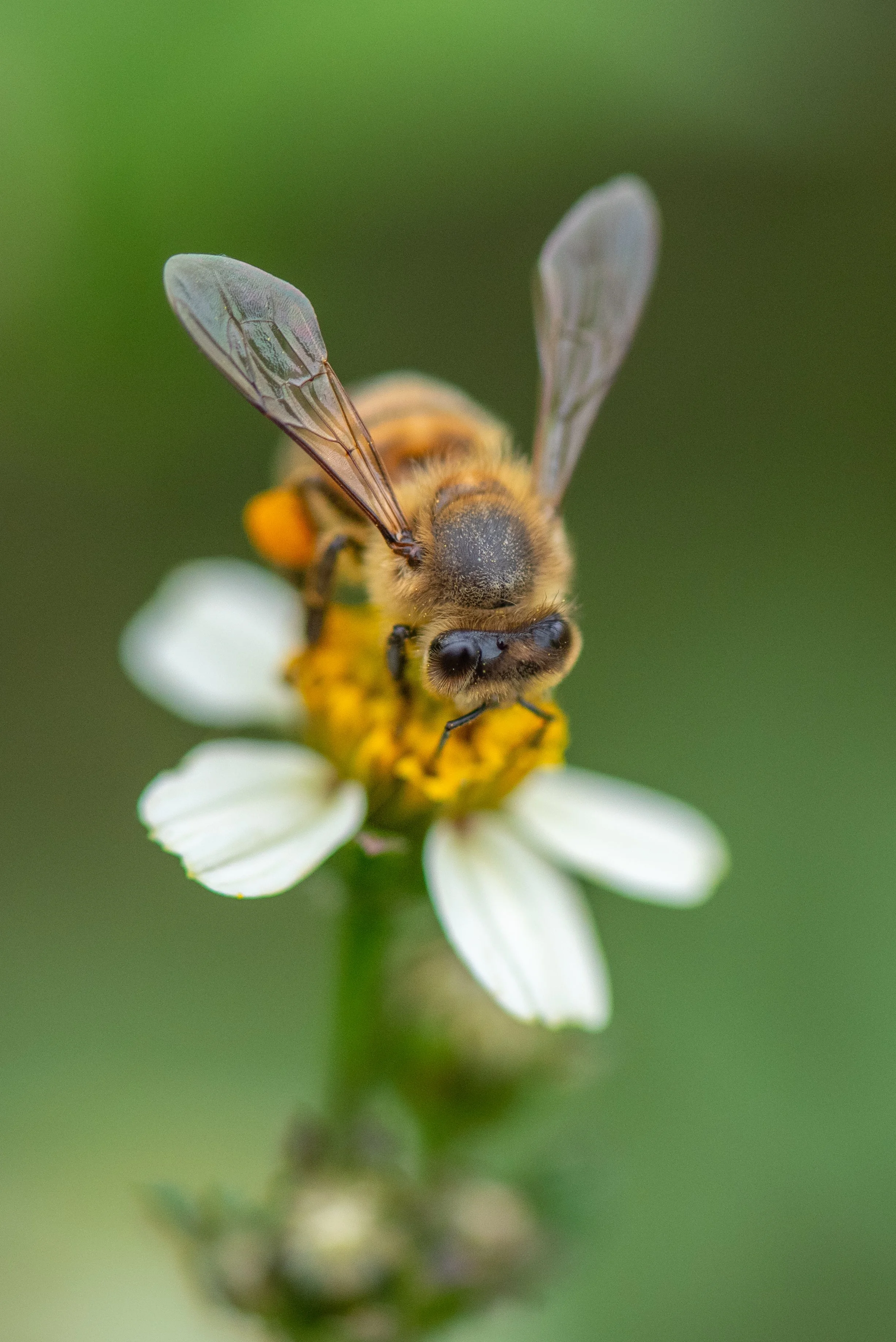
Zinnias are more than just beautiful they also attract butterflies, bees, and small pollinators that help keep the local ecosystem thriving. Their resilience in warm climates makes them especially well suited to the region, flourishing even during the hotter summer months when other flowers begin to fade.

Alongside zinnias, visitors may also notice native daisies, verbena, salvias, and seasonal wild herbs that bloom naturally across the hills. Each flower adds something different: colour, fragrance, movement, and a quiet reminder of how rich the landscape truly is.

Walking through the Sierras Chicas in bloom is an experience that changes with every season. Some mornings begin with soft wildflowers opening in the early light; evenings end with golden sunlight falling across fields of colour. It is this gentle beauty that makes the region feel so alive.

The flowers of the Sierras Chicas are not only part of the scenery—they are part of the identity of the land itself. From wild mountain blooms to the bright joy of zinnias, they tell the story of a landscape that is always growing, changing, and quietly flourishing.


Guardians of Argentine Pride: Keeping Gaucho Culture Alive

Estancia Los Potreros. Paradise for some. A working cattle ranch for others.

My name is Kevin Begg, although in Argentina I am also known as Lucas. Today, I own Estancia Los Potreros, a traditional - though perhaps not very typical - Argentine cattle ranch nestled in the hills of Córdoba.

For most of my life, I was not a gaucho. I was a banker.

I studied in London and spent years working in Milan, Madrid, Hong Kong, and eventually Buenos Aires. In 2001, I returned to Argentina to work for a German bank. Six months later, Argentina suffered one of the worst economic collapses in its history. Banks closed, governments fell, and overnight, everything changed.

My bank offered to transfer me abroad. But my parents were getting older, so I decided to stay in Argentina for a while longer. I returned to the estancia for what I thought would be just a weekend.

That weekend has now lasted twenty-five years.

I remember getting back on a horse again after years away. Something very simple happened: I felt at home. Not strategically. Not intellectually. Just instinctively.

Although my parents owned the estancia, I suddenly felt a deep responsibility — not simply to own the land, but to keep it alive.

People often ask me whether I became a gaucho at that moment. The truth is: no.

You are born a gaucho. It is not something you can imitate or easily become. My childhood friends were gauchos. We rode horses together, ran through the hills, and shared a freedom that shaped who we were. I may wear the boina, the traditional beret, but I do not pretend to be one of them.

Because real gaucho culture is deeper than clothing or folklore.

It is about quiet competence. Pride without show. Loyalty to family and land. It is about knowing your work without needing recognition.

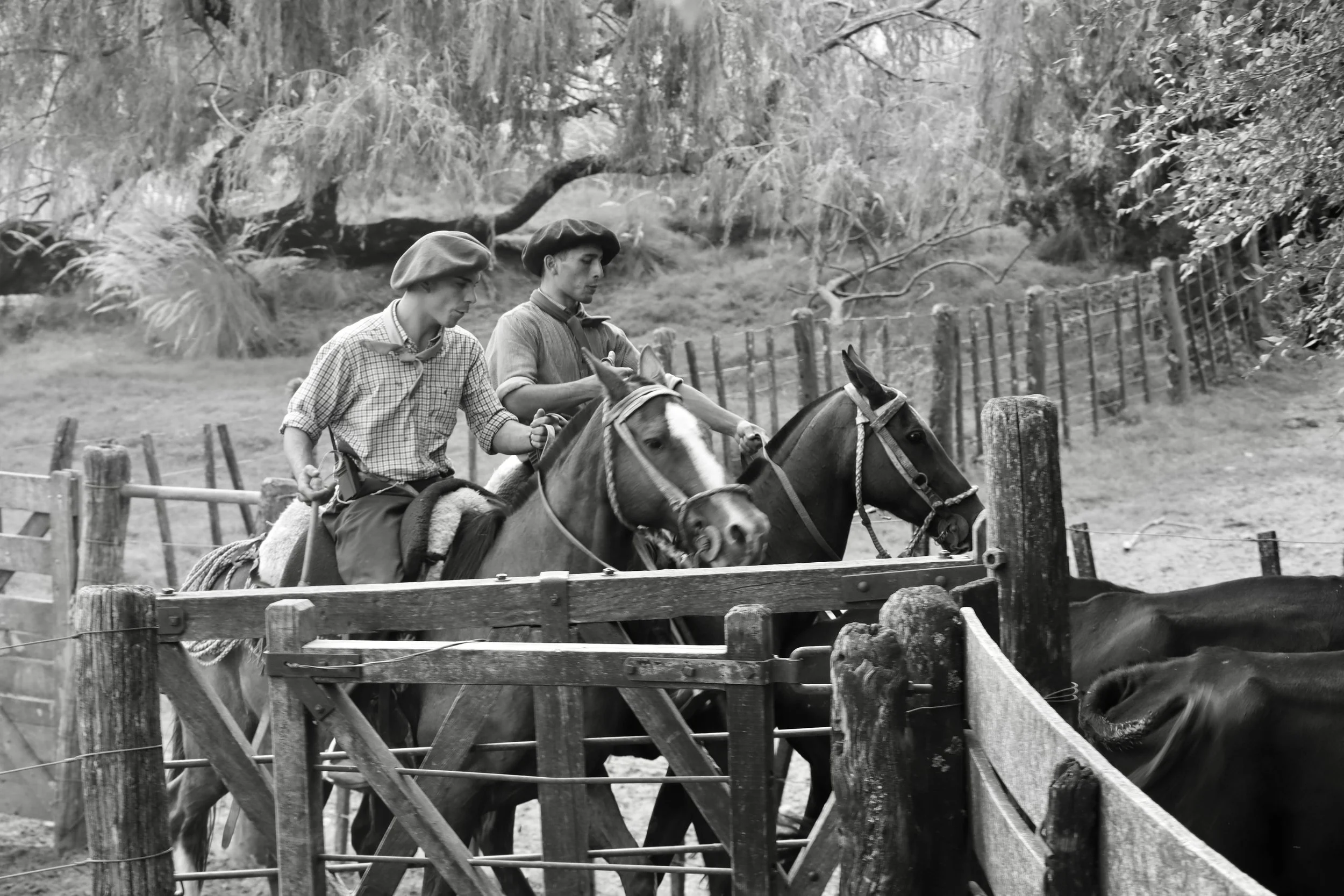
You see it in the way cattle are moved - calmly and efficiently, often without words. It is in the care given to a horse at the end of the day, or the attention paid to preparing a saddle properly before sunrise.

And above all, it is about responsibility: to family, to the land, and to a way of life quietly passed down from one generation to the next.

Sadly, this culture is under pressure.

Modern agriculture requires fewer workers. Young people leave for the cities. Technology replaces tradition. When I first returned to the estancia, many of the gauchos wore New York Yankees baseball caps because traditional bombachas and boinas had become too expensive to buy.

That moment stayed with me.

The question became: how do you preserve a culture without turning it into a museum?

For us, the answer was tourism but not tourism in the traditional sense.

Estancia Los Potreros is not a hotel, and it is certainly not a spa. Guests do not come simply to be served. They come to participate.

They ride horses, work cattle, sit around the fire, and experience the rhythm of life on a real working ranch. It is slower. Simpler. More connected.

What many people discover here is not luxury in the traditional sense, but something far more valuable: connection to the land, to the people, and to themselves.

Tourism has allowed this community to continue living and working here with dignity. It has created stable work not only for gauchos, but also for their families. It has helped preserve horsemanship, food traditions, asados, and a rural way of life not as performances for visitors, but as something real and alive.

Today, our gauchos and chinas wear their traditional clothing with pride again.

Gaucho culture is not disappearing. It is evolving.

And perhaps that is the most important lesson of all: traditions survive not by standing still, but by finding meaningful ways to remain alive in the modern world.

I feel incredibly fortunate to play a small role in helping ensure that this community continues to thrive.

Another Year at the Cattle Sales

There is always a special sense of pride on sale day, after months of careful breeding, grazing, and daily attention, the time comes for the calves to leave the estancia and head to market. This season’s sale was an especially positive one, with strong demand and some of the highest prices of the sale achieved by our own calves. It was a rewarding result and a reflection of the hard work, dedication, and high standards that go into raising quality cattle here in the Córdoba sierras.

Good cattle do not happen by chance. They are the result of long days, careful handling, and a deep understanding of both the land and the animals. From calving season through to the annual branding and beyond, every stage matters. Healthy pastures, strong bloodlines, and calm, consistent stockmanship all play their part.

Seeing the calves leave for market is always bittersweet. They have been part of daily life on the estancia, watched over and worked with by the team from the very beginning. But it is also a moment of achievement proof that the year’s efforts have paid off.

A huge well done goes to Lucas and the gauchos, whose commitment and skill make results like this possible. Their knowledge of the cattle, their horsemanship, and their quiet dedication are at the heart of the estancia’s success. Whether moving stock across the hills, checking calves, or preparing for sale day, their work is constant and invaluable.

Life on an estancia is built on teamwork, and moments like this are shared victories. Strong sale results are not just about numbers they represent months of effort from the entire team and the continuation of traditions that have shaped ranch life for generations.

At Estancia Los Potreros, cattle remain an essential part of the landscape and the lifestyle. Watching a successful group of calves head off to market is both a practical milestone and a proud reminder of what careful stewardship of the land can achieve.

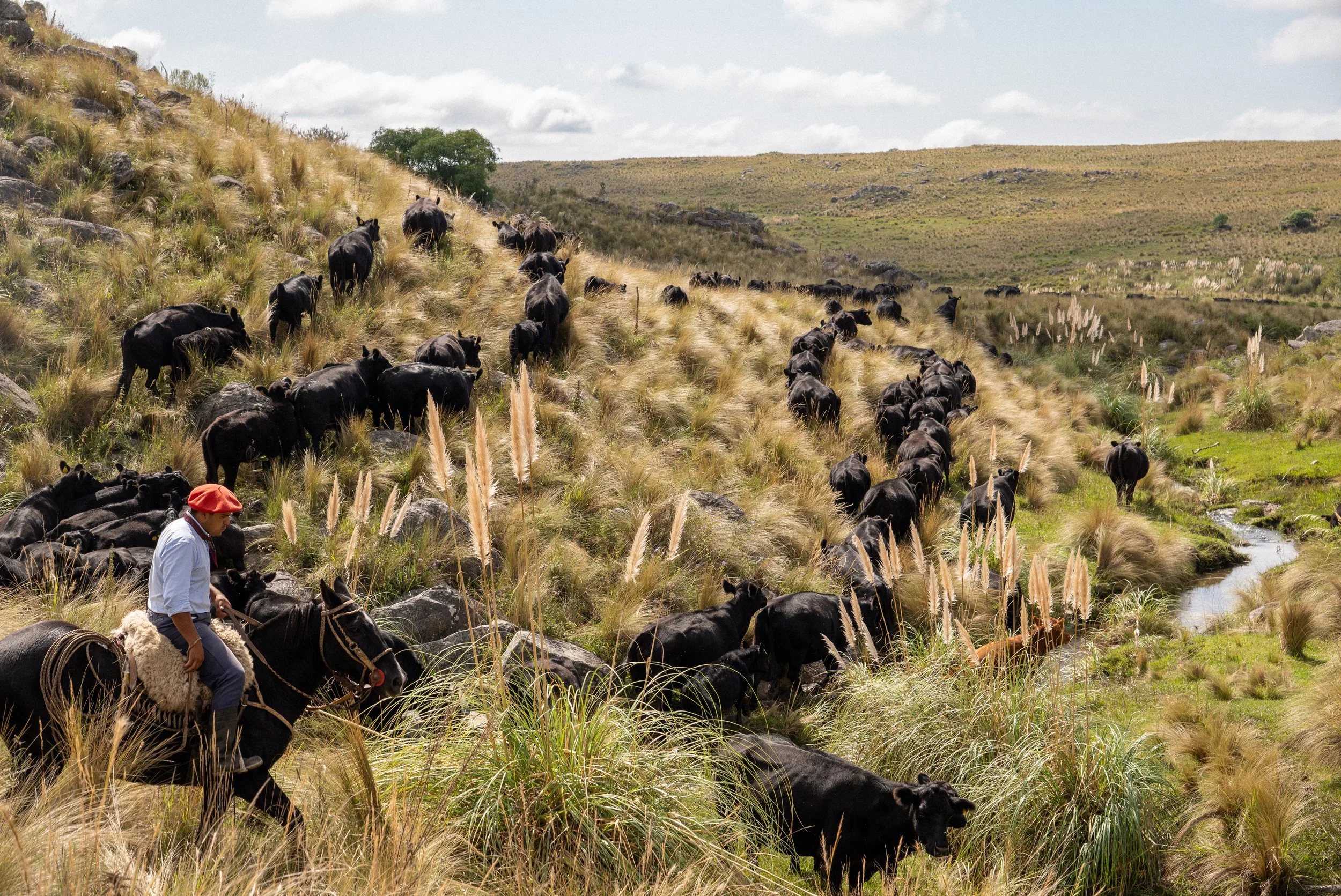
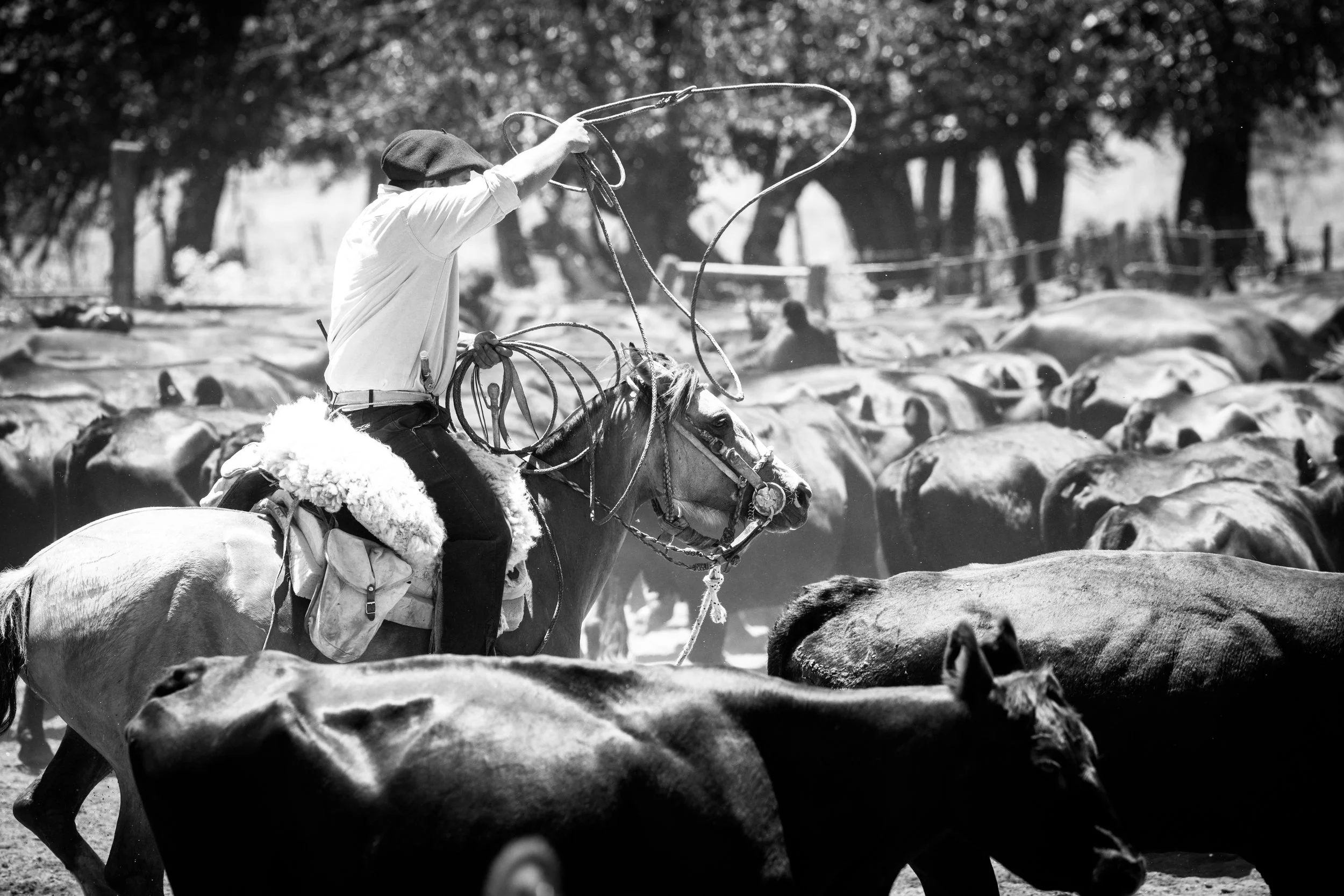
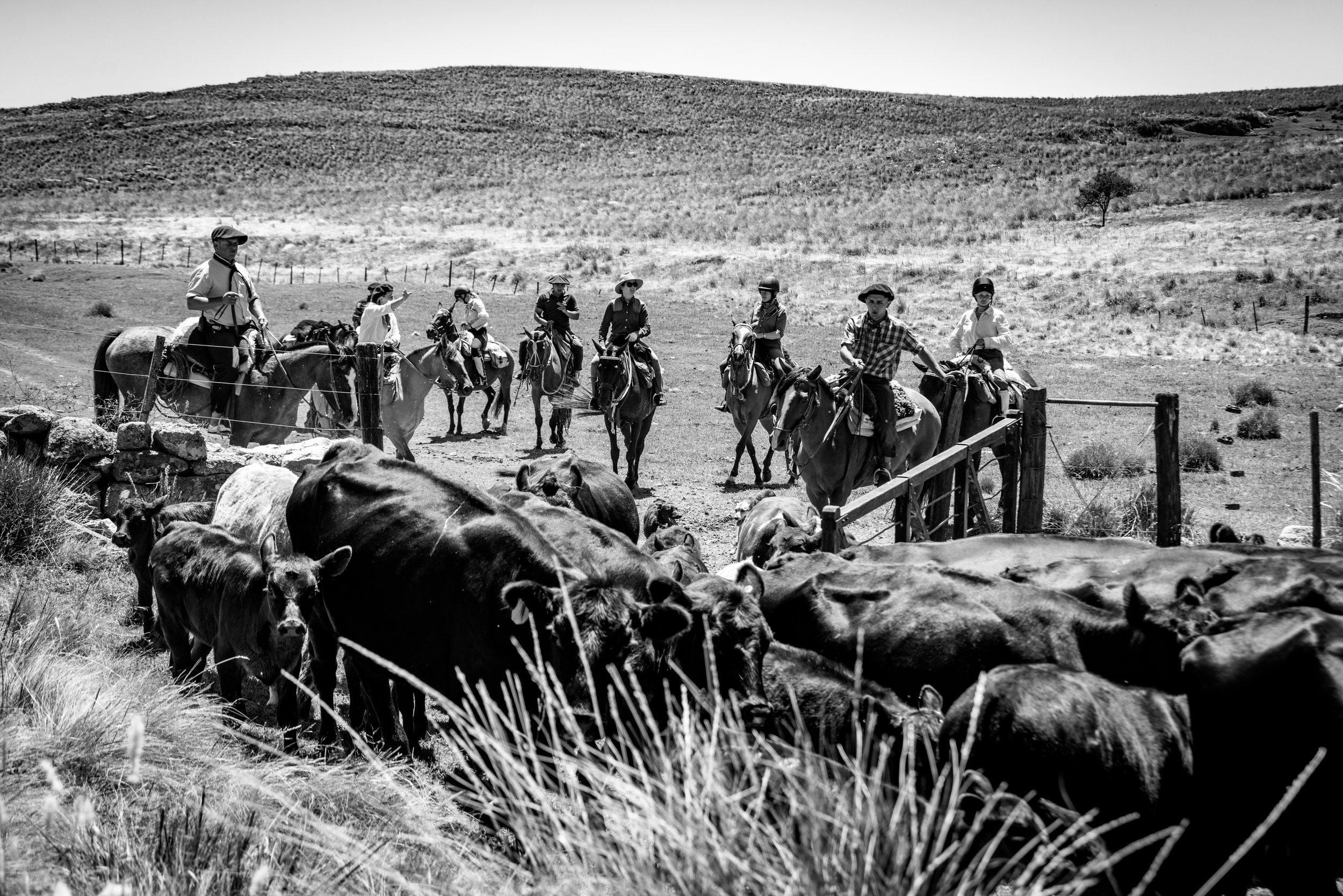
Gaucho herding angus aberdeen cows in the Sierras Chicas of Argentina, a real working cattle estancia

The Loica: A Bird of the Sierras

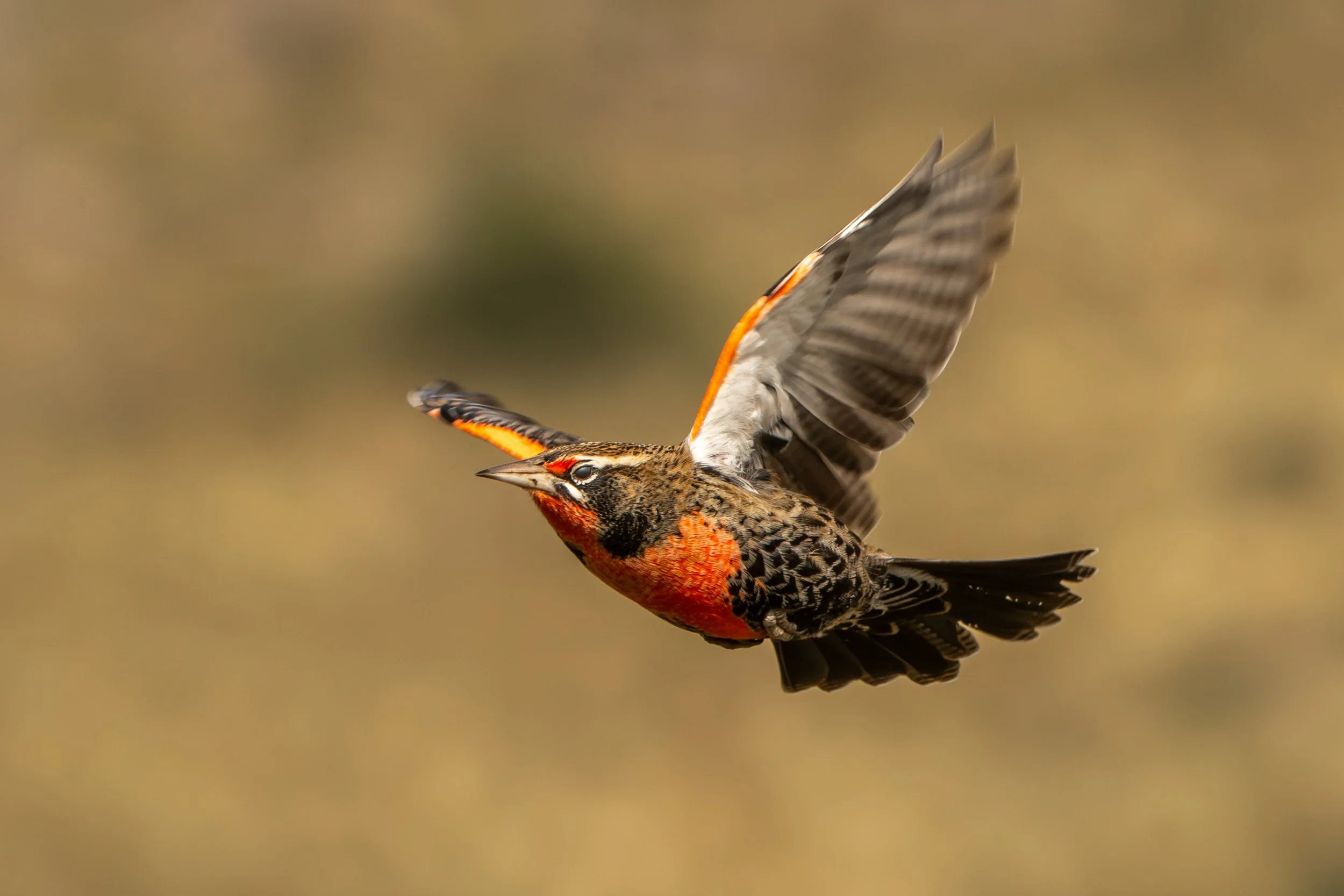
At Estancia Los Potreros, the beauty of the landscape reveals itself in quiet, unforgettable moments - the golden light over the hills, the sound of horses moving through the paddocks, and the sudden flash of red from a loica perched on a fence post.

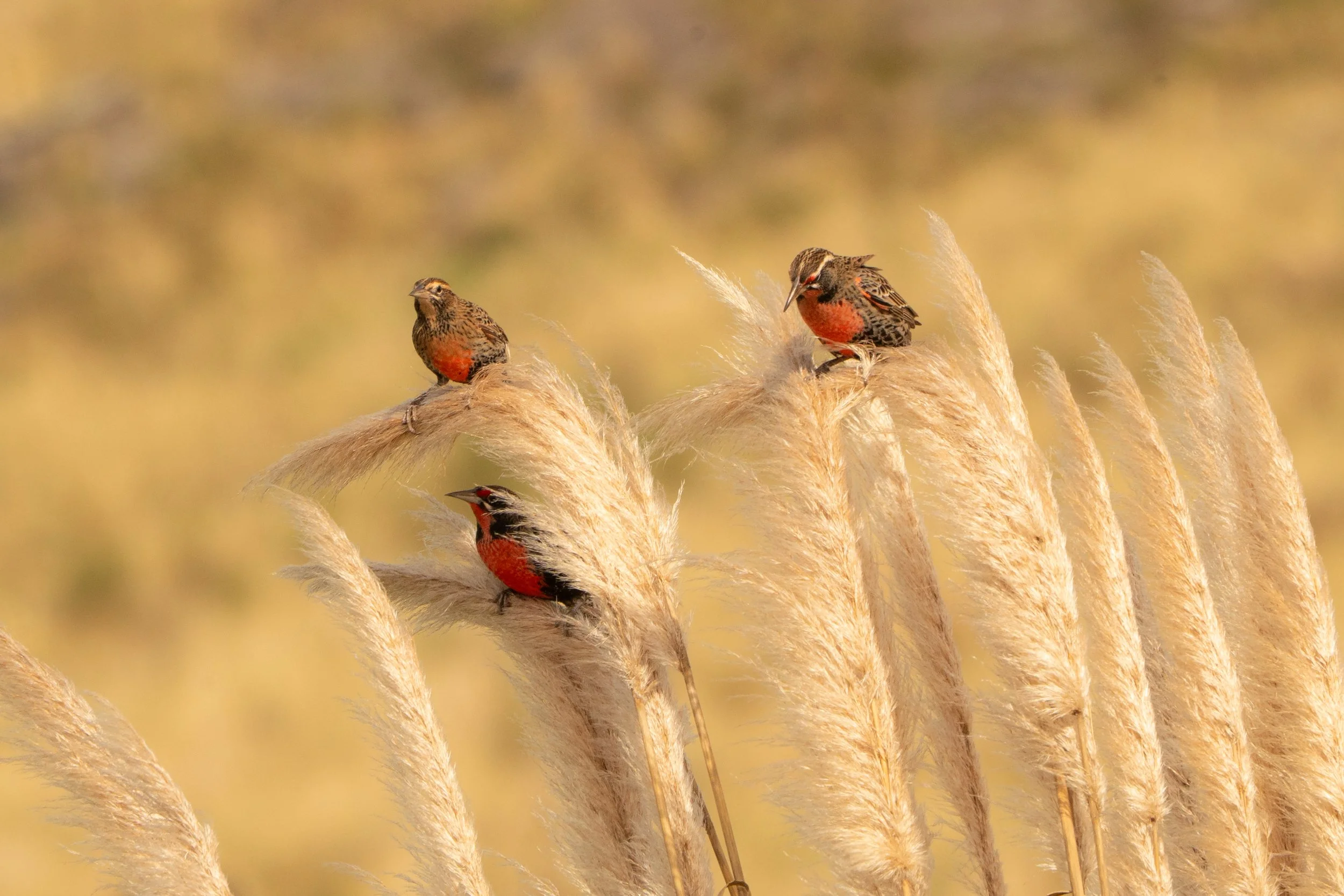
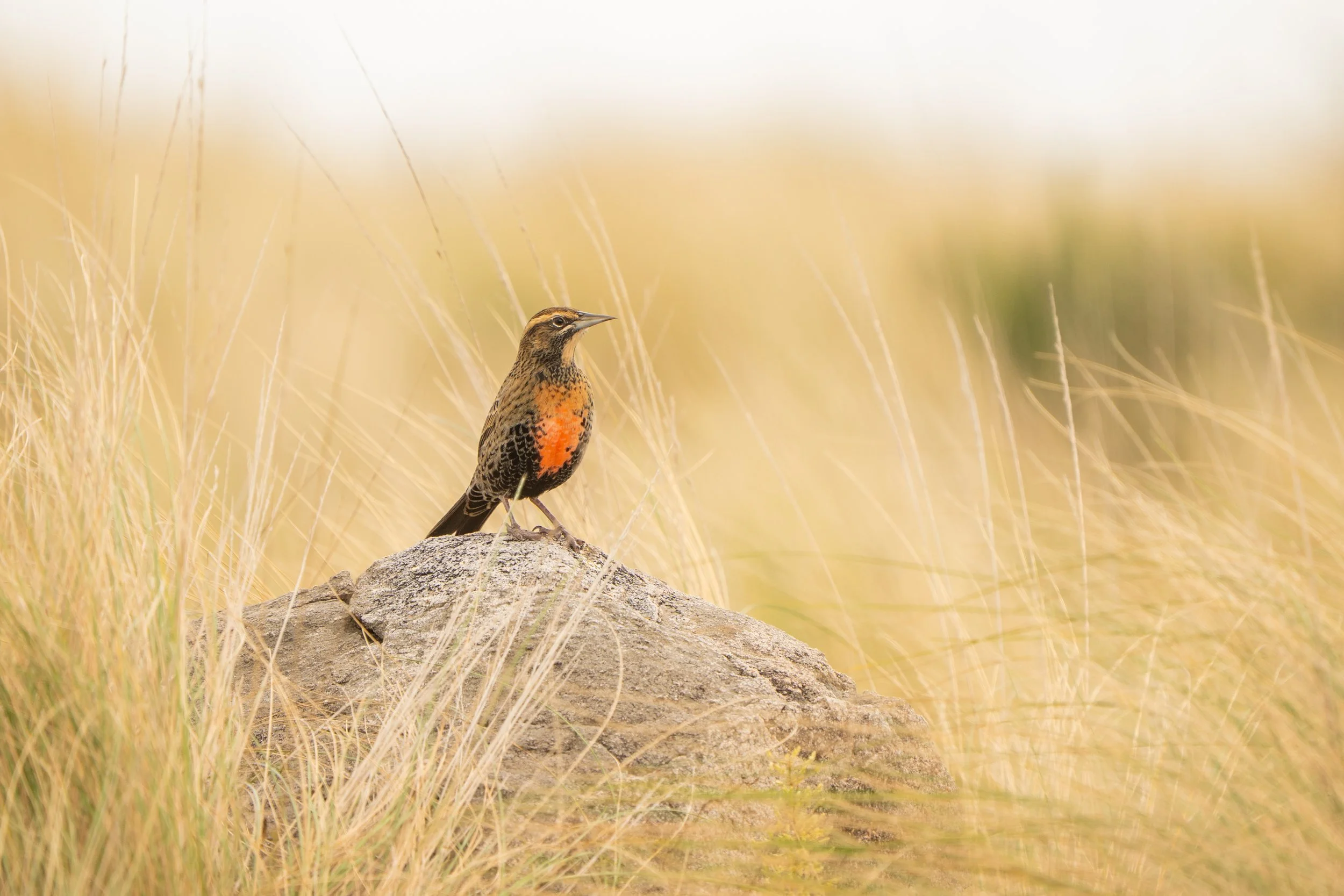
Known for its brilliant scarlet chest and confident song, the loica is one of the most distinctive birds of the Argentine countryside. Here in the rolling hills of Córdoba, it is a familiar and much-loved presence, adding color and character to the open grasslands that surround the estancia.

Guests often first notice the loica while riding out across the sierras. It appears effortlessly at home in these wide spaces, moving through native grasses, resting on wooden posts, or singing from a low branch as if announcing the morning. Its bright red breast stands out vividly against the soft greens and golds of the landscape, making it impossible to ignore.

The male loica is especially striking, using both his vibrant plumage and melodic call to defend his territory and attract a mate. Females are more understated in color, blending beautifully into the grasses where they build their carefully hidden nests close to the ground. Their quiet presence is a reminder of how much life exists just beyond the obvious.

At Estancia Los Potreros, where the rhythm of life follows the land, the loica feels like part of the family. It belongs to the same world as the horses, the cattle, and the endless horizon - a symbol of the natural balance that makes this place so special.

There is also something deeply symbolic about the loica. In rural folklore, its red chest is often linked to stories of courage, sacrifice, and loyalty. It is a bird woven into the identity of the countryside, carrying both beauty and meaning wherever it appears.

As native grasslands become increasingly important to protect, birds like the loica remind us why these landscapes matter. Preserving open spaces means preserving the wildlife, traditions, and sense of place that define life in the sierras. For guests at Los Potreros, spotting a loica is often a small but memorable highlight. It is not rare or dramatic in the usual sense but that is exactly its charm. It is part of the everyday magic of the estancia: simple, elegant, and unmistakably Argentine.

Autumn Birdlife in the Sierras Chicas

Birds and Migration at Estancia Los Potreros

As autumn settles over the Sierras Chicas, painting the hills in warm shades of amber and gold, the birdlife at Estancia Los Potreros begins its seasonal transformation. Migration brings movement, variety, and remarkable wildlife encounters, as birds travel in search of better food supplies, warmer climates, and ideal breeding grounds. The result is a rich and ever-changing tapestry of species across the estancia and surrounding mountains. Species such as the Patagonian Finch (Phrygilus Patagonicus) and the White-Winged Cinclode (Cinclodes Atacamensis) start to appear around the farm as they move north to avoid the colder winters.

A striking example of migratory birdlife in Córdoba is the Fork-tailed Flycatcher (Tyrannus savana). Instantly recognizable, this elegant bird features a bright white body, glossy black wings and head, and an extraordinary forked tail that can grow almost twice the length of its body.

These birds typically spend the summer months in the Sierras Chicas - from October through February or March - before migrating northward. Their journeys can span up to 4,000 kilometers, with some reaching as far as the United States and Canada. Their arrival each spring marks the beginning of a vibrant new birdwatching season.

The Andean Condor (Vultur gryphus) is one of South America’s most iconic birds. With a wingspan reaching up to 3 meters, it is among the largest flying birds in the world. Although a permanent resident of the Andes mountain range, condors are capable of traveling vast distances - sometimes up to 100 miles in search of food due to their incredible sense of smell. This results in common sightings across the farm all year round. Whether it is early September or late March, revel in the magnificent way they glide across the horizon. 

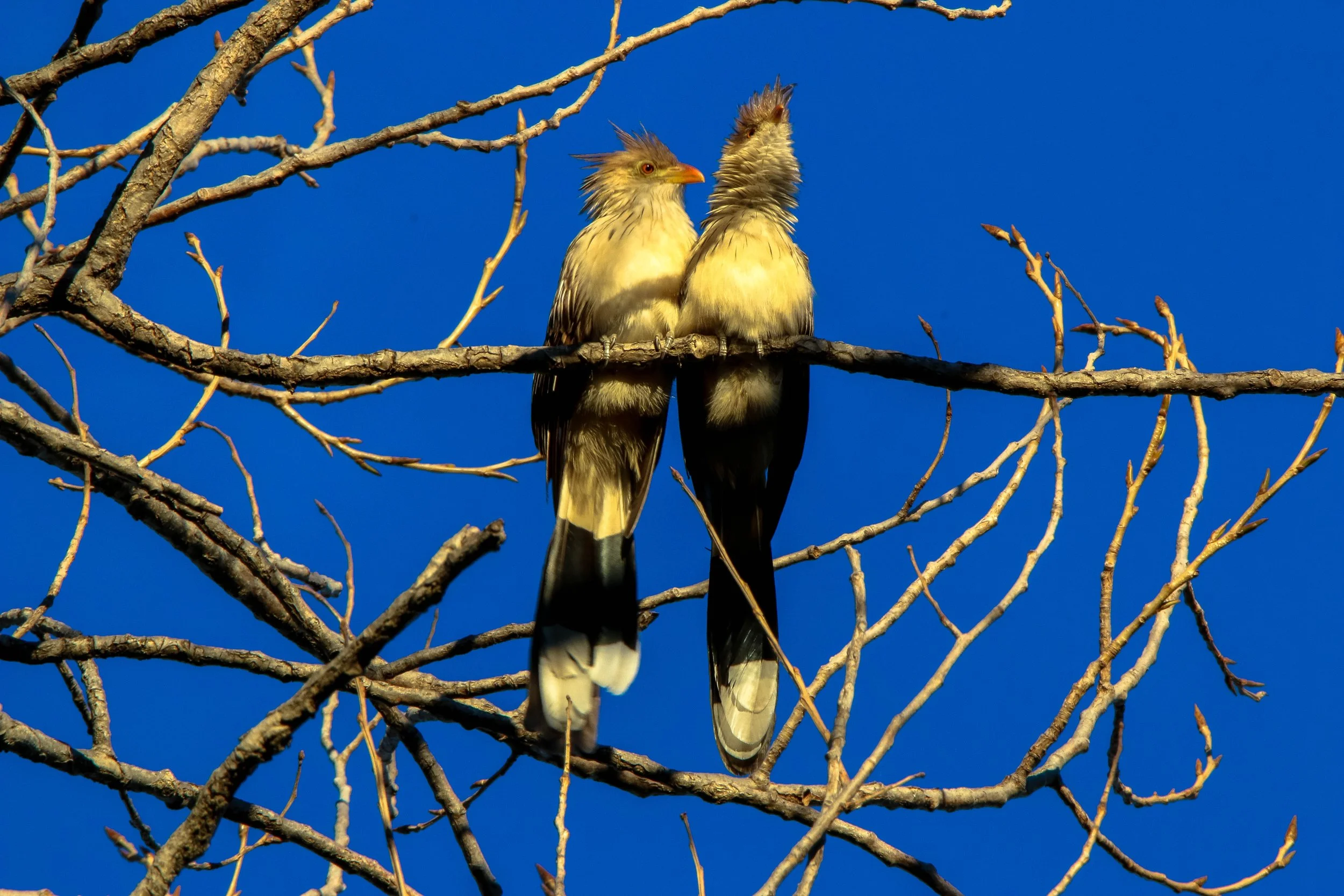
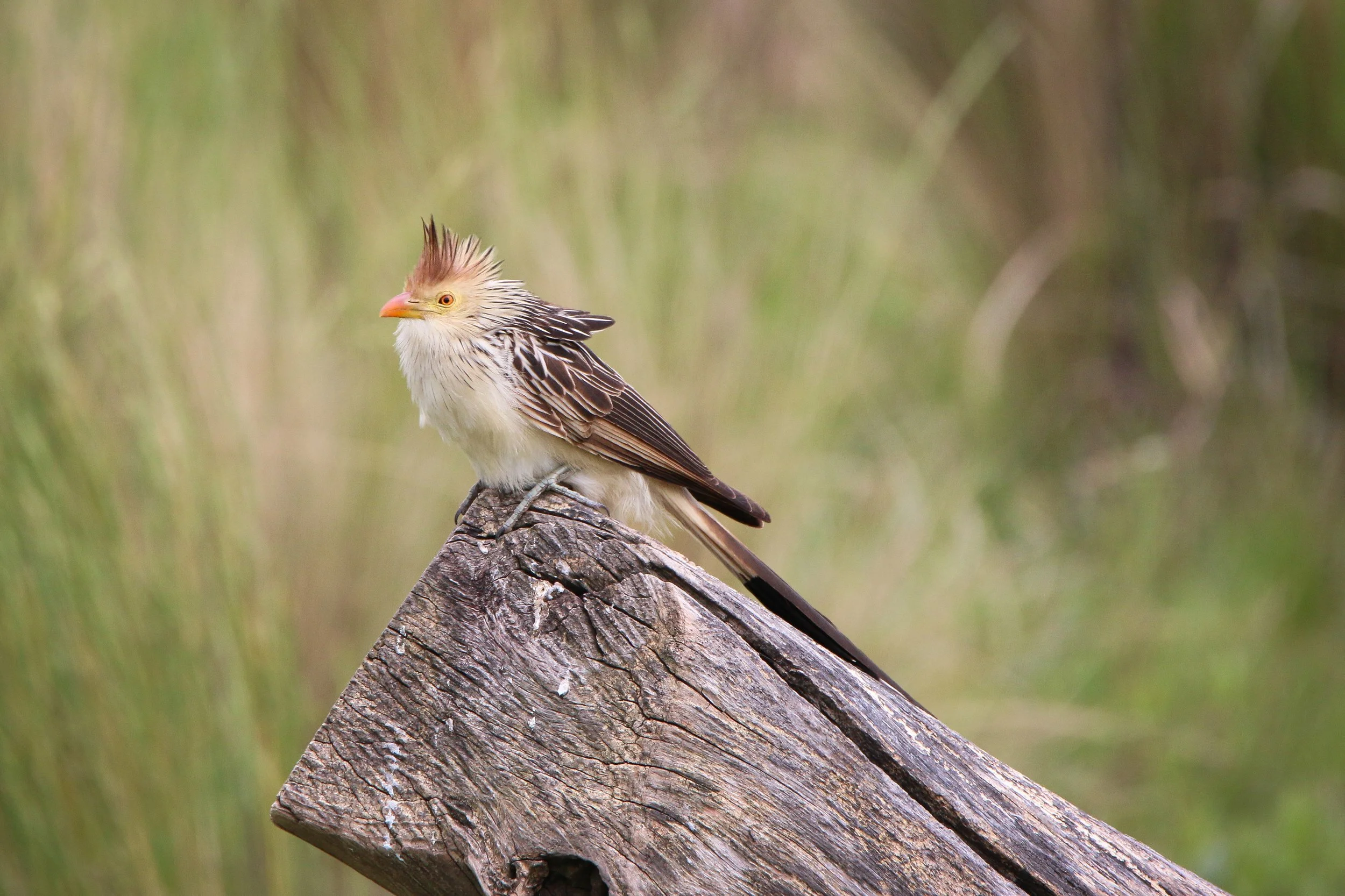
The charismatic Guira Cuckoo is always an exciting sight on the farm. Easily identified by its striking orange crest, pale body, and bold black tail stripe, this bird stands out both visually and behaviorally.

Highly sociable, Guira Cuckoos often live and roost together in shared nests, typically in groups of 10 to 20 individuals. They migrate south to breed in Patagonia during November and December, before returning north to the Sierras Chicas for the remainder of the year. They can also be found across Brazil, Uruguay, and other parts of South America.

November brought particular excitement with the sighting of a pair of Aplomado Falcon (Falco femoralis), the first recorded on the farm in many years. Considered rare across much of the Americas, their return is a thrilling development for our bird conservation efforts.

Beyond these headline species, the estancia hosts an extraordinary diversity of birdlife. Delicate hummingbirds such as the Red-tailed Comet and the Glittering-bellied Emerald dart around the garden, while Crested Caracaras soar high above the rolling hills.

Throughout the seasons, bird populations shift and evolve, making every visit unique. Whether you are an avid birder or simply a nature lover, autumn in the Sierras Chicas offers spectacular opportunities to witness migration in action.

Discover the changing birdlife at Estancia Los Potreros and experience one of Argentina’s most remarkable natural spectacles.

Wild Swimming in Argentina

Natural Pools & Horseback Adventures

Whilst our swimming spots may not offer the freezing temperatures recommended by Wim Hof, here at Estancia Los Potreros we firmly believe that a refreshing dip has a way of solving many of life’s small woes.

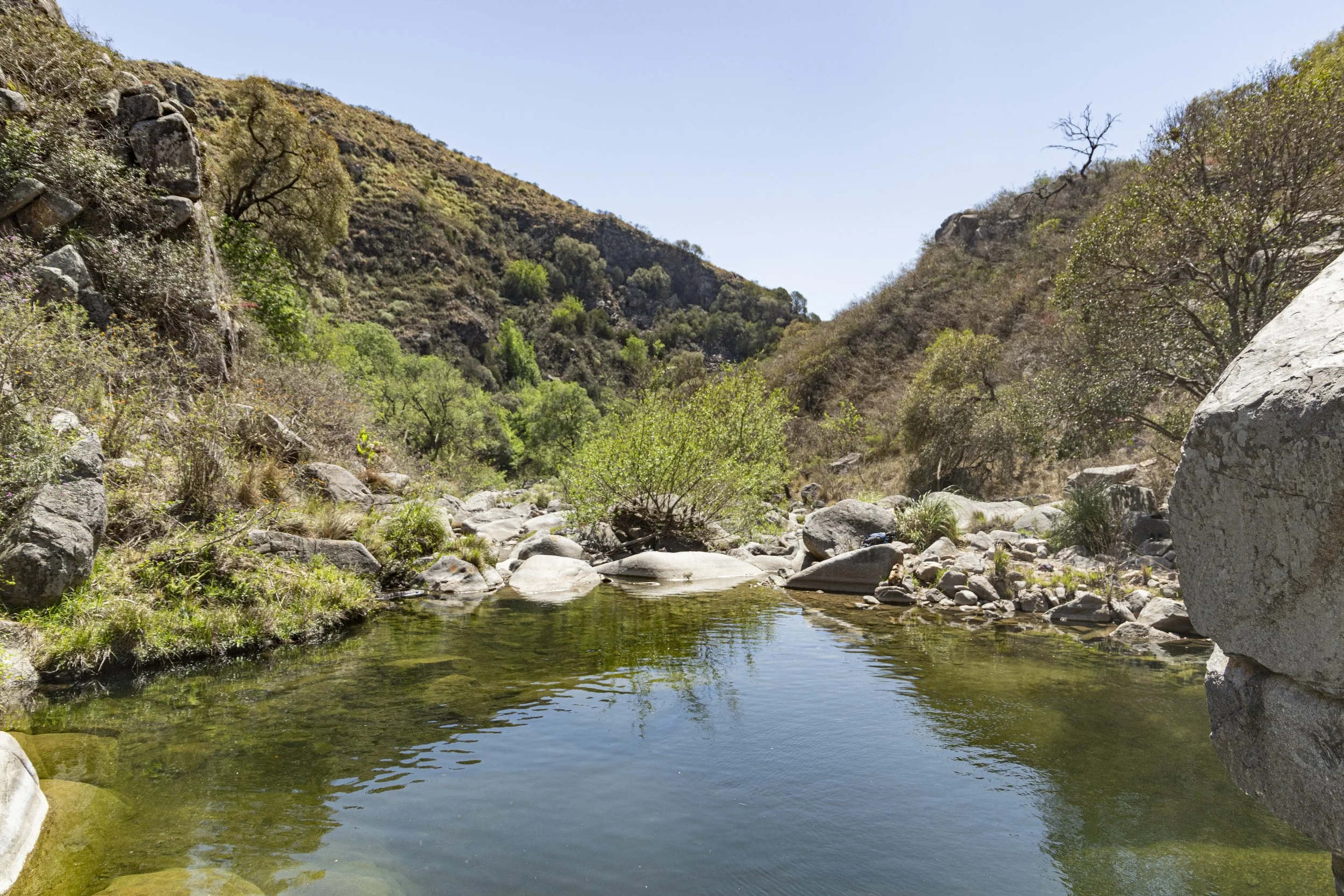
Wild swimming may feel like a recent trend elsewhere in the world, but for us it has long been part of everyday life on the estancia. We are lucky to have several natural swimming spots across the farm, many of them accessible on horseback - or on foot, if you prefer. A ride might take you across riverbeds and through steep valleys, before revealing a hidden natural pool, sometimes complete with a waterfall. And if you’re lucky, you may even persuade one of our gauchos to join you. Whatever the weather, our enthusiastic guides are rarely hard to convince. As they like to say this season, “you’ll never regret a swim.”

For those who prefer their dip a little closer to home, a pre-breakfast swim in our newly improved pool may be more your style. Over the winter, we’ve spent time transforming the pool area, and it has quickly become a favourite spot to start the day. There are few better ways to greet the morning than swimming as the sun rises, watching the foals play in the garden below.

Wild swimming at the Estancia, Las Tasas

Branding Week on the Estancia

Last week we branded our cattle, and the days leading up to it revolved around getting everything ready. Early in the week we gathered roughly 300 cows along with the bulls, bringing them in from the surrounding paddocks and moving them into the corrals to begin the full manejo process. Once inside, the first step was sorting the herd and separating the cows from the calves so the work could be done safely and efficiently.

After sorting, the cows and bulls were run through the dip, an important part of herd health management. The dip helps control ticks, flies, and other external parasites that can affect weight gain, fertility, and overall herd condition during the winter months ahead. With the adult herd treated, attention shifted to the calves and preparations for the yerra.

"Yerra" primarily refers to the cattle-branding season or the act of branding livestock with a hot iron, commonly used in rural Latin America (Mexico, Argentina, Uruguay, Paraguay, Chile).

Branding is still one of the most practical ways to identify cattle in large grazing systems like ours. With animals moving across wide pastures, a permanent brand ensures clear ownership and makes it easier to manage the herd in the future.

By the time branding day arrived, everything was ready.

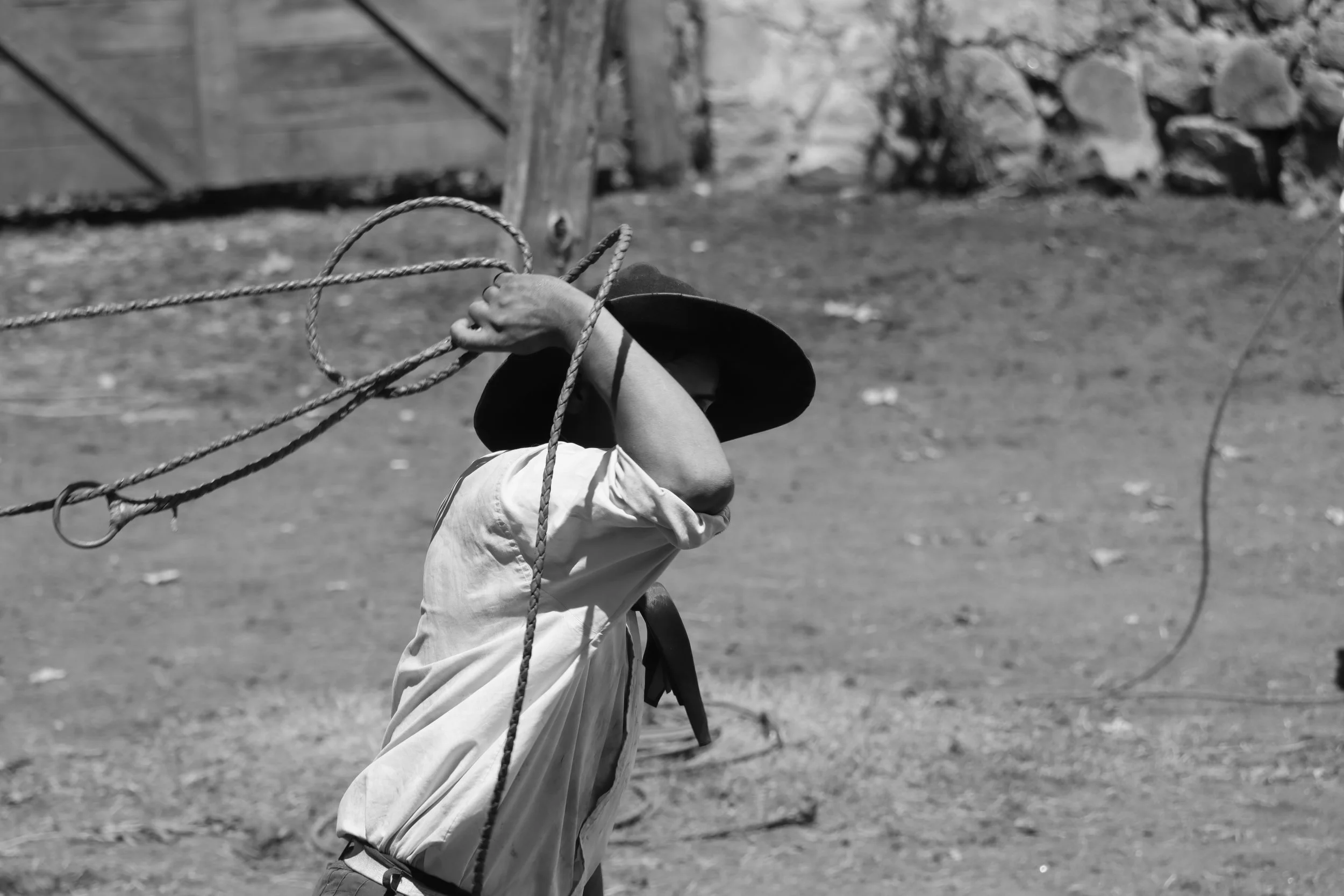
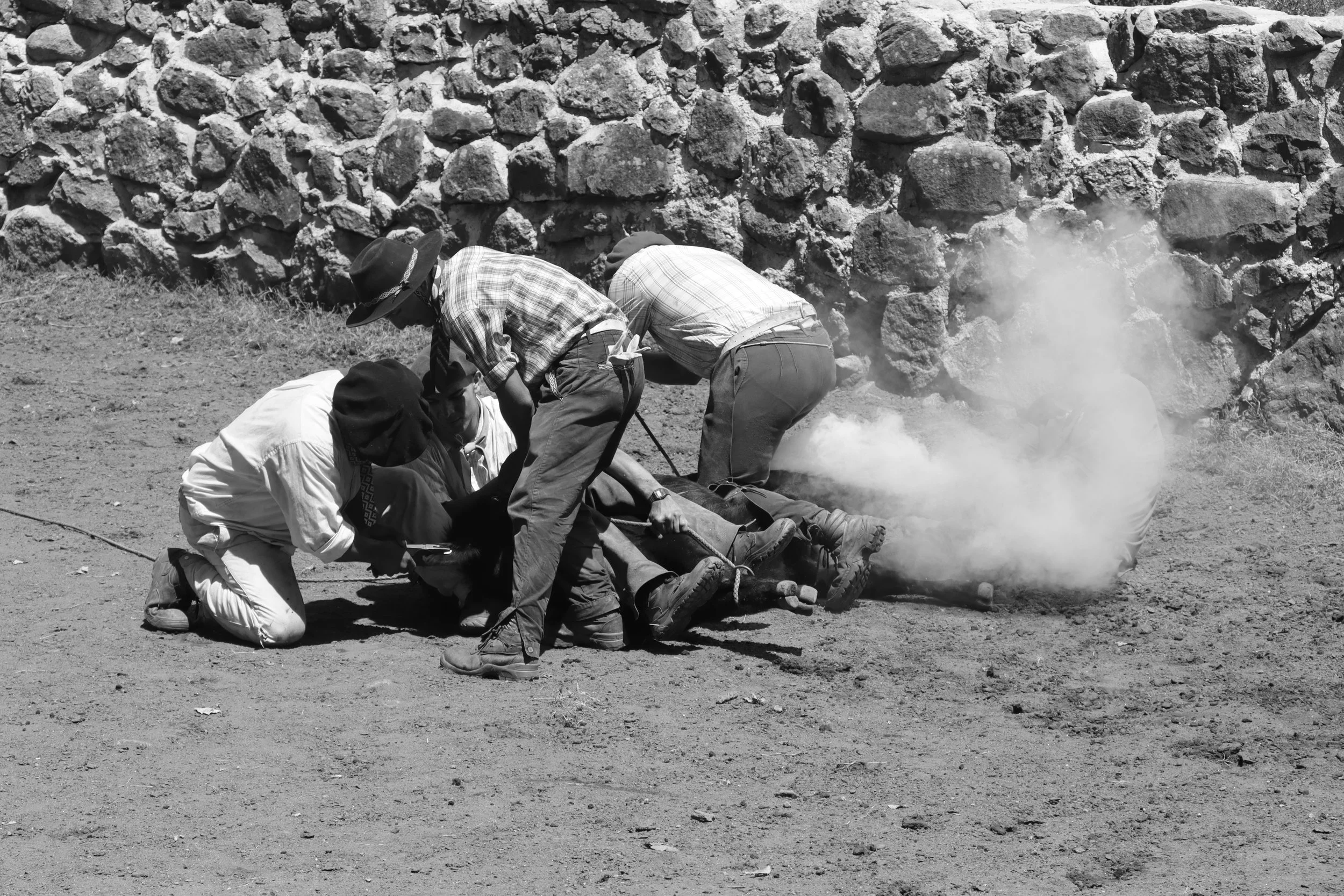
The corrals filled with dust and movement as the gauchos ushered the calves into the corral. The branding irons heated over the fire while calves were brought forward one by one. Everyone fell into a steady rhythm calves being lassoed around their front two legs, branded and tagged in the quickest and most stress-free process possible.

It’s demanding work and easily one of the busiest weeks of the year.

But it’s also the week when the entire team comes together.

Many of the gauchos who work on the estancia have grown up here, coming to yerra’s their entire life. Everyone knows their role, and that experience makes all the difference when the work gets heavy.

A successful yerra depends on good cattle, good horses, and a good team.

And in Argentina, when the work is finished, the day always ends the same way. Once the irons cool and the corrals quiet down, the fire is lit for the asado. Beef is placed on the fire con cuero, the hide protecting the meat while it slowly roasts over the embers. It takes hours, but there’s no rush. After a long week of work, the pace finally slows. Everyone gathers around the fire with sangría and fernet, sharing stories while the smell of wood smoke drifts through the air.

When the meat is ready, the table fills quickly. Plates pass around, glasses are raised, and the first bites signal the end of a long week.

Soon someone brings out a guitar.

A familiar song starts, boots tap the ground, and before long the gauchos who spent the day in the corrals are dancing in the open air.

Work, fire, food, music, and good company.

A perfect way to close out branding week on the estancia.

Beyond the Saddle: Walking at Los Potreros

Discover the Sierras Chicas on Foot

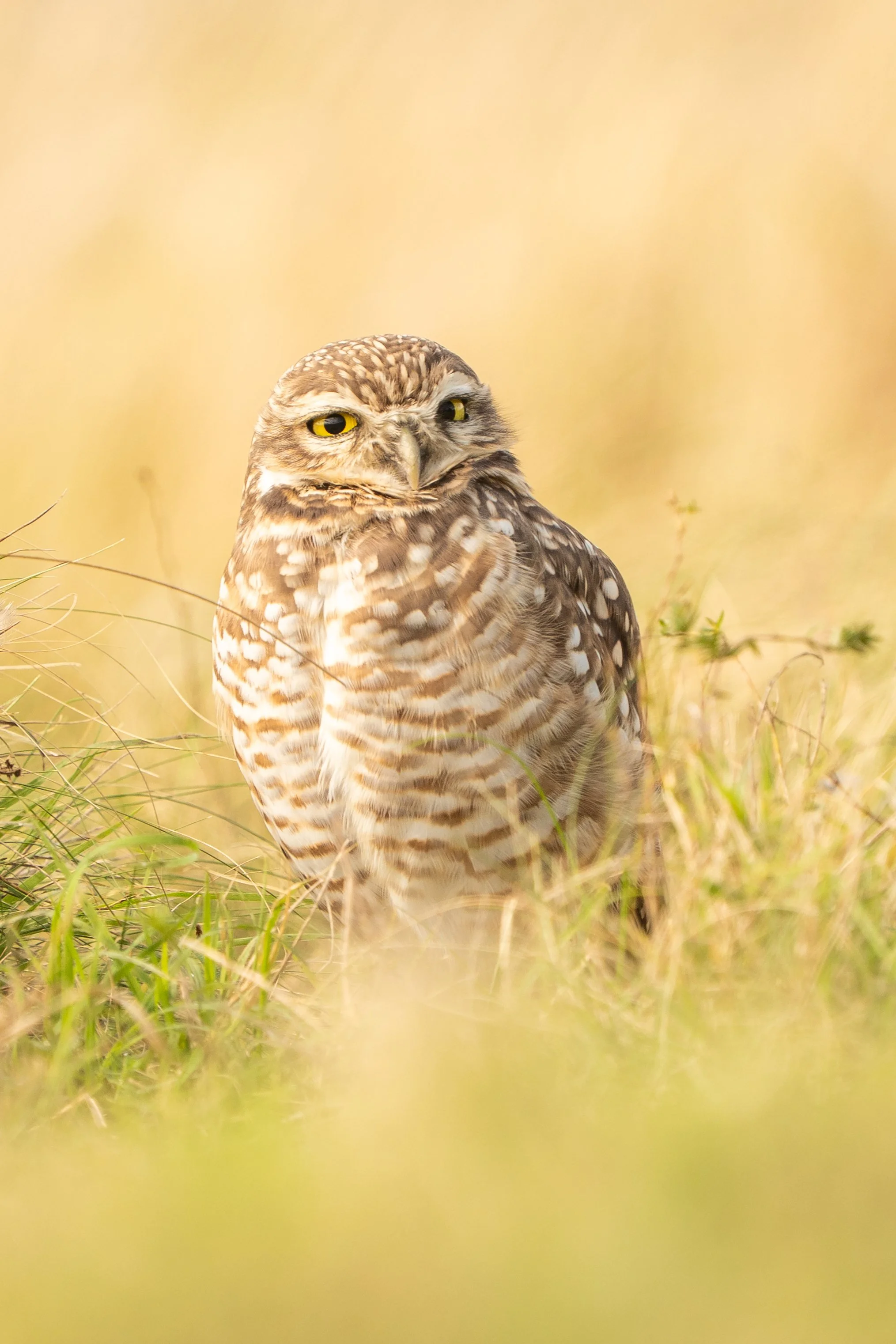
While horses are very much at the heart of life here at Estancia Los Potreros, we also love to explore the landscape on foot. Stepping away from the saddle offers a different pace and a fresh way to experience the estancia. Whether it’s a walk down to the waterfalls for a refreshing swim, or a pursuit to spot a burrowing owl, there is always something to discover, often accompanied by one or two of our ever-enthusiastic dogs.

There are few better ways to spend a Sunday afternoon than wandering through the rolling hills of the Sierras Chicas. Walking allows you to slow down and truly take in the details of the landscape: red-bellied toads hidden among the rocks, seasonal wildflowers underfoot, great Andean condors flying overhead and the unmistakable scent of wild mint carried by a gentle breeze.

Anything is possible here. Guests can enjoy guided walks with members of the team, head off on a quiet solo adventure, or even join on foot to watch the gauchos work cattle from a completely different perspective. It’s a simple pleasure, but one that often becomes a favourite part of a stay; proof that sometimes the best way to explore the estancia is one step at a time. 

Experience the Festival de la Candelaria at Estancita

A Timeless Tradition: The Festival de la Candelaria at Estancita

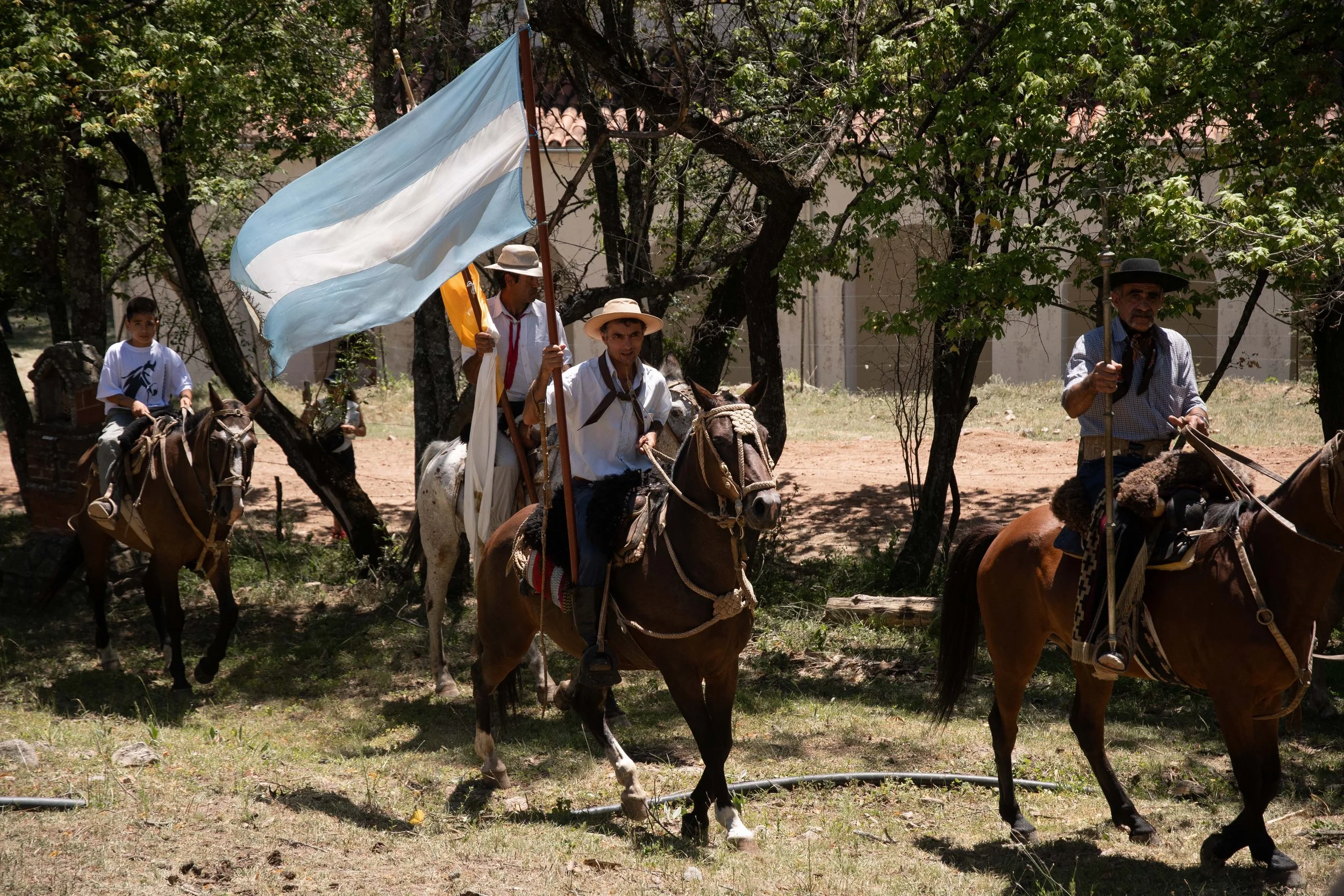
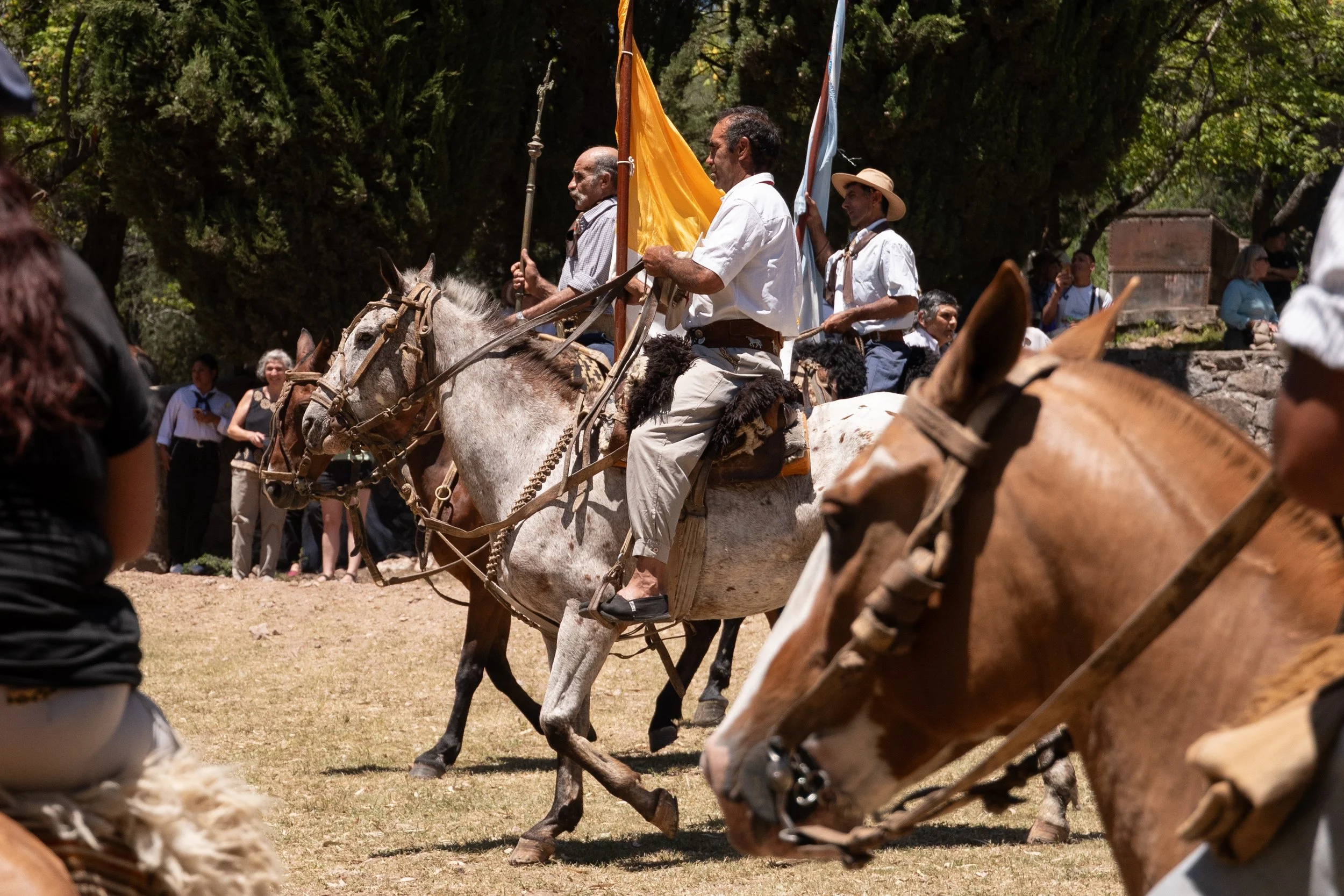
Deep in the heart of the Argentine countryside, where the horizon stretches wide and the rhythm of life follows the seasons, February 2nd marks a day of profound significance. The Festival de la Candelaria is an annual gathering at the historic Estancita chapel that serves as a vibrant bridge between sacred Catholic tradition and the rugged spirit of the gaucho. For those seeking the authentic soul of rural Argentina, this is the moment the landscape truly comes alive, blending spiritual devotion with a heritage that has defined the pampas for centuries.

The festival is rooted in the feast of Our Lady of Candelaria, a title of the Virgin Mary that symbolizes purification, hope, and the return of light. Traditionally depicted holding a candle, she serves as a beacon of guidance and protection for those who navigate the vast and often lonely stretches of the countryside. While she is the patroness of San Antonio de Areco, her influence is felt deeply throughout our local rural regions. To the families and workers here, she is a guardian who watches over their horses, their kin, and the long journeys undertaken across the land.

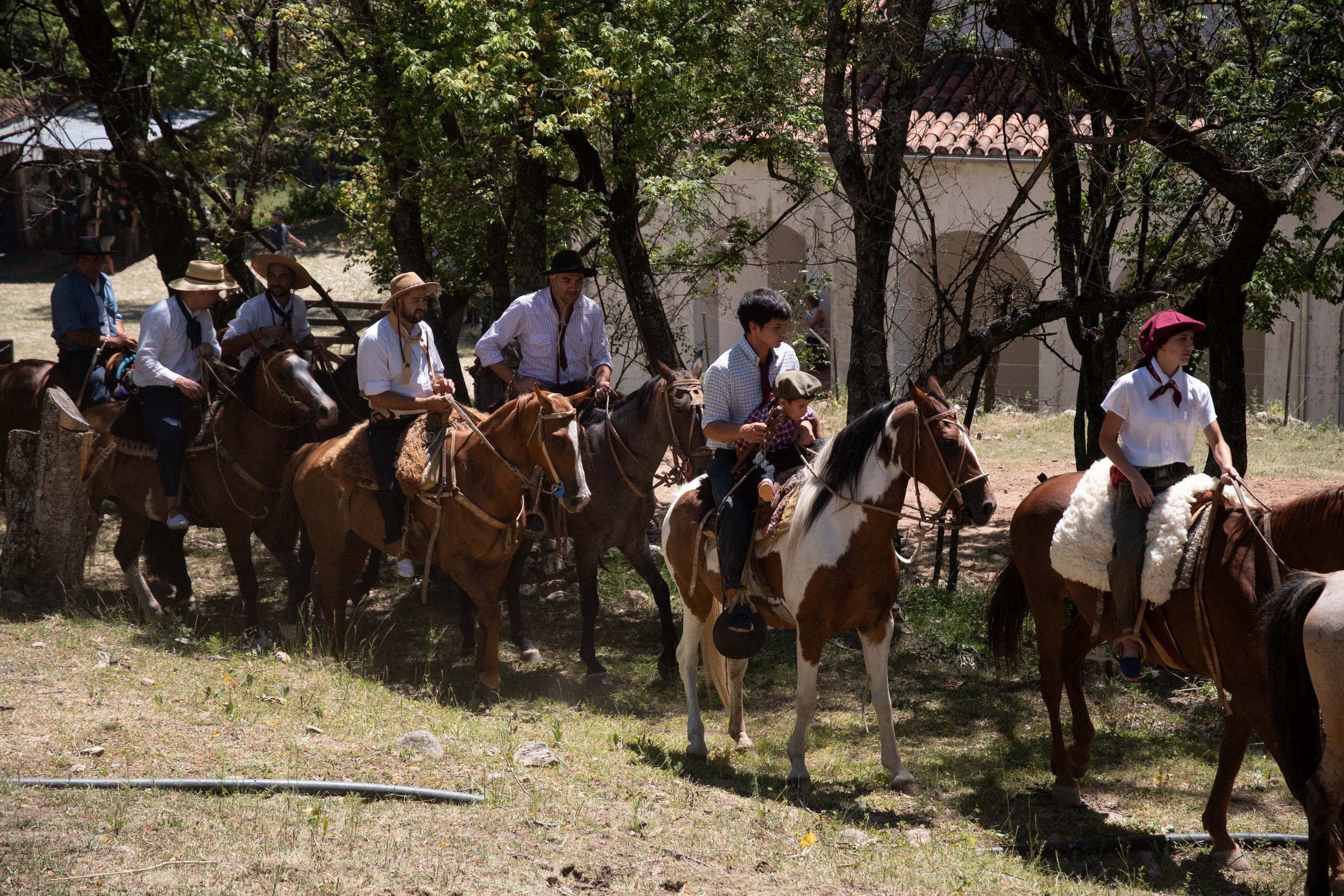
Once a year, the heavy doors of the small chapel at Estancita swing open to honor her, drawing neighbours and families from across the region. The morning air fills with the steady rhythm of hoofbeats as gauchos arrive on horseback to take part in the traditional Mass and a solemn procession. This gathering has evolved over time into a significant regional celebration, highlighting the enduring values of the gaucho community, an unwavering faith, a respect for tradition, and a spiritual connection to the land that sustains them.

Come and join us next year for the Festival de la Candelaria…

 
Festival of the Candelaria, a gaucho festival in Cordoba Argentina


The Living Legacy of the Gaucho at Estancia Los Potreros

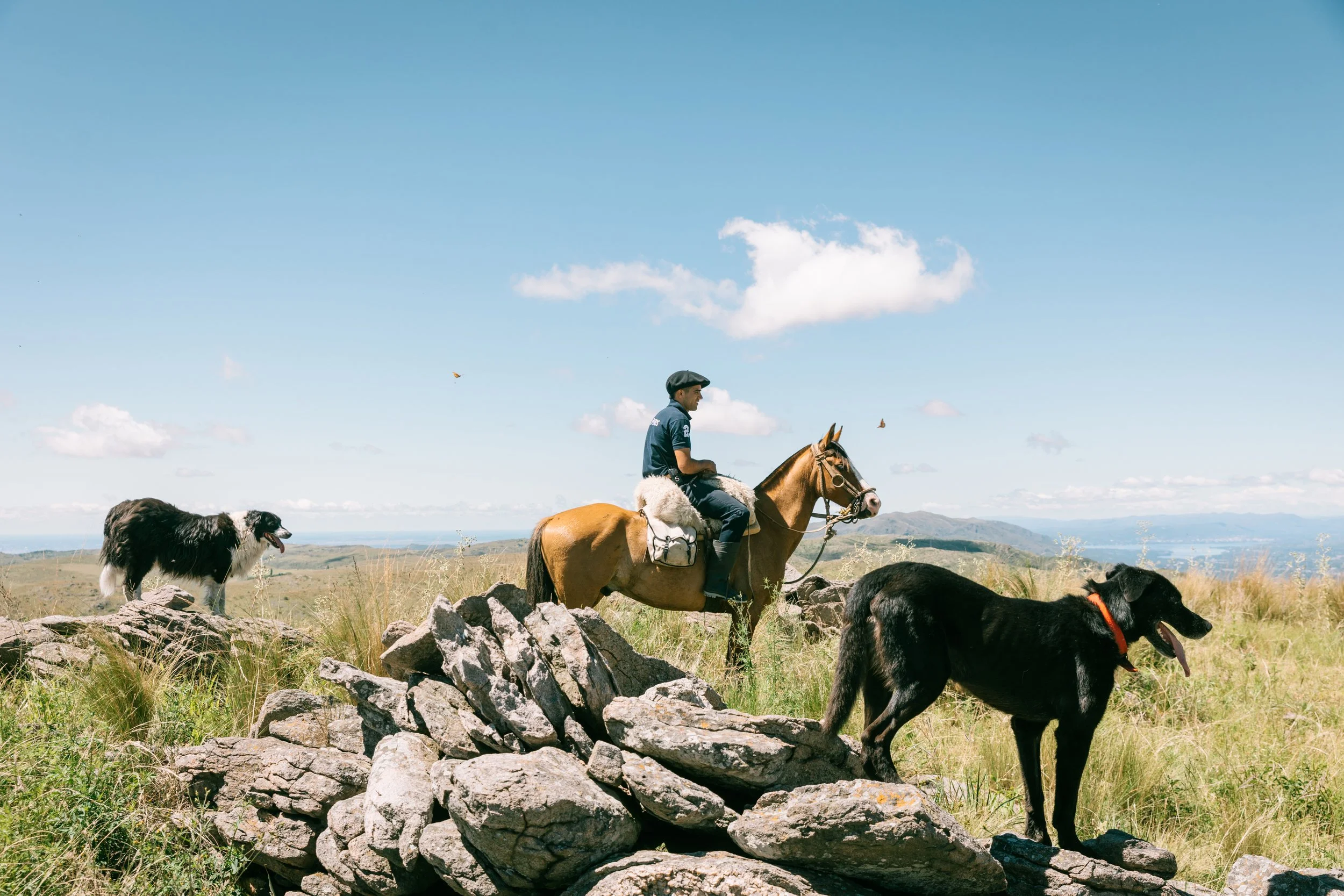
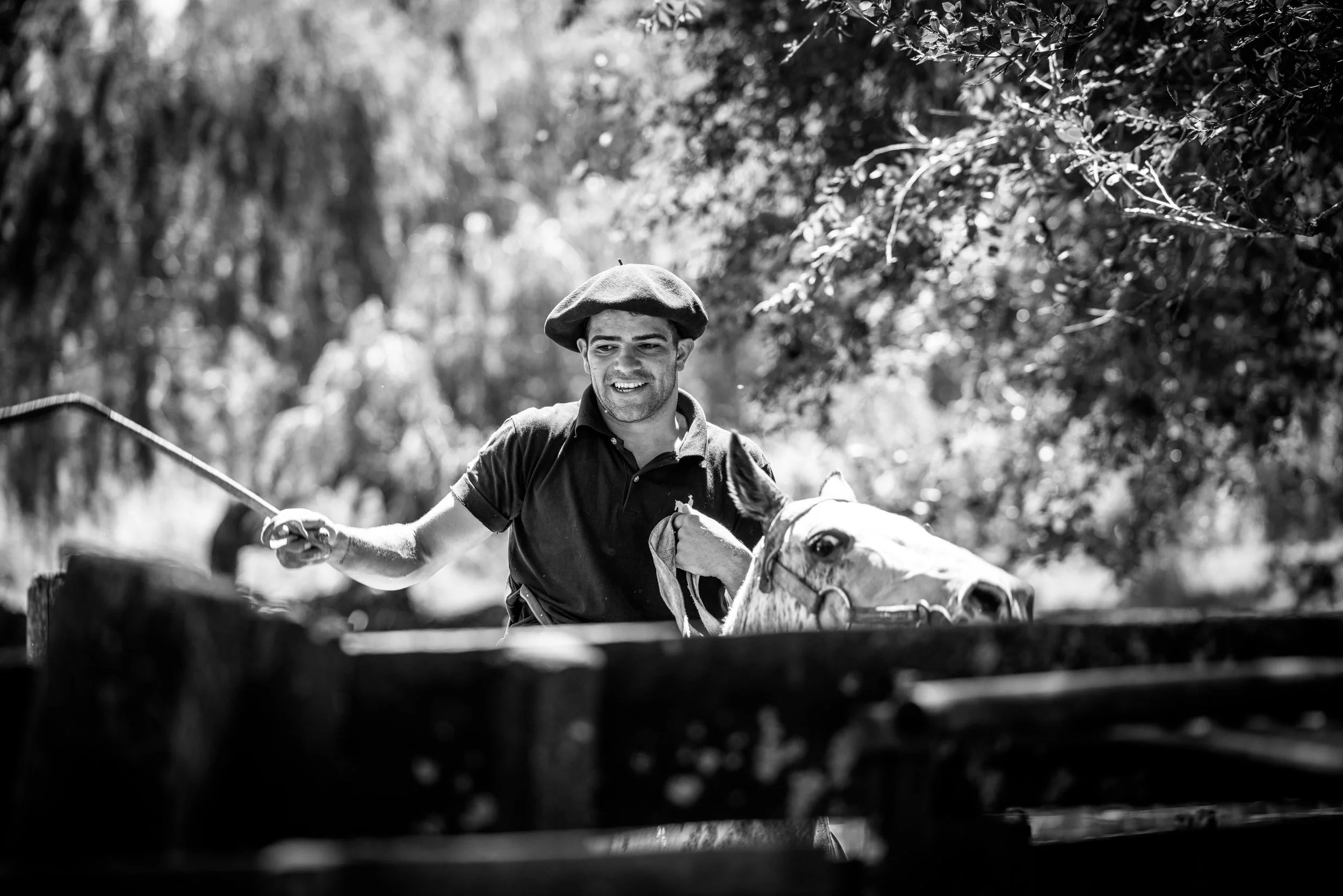
Traditional Argentine gaucho riding through estancia land

Generations of Gaucho Families at Los Potreros

Across Argentina’s wide-open landscapes, the gaucho stands as one of the country’s most enduring cultural symbols. More than a romantic figure on horseback, the gaucho represents a way of life shaped by the land, defined by horsemanship, resilience, and a deep sense of belonging. At Estancia Los Potreros, this heritage isn’t preserved behind glass - it is lived every day.

The Gaucho: Heart of the SIERRAS CHICAS

The gaucho emerged in the 18th and 19th centuries as a skilled horseman and cattle worker, roaming the vast grasslands of Argentina. Fiercely independent yet deeply tied to community, gauchos developed a culture rich in tradition from their distinctive dress and music to their mastery of riding, cattle handling, and life outdoors. Over time, they became a symbol of national identity, embodying freedom, humility, and a profound respect for the land.

While much of gaucho culture has faded elsewhere, it continues to thrive in places where tradition remains inseparable from daily life. Set in the rolling hills of the Sierras Chicas of Córdoba, Los Potreros is not a recreated version of rural life it is a working estancia with a long and layered history. The land itself reflects centuries of agricultural use, from early Spanish and Jesuit farming systems to the modern ranch it is today.

The Begg family established their roots here in the early 20th century, building a home and livelihood centered on cattle, horses, and the rhythms of estancia life. Over generations, Los Potreros has grown into a place where history, hospitality, and tradition exist side by side.

Gaucho culture and rural life at Estancia Los Potreros

Families Working Side by Side for Generations

What truly sets Estancia Los Potreros apart is the enduring partnership between the Begg family and the gauchos who work the land. For generations, families have lived and worked alongside one another, passing down skills, stories, and knowledge that can only come from years spent on horseback and in the fields.

Many of today’s gauchos at Los Potreros are descendants of those who worked the estancia decades ago. Their expertise, caring for horses, managing cattle, and navigating the landscape, reflects not only technical skill but also an inherited understanding of the land’s character and needs.

This shared history has created a strong sense of community, built on trust, respect, and mutual responsibility. The relationship goes beyond employment; it is a collaboration rooted in shared values and a shared commitment to preserving a way of life.

Guests at Estancia Los Potreros don’t simply observe gaucho culture, they experience it firsthand. Riding alongside gauchos through open fields, learning traditional techniques, or sharing quiet moments over mate offers a genuine connection to Argentina’s rural heritage.

There is no performance here, no separation between daily work and cultural expression. What visitors encounter is real life on an estancia — shaped by generations of experience and sustained by people who continue to live and work as their predecessors did.

Preserving Tradition Through Continuity

In a rapidly changing world, Estancia Los Potreros stands as a reminder that cultural heritage survives best when it is lived, not staged. Through the long-standing relationship between the Begg family and the gauchos who call this land home, the traditions of the Argentine countryside remain strong, relevant, and deeply human.

The legacy of the gaucho endures here - not as a memory of the past, but as a living, breathing part of everyday life.

Argentine estancia heritage and gaucho traditions

The Magic of Estancia Los Potreros in 4 Nights

If you are looking for a real look at rural Argentine life without sacrificing comfort, our 4-night stay at Estancia Los Potreros is the ideal length for a first visit.

Located in the Sierras Chicas hills of Córdoba, the estancia is a working organic farm that has been in the same family for four generations. Unlike a standard hotel, a stay here is an immersive experience where you live alongside the family and the gauchos.

Your arrival starts with a transfer from Córdoba airport, followed by a drive into the hills where the paved roads end and the farm begins. Once you’ve settled into your room each of which is uniquely decorated with family antiques we head out for an afternoon ride. We take horse matching seriously here; we have over 100 horses, including our famous Paso Peruanos and sturdy Criollo crosses, so we can find a horse that fits your confidence level, whether you ride every day or haven't been in a saddle for years.

The middle days of your stay are built around the rhythm of the farm. We usually head out for a long morning ride to explore the 6,500-acre estancia, reaching high ridges that offer views across the entire province. On these rides, you’ll experience the varied terrain of the Sierras, from rocky outcrops to hidden valleys, seeing the land exactly as the gauchos do.

Lunch is always an event, often a traditional "asado" (barbecue) cooked over an open fire. You’ll eat our own grass-fed beef and organic vegetables, paired with wines from our private cellar. In the afternoons, the pace is up to you. You can choose to go back out for a ride, go birdwatching around the estancia with our dedicated guides to spot local species, or simply watch estancia life unfold from the comfort of the veranda.

One of the unique aspects of Los Potreros is the "home-stay" feel. Evenings are social, starting with drinks on the veranda and moving into a communal dinner. You’ll be dining with the owners and other guests from around the world, making it a great option for solo travelers as well as couples. The atmosphere is relaxed; there’s no pressure to follow a rigid schedule. If you’d rather spend an afternoon reading by the pool instead of riding, you are more than welcome to do so.

By the time your four nights come to an end, you’ll have a true sense of the history and daily life of a Córdoba estancia. Whether you’ve come for the world-class riding or the quiet of the hills, you leave feeling like part of the family.

Sun, Sierras, and Spirits: A Christmas & New Year to Remember

Christmas and New Year at Estancia Los Potreros was a celebration of sunshine, adventure, friendship and unforgettable moments. The holiday season was a sun-drenched blur of long horseback rides across the hills, refreshing afternoon swims, relaxed lunches beneath the trees and lively evenings filled with music, laughter and dancing.

The estancia came alive as we welcomed a wonderful mix of returning guests and new faces from around the world. There was a special energy throughout the farm as everyone settled into the rhythm of summer life in the Sierras Chicas. From the smell of the asado drifting across the lawn to spontaneous picnics in the shade of the trees, every day brought a new opportunity to enjoy the beauty of the landscape and the magic of estancia life.

One of the highlights of the festive season was our Blind Fernet Tasting, where guests were invited to compare three very different interpretations of this much-loved Argentine tradition. We pitted the classic Italian Fernet-Branca against the bold Argentine favourite and a sophisticated English wildcard, Britannica London Fernet. While the Argentine version remained the undisputed champion for the classic Fernet and Coke, the English Fernet surprised many guests with its distinctive notes of cacao and roasted nuts, winning over those who preferred to enjoy their Fernet neat.

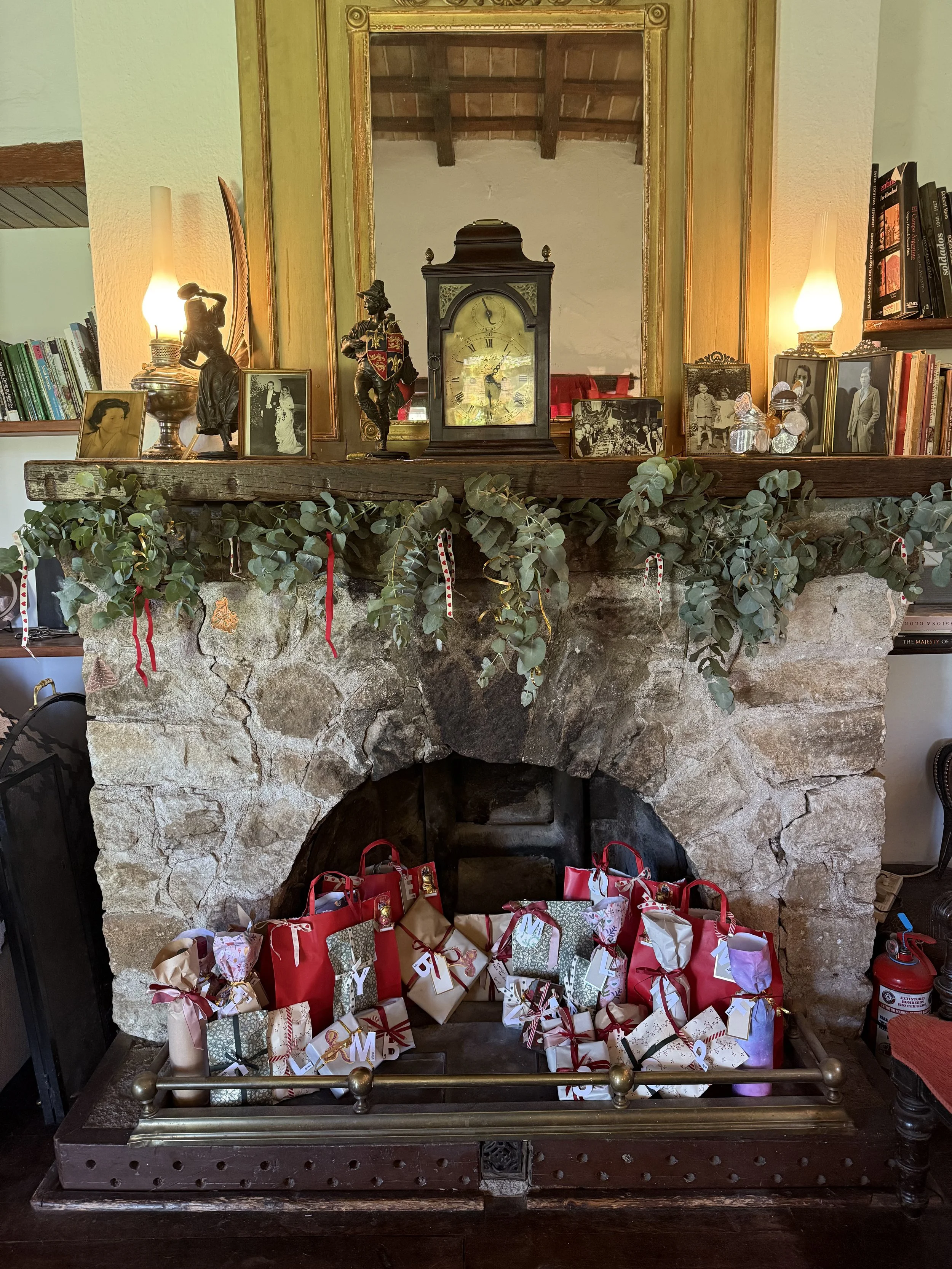
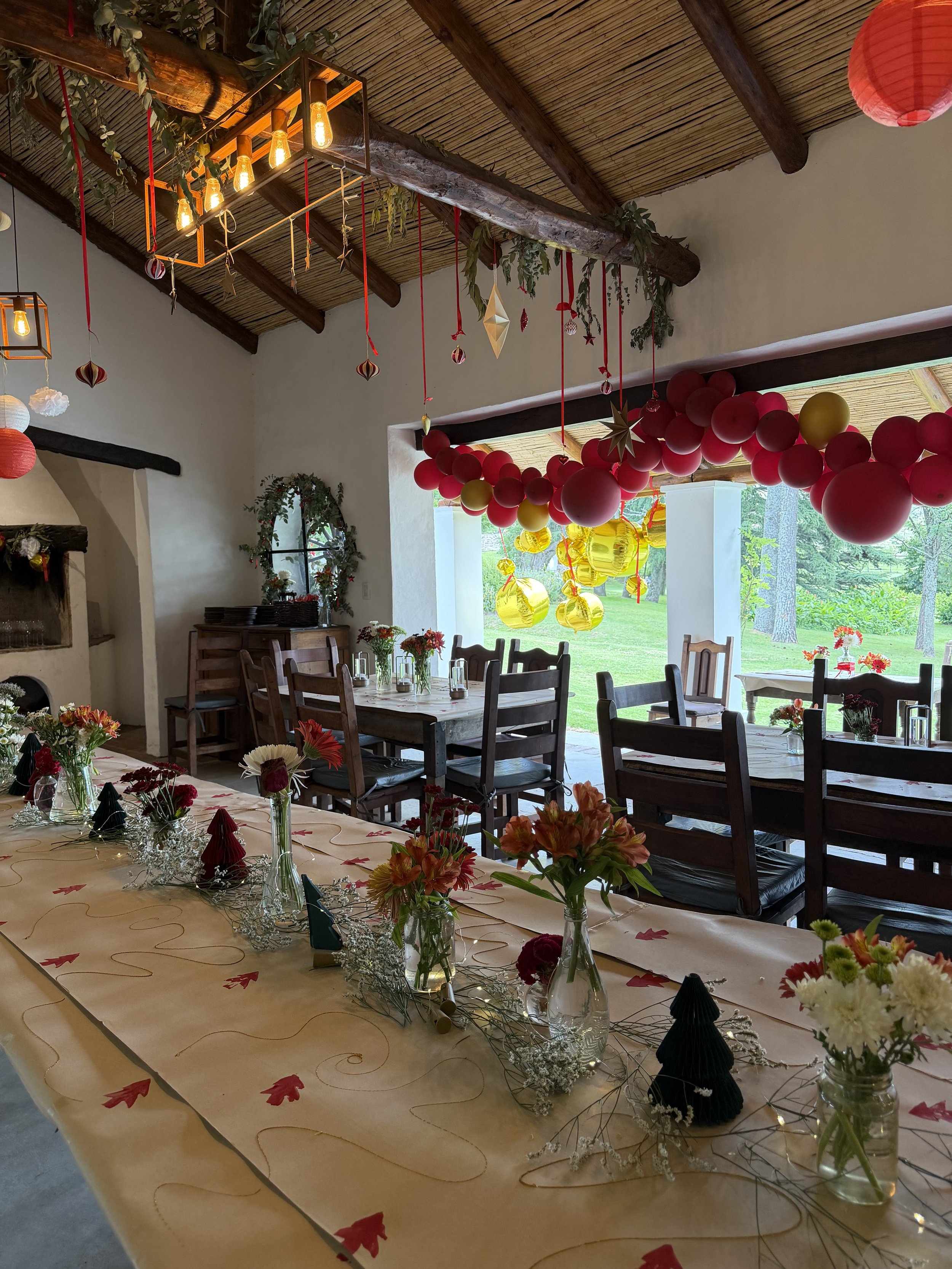
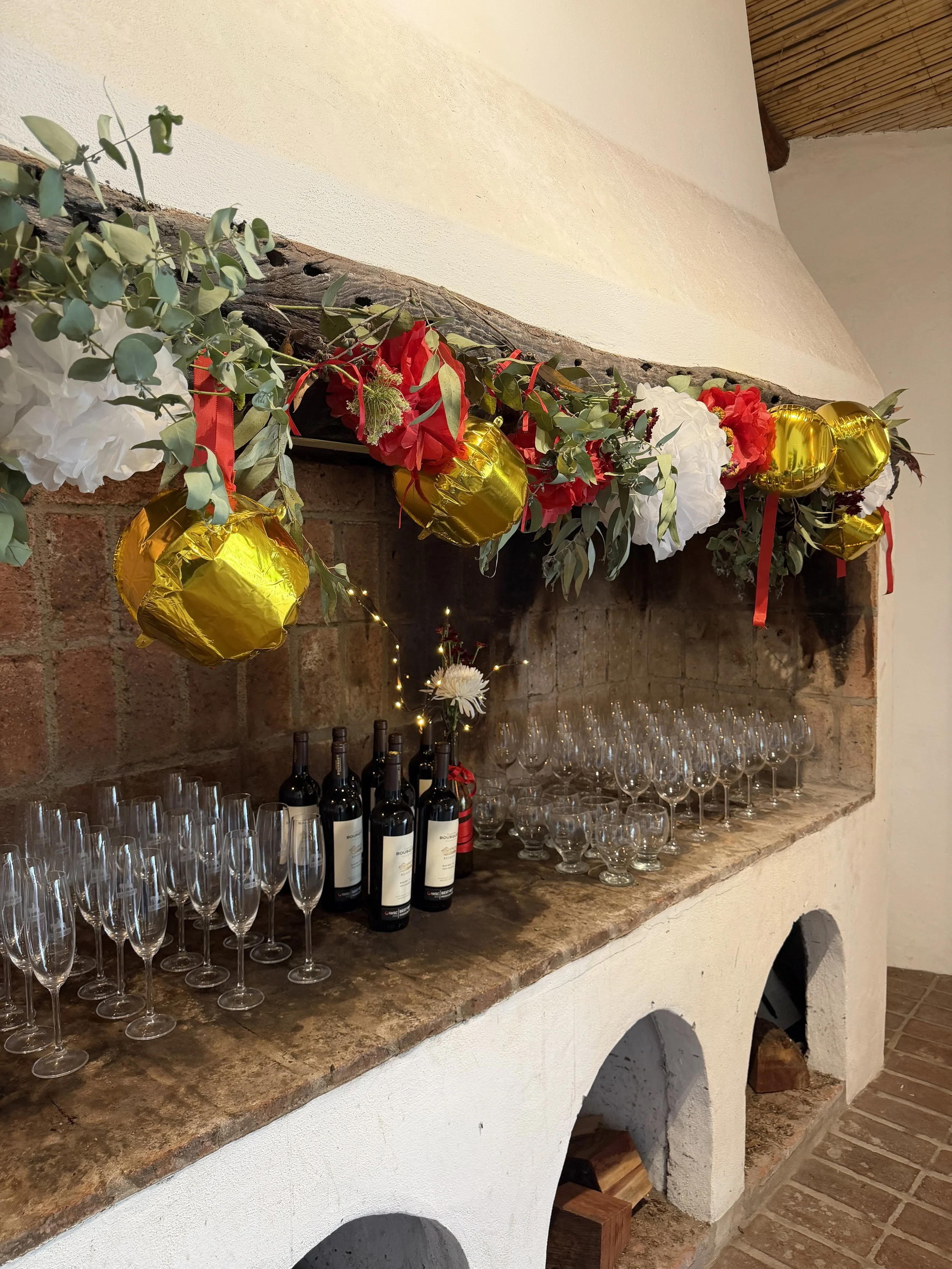
Every year, our Christmas and New Year themes are carefully chosen months in advance, and this year’s celebrations were inspired by the elegance of red and gold. The Christmas tree in the Establo was transformed into a spectacular centrepiece, covered with red bows and sparkling golden lights. Guests, staff and even the dogs embraced the theme, dressing up for a festive evening full of style and celebration.

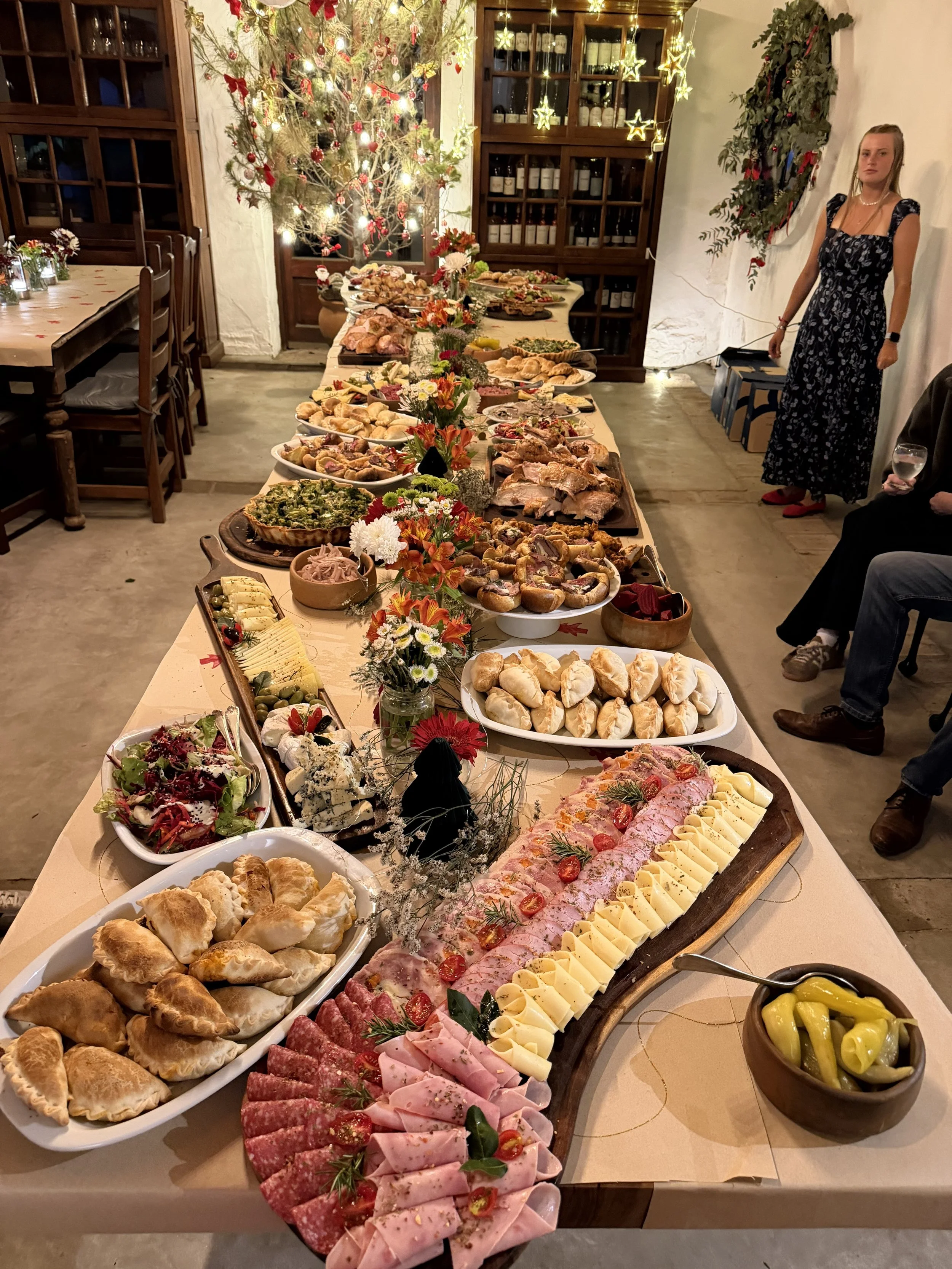
Behind the scenes, our kitchen team worked tirelessly to create memorable meals throughout the festivities. Christmas Eve was a true feast, combining Argentine favourites with a touch of British tradition. Guests enjoyed homemade empanadas, colourful seasonal salads, and a special taste of England with Yorkshire puddings filled with horseradish and roasted beef.

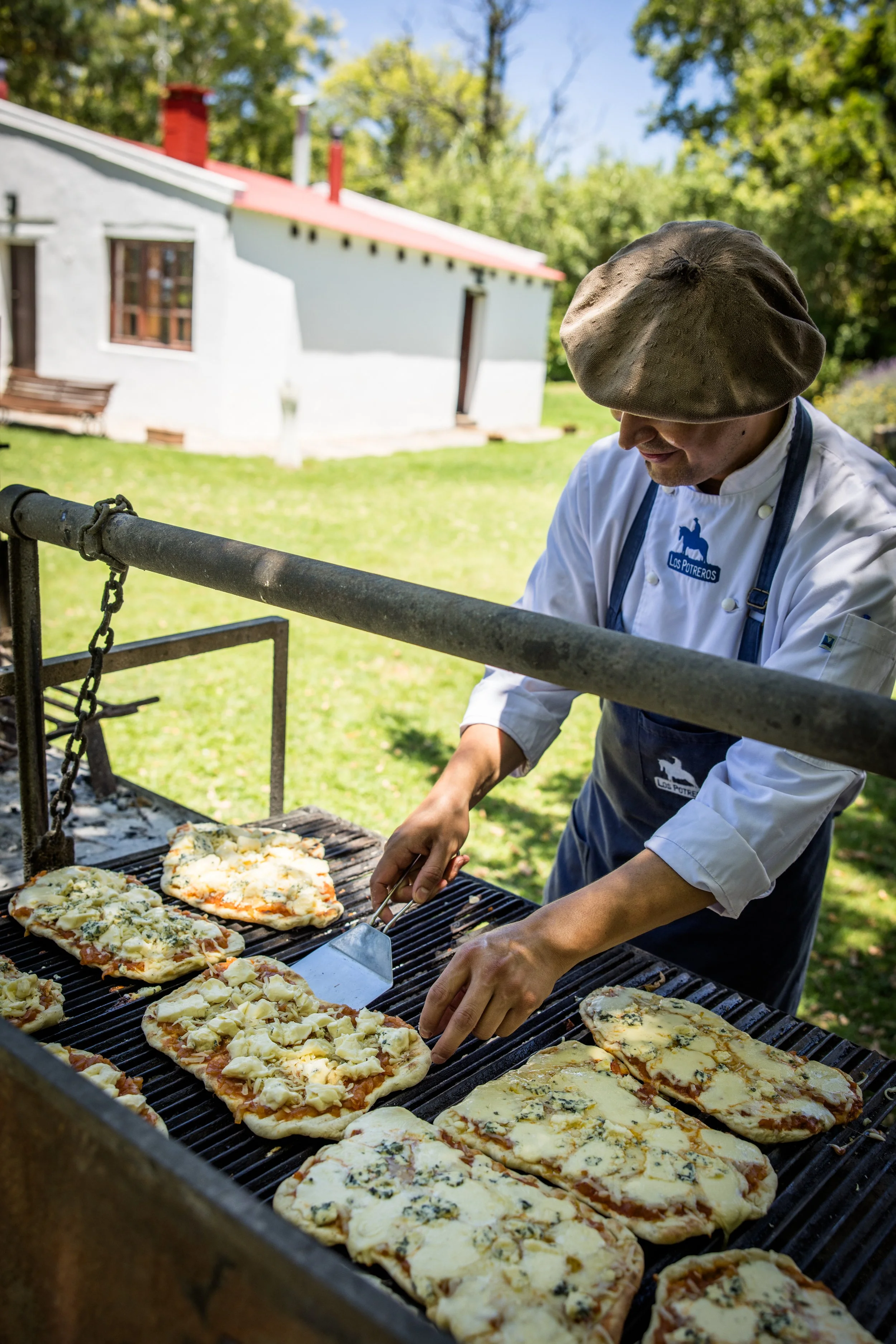
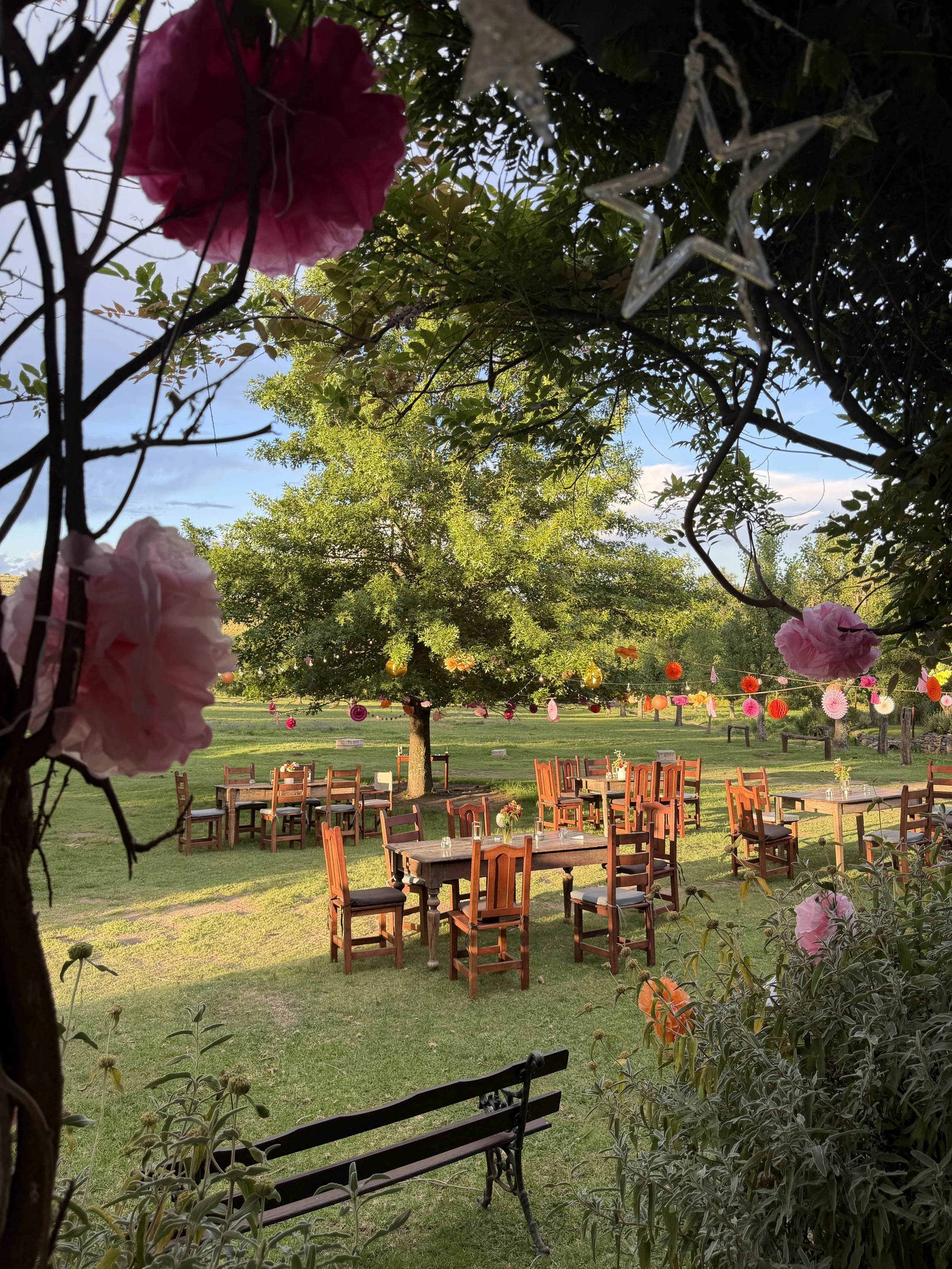
For New Year’s Eve, the farm was transformed into a European-inspired plaza beneath the stars. Decorations were hung between the trees using lassoes, while a “Spritz Station” brought a taste of summer evenings in Italy to the Establo. Fresh pizzas cooked on the parrilla were served throughout the evening, followed by dancing and celebrations that continued late into the night.

The crowning jewel, however, was our Full Moon Ride on January 3rd. Crossing the landscape under a silver sky, and watching the beautiful sunset from the highest point on the farm before sharing a moonlight picnic was pure magic - the perfect grand finale to a spectacular holiday.

We are already looking forward to welcoming guests back for another unforgettable Christmas and New Year at Los Potreros. If you would like to experience a summer Christmas under the Argentine stars, we still have availability for next year. Get in touch to reserve your place.

Meet Flamenco: The Newest Member of Our Family!

We are absolutely thrilled to finally introduce the newest addition to our herd: Flamenco.

A Journey Through the History of the Argentine Marchador

Every horse has a story, and we're excited to introduce one whose story began long before he arrived at our ranch. Meet Flamenco, the newest member of our herd and an incredible example of the Argentine Marchador - a horse admired for its beauty, intelligence, stamina, and one of the smoothest rides you'll ever experience.

At first glance, Flamenco is striking, but it's the way he moves that truly sets him apart. Unlike most horses that naturally trot, Marchadors perform a unique four-beat gait known as the ‘Marcha’. This smooth, rhythmic gait keeps at least one hoof in contact with the ground almost all the time, creating a ride with very little bounce. It's no surprise that riders often say they feel as though they're gliding over the trail instead of riding a horse. This natural gait has made the breed a favorite for long-distance trail riding, ranch work, and endurance riding throughout South America.

The history of the Marchador is just as fascinating as its movement. The breed traces its roots back to the early 1800s, when Iberian horses - particularly the Portuguese Alter Real, along with Andalusian, Barb, and Spanish Jennet bloodlines were crossed with hardy local horses in South America. Breeders wanted a horse that could comfortably travel long distances over rugged terrain while remaining strong, athletic, and willing to work all day. The result was a horse that combined endurance, intelligence, and the naturally smooth marcha gait that defines the breed today.

For generations, Marchadors became indispensable partners on cattle ranches and large estates. Riders often spent entire days in the saddle moving livestock across rolling hills, forests, and mountains. A comfortable horse wasn't considered a luxury it was essential. The Marchador's smooth gait allowed horse and rider to cover many miles without the fatigue that often comes with riding a trotting horse. This practical purpose helped shape the breed into one of the most respected saddle horses in South America.

While their athletic ability is impressive, Marchadors are equally admired for their temperament. They are known for being intelligent, curious, calm, and eager to please. These qualities make them wonderful trail horses and trusted companions for riders of varying experience levels. They are naturally sure-footed, making them well-suited for navigating uneven terrain, rocky trails, and changing landscapes with confidence.

Flamenco embodies everything we love about the breed. In the short time he's been with us, he has already become a barn favorite. His calm demeanor, inquisitive personality, and willingness to work make him a joy to be around both on the ground and under saddle. He approaches new experiences with confidence and seems to genuinely enjoy having a job to do.

We feel incredibly fortunate to welcome Flamenco to our herd. He represents centuries of thoughtful breeding, remarkable horsemanship, and a tradition of creating horses that are as dependable as they are beautiful. Whether you're an experienced rider or saddling up for the very first time, we think you'll quickly discover why the Marchador has earned such a devoted following around the world.

We can't wait for you to meet Flamenco and experience the legendary smooth ride of a Marchador for yourself. We have a feeling he's going to leave a lasting impression on everyone who has the chance to ride him.

Heritage, Habitat, and Heart: The Farming Philosophy of Los Potreros

The story of Estancia Los Potreros is not merely written in history books; it is etched into the rolling hills and pastures the Begg family call home . While the family’s connection to the land began even earlier through a tenancy agreement, it was in 1965 that Robert Begg formalised the farming system that defines the estancia’s legacy today.

A Legacy of Excellence

The farming operations at Los Potreros are centered around two world-class programs:

  • Award-Winning Angus Cattle: The estancia raises a highly recognised herd of Aberdeen Angus, maintaining a breeding program that prioritises quality, health, and resilience.

  • A Diverse Equine Herd: Over the last two decades, the estate has cultivated a magnificent collection of over 120 horses, including Argentine and Chilean Criollos, agile Polo Ponies, smooth-stepping Peruvian Pasos, and versatile Quarter Horses.

Living Wild and Free

At Los Potreros, the belief is that animals thrive best when they live as nature intended. There are no cramped stalls or confined feedlots; instead, the cattle and horses spend their entire lives roaming freely across vast natural grasslands.

By mimicking their natural habitats, the estancia allows these animals to socialize, graze, and express their essential "wild" behaviors. This approach is more than a farming choice, it is a fundamental commitment to the spirit and well-being of the animal.

Beyond Sustainability: Regenerative Roots

For Estancia Los Potreros, "sustainable" is only the starting point. The guiding ambition is regenerative: to leave the land in a better state than it was found. The estancia recognises that the success of its operations depends entirely on the health of the surrounding ecosystem.

The team actively works to expand natural habitats, enhance biodiversity, and protect threatened species. By incorporating regenerative agriculture into daily routines, the farming protocol remains in a state of constant, healthy evolution.

"The commitment at Los Potreros goes beyond merely being sustainable; the goal is to leave things better than they were found."

The Five Pillars of Animal Welfare

Animal welfare is the heartbeat of the estancia. Every manager, gaucho, and staff member is rigorously trained to uphold these core principles:
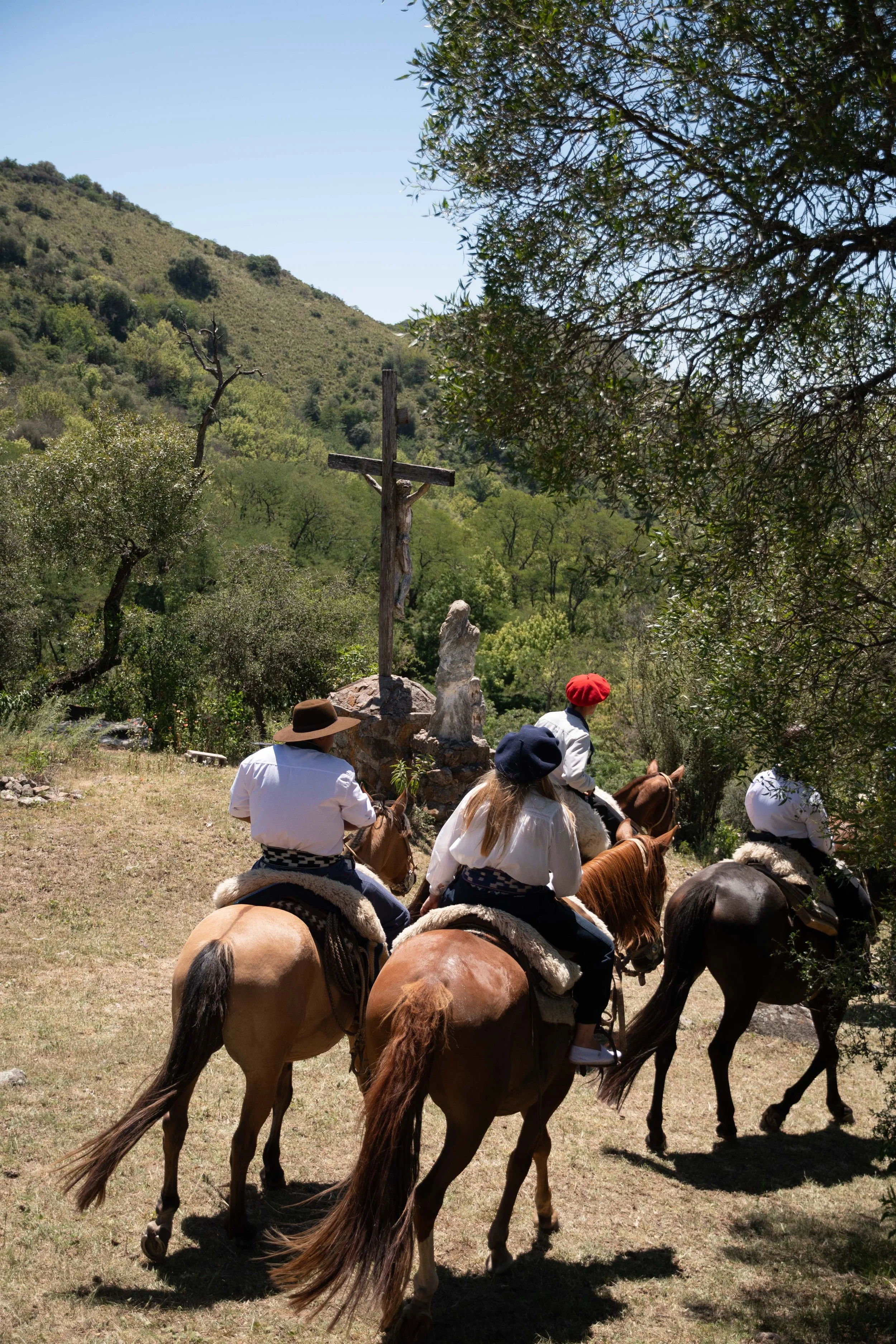
  1. Freedom to Move: Animals are never confined; they are born to roam.
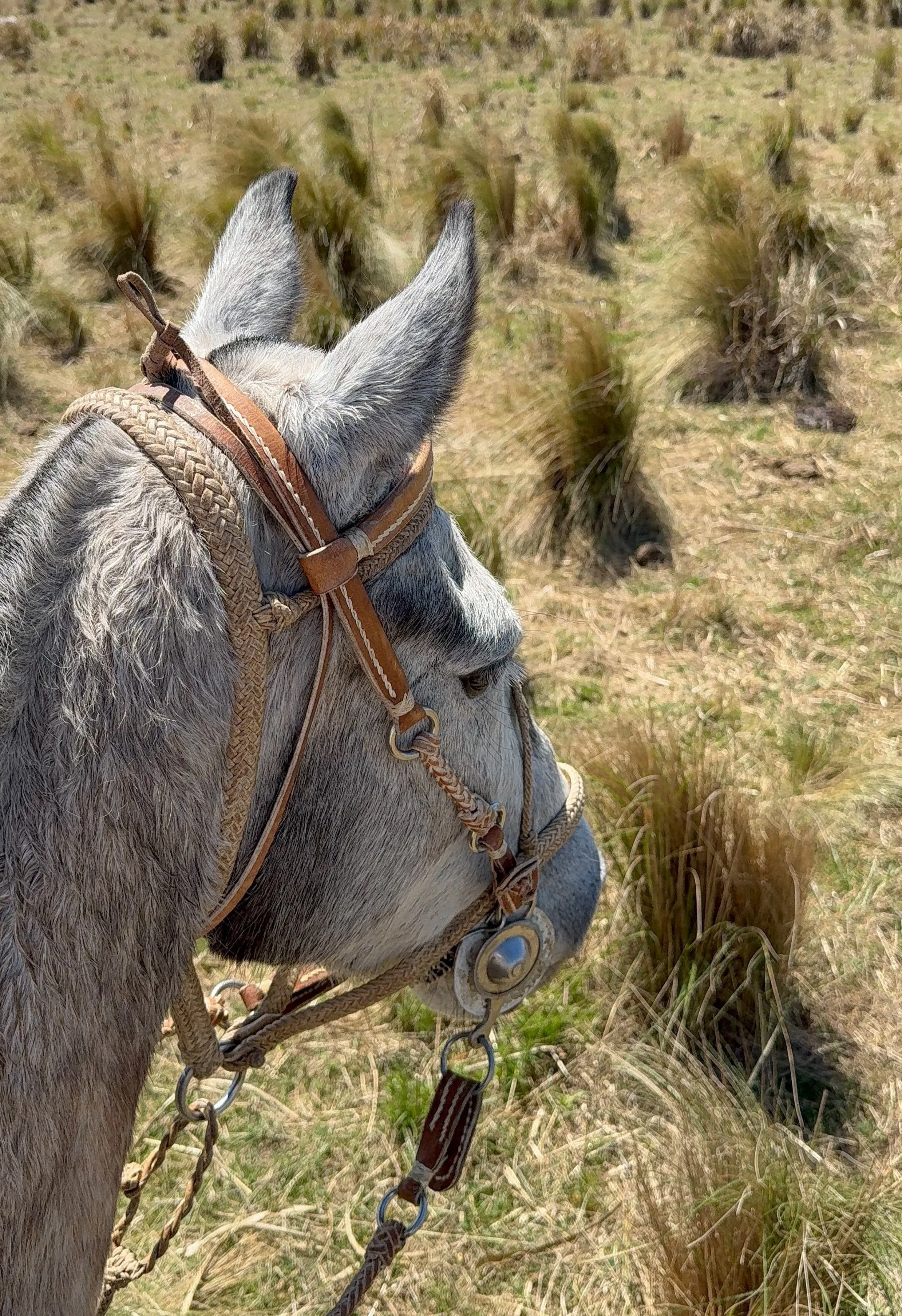
  2. Natural Expression: Every animal is afforded the space and social structure to behave as they would in the wild.

  3. Environmental Well-being: The estancia provides 24/7 access to pasture and sufficient natural protection from the elements.

  4. Pure Nutrition: The use of food additives, growth promoters, hormones, or animal by-products is strictly prohibited.

  5. Expert Care: All personnel are thoroughly trained and competent in the highest standards of animal husbandry and welfare.

At Estancia Los Potreros, tradition and nature walk hand-in-hand, creating a working landscape where history is honored and the future of the land is secured.